Humidity and Solid Wood Bed Frames: A Singapore Owner's Guide
Last month I visited a friend's newly renovated flat in Punggol, and the first thing she showed me was not her new kitchen or her imported sofa. It was a hairline crack running along the headboard of her six-month-old bed frame. The flat had been air-conditioned most nights, the window had never been left open during rain, and the bed frame still moved with the seasons. Singapore's relative humidity sits between 70 and 85 percent for most of the year, and even a well-sealed HDB unit in Tampines or Bedok will see indoor humidity climb to 75 percent whenever the air-con is off for a few hours. For owners of solid wood bedroom furniture, that figure decides everything from how tight the joinery stays to whether a wardrobe door will close in February.
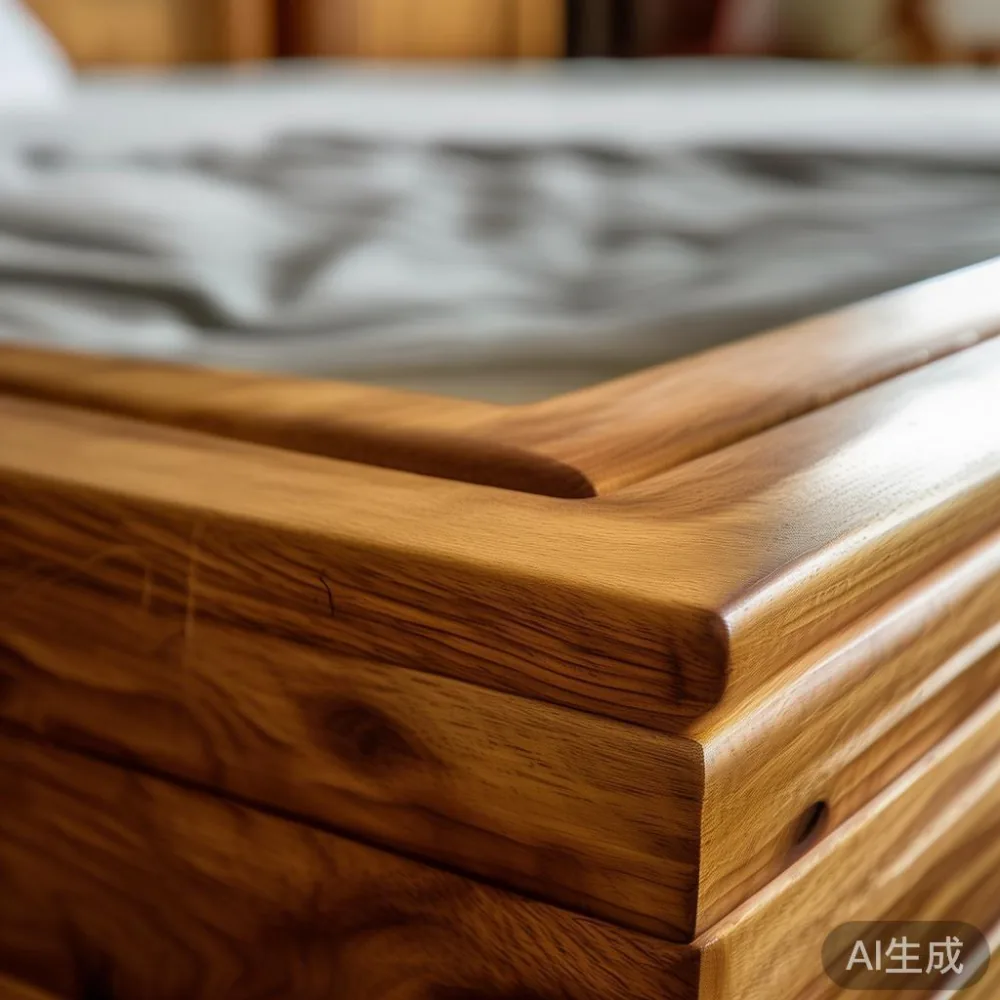
Solid wood breathes. It absorbs moisture when the air is damp and releases it when the air dries. In a climate like Singapore's, that exchange never really stops, and the bed frame you bought in a cool 65 percent showroom will behave differently inside your bedroom by the third week. Understanding how that movement works is the difference between a piece that lasts twenty years and one that develops a squeak in month four.
Why Does Humidity Cause Solid Wood Bed Frames to Warp or Crack?
Wood is hygroscopic. Each cell wall holds moisture like a sponge, and the fibre direction of the grain means the board expands across its width far more than along its length. A typical 150 cm wide oak or ash headboard can move 4 to 6 mm across its width between a dry January afternoon at 55 percent indoor RH and a wet November morning at 85 percent indoor RH. That movement shows up as cupping on wide planks, gaps between joined panels, or, in the worst case I have seen on a customer's piece in Bedok, a 3 mm crack running along a slat because the slat had been glued too tightly across the grain.
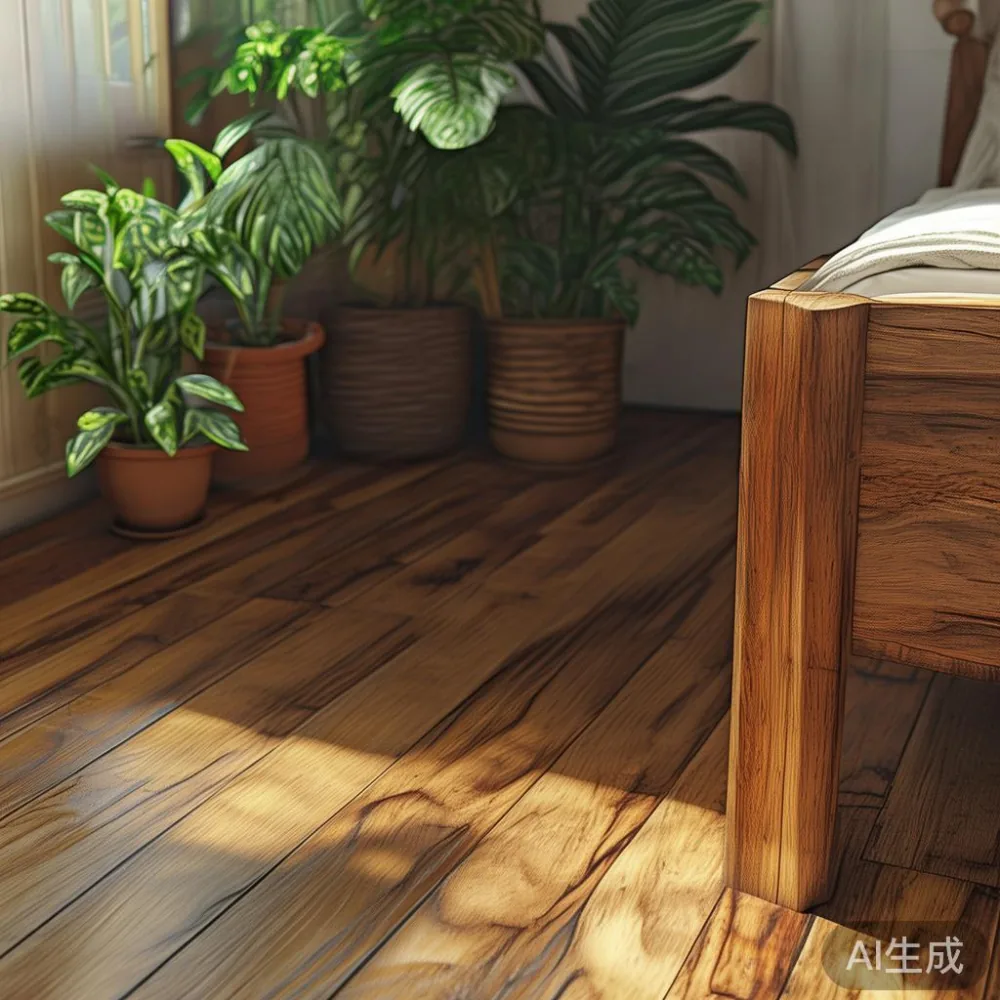
Factory kiln-drying brings the wood down to roughly 8 to 10 percent moisture content, which is ideal for temperate climates. Singapore's year-round ambient level pushes that same wood toward 14 to 18 percent as soon as it sits in your flat for a season. Pieces such as the solid wood bed frame from MIDHILL are dried and acclimatised before shipping, but the final few percentage points of adjustment happen inside your bedroom, not inside the factory.
How Do I Care for a Bed Frame in Humid Weather?
Keep indoor relative humidity between 45 and 60 percent, run the air-con or a dehumidifier during the day when you are out, leave 10 cm of clearance behind the headboard and side rails for airflow, and wipe the frame with a dry microfibre cloth every two weeks so salt-laden moisture does not sit on the finish.
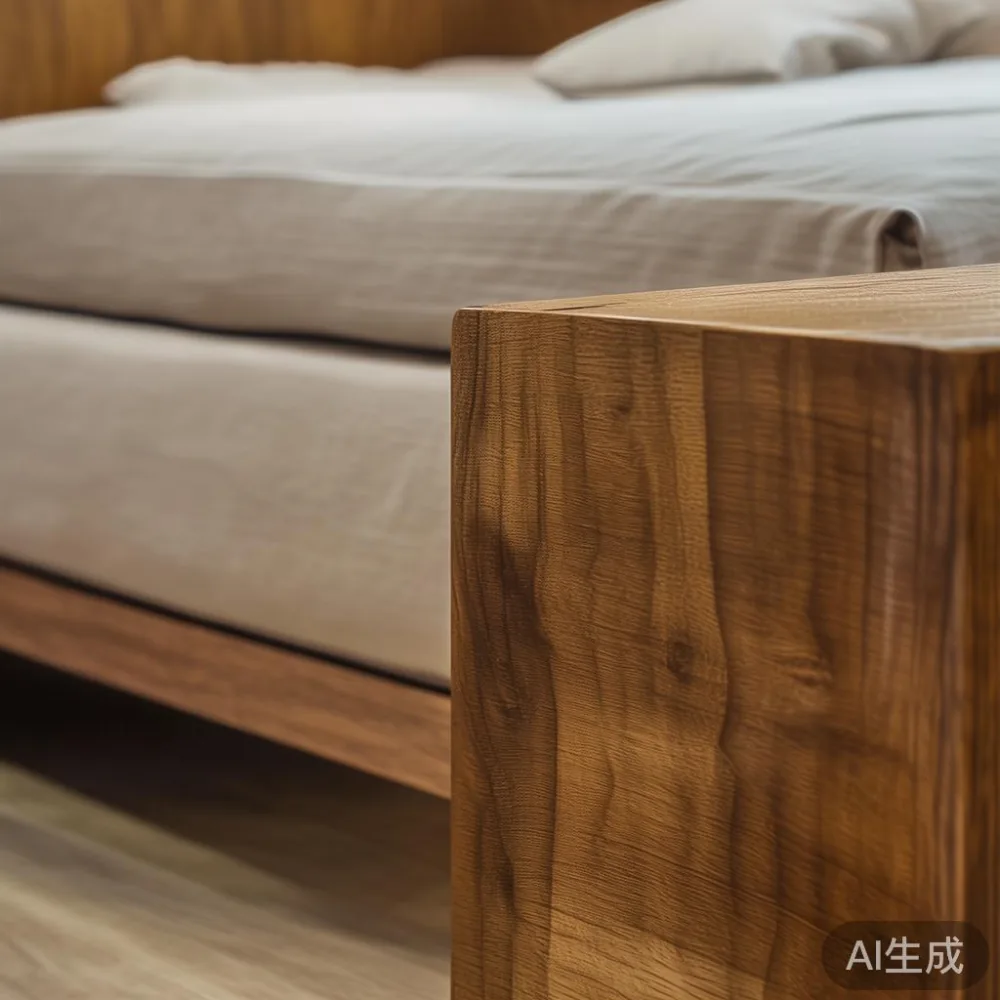
That short checklist covers ninety percent of what matters. Beyond it, a few habits separate pieces that age gracefully from those that fall apart. Lift, do not drag, the bed frame when you move it for cleaning; sliding it across tile or laminate will shear the foot joints within a year. Vacuum the slat platform monthly because dust holds moisture against the wood. If you notice a musty smell after a wet spell, run the bedroom dehumidifier for six to eight hours and crack the door open for twenty minutes afterwards so the trapped damp air can escape.
What Size Bed Frame Fits Inside a Singapore HDB or Condo Lift?
Most HDB passenger lifts in blocks built after 2010 measure 1.1 m wide by 1.4 m deep with a door opening of about 0.9 m. A standard queen mattress is 152 cm by 188 cm, so the bed frame itself often arrives in a flat-pack that fits within those numbers, but the headboard panel on some designs can run 160 to 170 cm wide. That is where my colleague in the logistics department at MIDHILL stepped in last quarter, helping a customer in Punggol Waterway Terrrace confirm that the headboard could be assembled inside the bedroom rather than carried through the corridor.
Older blocks in Bedok and Tampines occasionally have lift openings closer to 0.8 m, and service lifts in private condos sometimes run narrower still. Measure the lift door diagonal, not just the width, and remember that a queen headboard at 9 cm thick will pass through a 1.0 m opening as long as you keep the panel upright rather than flat. For families considering a 3-seater queen bed for kids room, the smaller footprint of a 152 by 188 cm queen still leaves space for a study desk and a wardrobe in a typical 12 sqm HDB bedroom, provided the bed frame is under 215 cm long so the door can still open past it.
Which Solid Wood Species Handle Singapore Humidity Best?
White oak, ash, and teak tolerate daily swings better than rubberwood or pine because of their tighter grain and higher natural oil content. Rubberwood, which is common in lower-priced bedroom sets, moves roughly twice as much across the grain as white oak for the same change in moisture content, which is why a rubberwood bedside table will show a gap in February that an oak nightstand next to it will not.
For bedroom pieces such as a solid wood bed frame, a dining table, or a wardrobe that lives near an exterior wall, oak or ash will give you fewer headaches across the wet and dry seasons. Teak is the traditional answer for tropical climates and carries a price to match, but a well-built oak piece with a proper joinery system will serve a Singapore household for fifteen to twenty years with nothing more than the care routine described above. Marble accents, such as those used on a marble dining table or a marble side surface, actually pair well with humid climates because the stone does not move; just remember to seal the stone once a year to keep it from spotting.
Does Air-Conditioning Help or Hurt a Bed Frame?
Air-conditioning helps more than it hurts, as long as you do not aim the vent straight at the headboard. Direct cold air will dry the surface of one panel while the back of the same panel stays damp, and that uneven drying is what causes the cupping and the hairline cracks my friend in Punggol saw on her piece. Aim the louvers upward, set the bedroom to 23 to 25 degrees Celsius, and the wood will settle into a stable equilibrium moisture content of around 9 to 11 percent.
Set the dehumidifier to 55 percent if you run one in the bedroom, and empty the tank daily because a full tank simply pumps the moisture back into the room. A unit with a continuous drain line that runs into the bathroom waste pipe is worth the S$40 to S$80 installation cost if you use the bedroom heavily. None of this is difficult; it is just habit, and it is the habit that keeps a S$1,800 to S$3,200 solid wood bed frame looking like new for the better part of two decades.
How Much Should a Quality Solid Wood Bed Frame Cost in Singapore?
A queen-size solid wood bed frame from a manufacturer with proper kiln-drying and a ten-year structural warranty typically retails between S$1,800 and S$3,500 in Singapore, depending on the species and whether the headboard is upholstered. Add 9 percent GST at the point of purchase, and budget S$120 to S$250 for delivery inside mainland Singapore, which usually takes 14 to 21 working days for a made-to-order piece. Free shipping kicks in over S$350 for ready-stock items, but a custom bed frame is rarely ready-stock.
A dining table in the same material sits between S$2,200 and S$4,500 for a six-seater, a two-door wardrobe runs S$2,800 to S$5,000, and a pair of nightstands adds another S$600 to S$1,200. Pieces that look light luxury, think restrained French silhouettes with brushed brass pulls, or the cleaner lines of post-modern light luxury, tend to cluster at the higher end because the joinery is more demanding. American light luxury, with thicker tops and visible mortise-and-tenon corners, falls in the middle of the range and is often the most forgiving in humid climates because the construction leaves the wood room to move.
What Should I Do If My Bed Frame Already Has Small Cracks or Gaps?
Measure the gap with a ruler, photograph it under good light, and check whether the gap closes during a dry week in February or July. If it does, the wood is responding to humidity and the fix is climate control, not filler. If the gap stays the same size through a full humid and a full dry cycle, contact the manufacturer for a warranty assessment.
MIDHILL offers a ten-year structural warranty and lifetime refinishing on its solid wood bedroom pieces, which is the kind of backing you want when you are evaluating whether a hairline gap is movement or a defect. A 14-day return window covers the obvious issues, but most humidity-related settling shows up between month three and month twelve, well after the return period ends. Keep the warranty card, photograph the piece when it is new, and re-photograph it every six months so you have a record of any movement across the seasons.
How Do I Move a Solid Wood Bed Frame When I Change Flats?
Disassemble the bed frame down to its component panels, wrap each panel in moving blankets, and stand the panels upright against the wall of the moving truck. A queen bed frame typically weighs 60 to 90 kg fully assembled and breaks down into four to six panels of 15 to 25 kg each, which a single person can carry into a lift and through a corridor without scraping the walls.
Singapore HDB corridor widths are usually 1.2 to 1.5 m, which sounds generous until you are carrying a 170 cm headboard panel sideways. Tilt it on its edge and it will pass through any standard door, including the 0.8 m service door in older Tampines blocks. If you are moving from a condo with a narrow service lift, ask the managing agent for the lift car dimensions before moving day; a 1.0 m by 1.2 m lift will accept a king-size headboard on its edge but will not accept a queen headboard flat. Plan the disassembly order so the headboard comes out last and goes in first at the new address.
Final Notes on Living With Wood in a Tropical City
Solid wood bedroom furniture is not high-maintenance, but it is not zero-maintenance either. The owners who get twenty years out of a bed frame are the ones who spend five minutes a month watching the indoor humidity, who wipe the slats when they vacuum the floor, and who call the maker when something looks off instead of waiting for a small gap to become a loose joint. In a climate like Singapore's, the wood will always be talking to you through small movements; your job is to listen early.
If you are furnishing a new flat in Punggol, a resale unit in Bedok, or a condo in the River Valley area, choose a maker that kiln-dries to the climate you live in, that documents its moisture content, and that backs the joinery with a written warranty. The combination of a stable indoor environment and a properly built bed frame will keep the bedroom quiet, the slats tight, and the headboard straight through every monsoon season the next twenty years can throw at it.