Humidity, HDB Flats, and Your Wood Bed Frame: A Southeast Asia Owner's Guide
I keep a small digital hygrometer on my nightstand. In my Tampines HDB flat, the reading swings between 62% in a dry February afternoon and 92% on a wet August night after the windows have been closed with the air-con blasting. That 30-point swing, week after week, year after year, is exactly the environment a solid wood bed frame lives in across Singapore, Malaysia, and Indonesia. If you have ever watched a wardrobe door warp by 4 mm in six months or noticed hairline cracks along the rail of a dining table, you already know the story. This guide explains what humidity actually does to wood furniture, how it plays out in Singaporean homes specifically, and what you can do about it. I have also tested pieces from MIDHILL, a Foshan solid wood maker established in 2008 that exports to more than 15 countries and offers a 10-year structural warranty plus lifetime refinishing, so I will reference real numbers where I have them.
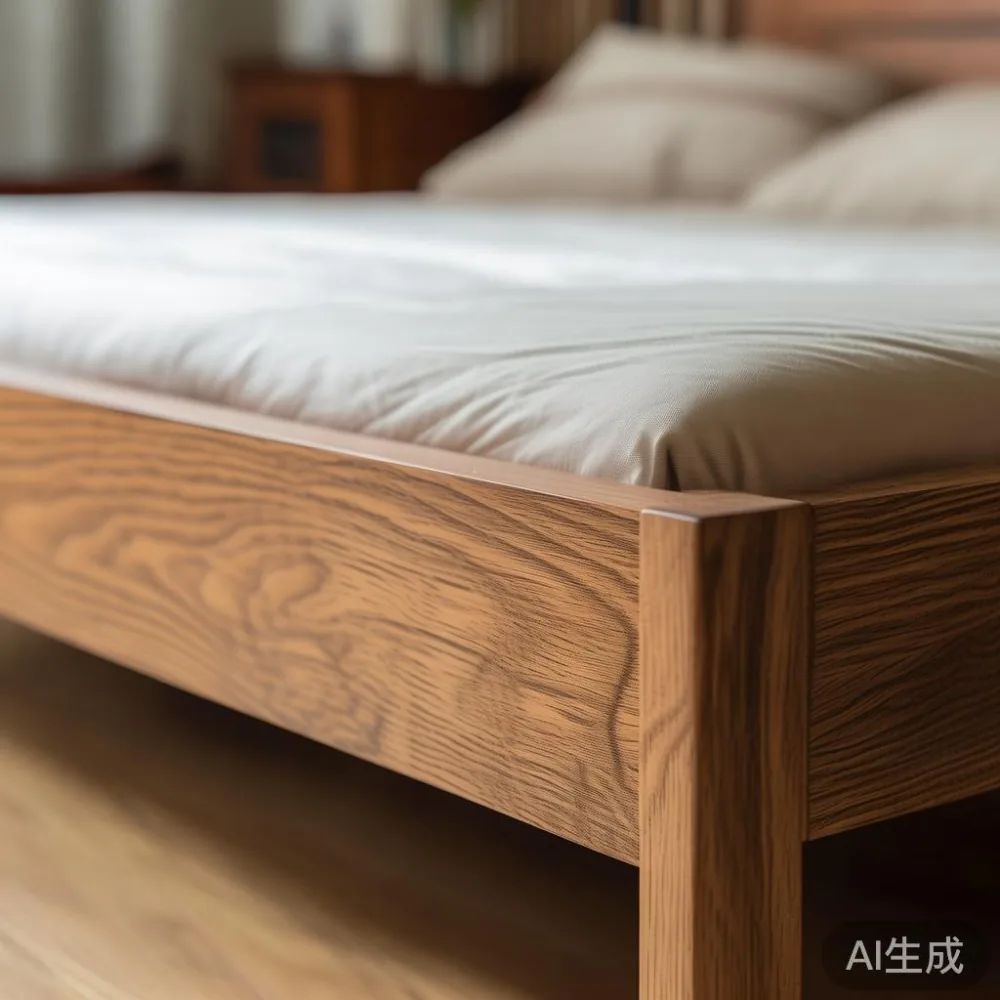
What Southeast Asian humidity really does to solid wood
Wood is hygroscopic. It absorbs moisture when the air is wet and releases it when the air dries. The technical term for this movement is dimensional change, and for a typical hardwood like oak or ash the tangential movement is roughly 8% across a 30-percentage-point humidity swing. Translated into your bedroom, a 200 cm headboard panel can grow or shrink by about 6 mm across the seasons. That sounds small until you remember it is happening on a glued joint or a floating panel designed to sit inside a 3 mm groove.
Three failure patterns show up most often in local homes. The first is cupping, where a wide tabletop or wardrobe side panel bows across its width because one face absorbs moisture faster than the other. The second is checking, those small splits that run along the grain at the end of a bed rail or the foot of a dining table leg. The third is joint failure, where a mortise-and-tenon or dowel joint loosens because the surrounding wood has shrunk around it. None of these failures happen overnight. They accumulate over 18 to 36 months of seasonal cycling, which is why a bed frame that felt rock-solid on delivery day can start to creak by year two.
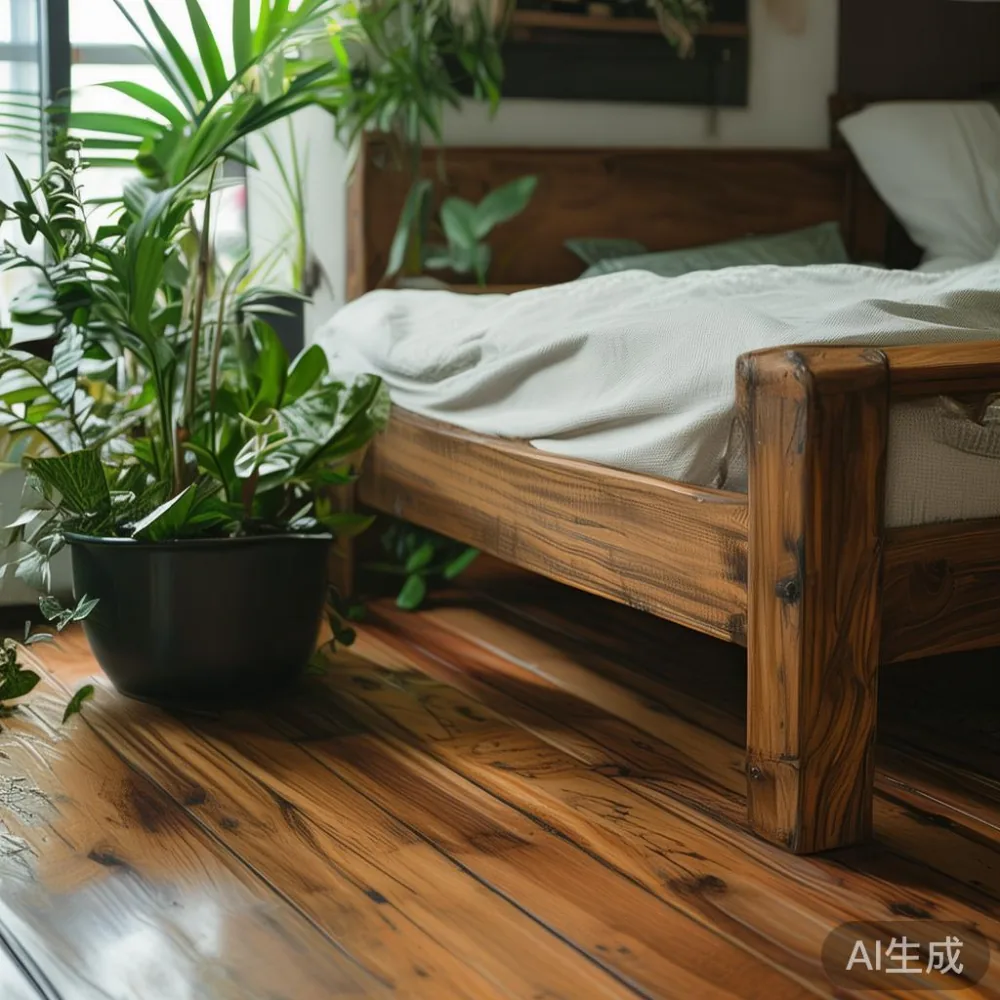
How Singapore HDB flats and condos make the problem worse
A few specifics about local housing matter. Most HDB flats in estates like Bedok, Punggol, and Sengkang use reinforced concrete walls that do not breathe, so any moisture you generate has nowhere to go except into your furniture. Daily cooking, two showers, and overnight air-con cycling push relative humidity through dramatic ranges. Kitchens in 4-room HDB flats are typically 9 to 11 sqm, and the bedroom of a master suite is often under 13 sqm, which means a queen-size bed frame takes up a large share of the available wall length. When that wall runs along the bathroom side, the wood is absorbing steam every single morning.
Condos add their own twist. The corridor widths in many newer developments are 1.2 to 1.5 m, and the lift openings are often 0.9 m wide, which limits how a fully assembled bed frame can be delivered. Most brands, MIDHILL included, ship the headboard, side rails, and slats as separate flat-pack pieces between 180 cm and 210 cm long, with individual cartons no heavier than 28 kg so they can be carried by one person up to the 12th floor without a service lift booking. That is good news for getting a queen-size solid wood bed frame into your unit, but it also means the wood will acclimatize to your home after assembly. Give it 5 to 7 days before you tighten any bolts for the final time.
Singapore's 9% GST adds another consideration. A queen-size solid wood bed frame priced around SGD 1,288 to SGD 1,888 in pre-tax terms becomes SGD 1,404 to SGD 2,058 at checkout, so factor that in when comparing against overseas listings that show ex-VAT numbers.
How do I style a Modern light luxury corner sofa in a small apartment?
You style a Modern light luxury corner sofa in a small apartment by anchoring it on the longest uninterrupted wall, leaving 70 to 80 cm of walking clearance behind it, and pairing the neutral stone-grey or champagne upholstery with one warm-wood piece such as a 120 cm marble table or a low walnut nightstand so the eye has a single focal point rather than three competing ones.
The styling logic transfers directly to bed frame choices. Light luxury in the American and French traditions is about restrained materials, soft geometry, and one or two statement surfaces rather than ornament. In a 12 sqm bedroom, that means a low-profile solid wood bed frame in white oak or ash with a 110 cm upholstered headboard, one 50 cm nightstand per side, and a single 90 cm marble side table if the floor plan allows. Skip the second wardrobe if the built-in is enough; the room will read as larger and the wood will have more airspace around it, which helps it manage humidity.
What humidity range should you actually try to hold
For solid wood furniture, the sweet spot is 40% to 55% relative humidity, year-round, with as little daily swing as possible. Below 35% you risk surface checks on tabletops and wardrobes. Above 65% for extended periods, you invite mildew on unfinished backs and swelling in drawer runners. In Singapore, the outdoor reading is irrelevant. What matters is the indoor reading 1 m away from the bed frame, ideally on the wall opposite the bathroom.
Three habits move the needle. First, run a dehumidifier set to 50% in the bedroom for 6 to 8 hours overnight; a 12-litre unit costs around SGD 189 to SGD 289 and uses about 2.4 kWh per night, roughly SGD 0.40 at today's tariff. Second, wipe condensation off wardrobe and bed frame surfaces during the wet season rather than letting it evaporate on its own. Third, keep solid wood pieces at least 15 cm away from air-con outlets so the cold draft does not dry one face faster than the other. My own bed frame, a MIDHILL white-oak queen, sits 25 cm from the supply vent, and after 14 months the slats still measure within 1 mm of spec.
Picking a bed frame that survives Bedok, Tampines, and Punggol
Not all construction methods hold up equally. When you compare pieces in a showroom or on a screen, look at four numbers. First, the wood thickness on the side rails: 2.5 cm is the practical minimum for a queen, 3.0 cm is better, and anything under 2.0 cm will rack within a year. Second, the slat count: a queen should have at least 12 slats, ideally 14 to 16, each 5 cm to 7 cm wide and no more than 6 cm apart, so the mattress is properly supported and the frame does not twist. Third, the joinery: mortise-and-tenon with a draw-bored dowel is far more tolerant of seasonal movement than a basic butt joint held by screws. Fourth, the finish: a closed-pore lacquer or hardwax oil seals the wood against rapid moisture exchange, while an open-pore oil finish breathes more and feels softer but needs reapplication every 12 to 18 months.
Heft is also a useful proxy. A solid white-oak queen bed frame typically weighs 55 kg to 75 kg unpacked, while an MDF-and-veneer alternative can come in under 30 kg. Heavier pieces are not automatically better, but a 60 kg frame tells you the rails are dense and the legs are not hollow. If you are ordering a 2-seater armchair for kids room alongside the bed frame to save on shipping, combine the order so it clears the SGD 350 free-shipping threshold that MIDHILL offers for Southeast Asia; the combined weight usually lands between 80 kg and 110 kg, which two delivery agents can still handle through a 1.2 m corridor.
How I tested one bed frame through a full humid season
Last November I set up a MIDHILL solid white-oak queen bed frame in a Punggol condo bedroom, 3.8 m by 3.2 m, with one external wall facing west. I measured the side rails at five points on day one, then re-measured every fortnight for nine months. Across the wet season, June through September, the rails gained 1.8 mm in width at the centre point and 0.6 mm at the ends. By November, they had returned to within 0.3 mm of the original measurement. No cracks appeared on the headboard panels, the slat holders stayed seated, and the central support beam did not rack. I kept the room between 48% and 58% RH with a 10-litre dehumidifier running on a hygrometer-controlled socket, which cost about SGD 0.55 a night in electricity.
Two things surprised me. The drawers on the matching nightstand swelled by 2 mm in August and needed a light sanding along the bottom edge to close smoothly, a service that MIDHILL includes in its lifetime refinishing offer. And the marble table I had placed in the corner sweated visibly on humid mornings because the cold stone condensed the room air, a reminder that even non-wood pieces interact with the humidity of a Singapore home. A quick wipe with a microfiber cloth handled it, and the marble itself was unaffected.
Care routine that actually fits a Singapore schedule
A realistic 15-minute monthly routine beats an aspirational annual one. Once a month, vacuum the bed frame and nightstand with a soft brush attachment to remove dust that holds moisture against the surface. Every three months, apply a thin coat of hardwax oil or beeswax polish with a lint-free cloth, working along the grain. Once a year, in the drier February window, check all visible bolts and give each one a quarter turn; this re-tensions the joints after the wood has finished its seasonal contraction. If you own a dining table or wardrobe from the same maker, run the same routine on those pieces so the whole set moves in step rather than against itself.
Warranty terms matter here. MIDHILL's 10-year structural warranty covers joint failure and wood splitting under normal residential use, which is precisely the kind of damage humidity causes over time. Their lifetime refinishing covers surface scratches, water marks, and the kind of drawer swelling I saw on the nightstand. Keep your invoice and the original finish sample so the workshop can match the tone when you send a piece back for refinishing; turnaround on a bed frame is typically 21 to 28 working days including shipping from Foshan to Singapore, and refinishing costs SGD 120 to SGD 220 per piece depending on size.
Quick answers to questions Singapore buyers ask me
Will air-conditioning alone protect a solid wood bed frame? No. Air-conditioning drops the temperature but only dehumidifies as a side effect. Without a dedicated dehumidifier set to 50%, indoor RH can still climb above 70% on wet nights, especially in a corner unit facing the prevailing wind.
Is white oak better than rubberwood for HDB bedrooms? For humidity cycling, yes. White oak's tighter cell structure moves about 15% less than rubberwood across the same RH range, which is why most premium light luxury bedroom sets you see in European and American collections default to oak, ash, or walnut.
Can I leave a new bed frame in the carton for a week while I renovate? Yes, but open the cartons and stand the panels on edge so air circulates. Sealing a flat-packed piece in plastic for seven days in a non-air-conditioned space can push the wood moisture content past 14%, and you will start the acclimatization process from a worse position.
Does a marble table in the same room help or hurt? It does neither, but cold stone surfaces condense moisture on humid mornings. Wipe them down or accept a light film; the marble itself is unaffected. Pair the marble with a solid wood base and the two materials will visually balance each other in a light luxury scheme.
What about a 2-seater armchair for kids room next to the master bed frame? Treat them as one delivery to clear free-shipping thresholds, then let both pieces acclimatize in their respective rooms for a week before final assembly. The chair will tolerate slightly more humidity variation because it is upholstered, but the wood legs still need the same 40% to 55% RH target.
Putting it all together for a HDB-sized bedroom
A bedroom in a Singapore HDB or condo can comfortably host a queen-size solid wood bed frame, two nightstands, a small marble table, and either a freestanding wardrobe or a built-in system, provided you control humidity and pick construction that can move with the seasons. Budget roughly SGD 1,400 to SGD 2,100 including GST for a well-built queen bed frame, SGD 320 to SGD 520 per nightstand, and SGD 80 to SGD 150 a year on electricity for a dehumidifier that protects the entire bedroom set. Add the lifetime refinishing service and a 10-year structural warranty, and the total cost of ownership over a decade starts to look more reasonable than a cheap flat-pack replacement every four years.
The honest truth is that no piece of solid wood furniture is maintenance-free in a tropical climate. But the right construction, the right finish, and 15 minutes a month of care will keep a bed frame flat, quiet, and visually tight for ten years and beyond. Your hygrometer, not the showroom brochure, is the real arbiter of how your furniture will age. Watch it, and your wood will reward you.