How Humidity in Southeast Asia Affects Wood Furniture (and What I Learned Moving a Solid Oak Bed Frame into a Tampines HDB)
Last month I helped a colleague move a new solid oak bed frame into her 4-room HDB flat in Tampines. The lift door was 872 cm tall and 868 cm wide, the corridor outside her unit measured roughly 1024 cm wide, and the delivery team had the headboard tilted almost vertically to clear the turn. None of that was the problem. The problem showed up a week later, when the monsoon pushed indoor relative humidity from a comfortable 60 percent to a sticky 88 percent and the side rail of the bed frame began to swell by what my caliper measured at 1.8 mm of air. That is the moment I stopped thinking of wood as a decorative material and started thinking of it as a living one.
Singapore sits on the equator. Average daily humidity runs between 70 percent and 90 percent for at least eight months of the year, and indoor humidity in air-conditioned HDB flats and condos in Punggol, Bedok, and Bukit Batok can swing 25 to 35 percentage points between an 18 °C air-conditioned afternoon and a balcony door flung open during a thunderstorm. Solid wood furniture — a bed frame, a dining table, a wardrobe, a nightstand, a marble-topped side table — responds to every one of those swings. As a furniture specialist writing for MIDHILL, a Foshan-based maker that has shipped solid wood pieces to more than fifteen countries since 2008, I spend a lot of time explaining how that response works and how owners can keep it under control.
The phrase "light luxury" gets attached to many styles these days — French light luxury with brass-tipped cabriole legs on a bed frame, American light luxury with wide-plank walnut and low-slung silhouettes, post-modern light luxury with split-line dressers and unexpected marble inlays. What unites them is that the wood underneath is real, the joinery is exposed, and the surface will move. Owners who expect laminate-flat stillness will be the first to feel betrayed. Owners who expect quiet seasonal breathing can keep the same piece for decades.
Why Southeast Asian humidity is harder on solid wood than, say, a London bedroom
Wood is hygroscopic, which is a polite word for "it absorbs and releases water from the air until it reaches equilibrium." The equilibrium moisture content (EMC) of a solid oak board in a Singapore bedroom sits roughly between 12 percent and 16 percent, depending on whether the air-con is running. In a heated London flat in February, the EMC can drop below 8 percent. The wood in Singapore therefore spends most of its year near the upper end of its comfort zone, and when the air-con swells, ECM drops by 3 to 5 percentage points in a single afternoon.
That swing is what causes the symptoms owners actually see:
- A bed frame side rail grows 1.5 mm to 2.5 mm across its 200 cm length when humidity rises 20 points.
- A wardrobe door that closed perfectly in February sticks in October.
- A dining table develops a 0.5 mm to 1 mm gap between leaves during the dry season, then closes back up in July.
- Nightstand drawers that slid easily in March need a push in November.
- A marble table surface on a wooden sub-base can hairline-crack at the joint if the wood cups beneath it.
None of this is a defect. All of it is a response. The question is whether the furniture was built to respond gracefully or to fight back.
What actually warps, and what just breathes
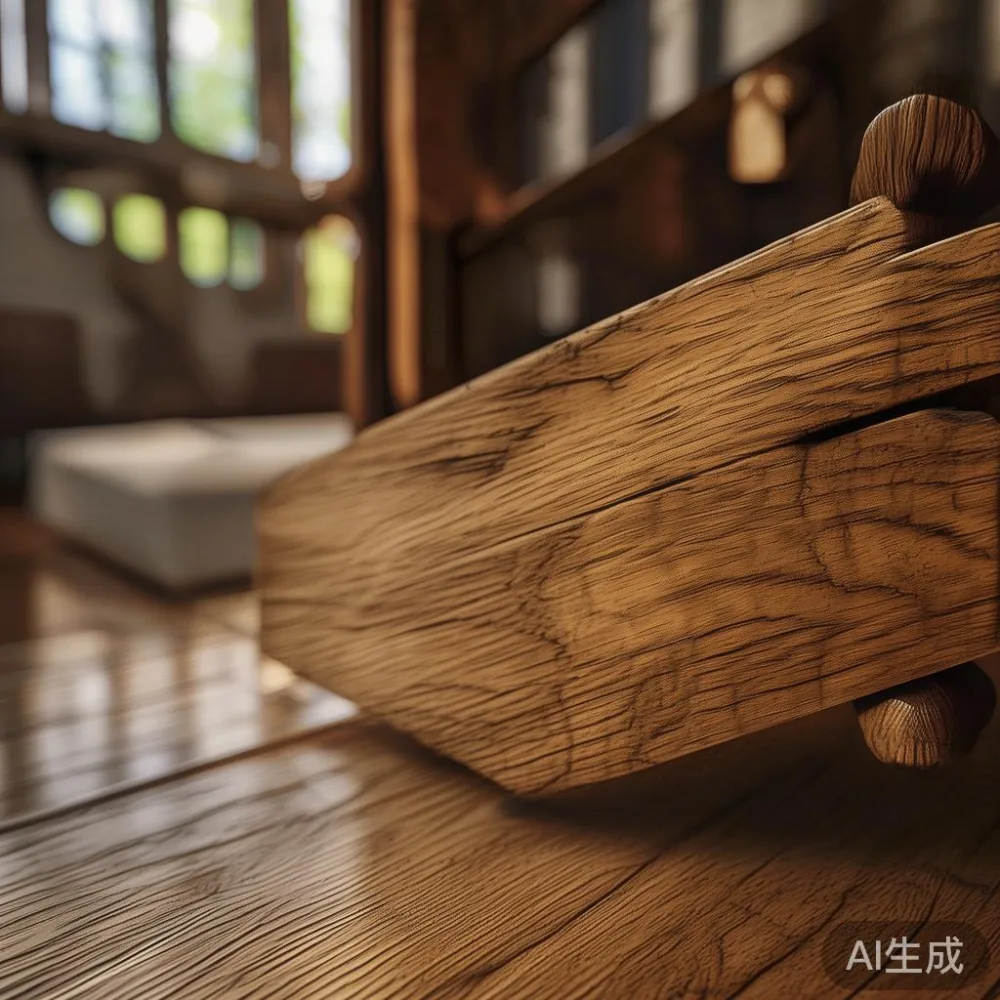
Solid wood moves along the grain far more than across it. A 200 cm-long oak bed frame rail might move 2 mm along its length and almost nothing across its width. Quarter-sawn oak moves about half as much as plain-sawn oak for the same humidity shift. Engineered cores with thick solid veneers sit somewhere in the middle.
The practical risk profile in a HDB or condo looks like this:
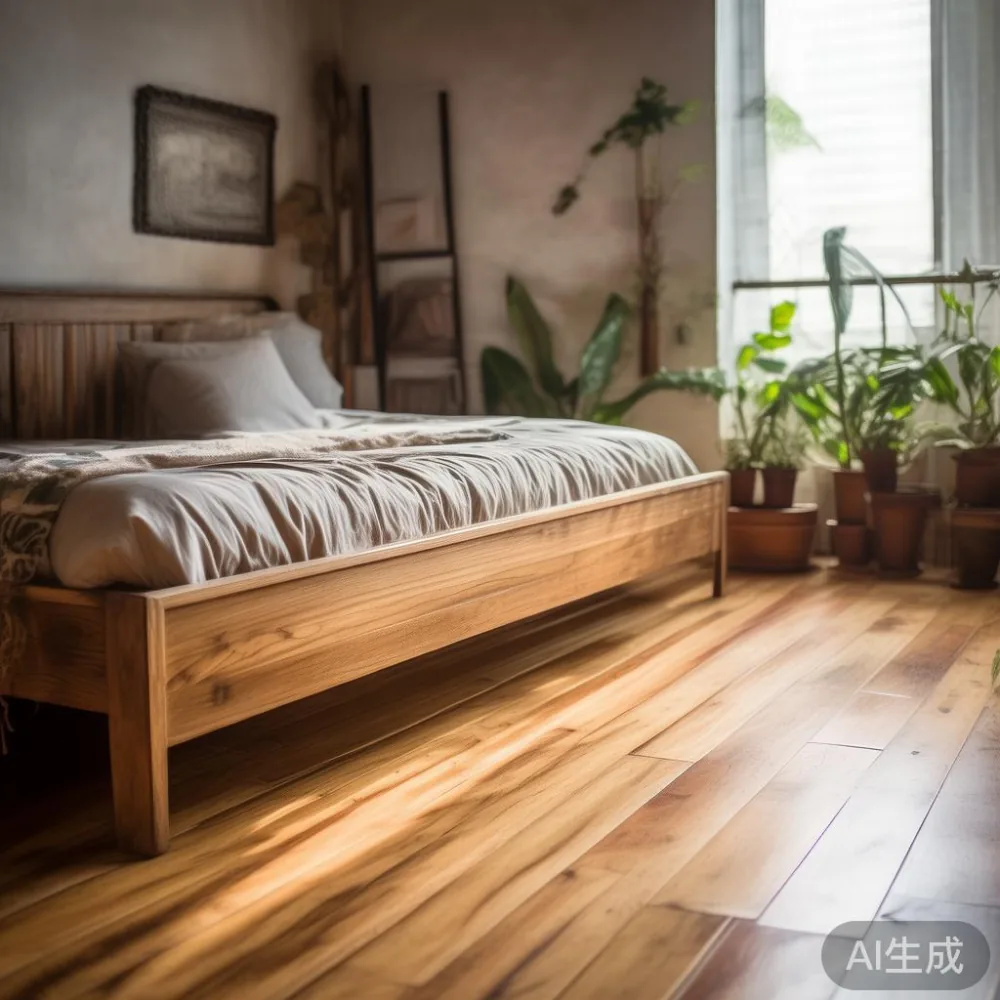
- Slats and side rails: Most exposed, most at risk. A 12 mm slat on a 180 cm-wide bed frame can cup 1 mm to 2 mm in a humid week, which is why quality makers ship slats that float in their holders.
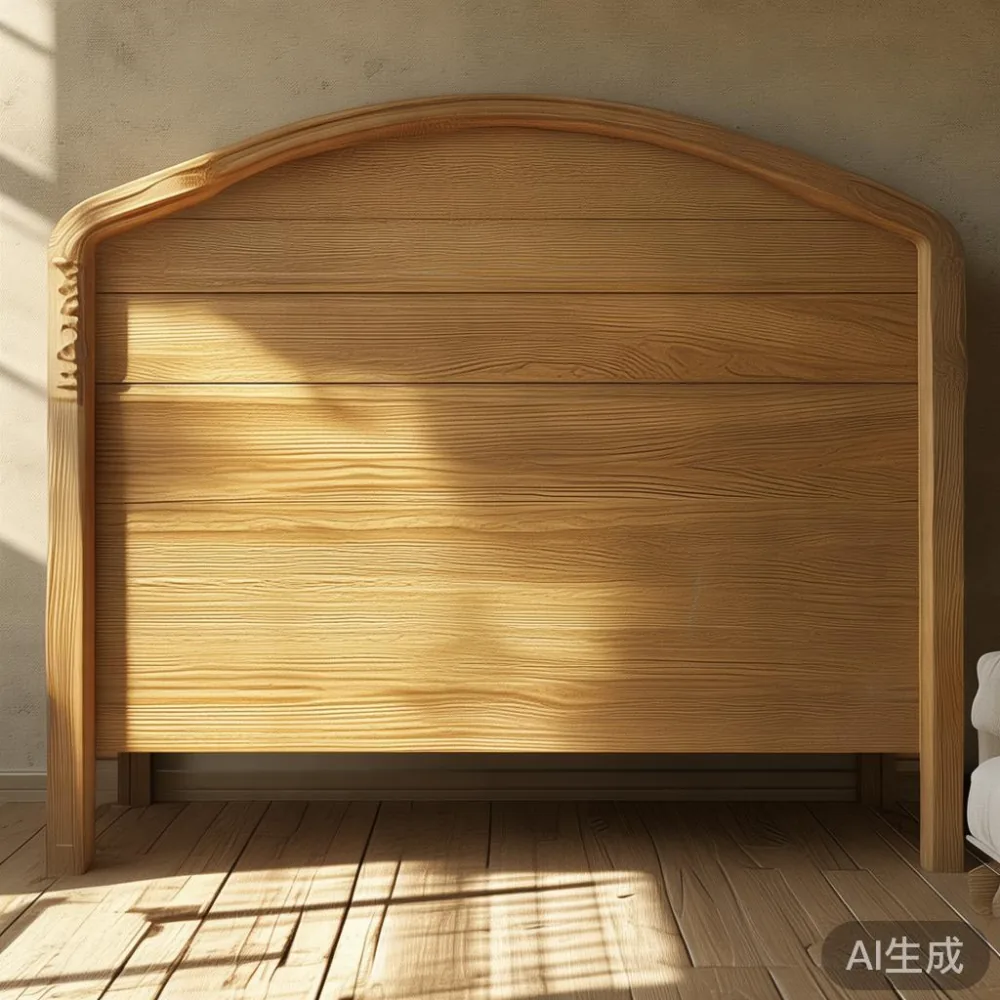
- Wardrobe panels: Large flat panels are the classic problem. A 210 cm-tall solid panel with no relief will cup if the back face and front face see different humidity, which is why traditional makers float the back panel in a rabbet.
- Dining table tops: Breadboard ends and floating tenons absorb the cross-grain movement; a single glued butt joint across the grain will fail within a year in Singapore humidity.
- Nightstand cases: Smaller boxes move less in absolute terms but show it more, because door gaps of 0.5 mm are visible on a 50 cm-wide face.
- Marble table tops: Stone does not move, so any wood sub-frame that supports it must be built with slotted fasteners so the wood can slide under the stone without splitting.
This is also why the joinery matters more than the species. A mortise-and-tenon bed frame with a drawbored tenant slab will out-cycle a cam-lock flat-pack piece in this climate, every time.
How do I care for a shipping damage in humid weather?
You photograph the damage within 48 hours of delivery, while the box, the foam, and the wooden crate are still in your Tampines or Punggol living room, and you send those photos to the maker's after-sales team with your order number so they can dispatch a replacement panel before the swelling humidity can turn a hairline check into a full split.
That sentence is the whole policy, honestly. Singapore's humidity does not wait for paperwork. A 0.3 mm surface check on an oak wardrobe door at delivery can become a 1.2 mm split in ten days if the door is left standing in a 3,900 g/cm² column of monsoon air, leaning at an angle, with no finish on the damaged edge. Reputable makers — and MIDHILL is one of them, with a ten-year structural warranty and lifetime refinishing on its solid wood sofa, bed frame, dining table, wardrobe, and nightstand lines — treat shipping damage claims as time-critical. The faster the photos arrive, the faster the replacement arrives, the less the wood has time to drift.
Three rules that help in this specific climate:
- Keep the packaging for 14 days. Singapore consumer law gives you a 14-day return window for non-defect issues; warranty claims on transit damage usually need photos of the original carton and foam. Bin the foam too early and you have a much weaker claim.
- Wipe, do not sand. Surface mould from a 90 percent RH morning should be wiped with a barely damp microfibre cloth, not sanded. Sanding opens fresh grain that absorbs even faster the next morning.
- Air-condition before you assemble. If your flat has been closed up during delivery and the air-con has been off, run the air-con for 12 hours to drop RH below 65 percent before you bolt the chair out of its crate. The wood will acclimatise in the box and move less in service.
What I would do differently in a 4-room HDB in Bedok
My colleague's Tampines flat taught me three things I now tell every customer in Bedok, Punggol, and Jurong.
First, measure the lift and the turning radius, not just the room. The lift opening at her block was 872 mm × 868 mm. The tallest component of her solid wood bed frame was 1,180 mm tall, so the headboard had to come up flat with the head end tilted. A 1,950 mm-long side rail, by contrast, had a 200 mm clearance through every corridor. Numbers like these decide the return before the piece even enters the flat, and they decide whether a delivery team has to use a crane trolley to lift a wardrobe up six floors because the lift simply will not accept the side panel.
Second, choose the floor location before you choose the finish. A HDB concrete slab that has not been sealed will wick groundwater into the bedroom air and push local humidity up by 8 to 12 percentage points at floor level. A solid wood bed frame sitting on an unsealed slab will cup its slats faster than the same bed frame on a laminated floor in a Punggol condo three storeys up. Either seal the slab with a moisture-blocking primer (around SGD 1.40 per m² for a quality product) or put the bed frame on felt-paired wood risers that lift the slats 25 mm off the concrete.
Third, give every wardrobe wall at least 30 mm of airspace behind it. Pushed flush against a HDB wall, the back of a wardrobe sits in a microclimate that can be 10 percentage points damper than the room. Pull it out 30 mm and that microclimate equalises. The same applies to a marble table: stone does not breathe, wood does, and the joint between them has to handle both.
Light-luxury styling that survives the monsoon
Light-luxury styling works in Southeast Asia when the wood underneath is chosen for stability, not just for show. Three pairings I have seen hold up well in Punggol and Bedok:
- French light luxury on a bed frame: Carved low-foot oak with brass sabots, paired with a high-thread-count mattress that does not trap sweat in the slats.
- American light luxury on a dining table: Wide-plank walnut top with a 90 mm breadboard end, finished with a hand-rubbed oil that can be reapplied at home twice a year.
- Post-modern light luxury on a nightstand: Two-drawer case in ash with a single split reveal and a marble table insert on top, joined with silicone-flexible adhesive so the wood can slide beneath the stone.
Each style accepts movement as part of its look. The French light luxury bed frame reads the slight gap between rail and post as patina. The American light luxury dining table reads the seasonal leaf gap as craft. The post-modern light luxury marble table reads the half-millimetre joint shift as design intent. Owners who fight those gaps with filler will lose; owners who oil and accept will keep the piece for a generation.
A short checklist for Singapore owners of solid wood
- Run the air-con. Target 60–70 percent indoor RH. A SGD 25 hygrometer from any Tampines mall lets you gauge whether you are in range.
- Oil twice a year. A 250 ml tin of hard wax oil (around SGD 28 locally) covers a six-seater dining table. Apply with a lint-free cloth, leave 20 minutes, buff 10 minutes.
- Pull wardrobes 30 mm off the wall. Equalises humidity on the back face.
- Rotate the bed frame 180° once a year. Equalises light and wear on the headboard.
- Photograph any damage within 48 hours. Send to the maker with order number, carton, and foam in frame.
- Keep the original packaging for 14 days. Then recycle responsibly.
Solid wood furniture in Southeast Asia is not a fire-and-forget purchase. It is a controlled, living material — a companion that breathes with the same monsoon that brings the cooling rain to a Punggol afternoon. Treat the wood as a living thing, keep the air-con in range, oil the surfaces twice a year, photograph any transit check in the same breath, and the same solid oak bed frame that helped my colleague sleep through her first Tampines monsoon will still be holding her mattress in 2035, long after the laminate flat-pack beside it has returned to chipboard. For owners who want the same care policy they would get from a Foshan maker with fifteen years of export experience, MIDHILL's combination of a ten-year structural warranty, lifetime refinishing, free shipping above US$350, and a 14-day return window covers most of the risks above. The rest is up to the hygrometer and the oil tin.