Unlocking the Furniture Warranty: A Singapore Buyer's Guide
I still remember standing in the corridor of a Tampines HDB on the 12th floor last month, a folded brochure in one hand and a measuring tape in the other, trying to figure out whether a 1.95-metre solid wood bed frame would even fit through the lift door. The seller smiled politely and said, "Warranty is ten years, don't worry." But I had learned the hard way a few apartments earlier that a ten-year warranty can mean almost nothing if you don't read the small print. This guide is for anyone buying a bed frame, dining table, wardrobe, nightstand, or marble table for a Singapore home — and it explains, in plain language, what a warranty actually promises, what it quietly does not, and the exact numbers worth checking before you click pay.

Why a furniture warranty is not the same as a furniture guarantee
A warranty is a written promise from the maker that they will repair or replace specific parts under specific conditions for a stated number of years. A guarantee is a broader promise about the product's condition or performance. In Singapore, most solid wood furniture — including the post-modern light luxury ranges that many Bedok and Punggol homeowners now favour — is sold with a limited warranty, not an open-ended guarantee. The word "limited" is doing a lot of heavy lifting. It usually means the warranty only covers defects in materials and workmanship, not damage caused by humidity,搬家 movers, pets, or sun exposure through a west-facing window. Before you buy any bed frame or wardrobe, ask the salesperson to circle the precise definition of "defect" in the warranty document and to list, in writing, every exclusion.
What a 10-year structural warranty usually covers (and what it does not)
When a Foshan-based maker such as MIDHILL offers a 10-year structural warranty, the word "structural" refers to the load-bearing parts of the piece: the rails, slats, legs, and corner brackets of a bed frame, the carcass of a wardrobe, the apron and stretcher of a dining table. A structural warranty will typically promise that these parts will not crack, split, or fail under normal residential use. It will not usually cover surface finish, colour change, dents smaller than 5 mm, wobble caused by uneven flooring, or damage during self-assembly. Always ask: "Is the slat system part of the structural warranty, or is it classified as a consumable?" On most imported solid wood bed frames, slats are considered consumables and replaced at cost after year three. Lifetime refinishing is a separate service that sits alongside a structural warranty; at MIDHILL, for example, owners can send a bed frame or nightstand back for sanding and re-oiling years after purchase, but that is a paid logistics arrangement, not a warranty claim.

How do I choose a wood finish for a condo?
For a Singapore condo, choose a wood finish that has been factory-applied in at least three coats of UV-cured lacquer or hardwax oil, with a stated moisture-resistance rating of 8% or lower on the kiln-dried solid wood itself, because HDB and condo air-conditioning keeps indoor relative humidity between 50% and 65% year-round and you want a finish that handles that band without micro-cracking. The finish choice also has to match your corridor logistics: a 2.4-metre wardrobe in a natural oak finish will show every fingerprint in a household with two children under six, whereas a darker walnut or post-modern light luxury smoked-ash finish forgives daily contact much better. Ask the showroom for a 10 cm × 10 cm offcut of the exact finish, leave a drop of water on it for 30 minutes, and see whether it beads or soaks in — that single test tells you more than any brochure photograph.
The four numbers you must see in every warranty document
Before you pay a single Singapore dollar — and before you add the 9% GST to your cart total — make sure the warranty document shows these four concrete figures:
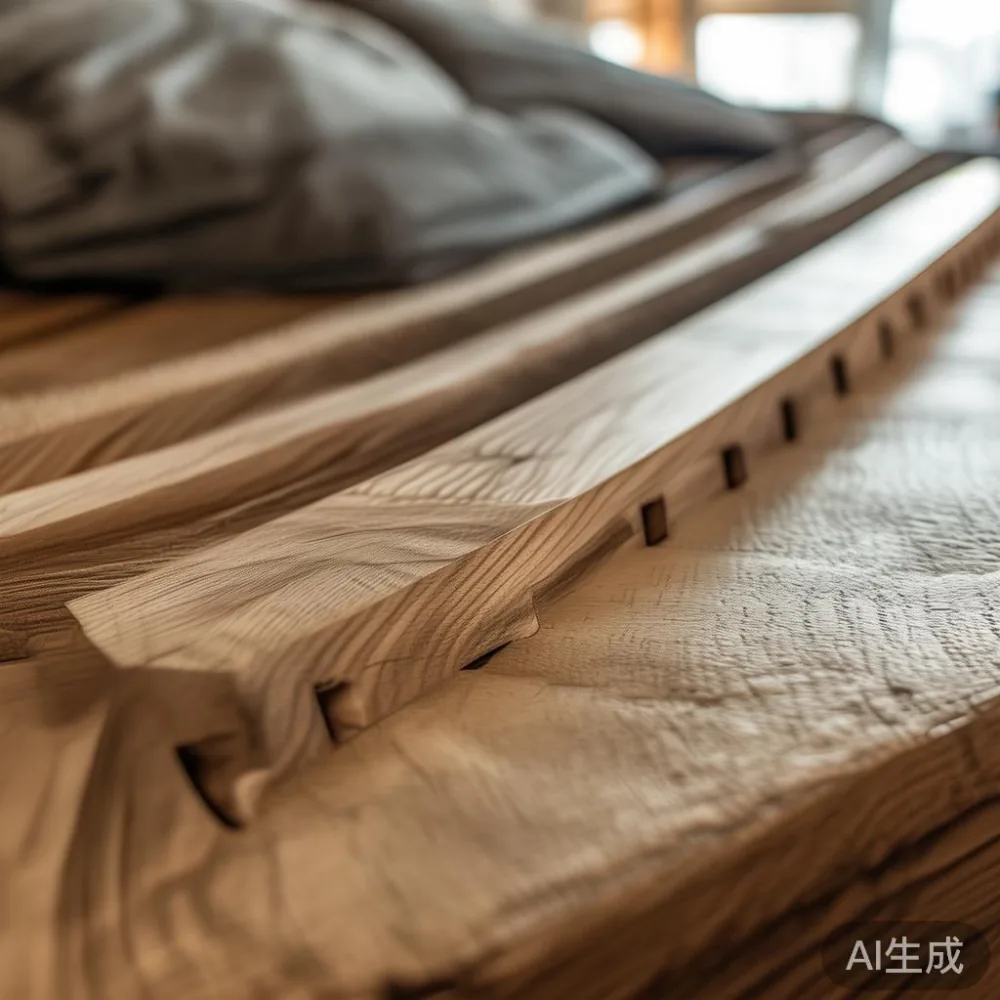
1. Warranty term in years, per component. A 10-year structural warranty paired with a 1-year finish warranty is honest. A blanket "10-year warranty" with no breakdown usually hides the fact that finish, hardware, and slats are only covered for 12 months. Reputable makers print a small table: structure 10 years, finish 3 years, hardware 2 years, slats 1 year.
2. Labour and shipping costs. A warranty that covers "defective parts" but not the SGD 120 to SGD 280 courier fee to ship a replacement side rail from Guangzhou to Singapore is a warranty you will never claim. Read whether labour is included; international brands often ship the part free but bill you SGD 80 to SGD 150 for the carpenter's call-out.
3. Claim response window. Look for a stated number of working days — 7, 14, or 30 — within which the maker will acknowledge a claim and dispatch a solution. Anything that simply says "promptly" without a number is too vague to enforce.
4. Proof-of-purchase requirement. Keep the original tax invoice, the delivery note, and the warranty card. In Singapore, missing the invoice can void a claim even within the warranty period, because Consumer Protection (Fair Trading) Act 2003 puts the burden of proof on the buyer when dealing with cross-border sellers.
Singapore-specific traps: HDB lifts, corridor turns, and monsoon humidity
A Tampines HDB lift door typically measures 80 cm wide by 200 cm tall, and the internal lift car is roughly 140 cm deep. A queen-size solid wood bed frame disassembled into its four side rails, slats, and headboard will usually fit, but a 2.2-metre American light luxury wardrobe will not fit vertically and rarely fits horizontally either. Last month I watched two movers in Punggol take 45 minutes to angle a wardrobe through a 90-degree corridor turn outside a unit on the 9th floor; the wardrobe survived, but the paint on the corridor wall did not. Check the unboxed dimensions against your lift, not against your living room, and ask the seller to confirm each carton weight in kg — anything over 35 kg per box becomes a two-person carry and may incur an SGD 80 surcharge by the corridor rules of some condos.
Humidity is the silent killer of solid wood. Singapore's monsoon season pushes indoor relative humidity above 75% for weeks at a stretch, even with air-conditioning running 24/7. A bed frame made from rubberwood or ash that has been kiln-dried to 8% moisture content will absorb and release moisture slowly; one dried to 12% will cup and twist within a year. Ask for the moisture content on the maker's spec sheet — and if they cannot tell you, walk away. Similarly, a marble table in a non-air-conditioned balcony will develop surface micro-fissures within six months; warranties almost never cover those.
The free-shipping threshold that quietly costs you money
Many cross-border sellers advertise free shipping above a certain order value, often US$350 or roughly SGD 470 at today's rate. The figure looks generous until you realise that the threshold is calculated before the 9% GST, before the SGD 60 lift-arrival surcharge, and before the SGD 40 stair-climb fee per floor above the 3rd. A "free shipping" order of exactly US$350 can quietly become SGD 610 at your door. I once ordered a solid wood sofa and two nightstands for a client in Bedok; the cart showed SGD 540 with "free shipping" ticked, but the final bill arrived at SGD 712 after surcharges and GST. The lesson: always read the shipping policy line by line, ask for the GST-inclusive landed figure in writing, and budget at least 12% above the cart total for true delivery to your bedroom door.
The 14-day return window: what really happens
Singapore's Consumer Protection (Fair Trading) Act gives you cancellation rights for direct sales, but online cross-border purchases are treated differently. A 14-day return policy sounds protective, but read the conditions: is the item in its original packaging, has it been assembled, and who pays the return shipping? A 60 kg disassembled bed frame returned from a Punggol HDB to a Foshan warehouse costs roughly SGD 1,100 in freight alone, and most sellers deduct that from your refund. A wiser approach is to ask the seller for a 7-day "defect-only" exchange plus a 48-hour swatch approval on the wood finish before shipment, both of which serious makers will agree to in writing. MIDHILL, for instance, allows customers to confirm colour samples by courier before a bed frame leaves the workshop — a small step that prevents most of the regret purchases I have seen in the past five years.
Questions to ask the showroom before you sign anything
Walk into any showroom with a printed list. Ask: "What is the moisture content of the kiln-dried solid wood?" "Is the slat system structural or consumable?" "Are labour and return shipping included in the warranty?" "What is the claim response window in working days?" "Can you show me a picture of vs solid wood examples so I can see the grain and joint detail before I commit?" A confident salesperson will answer every question with a number; a vague one will wave the brochure. Your purchase is also a 10- to 20-year relationship with a piece of furniture that will hold your mattress, your clothes, or your dinner guests — so the 20 minutes spent interrogating the warranty will pay you back every single night you sleep on a solid wood bed frame that was built to last.
Putting it all together for a Singapore purchase
The best warranty for a Singapore homeowner is short, specific, and written by a maker who has shipped to local HDBs and condos for at least a decade. Look for a 10-year structural term, a 3-year finish term, named labour coverage, a 14-day claim window, an SGD-inclusive shipping policy that lists lift and corridor surcharges, and a clear 14-day return clause. Cross-check every figure against the invoice and the GST calculation, keep the moisture content on file, and you will own a bed frame, dining table, wardrobe, nightstand, or marble table that will outlast two lease cycles and at least one renovation. That, more than any brochure slogan, is what a real warranty is supposed to deliver.