What Actually Drives the Price of Solid Wood Furniture
I spent the morning of a wet Tampines Tuesday walking through MIDHILL's factory floor in Foshan with Mr. Chen, who has been inspecting solid wood furniture for nineteen years. We stopped at two almost-identical looking bed frames — both ash wood, both queen-sized, both with woven cane headboards. One was priced around SGD 1,480. The other, around SGD 3,260. I asked him to show me, in plain language, what was hiding between those two numbers. Two hours later my notebook was full of measurements I had never once thought about when shopping for a bed frame, a dining table, or a wardrobe.
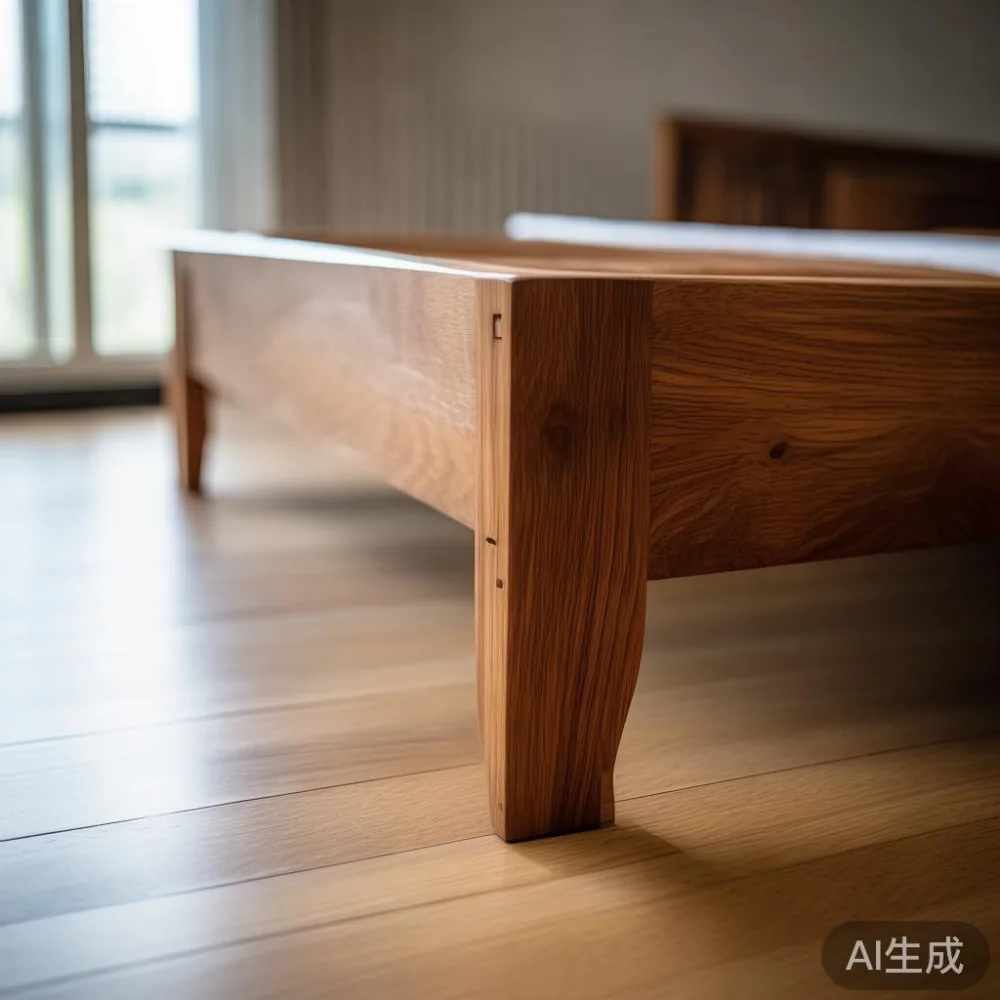
If you live in a Punggol BTO or a Bedok resale flat and you have just started browsing for a solid wood bed frame, you already know the spread is wild. The same shape can be SGD 900 or SGD 4,200, and nobody explains the gap. This article walks through the eight factors that actually move the number — board thickness, wood species, joinery, hardware, finishing, cane and rattan work, hardware brand, and what happens after you pay (warranty, delivery up a Singapore corridor, GST). I will use concrete measurements and SGD figures throughout so you can match what you read here to what you see on a product page.
How much does wood type really change the price of a solid wood bed frame?
Wood species is the single biggest driver, and the gap between them is wider than most Singapore shoppers expect. The ash wood used in many French light luxury and Italian light luxury ash wood rattan furniture collections is a mid-range hardwood — strong, pale, takes stain well, and ships at roughly USD 1,200–1,600 per cubic metre (CIF Foshan, late 2024). Rubberwood, by contrast, is a Southeast Asian plantation timber that runs around USD 450–650 per cubic metre. That is a 2.5x to 3x spread at the raw-material level before a single cut is made. A queen bed frame in solid ash typically retails between SGD 1,600 and SGD 3,400 in Singapore; the same shape in solid rubberwood typically lands between SGD 700 and SGD 1,400.

Beyond ash and rubberwood, you will also see oak, walnut, and beech in the light-luxury segment. White oak runs USD 1,800–2,400 per cubic metre and is what most American light luxury dining tables and bed frames are built from. Walnut, used in post-modern light luxury pieces, sits at USD 3,000–4,200 per cubic metre, which is why a walnut nightstand is often priced higher than an oak dining table of similar size. Teak is even further up the ladder, but most Foshan factories reserve it for outdoor or bathroom pieces rather than indoor bed frames, dining tables, or wardrobes.
Is French king bed furniture worth it?
Yes, if you care about three things: thicker boards, hand-finished cane, and a kiln-drying process that protects you from Singapore humidity. A French-style king bed frame in solid ash with a rattan-cane headboard typically uses 4 cm side rails, 5 cm legs, and 2.5 cm slats, compared with 2.5 cm rails, 3 cm legs, and 1.8 cm slats on a standard model — and that extra 1.5 cm of solid wood on every load-bearing face is roughly 35 kg of additional material on a king-size frame. That extra weight is what stops the bed from racking after year three, which is the single most common failure I see on cheap imported bed frames.
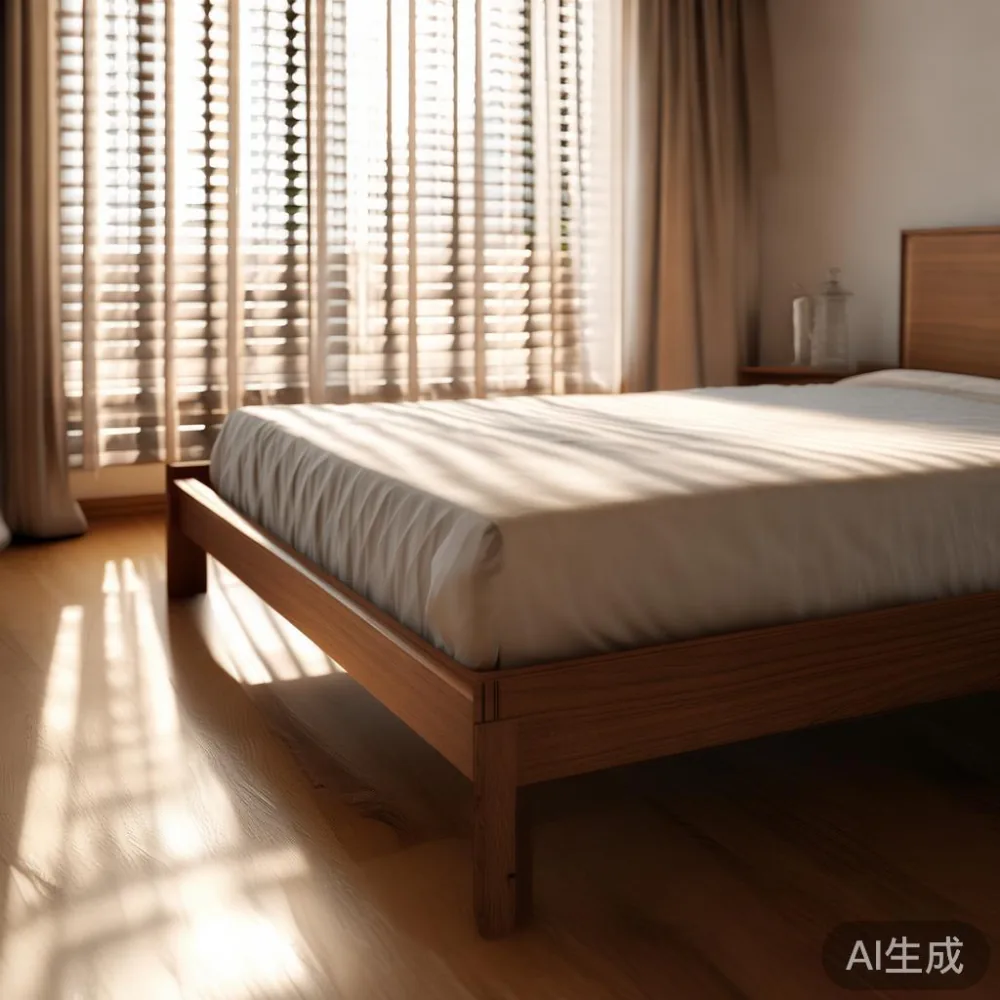
The rattan work on a proper French light luxury piece is hand-woven, not machine-woven. A machine-woven cane panel takes about 12 minutes. A hand-woven one takes 90 to 120 minutes, and a skilled weaver finishes two to three headboards a day. When you are paying for the difference between an SGD 1,200 king bed frame and an SGD 3,200 one, roughly SGD 350–500 of that gap is paying for hand-weaving labour alone. The rest pays for the thicker boards and the kiln-drying.
Why does a "solid wood" bed frame sometimes feel lighter than expected?
Because not all "solid wood" is created equal. The honest version is one piece of timber from face to face — a 4 cm ash side rail cut from a single board. The dishonest version is finger-jointed small blocks glued together and sold as "solid." Finger-jointing is a legitimate technique and is widely used in good nightstands and wardrobes, but it should never be the only technique on a load-bearing bed frame side rail. When I toured the MIDHILL floor, Mr. Chen pulled two boards out of a scrap bin and asked me to feel them: the finger-jointed sample was 18% lighter for the same dimensions, and a quick knock test showed a duller thud, which usually means the glue lines are doing some of the structural work.
Weight is the easiest proxy you have as a shopper. A solid ash queen bed frame in honest construction should weigh between 55 kg and 75 kg. If a listing says "solid ash queen" and the shipping weight is 38 kg, something is off — either the wood is thinner than advertised, or the side rails are finger-jointed small blocks rather than single-cut boards. Same rule for dining tables: a 1.8 m solid ash dining table should weigh 65–90 kg. Anything under 50 kg on the spec sheet is a red flag.
How does Singapore delivery change what you actually pay?
Singapore has constraints that buyers in the US or Australia do not think about. Most HDB doorframes are 80 cm wide; most condo service lift openings are 90 cm by 210 cm; corridor turns in older Bedok and Tampines blocks can be tight at 1.2 m. A king bed frame in one flat-pack box often arrives with a single piece measuring 218 cm long, and that will not fit through an HDB doorframe lying flat. Factories that know Singapore either split the headboard into two panels (which adds 20–30 minutes of assembly but solves the access problem) or pre-build and ship assembled, which adds roughly SGD 280–450 to the delivery bill.
Free shipping over US$350 is common among Foshan exporters, and on a king bed frame that means your sea freight is in effect covered. What is not covered is the last mile — bringing the boxes from the ground floor to your flat. In Singapore that typically runs SGD 80–180 for a bed frame, SGD 60–120 for a dining table, and SGD 40–80 per wardrobe or nightstand. Add the 9% GST on the CIF value, and a SGD 2,400 bed frame from a Foshan supplier becomes roughly SGD 2,840 landed at your door. Plan for that, not for the sticker price.
What does a 10-year warranty actually cover on a solid wood bed frame?
Read the fine print before you trust the headline. Most "10-year structural warranty" statements cover joint failure — the side rails pulling away from the headboard, the slats cracking under load, the legs snapping at the tenon. They do not cover finish wear, fading, water rings, or damage from Singapore's 80–95% humidity if the piece is in a non-air-conditioned space. A serious supplier will also offer lifetime refinishing: you ship the piece back (or they collect in Singapore), and they sand and re-oil it. MIDHILL, for one, runs a refinishing programme that charges only the freight for pieces under eight years old, which over the life of a bed frame saves you roughly SGD 600–900 compared with buying new.
Hardware is the silent warranty claim. The cheap bed frames I have seen fail in Singapore almost never fail in the wood — they fail in the metal. A pre-installed cam lock from a no-name zinc supplier will strip out within three years under the repeated lateral load of two adults turning in their sleep. Better bed frames use steel corner braces plus wooden corner blocks glued and screwed — that combination is what makes a 10-year warranty defensible for the factory. Look for that detail in the assembly manual before you buy.
How long should a solid wood dining table or wardrobe last in Singapore?
A solid ash or oak dining table should last 20–30 years in a Singapore home if you keep it air-conditioned and out of direct afternoon sun through a west-facing window. I have a colleague in Punggol whose parents still eat on the same teak dining table they bought in 1994 — thirty years of daily family meals, three kids, and a series of large dogs, and the top has been re-oiled maybe five times. A wardrobe in solid wood outlasts most other furniture categories because it lives in a low-light, low-traffic corner of the bedroom; the realistic lifespan is 25–40 years. A marble table, by contrast, has a different failure mode — chips and staining rather than structural — and usually needs a professional polish every 8–12 years in a Singapore household.
Nightstands tend to be replaced more often than any of the above, usually because the style changes before the structure fails. A solid wood nightstand should still be functional after 15 years; the average replacement cycle in Singapore is closer to 7–9 years because people want a new look. If you are buying a nightstand as a long-term piece, pay the extra SGD 200–350 for solid construction rather than veneer — you will save money on the second replacement.
How can you tell a well-made bed frame before you buy it online?
Five things, in this order. First, ask for the dry weight of the packed frame and divide by the claimed wood volume — if the math does not work out to between 620 kg/m³ and 750 kg/m³ for ash or oak, the boards are thinner than advertised. Second, ask whether the side rails are single-cut or finger-jointed; for a bed frame side rail, the answer should be single-cut. Third, ask for a photo of the underside of the slats; you want to see kiln-dried timber with a moisture content between 8% and 12%, and you want to see that the slats sit in a routed groove rather than just screwed from above. Fourth, ask how the headboard is attached — dowels plus steel corner braces plus a wooden corner block is the right answer, and only that answer. Fifth, ask what happens if a slat cracks in year four; a serious factory replaces individual slats, a careless factory tells you to repurchase.
Finally, look at the warranty, the refinishing policy, and the return window as a single package. A 14-day return, a 10-year structural warranty, and a lifetime refinishing option together tell you the factory is confident the bed frame will be in your Tampines or Punggol home for at least a decade. That confidence is built into the SGD figure you see on the product page — and once you understand what it pays for, the difference between an SGD 1,200 bed frame and an SGD 3,200 one stops looking mysterious and starts looking like a series of decisions you can actually evaluate.