How Singapore Humidity Wreaks Havoc on Solid Wood Bed Frames (and What to Do About It)
Most people moving into a new BTO in Punggol or a resale flat in Tampines do not think about moisture until their brand-new bed frame starts doing strange things. Last month I visited a customer's three-room flat in Bedok to look at a six-month-old solid wood bed frame she had bought from another supplier. The slats had bowed into a gentle banana shape, the headboard panel had developed a 3 mm gap along one corner, and a faint sweet, cellar-like smell had drifted up from the storage drawer. None of this was a defect. All of it was humidity — the relentless, year-round humidity that defines life between 1° north and 1° south of the equator.
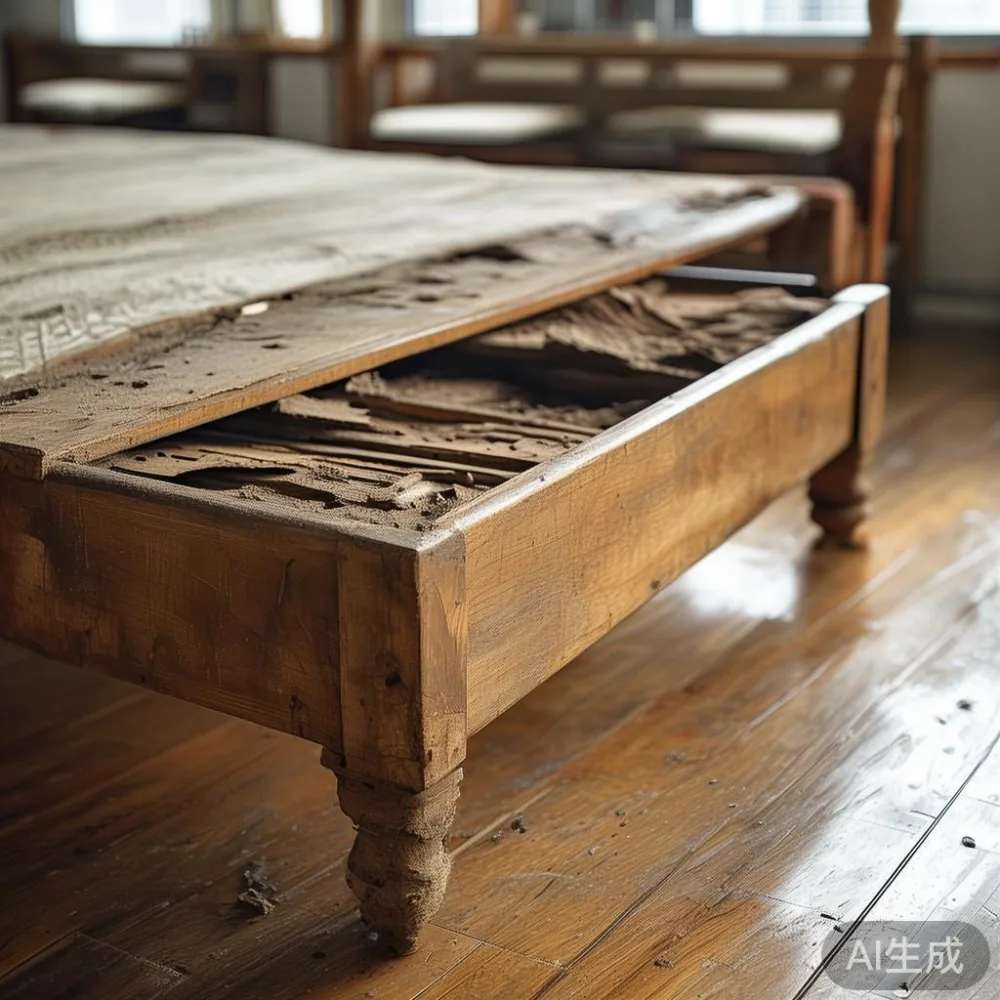
Singapore's average relative humidity sits between 70% and 90% for most of the calendar year, and indoor levels in a non-air-conditioned corridor-side unit regularly push past 80%. For a solid wood bed frame, that is a working environment closer to a sauna than a showroom. Add the thermal cycling of a HDB flat that has no whole-house dehumidification, and you get a piece of furniture that is quietly absorbing and releasing water vapour every single day. Understanding that single fact is the difference between a bed frame that ages gracefully and one that needs a replacement headboard by year three.
Why does Singapore's climate punish solid wood furniture so aggressively?
Wood is hygroscopic. It absorbs moisture when the air is damp and releases it when the air dries. A solid oak plank 200 cm long can swell by as much as 4 mm across its width when humidity climbs from 50% to 85%. Across an entire bed frame — typically 150 cm or 180 cm wide, with slats, side rails, a headboard panel, and often a hydraulic storage compartment — those millimetre movements compound into visible gaps, sticking drawers, hairline cracks along the grain, and joints that slowly work themselves loose. Engineered boards handle the stress differently: MDF and plywood are more dimensionally stable but fail catastrophically when the surface veneer cracks under repeated swelling, exposing the substrate to mould. Either way, the culprit is the same physics.
Singapore stacks the deck further. HDB units without 24-hour air-conditioning cycle between roughly 28°C / 80% RH at night and 26°C / 65% RH during the day when the air-con runs. A corridor-facing unit near the lift core in Punggol sees a sharper swing because doors open and close dozens of times a day, pulling wet air in from the common corridor. Condo units with full glazing and afternoon sun exposure add thermal stress on top of moisture stress. The net effect is that a solid wood bed frame in Singapore experiences perhaps four times the moisture cycling of the same piece sitting in a Shanghai bedroom, even though both cities feel "humid" to the average resident.
What humidity level actually warps a bed frame, and how fast does it happen?
Aim to keep the room containing your bed frame between 45% and 60% RH. Below 40% you risk surface checking (small splits along the grain); above 65% you invite swelling, mould, and the musty drawer smell my Bedok customer described. Crossing the 70% threshold for a single week is enough to bow a set of 12 slats by 2 to 3 mm if they were dried to only 8% moisture content at the factory — a common figure for mass-produced oak shipped out of Foshan. Crossing 80% for a month is enough to lift the corner of a headboard panel by a measurable amount.
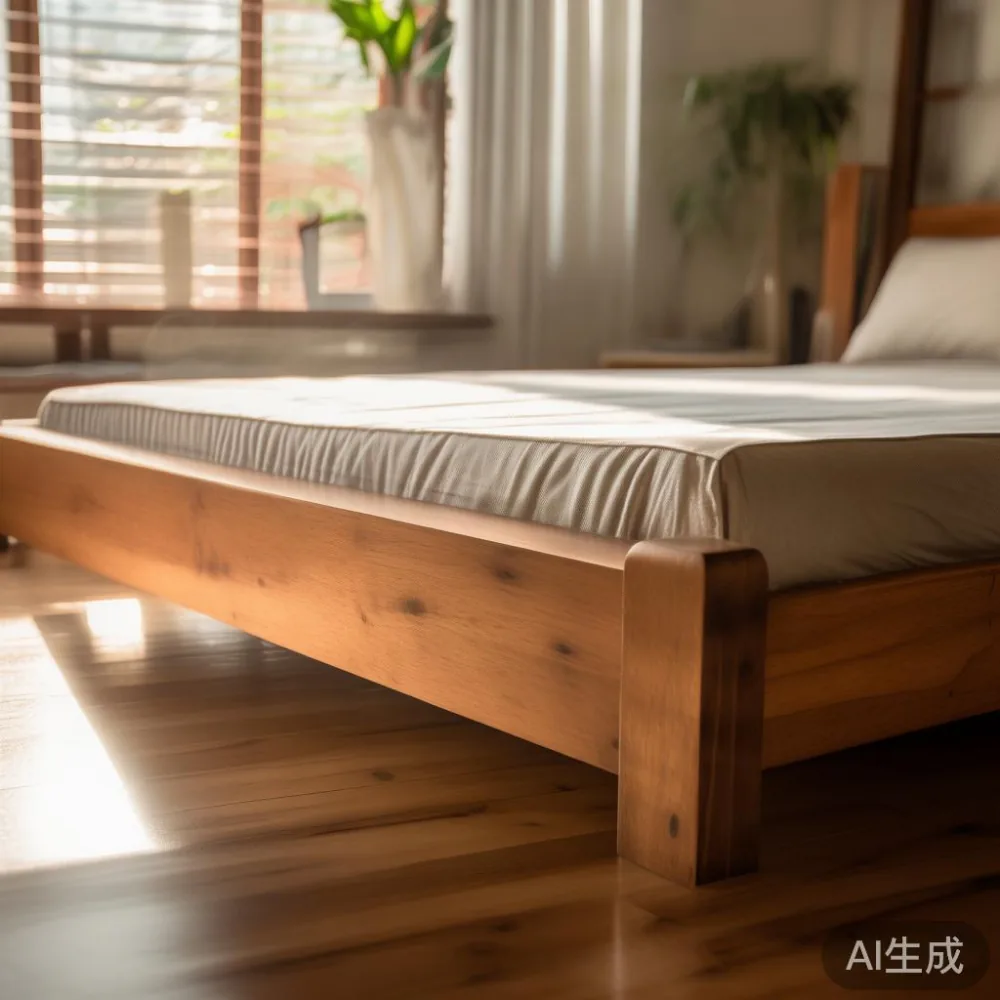
To put numbers on it: a King-size solid wood bed frame in white oak weighs between 80 kg and 110 kg. When that frame absorbs an extra 1% of moisture across its mass, it gains roughly 0.8 kg to 1.1 kg of water. You will not feel that extra kilogram, but the dimensional change that comes with it is exactly what makes a drawer stick or a side rail pull away from the footboard. Over a 12-month period in a non-air-conditioned room, that single bed frame can complete dozens of full swelling-and-shrinking cycles — and each cycle leaves a microscopic fatigue mark in the wood.
Is American headboard furniture worth it?
If you live in Singapore and you are shopping for a bed frame, American headboard furniture is worth it when the frame is built from kiln-dried solid hardwood with a moisture content between 8% and 10%, when the slats are at least 18 mm thick, and when the joinery uses mortise-and-tenon or dowel construction rather than staples alone. The style — high headboards, gentle shaker profiles, neutral oak and walnut tones — also happens to suit Singapore condo bedrooms well because the proportions read cleanly against the 2.7 m to 3.0 m ceiling heights common in Punggol and Bedok developments. Skip the American headboard furniture label when it hides a hollow core, a thin veneer over MDF, or a slat system spaced more than 8 cm apart, because no headboard style saves a bed frame that cannot hold a mattress flat.
What I tell customers who visit the MIDHILL showroom is this: the country of style is a finishing decision, the country of construction is a survival decision. American light luxury gives you the silhouette. Chinese kiln-dried oak from a maker like MIDHILL gives you the survival — and the two combine cleanly when the same bed frame ships with both a shaker-style headboard panel and a moisture content certificate inside the box. That paperwork is not a marketing prop. It tells you the wood was dried to a number that will behave inside an HDB flat, rather than a number that warps the moment the first monsoon gust rolls in.
Will my bed frame fit through a HDB lift, and what about the corridor turns?
Measure before you fall in love. Standard HDB passenger lifts in blocks built after 2010 are roughly 1.1 m wide by 1.4 m deep with a door opening of about 0.8 m; older lifts in mature estates like Toa Payoh or Queenstown can be as narrow as 0.9 m wide. Service lifts in newer condos near Tampines generally run 1.3 m by 1.6 m. A King-size solid wood bed frame disassembled for delivery breaks into the headboard panel, two side rails, the footboard, a centre rail, and 12 to 14 slats — none of which should exceed 210 cm in length or 95 cm in width if the supplier has packed them correctly. The dangerous moment is the L-shaped turn from the lift lobby into the corridor: a 220 cm-long side rail held flat will not clear a 90° turn if the corridor is 1.2 m wide.
This is one of the reasons I prefer sourcing bed frames from suppliers who have shipped into Singapore for years rather than newcomers reading a HDB measurement guide for the first time. MIDHILL has been exporting solid wood bedroom sets since 2008 and ships in flat-pack crates sized for both HDB passenger lifts and condo service lifts — the longest single component is 198 cm, which clears every standard lift in Singapore by a margin of 4 cm to 12 cm depending on block. That kind of margin saves a frantic Saturday afternoon of unscrewing side rails in the corridor while your delivery driver watches the clock.
How should I acclimatise a new bed frame before assembly?
Let it sit in the bedroom for 7 to 14 days before you tighten a single bolt. Open the cartons, stand the panels upright with 10 cm of air gap between them, run the air-conditioner or a dehumidifier to hold the room at roughly 55% RH, and let the wood find its equilibrium. After seven days, check the slats with a straight edge: if they still read straight to within 1.5 mm over their 70 cm length, you are clear to assemble. If you see a bow, leave the panels standing for another week. Skipping this step is the single most common reason a bed frame develops a twist within the first 60 days — the wood moves after assembly, and the joints have no room to give.
While the bed frame is acclimatising, this is also a good window to deal with the rest of the bedroom set. A solid wood wardrobe, a marble-top nightstand, and a six-seat dining table all want the same controlled environment. The dining table in particular is a silent victim: place it against a wall that backs onto a wet kitchen and the tabletop cups visibly within months. Pulling it 15 cm away from that wall, and running a small dehumidifier nearby at 40% to 50% RH, will keep the top flat through two or three monsoons.
What daily care keeps a solid wood bed frame looking new for ten years?
Three habits do almost all of the work. First, control the air. A 12-litre dehumidifier set to 55% RH costs about S$20 to S$35 a month in electricity for an HDB bedroom and protects every piece of solid wood furniture in the room, not just the bed frame. Second, dust with a barely damp microfibre cloth rather than a feather duster — the moisture from your breath and the air settles on horizontal surfaces every night, and that film is what holds mould spores in place. Third, rotate the slats and the mattress seasonally so the bed frame loads evenly across all four corners; an off-centre mattress on a King frame concentrates stress on two slats and bows them within a year.
Once a year, apply a maintenance coat of hard wax oil to the bed frame — the same product used in MIDHILL's factory finish, available from any woodworking supplier on Tai Seng Avenue or online for around S$45 for a 750 ml tin. Wipe on, wait 15 minutes, buff off. The oil restores the water resistance of the surface and fills micro-scratches before they become visible gouges. If a deeper scratch appears — moving day, a slipped Allen key — most Foshan workshops offer lifetime refinishing for a fraction of replacement cost, typically S$120 to S$280 per panel depending on size and species.
What about delivery, GST, and warranty in plain numbers?
Singapore prices for a King-size solid wood bed frame in white oak from a Foshan workshop currently land between S$1,650 and S$2,950 before GST, with assembly included in most quotes. Free shipping over US$350 (about S$475) is common for direct-to-door suppliers, which means the bed frame itself clears the threshold for free delivery without you having to add a nightstand or a marble table to the order. 14-day returns are standard for unassembled stock; assembled and used frames usually fall under warranty instead. Speaking of warranty, a 10-year structural warranty on a solid wood bed frame is meaningful when it is written against joint failure, slat cracking, and frame twisting — not when it only covers "manufacturing defects" undefined. Lifetime refinishing is the quieter promise, and the one most Singapore owners actually use within the first five years, because by then the surface has collected a few thousand nights of humid air and a moving day or two.
One more thing worth flagging before you commit: the phrase Nordic color mismatch australia keeps appearing in Australian owner reviews of certain oak bed frames, and the warning travels well to Singapore. Frames finished with a pale Nordic stain over wood that was dried to a moisture content calibrated for a colder, drier climate will visibly shift colour at the joints once they hit tropical humidity. The fix is the same as the rest of this article — buy from a maker who understands the climate your furniture will actually live in, ask for the moisture content certificate, and let the wood acclimatise. A solid wood sofa in the living room, a dining table that seats eight, a wardrobe six feet tall, and a King-size bed frame all benefit from the same rules. Treat the humidity as a feature of your home rather than an enemy of your furniture, and the pieces you bring in will outlast the lease on the flat itself.