Solid Wood vs Veneer Bed Frame in Singapore: A 5-Year Cost Breakdown
Last month I visited a friend in her new Punggol Waterway Woodcrest BTO, and we spent an entire afternoon arguing over her new bed frame. She had paid S$890 for a "solid wood" queen-size piece from a Jurong East furniture mall, and within eighteen months the side rail had cracked along the grain. The seller insisted it was "solid wood" because the outer faces were. The core was rubberwood with a 0.6 mm teak veneer. That conversation is the reason I wrote this guide — because in Singapore, where a Tampines 4-room HDB bedroom is roughly 12 square metres and a Bedok condo master bedroom might be 14, the bed frame is the single largest piece of furniture in the room, and the wrong choice costs you twice.
Why does the bed frame matter so much for a 5-year cost calculation?
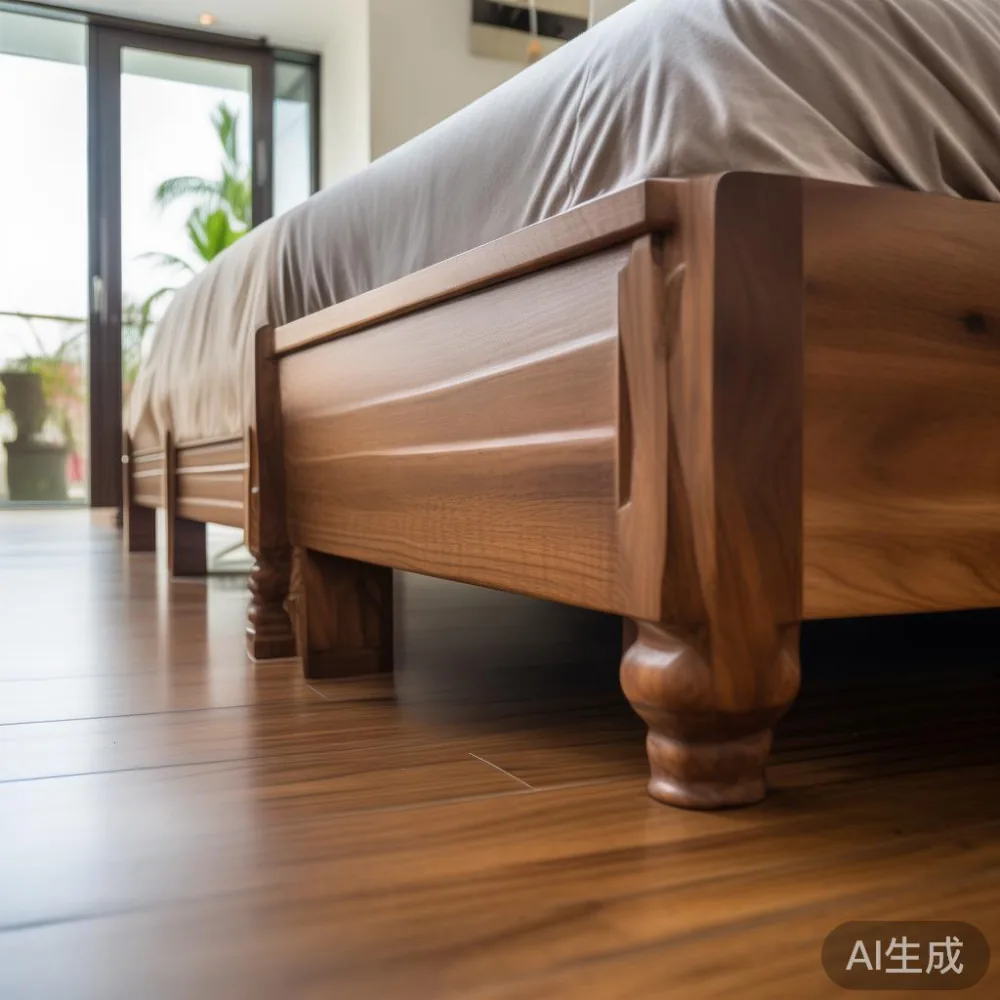
A bed frame is not just a piece of furniture. It is a structural commitment that holds 80–120 kg of human weight every single night, supports a mattress that costs S$1,200 to S$4,500, and frames the entire visual centre of your bedroom. If it warps, sags, or delaminates, you cannot sleep on it, you cannot sell your flat profitably with it in place, and you will almost certainly pay removal and disposal fees on top of a replacement. The 5-year window matters because most Singapore HDB leases still have 60+ years to run, and even a 99-year leaseholder is thinking about how their bedroom reads to a future buyer or tenant. A creaking, chipped, or peeling bed frame after year three will be the first thing a buyer's agent photographs for the listing.
I have walked through showrooms along Sungei Kadut, browsed Taobao listings at 2 a.m., and sat on the floor of three different MIDHILL display rooms over the past two years. MIDHILL is a Foshan manufacturer that has been exporting solid wood furniture since 2008 to more than 15 countries, and they back their bed frames with a 10-year structural warranty plus lifetime refinishing — a policy that is rare in this category and worth understanding when you run the numbers below.
What does "solid wood" actually mean versus "veneer" in a bed frame?
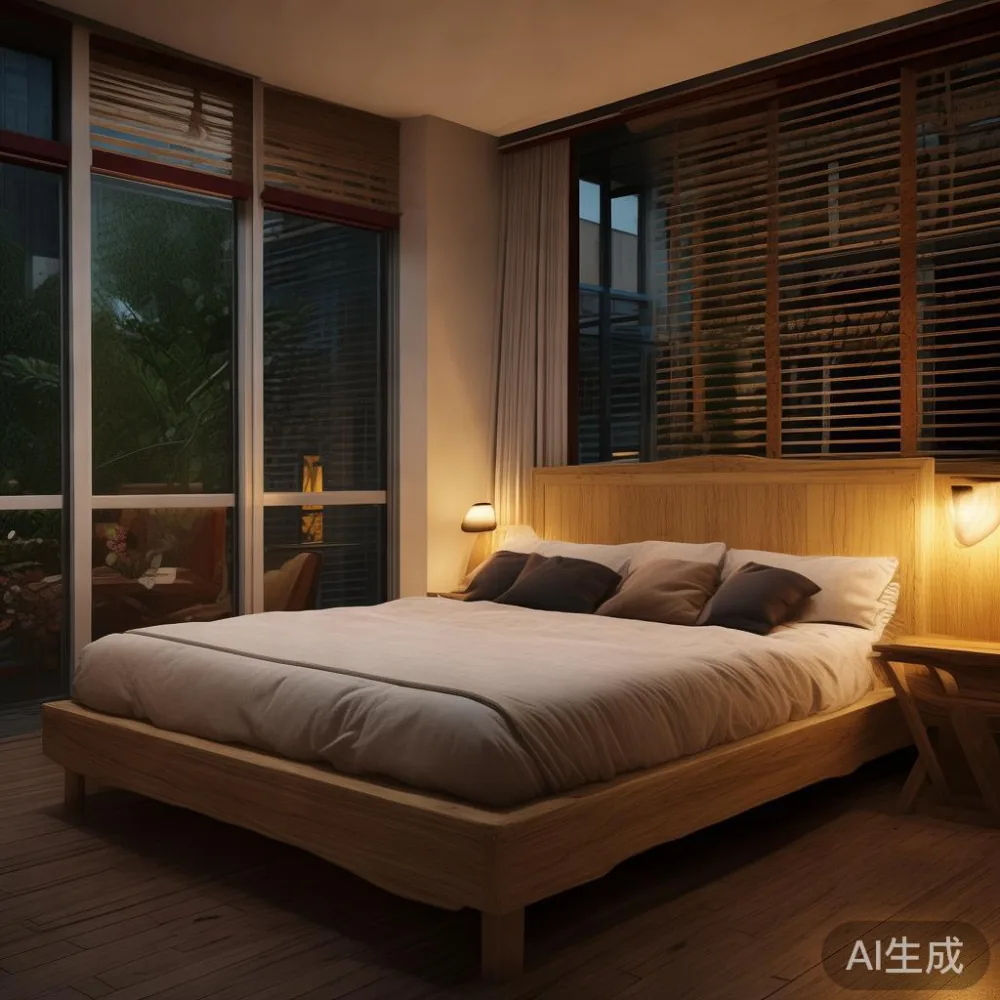
Solid wood, in the strict sense, means every load-bearing component of the bed frame — side rails, slats, headboard panels, legs, centre support beam — is cut from one piece of timber. Common species used by Foshan factories for the export market include oak, ash, beech, and walnut. A genuine solid oak queen bed frame typically weighs 55–75 kg. You can feel the weight when two movers carry it up the lift at your HDB block.
Veneer, on the other hand, is a 0.5–2 mm slice of attractive wood glued onto a substrate — usually MDF, particleboard, or a thin rubberwood frame. A veneer bed frame of the same queen size often weighs 28–40 kg. That weight difference is your first physical clue. The second clue is the price: if a queen bed frame in Singapore retails below S$700 and the seller claims it is "solid teak," it almost certainly is not. Genuine solid teak in queen size from a Foshan exporter lands in Singapore between S$1,650 and S$2,800, depending on slat count and headboard design.
How do the 5-year costs actually compare in Singapore dollars?
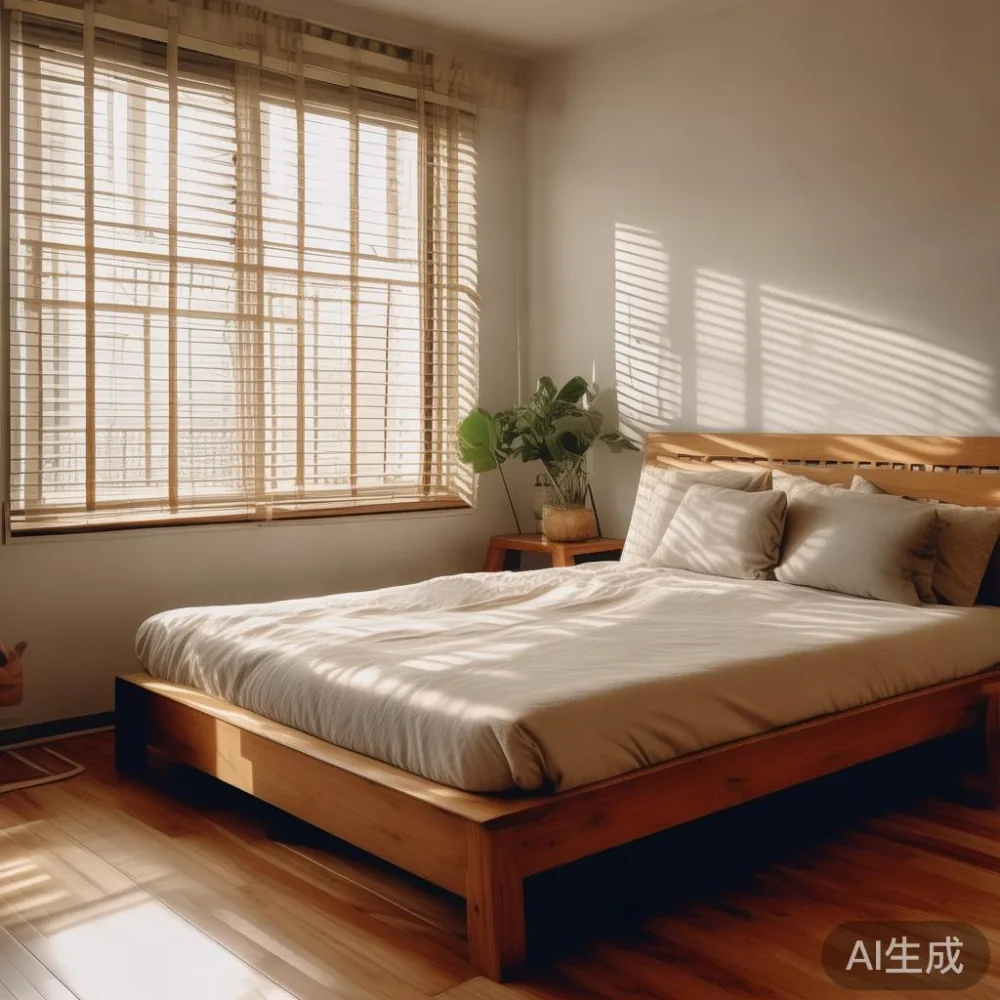
Let me walk you through three realistic Singapore households I have observed, with all figures in SGD including the 9% GST that took effect on 1 January 2024.
Scenario A: The budget veneer bed frame. A young couple in their late twenties buys a queen-size veneer bed frame from a local e-commerce platform for S$620, including GST. Delivery to a Tampines HDB on the 12th floor costs an additional S$60 because the lift is narrow and the box has to be tilted diagonally. Installation is free, but the slats are thin LVL (laminated veneer lumber), only 11 of them. Year 2, two slats crack and one side rail starts to peel. Year 3, the headboard veneer bubbles because of Singapore's 80–90% humidity. The couple replaces it with another S$640 unit. Total 5-year spend: S$1,320, plus roughly 6 hours of their weekend time on two assemblies and one disposal trip to the void deck. Disposal through a licensed bulky waste collector in Bedok or Punggol runs S$45–S$80 per trip.
Scenario B: The mid-range engineered "solid" bed frame. This is what my Punggol friend bought. The frame is rubberwood with a teak veneer face. Retail price S$890, delivery S$70 to a 14th-floor unit, slat count 14. Year 2, side rail cracks. Year 4, the headboard veneer lifts along the top edge from humidity cycling. Year 5, the couple buys a replacement queen bed frame for S$1,050 from a different brand. Total 5-year spend: S$2,010, plus one S$60 disposal fee and a can of wood filler that did not really fix anything.
Scenario C: The solid wood bed frame from a Foshan exporter. A 38-year-old professional in a Punggol executive HDB orders a queen-size solid ash bed frame, slat count 18, centre support beam included. Landed price in Singapore through a Singapore-based distributor of MIDHILL: S$2,180 including GST and delivery to the 9th floor. No disposal in year 5 because the frame is still structurally perfect, only the surface has light scuffs that the lifetime refinishing service handles for a S$120 collection-and-redelivery fee. Total 5-year spend: S$2,300. If she sells the frame in year 6 for S$400–S$600 on Carousell (genuine solid wood holds 20–30% of retail value in the Singapore secondhand market), her net 5-year cost drops to roughly S$1,700–S$1,900.
The arithmetic is uncomfortable for the budget option. The veneer bed frame was supposed to be cheaper, but because it had to be replaced once, the 5-year cost lands within S$400–S$600 of the solid wood alternative — and the solid wood option still has years of useful life ahead.
What hidden costs do Singapore buyers forget to add?
Three costs catch people out repeatedly. First, lift access. Most HDB passenger lifts in Tampines, Bedok, and Punggol blocks have internal dimensions of about 1.1 m wide by 1.4 m deep with a 2.1 m ceiling. A flat-pack queen bed frame in a 215 cm long box fits, but a fully assembled solid wood bed frame in a crate will not. If you order pre-assembled delivery from certain brands, the movers charge a S$120–S$180 hoisting fee to bring it up the service lift or through the staircase. Second, mattress damage. A sagging bed frame destroys even a premium mattress in two to three years. A S$2,200 mattress on a S$620 frame is false economy. Third, refinishing. Veneer cannot be sanded and refinished the way solid wood can. Once the surface fails, the only path is replacement.
How do I choose a loveseat for a home office?
Choose a loveseat for a home office by measuring your desk-to-wall clearance first — a standard 150 cm loveseat needs at least 180 cm of wall length and 90 cm of pull-out depth to recline without hitting a filing cabinet — and then match the frame material to the room's existing bed frame and wardrobe so the office reads as part of the same home rather than a separate flat-pack zone.
The reason I am putting a loveseat answer inside a bed frame article is that buyers in Singapore very often refresh the bedroom and the home study in the same 18-month window, and the material choice should be consistent. If your bedroom carries an American light luxury feel — think warm oak, soft linen, matte black hardware — then a loveseat in the same species reads as a deliberate choice. If you have gone French light luxury with curved headboards and tapered legs, the loveseat should echo those curves. Mixing a budget veneer bed frame with a solid walnut loveseat is the most common visual mismatch I see in Punggol and Sengkang resale flats during pre-listing consultations.
Does humidity in Singapore really destroy a bed frame in five years?
Yes, and the data behind this is straightforward. Singapore's average relative humidity sits between 78% and 86% year-round, with daily peaks above 90% during the December and January monsoon transitions. Engineered wood absorbs and releases moisture through every exposed face and every cut edge. MDF swells by roughly 0.5% across its width when humidity rises from 60% to 85%, which is enough to break a glue line along a veneer seam. Solid wood moves too, but it moves as one continuous piece along the grain, so the structure stays intact even when the surface expands or contracts. This is why every MIDHILL bed frame I have inspected in the Tampines and Woodlands showroom has its slats individually pocketed into the side rail rather than glued — the slats need room to flex without splitting the frame.
If you live in a ground-floor HDB in Bedok Reservoir or a high-floor unit that faces the sea in Sentosa Cove, the humidity picture is sharper. I tell these buyers to keep a small dehumidifier running in the bedroom for 4 hours a day and to pull the bed frame 8–10 cm away from the external wall so air can circulate behind the headboard. That single habit extends the life of any bed frame, solid or veneer, by two to three years.
How long does delivery take from a Foshan factory to a Singapore address?
For a stocked queen solid wood bed frame, expect 18–28 days from order to doorstep in Tampines or Punggol. Foshan to Singapore by sea is 5–7 days, customs clearance at PSA adds 2–4 working days, and last-mile delivery within Singapore takes another 3–7 working days depending on whether your block has a loading bay booking system. MIDHILL ships out of Shenzhen or Guangzhou ports and consolidates weekly. Custom orders — non-standard sizes, special finishes, integrated bedside nightstands — push the timeline to 35–55 days. The free-shipping threshold at most Foshan-to-Singapore distributors sits around US$350, which converts to roughly S$470, and most queen bed frames clear that bar on their own, so the S$60–S$120 Singapore delivery fee is the only local charge you will see.
What about the dining table, wardrobe, and nightstand — should they match the bed frame?
For visual coherence, yes, the species and finish should at least be in the same family. A solid ash bed frame pairs naturally with an ash dining table and ash-fronted wardrobe; oak pairs with oak. A marble table is the one exception — because stone reads as a different material family, a marble table can sit comfortably next to either an oak or a walnut bed frame without clashing. Nightstands are the easiest piece to match because most Foshan exporters offer them as a set with the bed frame at a bundle price. MIDHILL, for instance, sells the queen bed frame with two matching solid wood nightstands for S$2,780 combined, which works out to about S$200 saving versus buying the nightstands separately. The same logic applies if you are also choosing a solid wood sofa for the living room — keeping the timber species consistent across the home reads as intentional rather than as accumulated purchases.
Is the 14-day return window enough to judge a bed frame?
Fourteen days is enough to catch manufacturing defects — uneven slats, cracked joints, missing hardware, wrong dimensions — but it is not enough to judge long-term durability. By the time a side rail fails or a veneer seam lifts, you are well outside the return window. This is exactly why the warranty terms matter more than the return policy for a bed frame. A 10-year structural warranty, such as the one MIDHILL provides on its solid wood bed frames, is the contractual signal that the manufacturer expects the product to outlast that window by a comfortable margin. A one-year warranty on a veneer bed frame is, in effect, an admission that the product is unlikely to survive year three. Read the warranty document, not the marketing page, before you commit.
So which bed frame should a Singapore buyer choose?
If you are renting a room in a Toa Payoh HDB for 12–24 months, a budget veneer queen at S$500–S$700 makes pragmatic sense because you will not recoup the solid wood premium when you move out. If you are a HDB owner in Tampines, Bedok, or Punggol planning to stay five years or more, the math in this article shows that a S$2,000–S$2,400 solid wood bed frame from a Foshan exporter will cost less over five years than a pair of budget replacements, will hold 20–30% of its value on the secondhand market, and will not cost you a mattress. Run the numbers for your own floor plan, your own lift access, and your own humidity exposure, but do not let the lower sticker price on a veneer bed frame fool you into thinking you are saving money. You are paying for the bed frame twice and disposing of it once.