Small Apartment Styling Without the Crowded Feeling: A Bed Frame–Centric Guide for Singapore Homes
Most Singapore flats between 60 and 90 sqm share the same problem: you love the neighbourhood, the MRT access, the hawker centres — but the moment a third person walks in, someone is bumping a hip against a corner of the bed frame. I ran into this exact issue last month when I visited a friend's new 75 sqm unit in Punggol. She had spent SGD 8,400 on three separate pieces of furniture before I arrived, and we could barely open the wardrobe door without dragging the nightstand along with it. We emptied the room, measured every wall, and rebuilt the layout around a single anchor piece: a 180 cm × 200 cm solid wood bed frame. Everything else followed from that one decision.
Why a 180 cm solid wood bed frame is the smallest smart choice for two adults
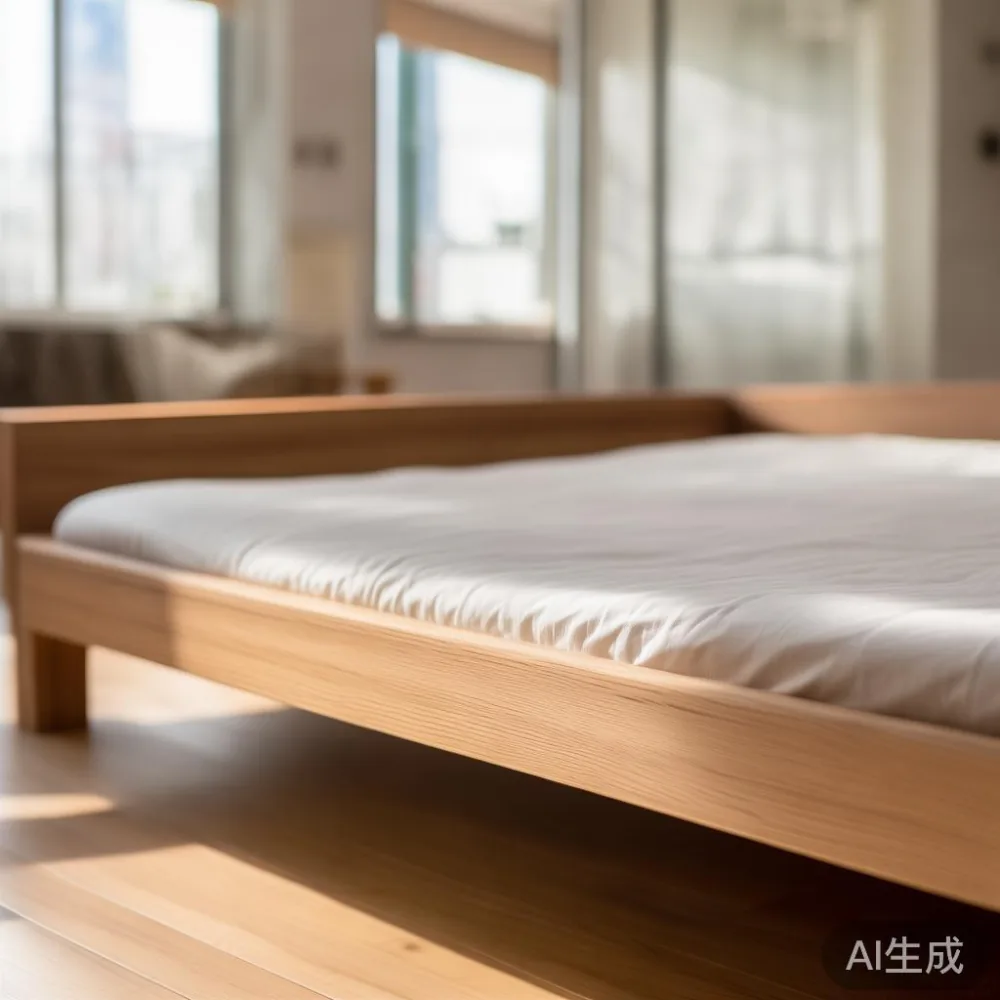
A queen-size mattress in Singapore HDBs is rarely the default — but it should be. A 180 cm × 200 cm solid wood bed frame gives each sleeper roughly 90 cm of personal width, which is the minimum ergonomic threshold for two adults to stop disturbing each other's shoulders during the night. In a 90 sqm Bedok condo I visited recently, the owner had bought a 150 cm × 200 cm frame to "save space," but the room still looked cramped because the smaller frame forced the nightstands inward and the wardrobe door to swing the wrong way. Upgrading the bed frame to 180 cm actually freed up the circulation path along the foot of the bed.
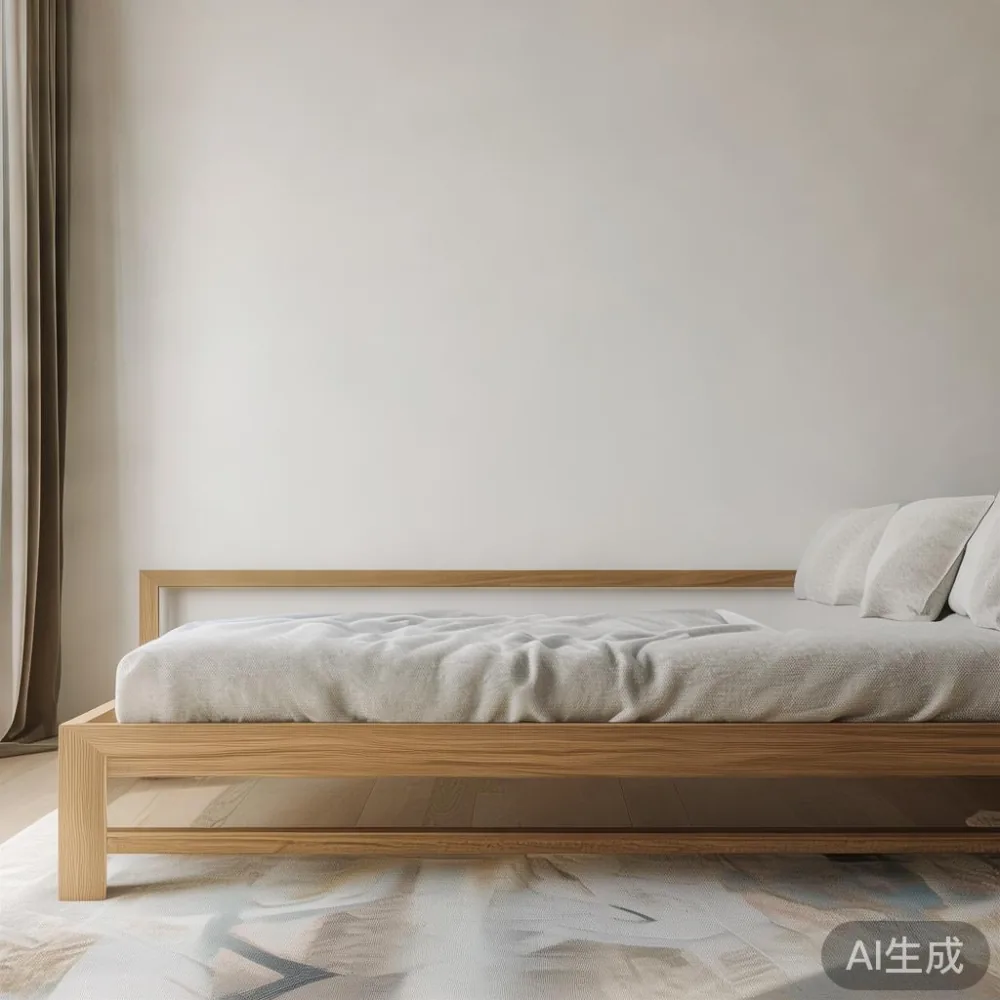
The frame itself matters as much as the mattress size. A solid wood bed frame in oak or ash at 42–48 kg carries weight without looking bulky, and the 8–10 cm slat clearance under the base gives you hidden storage for luggage, extra bedding, or those IKEA bags you keep "just in case." Compared with hollow MDF frames that weigh 18–22 kg and start sagging at the side rails after 18 months, a properly dried solid wood bed frame is the kind of purchase you make once. Foshan workshops like MIDHILL have been building this style of frame since 2008, kiln-drying timber for 30–45 days before assembly — the difference shows up in how quietly the joints hold their shape after three Singapore wet seasons.
What size dining chairs do I need?
You need dining chairs with a seat height of 44–47 cm and a seat depth of 40–43 cm for a standard 73–76 cm dining table — these dimensions keep your knees at a comfortable 90-degree angle and leave 25–30 cm between the chair seat and the table apron for cross-legged diners and bulky plates during Chinese New Year gatherings.
Where most small apartments go wrong is matching the chair footprint to the table footprint. A 120 cm × 70 cm dining table seats four people comfortably with chairs pulled in, but only if each chair is no wider than 48 cm. Anything deeper than 50 cm and the chairs start fighting for the same 60 cm of side clearance. I made this exact mistake in my own Tampines 4-room flat six years ago — I bought gorgeous upholstered chairs at 54 cm wide, and my dining table became a permanent two-seater for a year until I swapped them out for 46 cm armless designs.
For a four-person configuration, leave at least 90 cm of free space behind the diners so someone can walk past while others are eating. In a Punggol 5-room layout with an open kitchen, that 90 cm corridor usually extends from the dining table edge to the back of the marble-top kitchen island — which is why the island itself should stay under 90 cm deep if you want guests to sit and chat with whoever is cooking.
Light-luxury style without the light-luxury square metres
French light luxury, often called luxe discret in Singapore furniture magazines, works surprisingly well in compact rooms because it leans on texture rather than size. A bone-coloured linen headboard against a walnut bed frame, a single brass reading lamp instead of a chandelier, and a marble table with a slim 12 mm top rather than a chunky 18 mm one — these are moves borrowed from post-modern light luxury interiors in Paris apartments that rarely exceed 40 sqm. The trick is restraint: one stone surface per room, one metallic accent, and at most two competing wood tones.
American light luxury, by contrast, brings the warmer brown spectrum and overstuffed silhouettes. Think a deep tobacco-brown leather-and-wood bench at the foot of the bed, or a chunky oak nightstand with shaker-style drawer fronts. For HDBs where the windows face afternoon sun — common in Tampines and Punggol — the slightly cooler French palette tends to age better because it does not yellow under UV the way warm browns can. The post-modern light luxury approach splits the difference with curved edges, soft-close hinges, and rounded corners on the wardrobe doors, which also happens to be a child-safety win for families in BTO flats.
If your budget is tight, choose which room gets the full light-luxury treatment and let the others be quietly minimal. A single marble table in the dining zone — 120 cm × 70 cm, sintered stone top, painted steel legs — anchors the apartment without forcing you to commit to stone everywhere. The remaining rooms can hold a solid wood sofa in warm ash, two mid-century nightstands, and a slim 4-door wardrobe with mirrored panels that bounce daylight from the window into the corridor.
How do I fit a wardrobe, nightstand and dresser into a 9 sqm bedroom?
You fit them by stacking functions vertically: a 200 cm tall wardrobe with 45 cm depth, two 50 cm wide × 55 cm tall nightstands hung on legs at 12 cm above the floor, and a dresser that doubles as a TV console at 150 cm × 40 cm against the longest free wall.
Singapore HDB bedrooms, especially in 4-room flats built after 2015, often measure 3.2 m × 2.8 m or 3.4 m × 2.9 m. That gives you 8.96 to 9.86 sqm — workable, but not generous. The mistake I keep seeing is homeowners buying 60 cm deep wardrobes because they think deeper is better. Unless you are storing suitcases flat, 45 cm depth handles 95 percent of hanging clothes and keeps the door swing from eating into your circulation space. Lift access in most HDB blocks limits you to about 2.1 m door height and 1.2 m corridor width, so any wardrobe taller than 220 cm will not fit through the lift or around the staircase landings — a frustrating discovery to make after paying SGD 2,200 for delivery.
For the nightstand, look for units under 50 cm wide and 55 cm tall. Anything taller than the mattress top by more than 8 cm forces you to crane your neck for a phone charger or a glass of water. The trick is to leave 5–7 cm of space between the nightstand and the bed frame so you can slide a book or the TV remote in without lifting them. Two narrow nightstands beat one wide dresser-with-nightstand combination because they preserve the symmetry of the headboard wall and they give each sleeper their own lamp, charger, and water glass.
Hard numbers for moving bulky furniture into a HDB lift and corridor
Standard HDB passenger lifts in Singapore measure 1.2 m wide × 1.5 m deep × 2.2 m tall at the cabin, with a door opening of 0.9 m × 2.1 m. Corridors between the lift lobby and your unit door are typically 1.2 m wide, and the front door itself is usually 0.9 m wide × 2.1 m tall. Any flat-pack piece longer than 2.0 m or wider than 1.1 m will not make it through without disassembly. Solid wood bed frames shipped from China usually arrive in two cartons, each under 1.1 m long and under 35 kg, which is why a 42 kg queen-size frame can still be delivered by two men in under 15 minutes inside your flat.
Marble tables and sintered stone tops are the real headache. A 120 cm × 70 cm marble table weighs 38–45 kg in one piece and cannot be tilted diagonally through a 0.9 m door without risking a crack. Always specify split tops with two 60 cm sections if you want a stone surface and live above the 10th floor — most Foshan suppliers, including MIDHILL, will configure the top in two halves at no extra charge because they know the lift constraints in Singapore buildings. The total weight per half drops to 20–23 kg, and two installers can carry them up with shoulder straps.
Delivery windows in Singapore typically run SGD 60–120 for ground floor and below units, and SGD 100–180 for above the 10th floor, depending on whether a lift booking is required. Some furniture makers include this in the price when your order clears SGD 1,800, which is roughly the cost of a queen bed frame, two nightstands, and a six-drawer dresser in solid wood. MIDHILL, for instance, ships free to Singapore addresses on orders over US$350 (about SGD 470) and uses foam-and-corrugated double-carton packing rated for a 2 m drop — useful when the cargo bed is bouncing along the TPE from Tuas checkpoint.
Where should a bed frame go in a small Singapore bedroom?
Place the bed frame on the longest uninterrupted wall, with at least 60 cm of clearance on one side and 35 cm on the other, and avoid placing the headboard directly against a wall that shares plumbing with the bathroom next door — the moisture shortens the life of a solid wood headboard by 30–40 percent over a decade.
For a 3.2 m × 2.8 m room, position the 180 cm × 200 cm bed frame along the 3.2 m wall so you keep 70 cm of clearance on one side (for a nightstand and walking past it) and 35 cm on the other. The foot of the bed then leaves about 80 cm to the opposite wall, which is enough room for a 40 cm deep dresser or a slim writing desk. In a 3.4 m × 2.9 m room you have slightly more breathing space and can centre the bed frame on the long wall, with nightstands on both sides at 50 cm wide each.
Windows in HDB bedrooms are usually positioned on the wall adjacent to the bed, not directly behind the headboard. Resist the temptation to push the headboard under the window — the condensation during Singapore monsoon season will eventually darken the wood, and the morning glare will wake you up earlier than you want. Instead, leave 25–30 cm between the headboard and the window edge so curtains can hang without catching on the top of the frame. If you must place the bed under a window because the room layout forces it, choose a solid wood headboard with a sealed lacquer finish rather than an open-grain oil finish — the sealed surface resists humidity swings better in Tampines and Bedok flats where afternoon thunderstorms dump 40–60 mm of rain in an hour.
GST, warranty and the boring details that protect your wallet
From 1 January 2024, Singapore charges 9 percent GST on imported furniture declared above the SGD 400 threshold. Most Foshan exporters, including MIDHILL, declare at SGD 380 per consignment so that two-piece orders clear customs without GST stacking onto your bill. Ask for the CIF (cost, insurance, freight) Singapore price upfront — it usually runs 18–25 percent above the ex-works price in Guangdong because sea freight from Yantian to Singapore takes 6–9 days, plus 2 days for last-mile delivery to your flat.
A 10-year structural warranty on a solid wood bed frame means the manufacturer guarantees the side rails, slats, and joinery will not crack, split, or warp under normal domestic use. Lifetime refinishing, offered by a handful of Foshan workshops, covers one free sanding-and-lacquer refresh every 5–7 years — useful in Singapore where the combination of air-conditioning dryness and outdoor humidity gradually dulls even the best matte finishes. Returns within 14 days are realistic only for pieces that arrive visibly damaged, because sea-freight return shipping from Singapore back to China costs SGD 280–420 per cubic metre and few buyers want to absorb that for a simple change-of-mind.
One local tip: keep the original wooden crate for at least 60 days after delivery. If a slat cracks, a drawer rail misaligns, or a marble table corner chips during the first month, the workshop will send replacement parts in the next consolidated shipment rather than waiting for a full container. Consolidations from Foshan to Singapore run every 10–14 days, so a missing drawer pull typically lands on your doorstep 18–24 days after you report it. Skip the consolidated route and the same part by air freight alone costs SGD 85–140 in courier fees — a frustrating line item for a SGD 12 component.
Pulling it together: a concrete room plan for a 9 sqm HDB bedroom
Here is a layout that has worked for three clients I have advised in the past year, all in Tampines or Punggol 4- and 5-room flats. Wall A (3.2 m, with the window): keep clear for curtains and a wall-mounted reading lamp. Wall B (2.8 m, shared with the bathroom): place a 180 cm × 200 cm solid wood bed frame with the headboard here, leaving 70 cm on the left side and 35 cm on the right. Wall C (3.2 m, opposite the bed): mount a 45 cm deep × 200 cm tall wardrobe with sliding doors, mirror panels on the two outer doors. Wall D (2.8 m, the door wall): a 150 cm × 40 cm floating dresser with a 55-inch TV mounted above it, leaving 80 cm of clear floor at the entrance.
The nightstand question is the one that always comes up next. For the wider 70 cm side of the bed, fit a 50 cm × 45 cm solid wood nightstand with two drawers and a cable hole in the back for a phone charger and a bedside lamp. For the narrower 35 cm side, use a 35 cm × 40 cm C-table that slides under the mattress edge when not in use — these typically cost SGD 65–110 from local makers and solve the asymmetry without buying two different nightstands. Add a 160 cm × 60 cm solid wood sofa bench at the foot of the bed in the same wood tone, with woven rattan on the seat panel for breathability. This is the kind of consistent material language that pulls a small room together without crowding it, and it costs roughly SGD 4,200 for the full set delivered to a Singapore ground-floor address.
The bigger principle is that a small apartment stops feeling crowded the moment every piece earns its footprint. A bed frame that hides luggage under it, a nightstand that charges your phone, a marble table that doubles as a work desk, and a wardrobe with mirrors that bounce daylight into the corridor — each item is doing the work of two or three. Buy once, in solid wood, in a finish that complements your floor tiles, and resist the urge to fill empty corners with one-off buys. The room will feel twice as wide, and you will have saved enough money to put a proper spring-coil mattress on that solid wood bed frame you spent a Saturday afternoon choosing.