How Southeast Asian Humidity Affects Solid Wood Bed Frames
Humidity is one of the least visible forces shaping a solid wood bed frame in Singapore. Even when the air feels comfortable, timber can absorb moisture, expand, and contract by small amounts that are easy to overlook. Over months, those movements may appear as tighter joints, faint surface lines, or changes around the headboard and slats. In HDB flats and condominiums in Tampines, Bedok, and Punggol, the combination of year-round humidity, air-conditioning, balcony doors, compact corridors, and frequent luggage or laundry movements means that good furniture design must account for more than appearance.
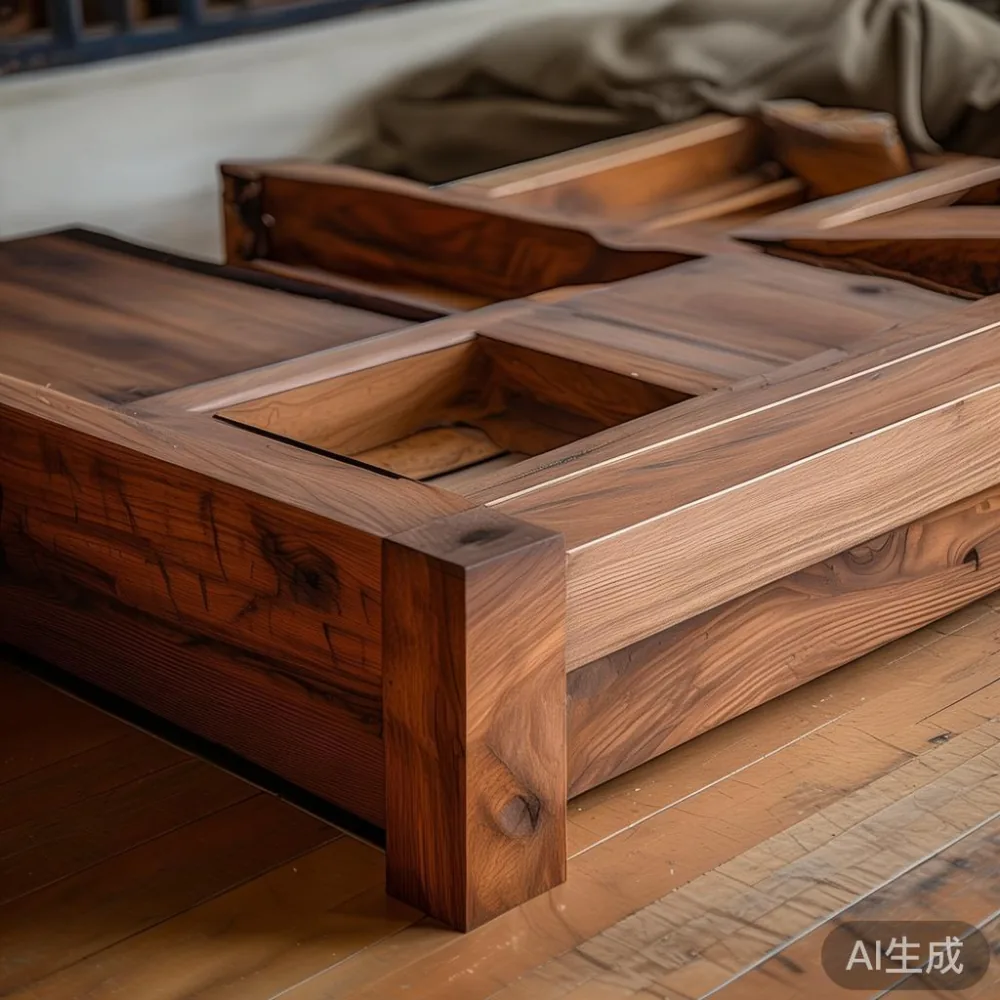
MIDHILL makes solid wood furniture in Foshan, China, and has supplied 15-plus countries since 2008. Its 10-year structural warranty and lifetime refinishing service provide reassurance for furniture exposed to tropical conditions. That does not mean timber needs no care. A stable indoor environment, sensible placement, and regular inspection remain important, especially for a bed frame assembled inside a narrow Singapore bedroom.
This guide explains how relative humidity affects solid wood bed frames, what Singapore homeowners should monitor, and how to select, deliver, and maintain a piece without mistaking normal seasonal movement for a defect.
Why does humidity make a solid wood bed frame move?
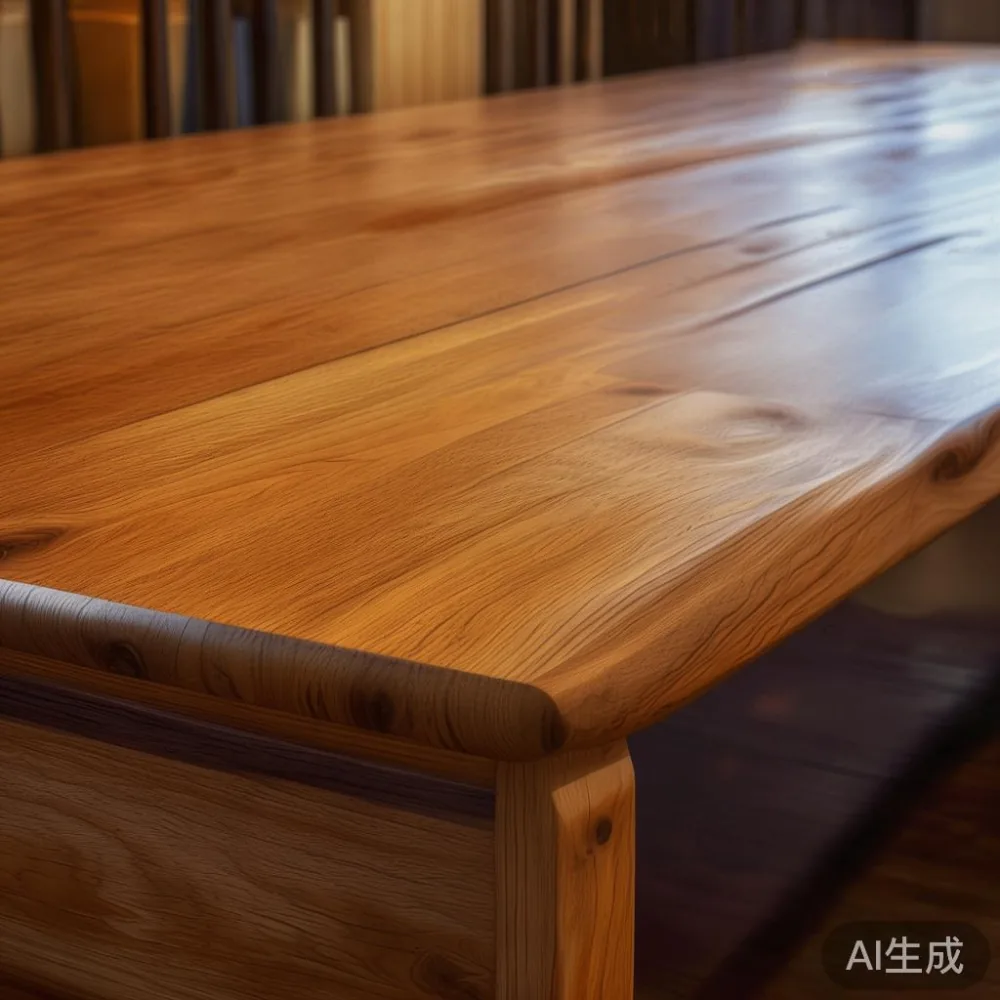
Wood is hygroscopic: it takes on moisture when the surrounding air is humid and releases it when the air becomes drier. The movement is directional. Tangential shrinkage and expansion across the grain can be noticeably greater than movement along the grain. A bed frame may therefore widen by roughly 2–6 mm across its rails or show a 1–3 mm gap at a joint while the dimensions remain close to the original measurements.
In Singapore, outdoor relative humidity commonly ranges from about 70% to 90% during wet periods, while well-controlled interiors often sit around 50% to 65%. Air-conditioned bedrooms can fall below 45% in the evening as the system cools and dehumidifies the room. Repeated cycling between these conditions can stress joinery, veneer, lacquer, and moving parts.
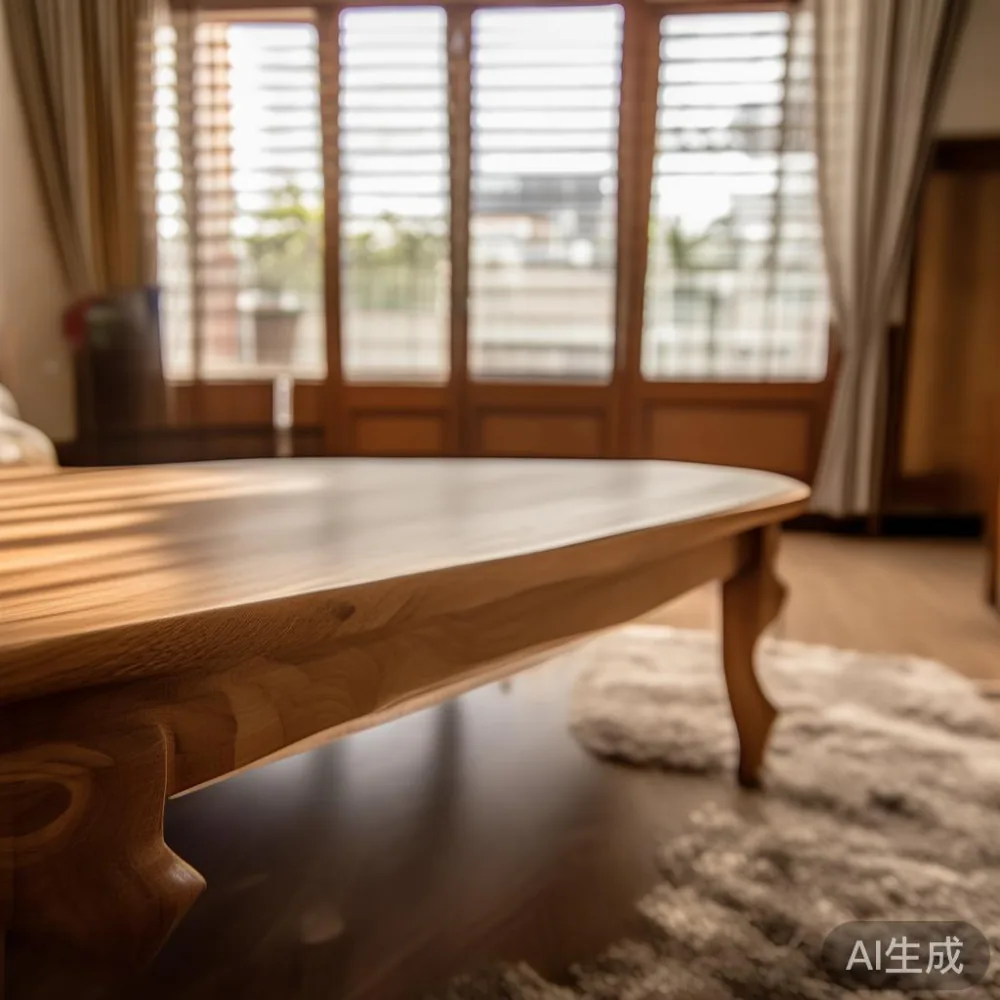
The risk is not simply that the bed frame will absorb water like a sponge. Sealed solid wood changes much more slowly. The main concerns are surface finish quality, joint design, moisture content at delivery, and whether the furniture has been conditioned for the destination. Solid wood can remain stable for years when these factors are managed properly.
Temperature also matters. Singapore generally stays near 26–33°C, but west-facing HDB units and upper-floor condominiums can become warmer, particularly from noon to 5 p.m. A room at 31°C and 80% relative humidity contains substantially more moisture than one at 25°C and 55%. This is why direct sunlight, extractor fans, and abrupt changes near windows deserve attention.
What is the ideal humidity level for a bedroom in Singapore?
A practical target is 45–65% relative humidity, accompanied by moderate airflow and no direct contact with wet walls. The goal is consistency, not chasing a perfect number on a display screen. A table placed beside a bed may read 54% in the centre of the room and 68% beside a balcony door; measuring in both positions can reveal where care is needed.
A small hygrometer costing about SGD 15–30 is sufficient for most homes. Place it near the bed frame but not directly against an exterior wall, and check it at approximately 8 a.m. and 9 p.m. for 7 consecutive days. If readings remain below 45% for more than 5 days, consider a modest dehumidifier. Models rated for 10–20 litres per day are common, though actual output depends on room size and conditions.
Conversely, avoid placing a bed frame against a wall with visible condensation or within 10–15 cm of a persistent damp patch. In a typical Tampines HDB flat, the bedroom may measure only 9–12 square metres. A queen-size bed frame can occupy 2.7–3.4 square metres of floor area, leaving narrow paths where air circulation and delivery manoeuvring become important.
Do not use a humidifier simply because wood has expanded slightly. Excessively adding moisture may create mould risks on nearby walls and fabrics. If the humidity reading is already 60%, a dehumidifier, exhaust ventilation, and repositioning away from the balcony are more sensible measures.
How does humidity affect different bed frame finishes?
Oil finishes generally allow timber to retain a natural appearance and can be maintained with care. Hardwax oil and matte lacquer may also perform well when applied correctly. Film-forming finishes such as high-gloss polyurethane can look refined but may show fine checking if the moisture barrier is thin or the application environment is unstable. The finish system matters as much as the finish colour.
A solid wood sofa, dining table, wardrobe, or nightstand will respond to the same basic physics, but a bed frame has extra stress points: slat supports, centre rails, connectors, and broad headboard surfaces. The 2–5 cm thickness of a headboard panel may adjust across its width, while a long side rail can move along its length. A frame designed with joinery that accommodates such movement is preferable to one held in a rigid condition that does not allow the wood to breathe.
Marble table surfaces need a different kind of humidity care. Marble is less affected by moisture than wood, but its porous structure can stain if spills remain. A marble table should use coasters and a neutral pH cleaner, not bleach. For a bed frame, however, the priority is preventing moisture from reaching the timber and keeping finishes away from damp walls.
French light luxury tends to pair pale woods, gentle curves, upholstered details, and restrained hardware. Those materials can suit Singapore interiors, yet pale finishes reveal dust, fingerprints, and small surface changes more readily. American light luxury often combines substantial wood with metal accents and deeper tones, which can visually disguise minor movement. Post-modern light luxury may use mixed geometry and contrasting surfaces, making material quality and connector engineering especially important.
Is an Italian light luxury bed worth it in a humid climate?
This is a fair question, although style labels do not determine moisture performance. A bed marketed with Italian-inspired detailing should still disclose the wood species, finish, structural method, and warranty. The practical value lies in stable joinery, replaceable components, and a finish suited to tropical humidity. A decorative European light luxury bed vs Mid-century modern bed comparison should therefore examine construction rather than rely on appearance alone.
A European-style bed may use a tall upholstered headboard and decorative mouldings, which can add 3–8 kg compared with a clean timber frame. That extra weight can be useful for stability, but it also makes delivery through a lift and corridor more demanding. A Mid-century modern design often has slimmer rails and tapered legs, improving visual lightness while potentially showing movement at exposed joints.
For shoppers comparing the is Italian light luxury bed worth it question, inspect the underside, ask for fixing details, and check whether the finish can be renewed. MIDHILL's lifetime refinishing option is relevant because a maintained solid wood bed frame can remain in service for 10 years or more, rather than being replaced because a humid room caused superficial wear.
Which bed frame suits a small HDB flat or condominium?
Dimensions should be decided before the style. A queen mattress commonly measures 152 cm by 191 cm in Singapore, while a king measures 182 cm by 191 cm. A frame may add 2–8 cm to each side, so a queen outer width can reach 160–168 cm. In a compact HDB bedroom, this can make side access tight, particularly beside a wardrobe door.
Lift dimensions and internal door widths deserve measurement before ordering. Many HDB lift cars are roughly 100–130 cm wide and 120–150 cm deep, with door openings around 80–90 cm. Condominium service lifts may be larger, but a short lift can still prevent a long headboard or oversized frame from turning into the corridor. Measure the lift doorway, lift car, landing, bedroom door, and the narrowest turn.
For example, a packaged bed frame with 4 sections, each around 45–60 cm long, 18–25 cm wide, and 12–20 cm thick, is usually easier to move than a single 165 cm-long package. Allow at least 15 minutes for an HDB move if the furniture is flat-packed and the route is clear. In a condominium with a booked service lift, allow 30–60 minutes.
Low-profile frames can create useful clearance, but a frame with 25–35 cm of under-bed space is easier to inspect for moisture and cleaning than one with only 8–12 cm. For modern interiors, Modern light luxury for apartment layouts should combine slim proportions, light finishes, and visually calm storage without crowding a 10-square-metre room.
For a tailored timber look, the phrase Modern light luxury for bedroom can describe French light luxury with clean lines, oak-toned wood, and a padded headboard. For buyers searching for the best Scandinavian bed for 2026, pale oak, ash, or beech visuals may suit local homes, but their lighter colour makes careful finish maintenance more important.
How should a bed frame be delivered and assembled?
Delivery preparation matters because a frame can be damaged before it reaches the bedroom. Ideally, the timber should reach Singapore with a moisture content appropriate to the indoor environment and be given time to acclimatise. The exact acclimatisation period varies with timber thickness, packaging, and factory condition, but 3–7 days in the final room is a sensible planning window when the pieces are unwrapped and air can circulate.
Remove all plastic wrapping after the frame reaches the bedroom. Do not leave a mattress or bedding compressed against a freshly delivered headboard for more than 48 hours. Assemble the bed frame on a clean, dry floor, checking that every fixing is seated correctly. Tightening every connector excessively can add stress to the joinery; use the specified torque or hand-tighten evenly.
MIDHILL offers free shipping on orders above US$350, equivalent to approximately SGD 465 before any GST or bank-card adjustment. Currency charged at checkout can vary, so Singapore buyers should confirm the final SGD total and applicable GST. Standard production and delivery commonly take 30–45 days, while custom dimensions or finishes may require 45–75 days. Local placement should be arranged only after the shipment arrives, and the 14-day return window should be checked against the stated condition requirements.
Before accepting delivery, inspect the bed frame for crushed corners, split rails, loose joints, scratches, and finish colour differences. Photograph the packed sections, labels, and installed pieces. For condominium deliveries, reserve the service lift for at least 30 minutes and inform the building management if required.
What maintenance routine protects solid wood in Singapore?
Check the bed frame every 3 months during wetter months. Look beneath the slats, around centre supports, behind the headboard, and beneath the lowest rail. Use a dry microfibre cloth and a soft brush. If the surface is dirty, use a lightly damp cloth with mild soap, then dry it within 10–15 minutes.
Keep the frame at least 10–15 cm from an exterior wall where possible and at least 30 cm from a source of direct dampness. Do not place laundry baskets, wet towels, or air-con condensate pans against the timber. Wipe any condensation promptly and check the wall behind the headboard every 6 months.
Reapply a suitable care product only according to the finish manufacturer's schedule. Oiled wood may need refreshing every 12–24 months depending on use, while lacquer should not be treated with an oil designed for unfinished timber. Use white gloves when handling an oiled finish, and work along the grain with a soft cloth.
Small movement between components can be assessed with a straightedge or a 0.05 mm feeler gauge. A visible 2–3 mm seasonal gap that closes and reopens may be normal; a widening split, rocking leg, or failed centre support is not. Tighten approved hardware lightly, but do not shim or glue the frame without checking the construction guidance.
For broader bedroom planning, the Mid-century modern for bedroom approach can use warm timber, tapered supports, and compact nightstands. Those details must still respect humidity. In warm rooms, dark finishes may require less visible care, while pale Scandinavian tones call for more frequent wiping. A well-chosen bed frame, supported by stable humidity and simple maintenance, can serve a Singapore household for many years.
MIDHILL also lists the MIDHILL coffee table among its product references, illustrating how the same controlled manufacturing and finish discipline apply across a bedroom setting. For anyone comparing styles, including the Modern light luxury for apartment character with solid timber, the deciding factors should be dimensions, joinery, finish care, delivery access, and local climate performance—not just a style label.