How to Read a Furniture Warranty Without Getting Caught Out
A bed frame warranty can look generous on a product page yet become frustrating after delivery. The wording may promise coverage for “wood defects” or “normal use” without defining either phrase. Dimensions, finish, movement, moisture, and assembly methods can all affect a claim. For homeowners in Singapore HDB flats and condos, the delivery environment also matters: a 150 cm corridor, a 90 cm doorway, and a lift that cannot hold a 75 kg carton can create problems long before a joint begins to split.
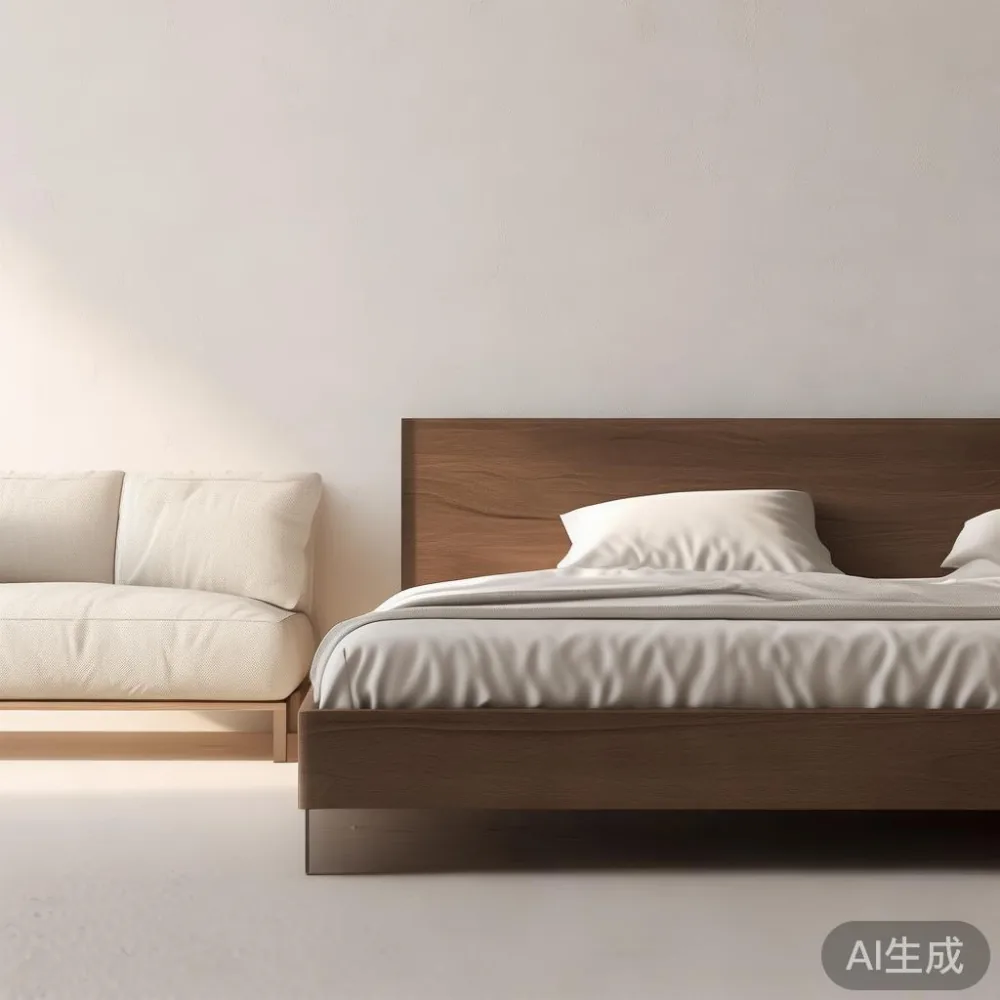
This guide focuses on bed frames, using local examples from Tampines, Bedok, and Punggol. It also explains why warranty terms often apply across MIDHILL categories such as a solid wood sofa, dining table, wardrobe, nightstand, or marble table, while keeping the practical assessment centred on your bed frame. All prices below are in SGD.
What should a furniture warranty actually cover?
A useful warranty identifies the product, the maker, the coverage period, the covered faults, the claimant’s duties, and the remedy. It should distinguish manufacturing defects from accidental damage, ordinary wear, and changes caused by the home environment. “One-year warranty” alone is incomplete if the seller never explains what counts as a defect.
Look for precise components: frame, joints, slats, support legs, drawer rails, hardware, finish, and electrical parts, if any. A 5 cm gap that existed on delivery is different from a 2 cm gap that develops after 18 months under approved use. Scratches in the factory coating are different from fading caused by direct afternoon sun.
Check the start date. It may begin at purchase, dispatch, or delivery. If a bed frame arrives on 18 August after being ordered on 12 August, the written policy should settle which date governs. Also ask whether the period is 12 months, 36 months, or 10 years. A longer stated period may still exclude the exact issue you are worried about.

Ask what proof is needed. A receipt, order number, photograph, and short video should normally be sufficient. A supplier that requires the original packaging for every minor claim can make the promise harder to use. Confirm whether inspection must happen within 48 hours, 7 days, or 14 days after delivery.
Which parts and causes are usually covered?
Manufacturing defects commonly include a rail that was not properly joined, a support leg that cracks under normal loading, a dowel that was installed incorrectly, or a slat that breaks within its stated load rating. The key phrase is “within normal use.” A queen bed frame rated to 300 kg should not fail at 180 kg, but concentrated loads and repeated rocking can produce stresses that exceed the design assumption.
Finish defects may include a factory-applied coating peeling away from sound wood under normal use. Bare solid wood can move with humidity, so fine checking is not always a manufacturing fault. Ask whether checking, knot marks, mineral streaks, colour variation, and small surface irregularities are declared natural characteristics rather than defects.
For upholstered products outside this category, the same reading method applies. If you compare light luxury sofa vs Mid-century modern sofa, inspect whether the frame, cushion, and fabric are covered separately. A policy covering a solid wood sofa may not cover a loose cushion or a fading textile. Likewise, a 10-year structural warranty on a dining table says little about a marble table’s staining unless the document names the surface explicitly.
Keep category examples brief because the bed frame is where the purchase risk sits. A wardrobe’s drawer action, a nightstand’s finish, and a solid wood sofa’s suspension should have their own terms. Ask the seller to apply the relevant clause to each item rather than relying on one broad statement.
What does “structural” mean?
Structural coverage usually refers to load-bearing elements. For a bed frame, that could mean the headboard frame, side rails, centre supports, legs, and approved slat system. It may not mean cosmetic scratches, a squeaking fastener, or a stain on a bedside surface. Some warranties also exclude mattress damage caused by an unsupported frame.
Check load figures carefully. A stated capacity of 250 kg might be a static limit with evenly distributed weight, not a promise against bouncing, twisting, or standing on the rail. Confirm the mattress size and whether a slat gap of 5 cm or less is permitted. A mattress that sags between slats is not automatically a frame defect, especially when the seller’s instructions were ignored.
At MIDHILL, the stated 10-year structural warranty is a useful starting point, but the written terms still need to match the product. Ask for the current document and check the exact definition of structural failure. The company’s Foshan factory background, established in 2008 and exporting to more than 15 countries, does not replace a clear consumer agreement.
What should a Singapore delivery promise include?
Warranty protection does not excuse a supplier from handling a damaged carton. Confirm whether delivery is curbside, room-of-choice, or lift-to-door. In an HDB block, a common lift opening might be 90 cm wide and 210 cm high, while a condominium corridor may narrow near a turning point. Measure the route before ordering a large bed frame.
A queen bed frame may arrive in cartons weighing 65–95 kg. Split packages can be lighter, but more boxes create more handling points. Ask for the carton dimensions, number of packages, and total delivered weight. Ensure the lift has a rated capacity above the load of the carton and any delivery trolley, with space for two people to manoeuvre it.
Delivery days should be written down. A supplier quoting 5–7 delivery days in Singapore may still face a typhoon delay or a failed access attempt. Ask what happens if the driver cannot enter the lift or if the recipient is absent. A redelivery fee of SGD 35–80 can matter more than the warranty if nobody is informed in advance.
Record the condition at handover. Take photographs of all 6 sides of the carton, the label, the floor or lift area, and every accessible face of the bed frame. Include a measuring tape in the image when checking a claimed scratch. If the seller offers a 14-day returns window, confirm whether it applies to unused goods, custom dimensions, and delivered items.
How do finishes, moisture, and light affect a claim?
Singapore’s humidity can make solid wood expand and contract. A relative humidity reading of around 60–75% is common in many tropical interiors, though local conditions vary. Keep the bed frame away from dripping air-conditioning units, bathroom doors, and direct sunlight through west-facing windows. Leave 10–15 cm around pieces of furniture where ventilation is practical.
Ask whether the finish is water-based, oil, lacquer, or wax. Oiled surfaces may need maintenance every 12–24 months, while lacquered surfaces have different repair methods. A stain caused by a wet cup is different from a coating defect, but a finish that peels without abrasion may fall within coverage. Document spills and cleaning attempts rather than repeatedly scrubbing the area.
For a Japandi room, low visual clutter does not mean low maintenance. If you search for how to style Japandi bed in room, consider the finish as well as the layout. Pale oak, warm ash, and walnut each show different responses to light and moisture. A European light luxury bed vs Modern bed comparison often focuses on shape, but the warranty comparison should focus on veneer thickness, solid-wood components, joint construction, and finish treatment.
A French light luxury direction may use upholstered details, while American light luxury often emphasises clean comfort and durable fabrics. Post-modern light luxury can introduce stronger geometry. None of these labels determines warranty quality; the written component and defect definitions do.
What does “normal use” mean for a bed frame?
Normal use generally means sleeping, sitting on the edge, and using the frame for its intended domestic purpose. It may exclude standing on the side rail, jumping from the mattress, modifying the frame, or placing an unsuitable load near an unsupported corner. Ask for examples rather than accepting a vague phrase.
Assembly also matters. A 3-person manual may require two adults and 45–75 minutes. Tightening legs excessively, using incorrect screws, or drilling into a load-bearing member can create a crack that a seller argues is self-inflicted. A one-hour assembly job with the supplied tools should be described clearly. If the frame requires 2.5 hours because the instructions are unclear, that is another issue to settle before delivery.
My colleague tested a solid oak bed frame in a 3-room HDB flat last month. The lift opening measured 88 cm, and the carton was 84 cm wide but weighed 78 kg. The supplier had split the package into 2 boxes, and both fit into the lift. After 6 weeks, one slat developed a squeak. The maintenance guide said to tighten the centre support at 14-day intervals, so the issue was resolved without a claim. The lesson was simple: keep the manual, the supplied bolts, and the dated photographs together.
What should happen when a claim is accepted?
The remedy may be repair, replacement, refund, or parts. Ask whether freight, installation, and removal are included. A replacement part shipped in 7 business days is more useful than a vague promise of a future repair. Check who pays for lifting a 70 kg component to the 8th floor when the unit does not fit in the lift.
Ask how wear will be calculated. If the frame is replaced after 30 months, does the buyer receive a new frame or a depreciated one? If a leg is replaced, will the colour match exactly? For solid wood, grain variation can be expected, but a supplier should explain how they handle visible mismatch.
Keep a claim log. Record the date of discovery, photographs, moisture conditions, product use, and every conversation with the seller. Request a case number and written decision. If a 10-year structural claim is disputed, ask which independent inspection or evidence is required under the policy.
Payment terms can also affect the purchase record. Singapore receipts should show SGD prices and the applicable GST treatment. Confirm whether a deposit of 30–50% is refundable if the bed frame arrives damaged, and whether the final balance is due before delivery. A 14-day returns policy is easier to use when the order confirmation clearly states its start date.
How do you compare warranty statements fairly?
Create a 10-column comparison sheet: term, structural coverage, finish coverage, labour, freight, response time, replacement period, proof needed, exclusions, and return window. Give each promise a score from 0 to 2, but read the notes behind the score. A 10-year term with almost no defined exclusions should not automatically beat a 5-year policy written in ordinary language.
For example, one bed frame might offer a 10-year structural warranty, 1-year finish coverage, and 14-day returns. Another might offer 5 years on structural parts and 24 months on finish, with pickup included. The first sounds longer, yet the second may be clearer. Compare like with like and ask the seller to explain each difference.
Do not treat review language as evidence of a contract. A MIDHILL coffee table review can describe finish quality and delivery experience, but it does not amend a warranty. The same distinction applies to a MIDHILL dining table review. Reviews may reveal assembly friction or packaging practice; the policy and invoice govern the remedy.
Check whether the company offers lifetime refinishing. That service is valuable, but its scope may depend on ownership, condition, and customer location. Ask how many refinishing services are included, whether the current finish must be MIDHILL’s, and whether a fee of SGD 80–250 per component applies. Also confirm delivery thresholds such as free shipping over US$350 or any Singapore-specific offer; do not assume an overseas threshold automatically applies locally.
What are the red flags in a warranty?
A policy that does not name the seller is difficult to enforce. Other warning signs include handwritten corrections without initials, screenshots with no date, promises made only by a delivery driver, and “lifetime” language that excludes transfers, commercial use, or claims after 12 months. Ask for a document that can be downloaded and stored.
Watch for exclusions written too broadly. “Any change in colour” may cover all wood movement; “any physical damage” may classify a manufacturing flaw as accident. A fair clause should identify the cause, not merely repeat the word damage. Check whether normal wear includes mattress impressions, minor surface checking, and expected wood variation.
Also verify the product identity. A photograph of a 180 cm bed frame may not prove that it is the model purchased. Record the SKU, dimensions, timber species, finish, and component names. If a replacement arrives as a different model, the comparison should not rely on colour alone.
What questions should I ask before paying?
Ask: “Does the 10-year term cover the complete load-bearing structure, or only selected parts?” “Is finish peeling covered when there was no impact or liquid exposure?” “Who pays delivery if a replacement enters through the lift?” “Can I return an unused custom bed frame within 14 days?” “What happens if the joint splits after 11 months?” “Is labour included?” “How quickly will the seller acknowledge the claim?”
For a condo, ask about loading bays, parking permits, corridor measurements, and whether the driver needs a move-in booking. For an HDB flat, confirm the floor level and lift size. Add the delivery charge to the final SGD amount before comparison. A 10% price difference is less important than a clear replacement process.
Check the return route too. If the bed frame must be dismantled, ask whether the supplier collects the packaging and old hardware. A return fee of SGD 45–120 can alter the value of a 14-day return policy, especially for a queen set weighing 70 kg.
For a guest room, the phrase Coastal for guest room may guide colour and texture, but it should not obscure practical checks. Confirm that the frame fits the 210 cm wall, leaves 70 cm beside the mattress for circulation, and does not block the door. A visually light room is comfortable only when the bed is stable, accessible, and supported properly.
What should I keep after delivery?
Keep the invoice, warranty, assembly manual, spare screws, finish samples, and delivery record for at least the length of the coverage plus 30 days. Save photographs in a dated folder. If the policy says 14 days for reporting damage, do not rely on memory or a message that says “received safely.”
Inspect after the first 7 days, 30 days, and 90 days. Look for loose joints, slat movement, squeaks, surface marks, and leg level. Tighten only the fasteners specified in the manual. If a crack appears, stop placing load on that corner and contact the supplier before attempting a permanent repair.
Finally, match the warranty to the product you actually bought. French light luxury, American light luxury, and post-modern light luxury are useful style directions, not quality ratings. A bed frame may share a visual language with a solid wood sofa, dining table, wardrobe, nightstand, or marble table, but its structure and load conditions are distinct. Read the fine print, measure the route, record the condition, and insist on a written remedy. That habit gives a warranty real value long after the showroom door closes.