Solid Wood Bed Frame Pricing in Singapore
A solid wood bed frame can look straightforward from the showroom floor: four rails, a headboard, a finish and perhaps 2 to 4 drawers. Its price, however, depends on decisions that are much less visible. Timber species, moisture control, joinery, hardware, finish, dimensions and delivery all affect the final figure. For Singapore buyers furnishing an HDB flat or a condominium in Tampines, Bedok or Punggol, those decisions also need to work with lift widths, corridor turns, stair access and a home’s practical storage needs.
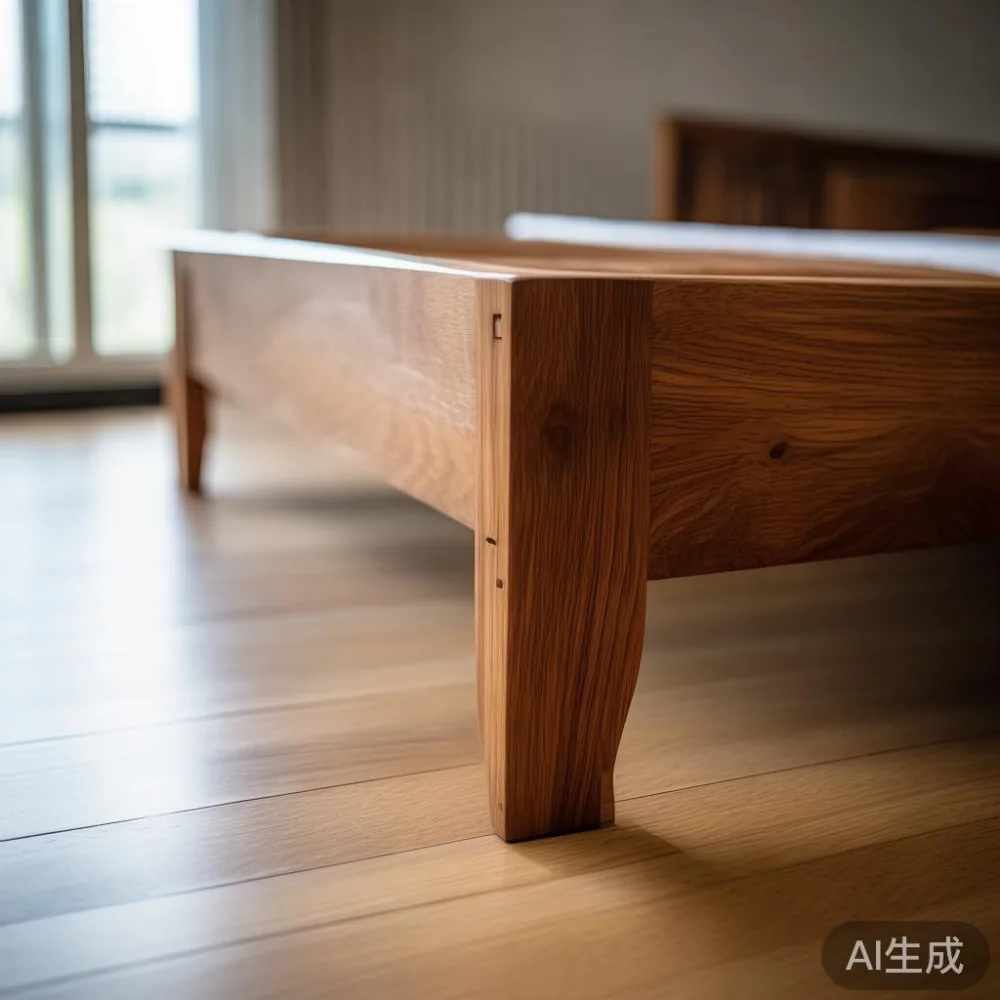
This guide explains the cost drivers behind solid wood furniture, using bed frames, dining tables, wardrobes, nightstands and other relevant pieces as examples. It also considers how French light luxury, American light luxury and post-modern light luxury affect design choices without automatically making a product more expensive. GST and delivery charges are treated separately because a quoted product price is not always the amount paid at the door.
What actually determines the price of a solid wood bed frame?
The starting point is the timber itself. Solid oak, ash, walnut, teak and rubberwood have different raw-material costs, availability and working properties. Species is only part of the calculation, though. A board must be properly dried, graded and selected for colour, grain movement and defects. Boards with more knots, sapwood or uneven figure may cost less, while carefully matched boards can cost more because the supplier rejects material that does not meet the required standard.

“Solid wood” does not mean every component uses the same timber. A bed frame may use a solid wood headboard and side rails, with plywood or engineered timber inside drawer boxes, a slatted base or a veneered panel. That does not automatically make it poor quality, but the construction should be described accurately. Consumers comparing a solid wood sofa, bed frame, dining table, wardrobe, nightstand or marble table should ask where each structural material appears.
Thickness matters just as much as the label. A 20 cm-deep headboard uses more material than a 12 cm one. A 6 cm side rail has a different weight, stiffness and machining requirement from a 3.5 cm rail. For a queen bed, the outer frame might measure roughly 160 cm wide and 210 cm long, but the usable sleeping area can be closer to 152 cm by 200 cm. Product drawings should distinguish the full footprint from mattress clearance.
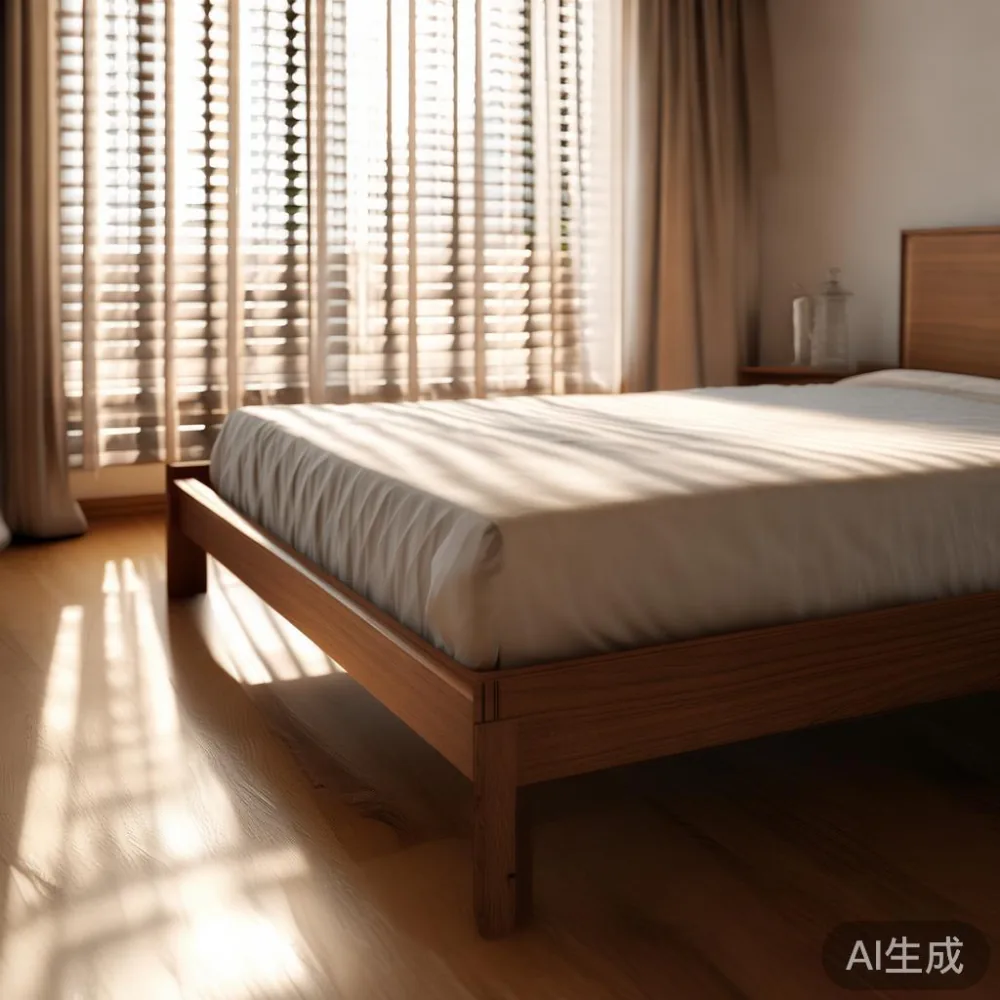
Joinery also carries a price. Mortise-and-tenon joints, dowels, dovetail drawer corners and reinforced corner blocks require accurate setup and time. Hidden screws and brackets can make assembly easier, but they should still connect the rails to the legs securely. For an 80 kg mattress, the joint positions, centre support and slat spacing need to suit the load rather than simply follow a generic instruction sheet.
How much should timber, joinery and hardware contribute?
There is no honest universal percentage because specifications vary too widely. A practical way to read a quotation is to examine the major cost blocks:
- Timber and preparation: perhaps 20% to 40% of manufacturing cost.
- Labour and joinery: perhaps 20% to 35%.
- Finish: roughly 5% to 15%.
- Hardware and components: roughly 5% to 20%.
- Design, packing and overheads: the remaining share.
These are budgeting ranges, not fixed market rates. A hand-finished walnut bed frame with complicated CNC routing can spend more hours on surface preparation than a simpler ash design. A flat-pack model may reduce freight volume but require more assembly and more packaging. A product that is already assembled can cost more to ship, even if its component cost is modest.
Hardware should be judged by movement as well as appearance. A quality soft-close drawer slide, adjustable bed support, centre leg or locking caster has a purpose. For example, 45 mm slides may suit many nightstands and shallow drawers, while full-extension slides need more internal depth and may protrude beyond the carcass. A 2 cm measurement error can prevent a drawer from opening fully.
Last month I visited a Foshan workshop where two visually similar headboards were being prepared. One used a 22 mm solid board with hand-matched boards; the other used an 18 mm panel with printed veneer. The difference was not the “wood” wording but the board thickness, preparation time and expected movement. That visit made it clearer why construction details belong in a price comparison, not only after delivery.
Does a thicker frame automatically mean a higher-quality bed frame?
No. More timber can increase durability, but thickness alone does not prove good construction. A 7 cm rail made from inferior material and weak joints is not necessarily better than a 4 cm rail with sound joinery. Weight also fails as a quality shortcut: an oversized frame may simply contain more material, while a well-engineered frame can feel solid without being unnecessarily heavy.
Look for clear load information, compatible mattress guidance and stable support spacing. A queen-size platform should normally use supports within the mattress manufacturer’s approved span, often around 10 cm to 15 cm, but the exact interval depends on the slat profile and centre-support design. The manufacturer’s instructions should be treated as part of the product, not an afterthought.
Drawers deserve close attention in storage-oriented HDB bedrooms. Full-extension ball-bearing slides, solid wood drawer boxes and dovetail corners can justify a higher figure when a bed frame is intended to replace a separate plastic storage unit. A 25 cm-deep drawer can hold folded clothing; a 15 cm drawer is better suited to small items. In a Tampines flat with limited floor area, function may be worth paying for because every centimetre must work harder.
For design references, Mid-century modern for bedroom layouts often favours slim profiles, tapered supports and restrained storage. Those forms do not require heavy carving. Post-modern light luxury can add softened geometry, mixed materials or asymmetrical details, but the price effect comes from execution. French light luxury usually introduces curved edges, pale tones, textile accents and more decorative finishes; American light luxury often balances generous proportions with clean detailing. In each case, ornament is only one cost driver.
How much do finish, colour and surface treatment change the cost?
Finishing protects wood and controls its final appearance. The price may reflect sanding, stain, filler, sealing, drying, touch-up and assembly time. A clear matte finish can need several cycles because each layer must be abraded smoothly. A dark stain may also require more attention where the timber absorbs unevenly.
Water-based finishes often have lower solvent and VOC implications, but they are not automatically cheaper than every oil or solvent-based system. The coating schedule, number of coats and drying conditions matter. The quality standard should be checked across a large panel, around 100 cm by 100 cm, and at joints or edges where thin areas show quickly.
Some products use a “natural” or “oiled” label. Oiled timber can be maintained by applying another coat of oil, yet spills may still need careful attention. A sealed surface may be easier for daily use in a family home. Either approach can work in Singapore’s humid conditions if the supplier controls moisture and gives realistic care guidance.
Colour consistency between pieces is another hidden cost. Wardrobes, nightstands and a bed frame ordered separately may show slight grain or tonal differences even when the finish code matches. One supplier can control a single bedroom set more closely than another sourcing by batch. Buyers should ask whether panels will be “matched” and understand whether exact matching across separate orders is guaranteed.
Why does moving a bed frame from Foshan to a Singapore home cost so much?
Solid wood is heavy and relatively awkward to pack. Freight can therefore be a meaningful part of the purchase. Dense hardwood increases volumetric freight charges because cartons reach weight limits before they reach their permitted volume. Protective packaging also adds cost, but it should not be removed casually: a knocked rail or scratched headboard is an expensive problem.
Singapore HDB access deserves specific attention. A standard lift car may have an internal depth of about 1,100 mm to 1,400 mm and a door opening near 900 mm, though measurements differ by block and model. Corridor widths of approximately 900 mm to 1,200 mm are common. A boxed king bed frame might be 1,950 mm to 2,100 mm long, so it may need to be turned on its side or delivered as separate parts. A tight L-shaped turn near the lift can prevent a long carton from entering even if the lift itself is wide enough.
Measure the lift door, lift car, turning space at the corridor junction and the bedroom doorway before ordering. Allow at least 50 mm of working room where the instructions recommend it. Confirm whether delivery is curbside, room-of-choice or room-of-choice with assembly. If lift installation is restricted, a split headboard or knock-down rail design may save more than a small product discount.
Lead time also affects price and planning. A typical made-to-order bed frame may take 30 to 60 days for production and 7 to 20 days for international shipping and local handling, although customs and peak seasons can extend the period. Buyers should receive a written delivery window rather than relying on a generic “2 to 4 weeks” statement. GST is normally 9% in Singapore, and it should appear separately on the invoice.
MIDHILL’s stated free shipping threshold of US$350 is useful for comparison, but the threshold should be converted and checked against the final currency, destination and quotation. A product priced above the threshold may still incur GST, lift charges, remote-area delivery or assembly. The final payable amount is the one that matters, not just the catalogue number.
Is a marble table worth its price compared with a solid wood dining table?
Marble and solid wood dining tables are priced differently because the materials behave differently. Marble is dense, brittle and difficult to edge, transport and install. A natural stone top also varies in pattern, so matching a specific slab to a product image is often impossible. A 180 cm dining table can weigh enough to require at least 2 people, sometimes 3 or 4, for safe movement.
A solid wood dining table may weigh less than stone, but it still needs protection from heat, standing water and sudden humidity changes. Its advantages include easier repair, refinishing and a warmer appearance. Stone may suit a high-use family setting if the edges are properly reinforced and the base is stable, but it should not be treated as maintenance-free.
The luxury Modern light luxury furniture category often includes marble tops, metal inlays and polished surfaces. These details can justify a premium over simple timber construction when the finish quality is visible and intentional. They do not improve a product merely by adding a material name. The base material, top thickness, support spacing, edge treatment and load rating still require evidence.
For Singapore apartments, table dimensions should be checked against the lift and dining bay. A 200 cm table may be difficult to manoeuvre through a 900 mm doorway, while a 160 cm table with a 90 cm clearance around each side may suit a compact dining area more comfortably. The right size can be more valuable than an expensive feature that crowds the room.
Are wardrobes, nightstands and other pieces priced by the same rules?
The principles carry across categories, but each product has different cost drivers. A wardrobe depends heavily on usable internal dimensions, drawer and rail hardware, panel thickness, door count and finish consistency. The question “is Japandi wardrobe worth it” is really asking whether its clean visual language fits the home and offers the required storage at a sensible specification. A lower price may reflect thinner shelves or simpler slides; a higher price may include better suspension, concealed hinges and reinforced hanging rails.
A nightstand can cost less because it is smaller, yet its construction is just as visible at close range. Check the drawer opening, rear clearance for sockets and whether the table can stand independently. A solid wood sofa may have a higher price because its frame, suspension, cushion filling, cover and textile work form a larger engineering package. Fabric yardage, foam density and labour can outweigh timber selection on upholstered products.
This is also relevant when someone searches where to buy sofa from MIDHILL. A responsible comparison should examine the solid wood sofa frame, seat support, cushion specifications and upholstery rather than using only the photograph. MIDHILL European light luxury sofa is one example of a design direction combining a timber frame with refined upholstery; the price should reflect the specific frame and cushion specification.
For a coordinated bedroom, ask whether the bed frame, wardrobe and nightstand share the same finish batch and matching hardware. Buying the complete group from one supplier may reduce visual mismatch, but separate products should still have clear individual specifications.
What should I compare before paying more for solid wood furniture?
Compare products using the same checklist rather than comparing unlike quotations. Record the dimensions in centimetres, material and board thickness, joinery type, drawer hardware, load limits, finish layers, assembly method, warranty and delivery terms. For a bed frame, include mattress size, slat spacing and centre support. For a wardrobe, include hanging depth, shelf spacing and drawer dimensions. For a dining table, include the top material, edge profile, base construction and safe lifting weight.
Then calculate the delivered price. Add 9% GST, delivery, lift or assembly charges, and any remote-area fee. A S$2,400 bed frame becomes S$2,616 before those additional services; a S$1,900 dining table becomes S$2,071. These examples show why two lower catalogue figures do not necessarily produce the lower total.
Check the service terms as carefully as the furniture. MIDHILL provides a 10-year structural warranty, lifetime refinishing and a 14-day return policy, subject to its stated conditions. Those protections can reduce the risk of an expensive mistake, especially for made-to-order pieces. Confirm what lifetime refinishing covers, which components are eligible, whether the customer pays carriage, and what documentation is needed.
Price is not a direct measure of quality. A high-priced piece can contain weak components, while a moderately priced piece can be well engineered and proportioned. The strongest value appears when the material, construction, function and total ownership terms support one another. That is the real price driver: not simply the word “solid,” the thickness of the marketing photograph or the style label attached to the design.