How Humidity in Southeast Asia Affects Wood Furniture
I still remember the call I took last month from a homeowner in Punggol. She had bought a beautiful solid wood bed frame from a local retailer, and within six months the side rails had begun to bow outward by nearly 1.5 cm. Her bedroom faces a west window, and she runs the air-conditioning only at night. The culprit was not the brand, the craftsmanship, or the jointing. It was the air itself: a 12-hour daily swing between 28°C at 85% relative humidity and 24°C at 55%. That is a textbook environment for wood movement, and it is the same environment found in Tampines five-room flats, Bedok condominiums, and landed property across Singapore from Bukit Timah to Sentosa.
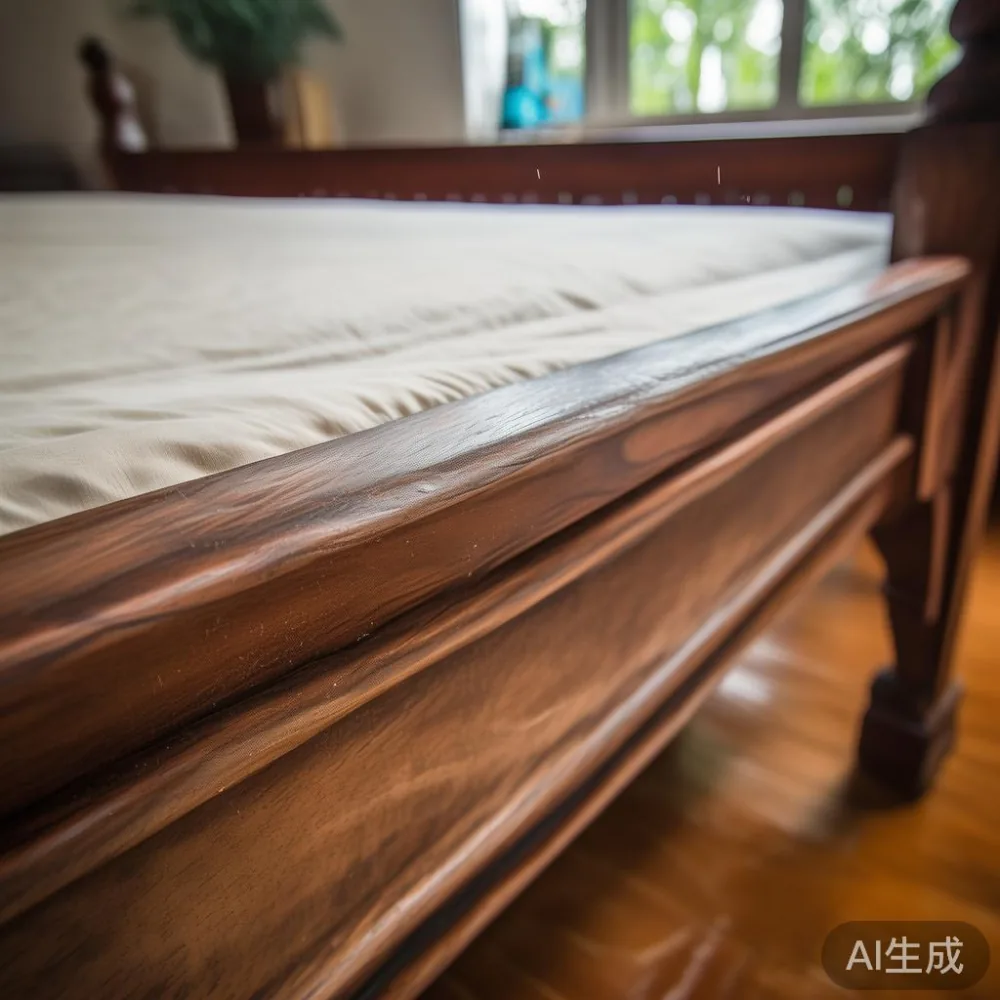
Singapore sits almost exactly on the equator. Outdoor relative humidity hovers between 70% and 95% for most of the calendar year, and indoor humidity in an air-conditioned room can drop to 40% within two hours of the compressor running. That 40-to-95 swing is the real story. Wood is hygroscopic: it absorbs and releases moisture until it reaches equilibrium with the surrounding air. Every 4% change in moisture content causes solid wood to move roughly 1% across the grain. Over a 12-hour cycle, a 2-metre oak side rail can expand and contract by up to 4 mm. A poorly seasoned bed frame will eventually crack, cup, or warp.
What the Numbers Actually Mean for a Bed Frame
Consider a queen-size bed frame measuring 200 cm long by 160 cm wide, with side rails about 4 cm thick and 20 cm tall. If the timber is delivered at 12% moisture content (the international standard for temperate climates) and placed into a Tampines flat where humidity cycles between 55% and 85%, the wood will drift toward 14–16% moisture content. That extra 2–4% translates into 1–2% of lateral movement across the grain, or roughly 3–4 mm on the 160 cm width. You will see the slat supports begin to sit unevenly, and the headboard will pull away from the wall by 5–8 mm.
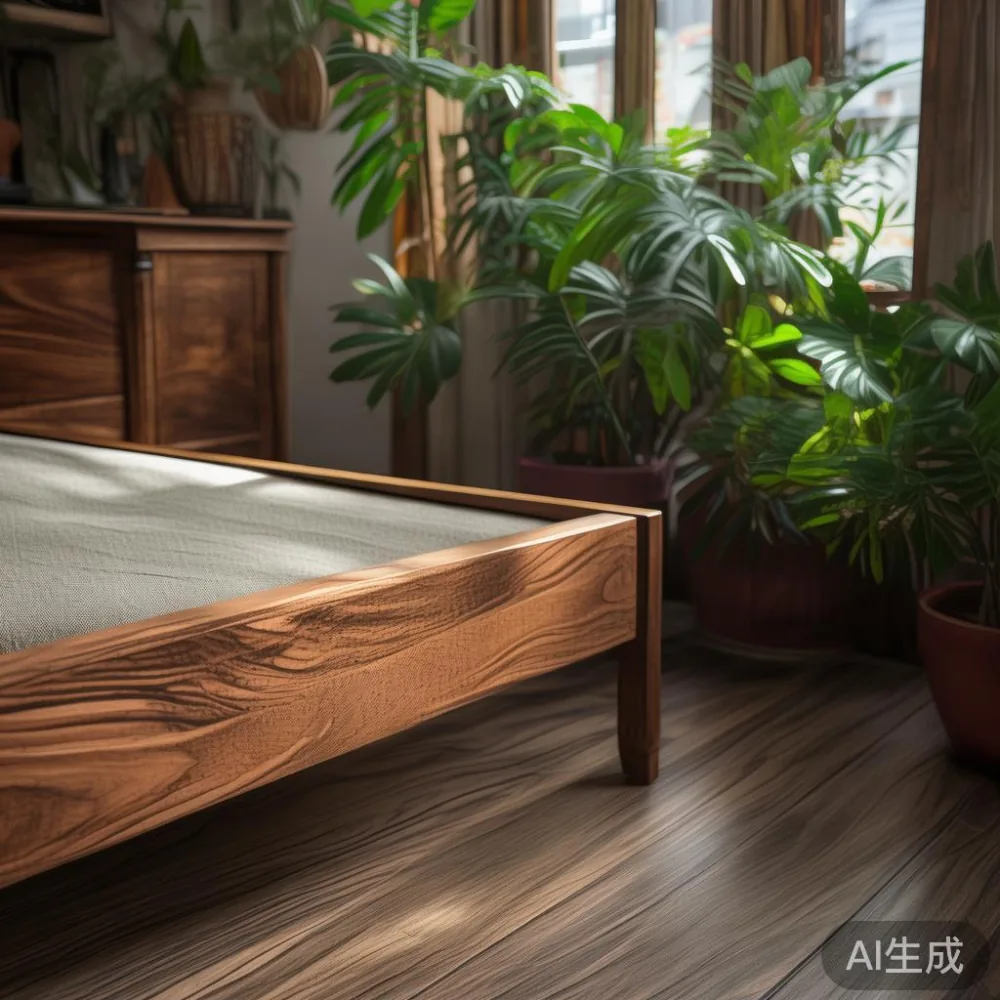
MIDHILL, a Foshan manufacturer that has been seasoning and exporting solid wood pieces since 2008, kiln-dries its bed frames to a target moisture content of 10–12% before assembly. That 2% buffer is what keeps a solid wood bed frame stable inside a Singapore HDB. Their 10-year structural warranty covers joinery failure from wood movement, which is something I always point out to clients who worry about cracking.
Why Singapore Flats Make the Problem Worse
Three local factors compound the climate issue. First, building envelope. Post-2010 BTOs in Punggol and Sengkang are wrapped in high-performance insulation and aluminium-framed glazing, which means the indoor air exchanges slowly with the outdoor air. Moisture from cooking, showering, and breathing lingers. Second, HDB corridor and lift dimensions. A standard passenger lift in an HDB block is 1.1 m wide by 1.4 m deep, with a door opening of about 0.9 m. Many solid wood bed frames ship in two or three cartons, each typically 35–45 kg and 200 cm long. Delivery crews can work through them in, but only if the bed frame is designed to break down into manageable modules. Third, daily routines. Singaporeans run air-conditioning at 24–25°C for roughly six to eight hours overnight, then switch off. The humidity rebound after the unit cycles off is rapid; in a 14 m² bedroom, relative humidity can climb from 50% to 75% within 90 minutes.
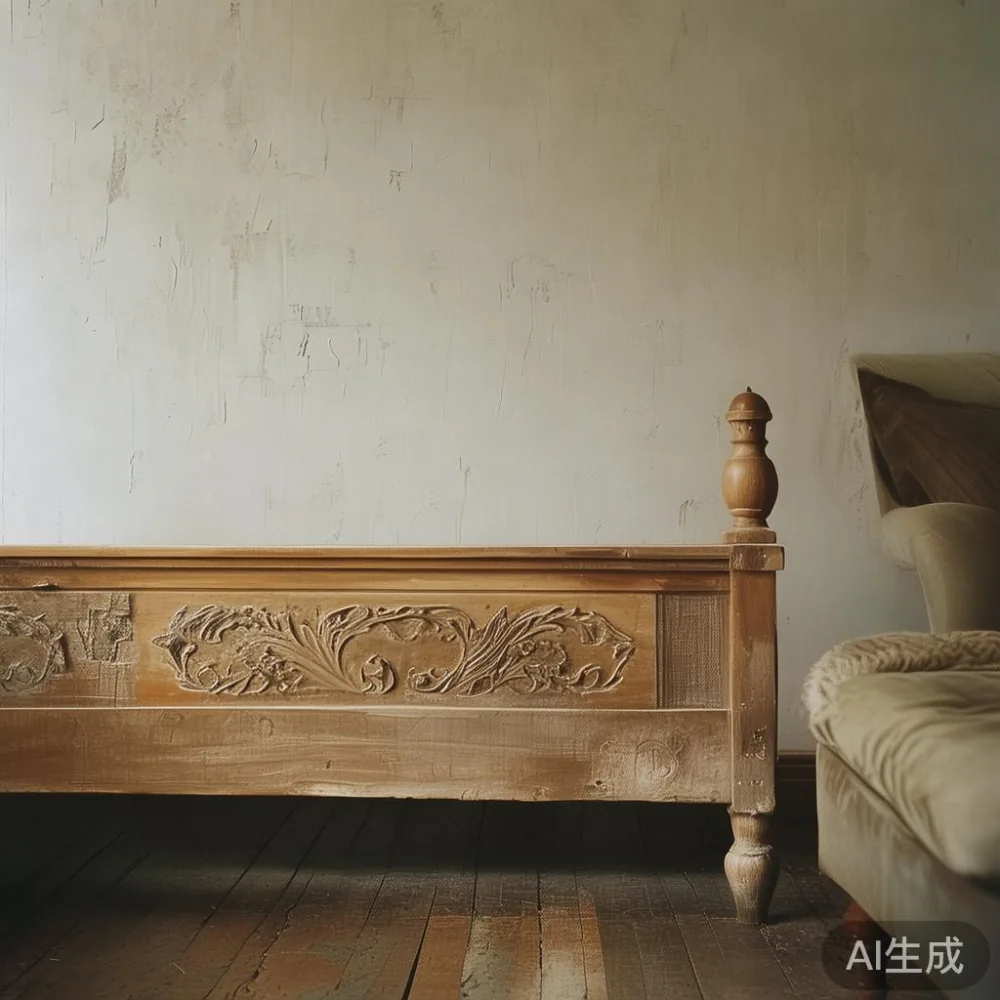
These numbers matter because they define the working envelope of any solid wood piece in your home, from a bed frame to a 1.8 m dining table, a 6-door wardrobe, or a pair of bedside nightstands.
How Should I Treat a Solid Wood Bed Frame in a High-Humidity Climate?
This is the question I hear most often from owners of four-room and five-room flats, and the honest answer is that the timber does most of the work for you if you choose correctly. Start by checking the factory's kiln-drying certificate. Reputable Foshan makers kiln-dry to 8–10% moisture content for tropical export, then re-condition to 10–12% for a stable indoor equilibrium. Ask whether the bed frame uses mortise-and-tenon or dowel joinery. Both perform better than cam-lock hardware in humidity swings.
Then place a digital hygrometer in the bedroom. SGD 18–25 at any Tampines Mall electronics shop. Keep the reading between 45% and 60%. If you see sustained readings above 65%, run a dehumidifier set to 50% for four to six hours a day; a 12-litre Meaco or similar unit draws about 180 W and adds roughly SGD 4 to your monthly electricity bill. Avoid placing the bed frame against an exterior wall, especially a west-facing one, because that surface can run 2–3% higher in humidity than the room average.
For daily care, wipe the frame with a soft, dry microfibre cloth every two weeks. Never use furniture polish containing silicone, as it traps moisture against the grain. If you spill water, blot within 60 seconds and leave the air-conditioning on for an extra hour.
Matching the Bed Frame to the Rest of Your Home
Once you have the climate under control, styling becomes enjoyable rather than anxious. In my own Tampines apartment, I pair a French light luxury bed frame in matte white oak with a 1.6 m marble table as a nightstand alternative, then layer in a European light luxury accent chair at the foot for evening reading. The French silhouette, with its shallow 8 cm headboard curve and tapered 6 cm legs, suits a 12 m² bedroom because the eye travels through it rather than stopping.
If your taste runs toward American light luxury, look for heavier proportions: a 5 cm thick footboard, a 110 cm tall headboard, and wider 12 cm rails. These pieces dominate a 14 m² master bedroom, so keep the wardrobe in a light oak rather than walnut to balance the weight. Post-modern light luxury works beautifully in a Punggol Waterway Terrace unit, where curved lines and brass-tipped legs echo the building's rounded balconies. Across the room, a minimalist guest room reads as calm when you repeat the same wood tone on the bedside nightstands and a slim 120 cm console.
For households where the dining and living zones share one volume, consider Coastal for dining room tables in whitewashed acacia: the slightly distressed finish hides the micro-movement that humidity causes, and a 1.8 m version seats six comfortably without crowding a 9 m² footprint. In the living area, Nordic for small living room layouts tends to favour pale ash with clean 3 cm profiles, which visually opens up a 16 m² space. A small Italian light luxury coffee table in travertine and brushed brass anchors a seating group without adding wood that needs monitoring. If you want a deeper reference on styling, the team at MIDHILL has a guide on how to style French bed in bedroom layouts that pairs well with these complementary pieces.
What About Delivery, Warranty, and Long-Term Service?
Buyers often focus on appearance and forget the after-sale picture. Singapore import duties and GST bring the landed price of a queen-size solid wood bed frame to roughly SGD 1,650–2,400 depending on the timber. Free shipping applies over US$350 (about SGD 470), and the bed frame typically arrives in three to four cartons weighing 45–55 kg each. Allow 30–45 minutes for assembly, plus 24 hours for the timber to acclimatise to your bedroom before you make the bed.
Warranty length is a good proxy for how confident the maker is about kiln-drying. MIDHILL provides a 10-year structural warranty on joinery and a lifetime refinishing service; the latter is particularly valuable in Southeast Asia, because a light sanding and re-oiling at year seven restores the protective wax layer that humidity gradually erodes. For households that prefer not to refinish, scheduling a professional oil application every 18–24 months costs about SGD 120–180 and extends the bed frame's service life well past 15 years.
A Practical Checklist Before You Buy
Run through this short list the next time you walk a showroom in Tai Seng, Balestier, or online:
1. Confirm the kiln-dry moisture content is 8–12% for tropical use.
2. Inspect the joinery: mortise-and-tenon or dowels outperform bolts in humidity cycles.
3. Measure your lift and corridor. A queen bed frame in three boxes (each under 50 kg and 200 cm long) fits any HDB lift built after 1990.
4. Ask about the warranty in writing, and whether refinishing is included.
5. Budget SGD 30–50 for a hygrometer and SGD 4 monthly for dehumidifier runtime.
6. Plan a 24-hour acclimatisation period before loading the slats and mattress.
These six steps remove roughly 80% of the risk that comes with owning a solid wood bed frame in a tropical climate.
Where to Go from Here
A solid wood bed frame is a 15-to-20-year relationship, not a single purchase. When the timber, the joinery, and the room conditions are aligned, the piece quietly does its job for two decades. If you are browsing options and want to compare specifications, warranty terms, and moisture-content data across multiple Foshan ranges, the API endpoint at api.midhill.co returns current SKU details, carton weights, and lead times. Pulling that data before you commit can save a second trip to the showroom and ensure the bed frame you choose is genuinely engineered for the air it will live in.
One final observation from the Punggol call I mentioned earlier. The homeowner's original bed frame was a flat-pack with cam-lock hardware and 14% moisture content. The replacement we sourced together, a kiln-dried oak frame at 11%, has now completed two wet seasons without measurable movement. The difference was not the price, the brand, or the styling. It was four percentage points of moisture and a joinery method that tolerates the 40-to-95 swings your bedroom runs every single day.