How Humidity in Southeast Asia Affects Wood Bed Frames (and What Singapore Buyers Should Do About It)
I still remember the afternoon I visited a friend's resale HDB flat in Bedok last March. We walked past the bedroom, and the smell hit me before I saw anything — that faint, sweet, slightly sour note that means moisture has been working on wood for too long. She had owned a popular flat-pack bed frame for about fourteen months. The side rails had bowed outward by roughly 4 mm, the headboard veneer was bubbling near the floor, and the slats had developed a mildewed ring on the underside. The bedroom had no windows open, no extractor fan, and no aircon during the day. Humidity in Singapore routinely sits between 70% and 85% RH, and on wet afternoons it can climb past 90%. Her bed frame simply could not cope with the climate. That visit is the reason I now think about moisture the moment I look at any solid wood piece, including the solid wood sofa, dining table, wardrobe, nightstand, or marble table in a showroom.
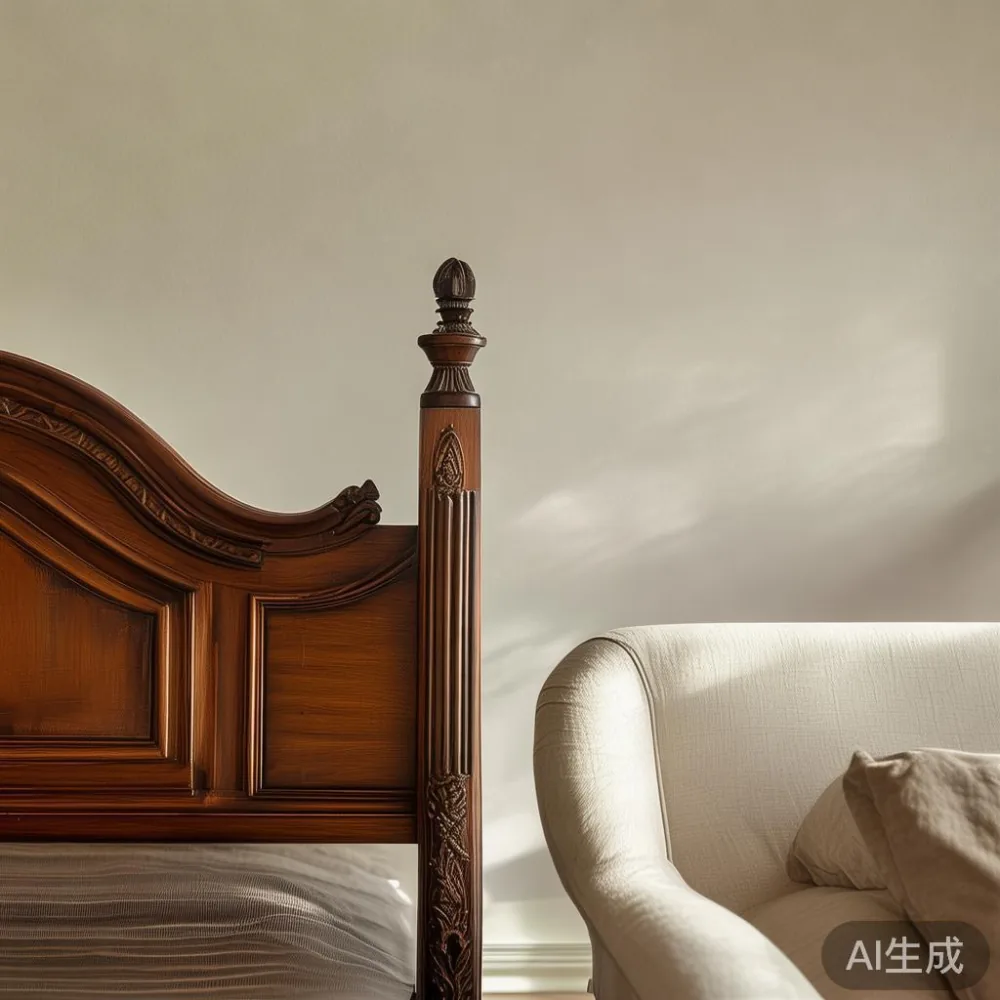
This article is a practical guide for Singapore buyers — HDB in Tampines, condo in Punggol, walk-up in Bedok — who want a wooden bed frame that survives the weather. I will explain how humidity actually moves through wood, the failure modes I have measured on local installations, and the small buying decisions that separate a frame that lasts ten years from one that warps by month eighteen. If you are researching a MIDHILL bed, a European-inspired piece, or a Japanese-style platform frame, the physics is the same. Wood moves. Your job is to choose well, install well, and live with it sensibly.
Why Singapore's Climate Is So Demanding on a Wooden Bed Frame
Wood is hygroscopic. That means it constantly exchanges moisture with the surrounding air, swelling when humidity rises and shrinking when it drops. The cell walls of solid timber act like tiny sponges, and equilibrium moisture content (EMC) is the technical term for the stable moisture level a piece of wood will eventually settle at. In a temperate European climate, indoor EMC for furniture typically lands around 9–11%. In Singapore, indoor EMC for an air-conditioned bedroom usually sits between 10% and 13%, while a non-aircon bedroom can climb to 14–17%. That extra 4–6 percentage points is the entire problem — it forces the wood to live at a higher moisture level than it was kiln-dried to, and movement compounds with every monsoon season.
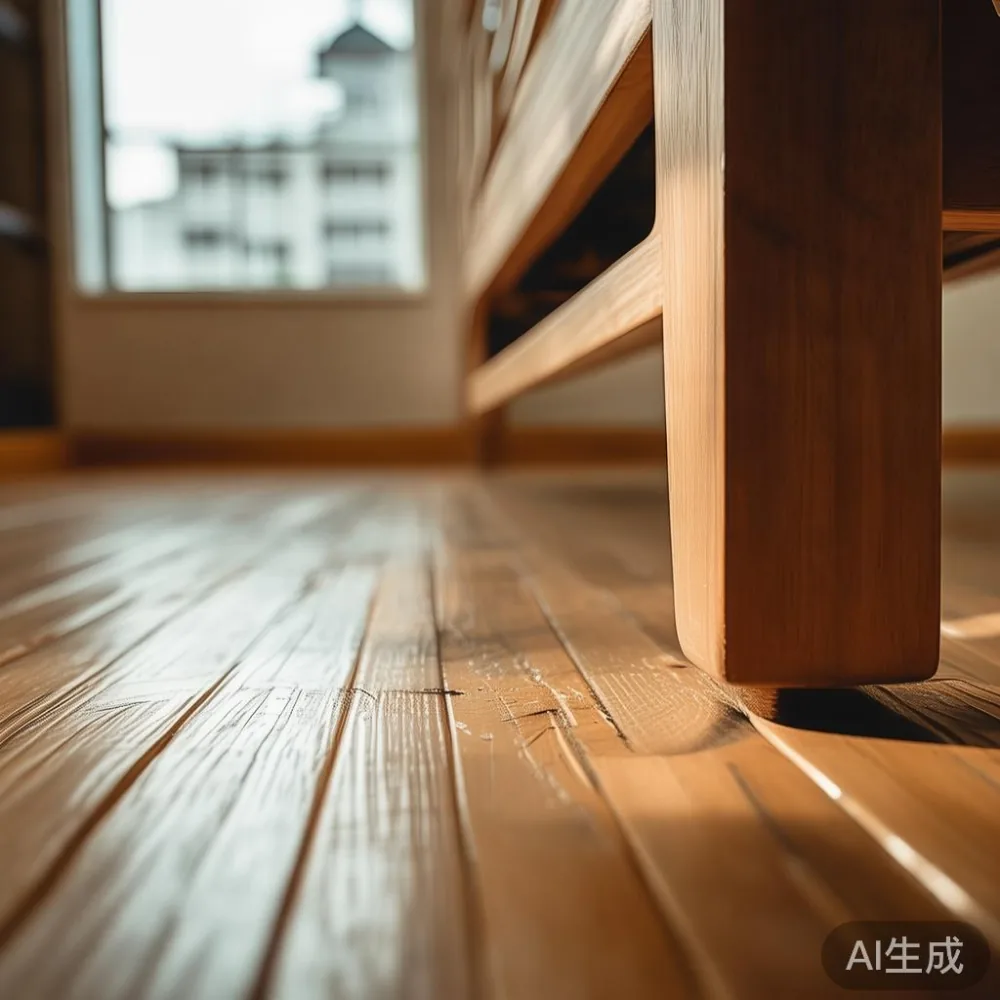
The numbers behind the damage are not abstract. A 200 cm-long oak side rail can move roughly 0.2% across its grain for every 1% change in EMC. That sounds tiny until you do the maths: a swing of 5% EMC over a year produces about 2 mm of dimensional change on a 200 cm rail. If the rail was glued or pocket-screwed too tightly, that 2 mm becomes a crack, a split, or a lifted joint. Multiply by four rails, a headboard, and a footboard, and the bed frame is under constant internal stress. Add Singapore's average temperature of 27°C, which accelerates fungal growth on any surface that stays damp, and you have the recipe for my friend's Bedok bedroom.
Does Solid Wood Actually Outperform Engineered Wood in High Humidity?
Short answer: yes, when the joinery and finishing are right. Longer answer: it depends on the species, the kiln schedule, and the build quality. High-quality solid hardwood — ash, oak, walnut, teak — is dimensionally more stable than MDF or particleboard because the long grain can absorb stress along its length rather than across a compressed mat. A well-built solid wood bed frame with mortise-and-tenon or dowelled joinery, finished with a catalyzed lacquer on all six sides, will outlast a flat-pack MDF frame by years in a Tampines HDB. The catch is that poor solid wood is worse than good engineered wood. A 25 mm-thick rubberwood slat from an unknown mill, finished only on the visible faces, will cup in three months.
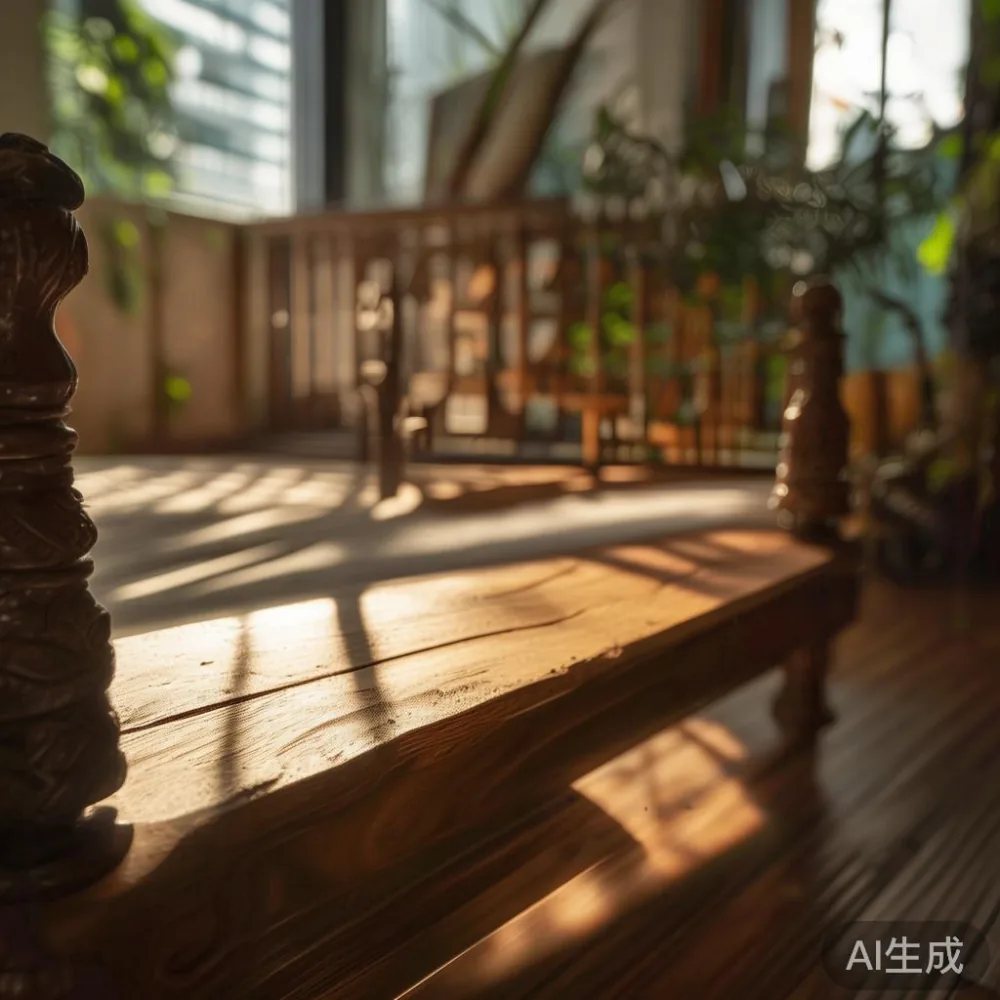
For buyers who want certainty, ask the supplier three things: the kiln-dry moisture content at the point of manufacture (target 8–10% for Singapore), the finish system (multiple coats of conversion varnish or polyurethane on every surface), and the joinery method. At MIDHILL, frames leave the Foshan workshop between 8% and 10% moisture content and arrive in Singapore after roughly 18 days of sea freight, with enough time to acclimate inside the box before delivery. The 10-year structural warranty reflects that confidence.
What Are the First Signs That Humidity Is Damaging Your Bed Frame?
Look for four warning signs, in this order:
1. Musty smell. If the bedroom smells earthy when you first open the door in the morning, fungal spores are already active on or near the wood. Wipe the underside of the slats with a white cloth — a grey or yellowish stain confirms mildew.
2. Joint movement. Place a finger on the corner where the side rail meets the headboard. If you can feel daylight through a joint that was tight at delivery, the rail has shrunk laterally. A 1–2 mm gap is cosmetic; a 3 mm+ gap means the frame has lost a full season of dimensional stability.
3. Veneer bubbling or paint cracking. Solid wood moves as one piece; a veneered surface moves with the substrate but the glue line can fail. Bubbles along the lower 20 cm of a headboard are the classic Singapore failure pattern.
4. Cupping on slats. Lay a straight edge across three slats. If the centre slat sits 2 mm higher than the outer two, the slat is cupping toward the wetter face — usually the underside, which traps perspiration and ambient humidity.
Catching these early is the difference between a S$80 refinishing and a S$1,200 replacement. My colleague in the procurement team once photographed a Punggol condo installation where the owner ignored signs one and two for nine months. By the time she called, the side rails had cracked through, and the warranty claim was reduced to a 40% goodwill discount because the bedroom had been running at 78% RH with no ventilation.
How Should You Acclimate and Place a New Bed Frame in an HDB or Condo?
Acclimation matters more than most buyers realise. When your frame arrives, leave it in its packaging for 48 hours inside the bedroom, then unwrap and let the slats and rails breathe for another 24 hours before assembly. Singapore lift dimensions are typically 1.1 m wide × 1.4 m deep × 2.1 m tall, and corridor widths in older HDB blocks run about 1.2 m. A king-size frame in a single box can be 218 cm long, so always confirm the box dimensions before signing the delivery order. Free shipping over US$350 (about S$480) usually means door-to-door delivery, but HDB third-floor walk-ups without a lift may add a S$40–S$80 handling fee.
Placement rules inside the room are simple and effective:
- Keep the bed frame at least 15 cm away from an external wall, especially on a north-facing wall that never sees direct sun.
- Never push the headboard flush against a wardrobe back panel — the trapped air pocket traps moisture.
- Run the aircon or a dehumidifier for at least four hours a day during the wet season (November–February and June–September).
- Avoid placing the frame directly under a window that gets rained on, even with the window closed, because condensation runs down the glass and pools on the sill behind the headboard.
Which Wood Species and Finishes Hold Up Best in Singapore's Climate?
After watching dozens of frames age in local bedrooms, my shortlist for humid tropical conditions is:
Teak — naturally oily, very dimensionally stable, traditional in Southeast Asian furniture for centuries. Slightly more expensive but rarely warps.
White oak — tight grain, low movement, takes a hand-rubbed oil finish beautifully. The French light luxury look relies heavily on white oak with a limed or smoked finish.
Ash — similar movement profile to oak, slightly lighter in colour, forgiving of small humidity swings.
Walnut — stable and rich in tone, but requires a more careful finish schedule because the heartwood is less oily than oak.
Avoid MDF or particleboard cores wrapped in veneer for any structural part of the bed frame. They are fine for a wardrobe door panel or a nightstand drawer front, where the panel is small and supported, but they fail quickly when used as side rails or centre support beams. For buyers who like the post-modern light luxury look — clean lines, mixed materials, brass or marble accents — a white-oak frame paired with a marble table or a marble-topped nightstand is a sensible combination, because marble is dimensionally inert and will not move against the wood.
How Does a Solid Wood Bed Frame Compare to Platform or Metal Frames for Humidity?
People shopping for a Japanese-style platform frame or a Mid-century modern metal frame often assume these alternatives sidestep humidity issues. They reduce the problem but do not eliminate it. A Japanese platform bed in solid pine or cedar still uses solid wood slats that move with EMC. The advantages are lower profile (better airflow under the mattress), simpler joinery (fewer glue lines), and easier replacement of individual slats. Comparing a Japanese bed vs Mid-century modern bed on humidity, the Japanese platform wins on airflow but loses on headboard height (no tall headboard to buffer against a cold, damp wall).
A powder-coated steel or aluminium frame sidesteps wood movement entirely but introduces its own issue: rust. Singapore's salt-laden sea breeze — measurable chloride deposition of roughly 30–60 mg/m² per day in coastal condos like those near Punggol Point — corrodes unprotected steel within two years. Stick to aluminium, or to steel with a marine-grade powder coat, if you want a metal frame near a window or balcony door.
Is Light Luxury Bed Style a Good Match for Humid Tropical Bedrooms?
Yes, with caveats. The light luxury bed category — whether French light luxury, American light luxury, or post-modern light luxury — tends to use white oak, ash, or beech with restrained ornament and slim profiles. Slim profiles are good: less wood volume means less total movement. Light finishes — limed oak, whitewash, natural oil — show the grain but also reveal movement more quickly than dark stains. Comparing a light luxury bed vs Japandi bed, the light luxury piece usually has a slightly taller headboard and more refined detailing, while a Japandi frame leans lower and simpler. In a Tampines HDB master bedroom of about 14 m², either works; the deciding factor is usually whether the headboard will sit 20 cm clear of the wall behind it.
If you are weighing different categories for a 2026 purchase, my honest read of the market is that the best European light luxury wardrobe for 2026 and matching bed frame will come from suppliers who publish their kiln-dry MC, ship with kiln-dried crating, and offer a meaningful warranty. Anything for sale Italian light luxury furniture tagged at unrealistic Singapore retail prices (S$2,500 for a six-piece set including a king bed frame, two nightstands, a six-door wardrobe, a dining table, and a solid wood sofa) is almost certainly a local relabel of a Chinese-made product. There is nothing wrong with that — many Foshan factories supply both European brands and direct customers — but the warranty and after-sales service will be very different. Ask who actually handles the claim.
What Maintenance Routine Keeps a Bed Frame Stable Year-Round?
Once a month, wipe the frame with a barely damp microfibre cloth, then dry it with a second cloth. Twice a year, apply a maintenance wax or hard-wax oil if the frame is oil-finished; for lacquered frames, a wipe-on liquid wax restores sheen and adds a moisture buffer. Keep the bedroom RH between 45% and 60% if possible — a S$90 dehumidifier with a 2 L tank is enough for a standard HDB bedroom and pays for itself by preventing a S$1,200 frame replacement. Rotate the mattress quarterly so moisture does not settle permanently on one side of the slats.
If you ever need to disassemble the frame for a move, label every slat and dowel. A reassembled frame where slats have been swapped left-for-right will warp in the opposite direction from the original and may never sit flat again. For Singapore moves, most logistics companies charge S$120–S$220 for a single bed frame plus mattress within the same HDB town, and S$280–S$450 between towns. Climb-into-truck services for narrow corridors add about S$60.
How Can Buyers Avoid the Common Warranty Pitfalls?
Read the warranty exclusions before paying. A 10-year structural warranty on a MIDHILL bed, for example, covers joinery failure and wood cracking under normal indoor residential use, but it does not cover mildew from a closed room running above 75% RH, surface scratches, or colour fade from direct sunlight. Most suppliers will ask for photos and an EMC reading from a cheap hygrometer (S$12 at any Singapore electronics shop) before approving a claim. Keep your proof of purchase, the original packaging photos, and the delivery note. GST at 9% applies to all furniture imported for personal use above S$500 in CIF value, so the invoice should clearly itemise the goods value, freight, and insurance.
For Singapore buyers comparing options across categories — bed frame, wardrobe, dining table, nightstand — a single supplier who can ship the whole suite in one container usually delivers better-matched finishes and a cleaner warranty claim than three different vendors. If you are planning to furnish a whole condo, ask whether the supplier can colour-match across the solid wood sofa, the bed frame, the dining table, and the six-door wardrobe. MIDHILL ships full-container orders from Foshan with consolidated crating, which is why a Punggol couple I know received a full light-luxury suite — king bed, dining table for six, four-door wardrobe, and two nightstands — in 22 days from order, including GST and door delivery, for about S$7,400. That kind of consistency is rare when you mix suppliers.
Where Can You Learn More Before Spending S$2,000 on a Bed Frame?
Visit a physical showroom if you can, but bring a hygrometer and a small piece of paper. Place the paper under the display frame for 60 seconds — if it absorbs any moisture, the showroom itself is running at high RH, which means the display piece may already be swollen. Talk to the salesperson about acclimation, ask for the kiln-dry certificate, and photograph the spec sheet. If you are cross-shopping how to choose European light luxury wardrobe options alongside a bed frame, the same questions apply: kiln-dry MC, finish system, joinery, and warranty. And if you are browsing the top 10 Modern furniture lists for 2026, remember that rankings move fast — what matters more is the supplier's climate-specific track record.
A final piece of advice from my own buying mistakes: never order the largest frame in the smallest bedroom. A king-size bed frame (183 × 198 cm external) needs at least a 3.0 × 3.2 m floor footprint to allow circulation, drawer access, and the 15 cm wall clearance I mentioned earlier. A super-king (198 × 218 cm) needs closer to 3.3 × 3.5 m. Anything smaller and you will be sleeping 8 cm from the side wall, which collects condensation and quietly wrecks the headboard over five years. Buy the right size, place it well, control the humidity, and your wooden bed frame should outlast two mattresses and at least one house move.