Humidity, HDB Corridors, and Your Bed Frame: A Singapore Buyer's Guide
I still remember the afternoon I visited a friend's resale flat in Bedok. We had hauled a beautiful imported oak bed frame up a narrow lift, only to discover, three weeks later, that one of the side rails had bowed outward by roughly 6 mm. His bedroom sat at around 82% relative humidity that month, and the wood had simply done what physics dictates. That single visit taught me more about selling solid wood furniture in Singapore than any factory tour I had taken the year before.

If you live in Tampines, Punggol, or along the East Coast, your bedroom is quietly negotiating with moisture every single day. Relative humidity in Singapore averages 78–85% year-round, and indoor levels in a non-air-conditioned HDB room can climb above 90% during the November to January monsoon window. A bed frame is the largest piece of timber in most bedrooms, which means it absorbs and releases more water vapour than a nightstand, a wardrobe, or even a dining table. Understanding that give-and-take is the difference between a bed frame that lasts fifteen years and one that cracks at the headboard joint after the second monsoon.
Why does solid wood move at all when humidity changes?
Wood is hygroscopic. Every cell wall contains bound water, and as ambient humidity rises, the timber takes on moisture and swells across the grain. When humidity drops, it shrinks. The movement is not uniform: a 150 cm-wide oak plank will expand or contract roughly 1.5 to 3 mm across its width for every 10% swing in equilibrium moisture content, while its length barely changes. That is why a bed frame side rail might warp even when the headboard appears stable.
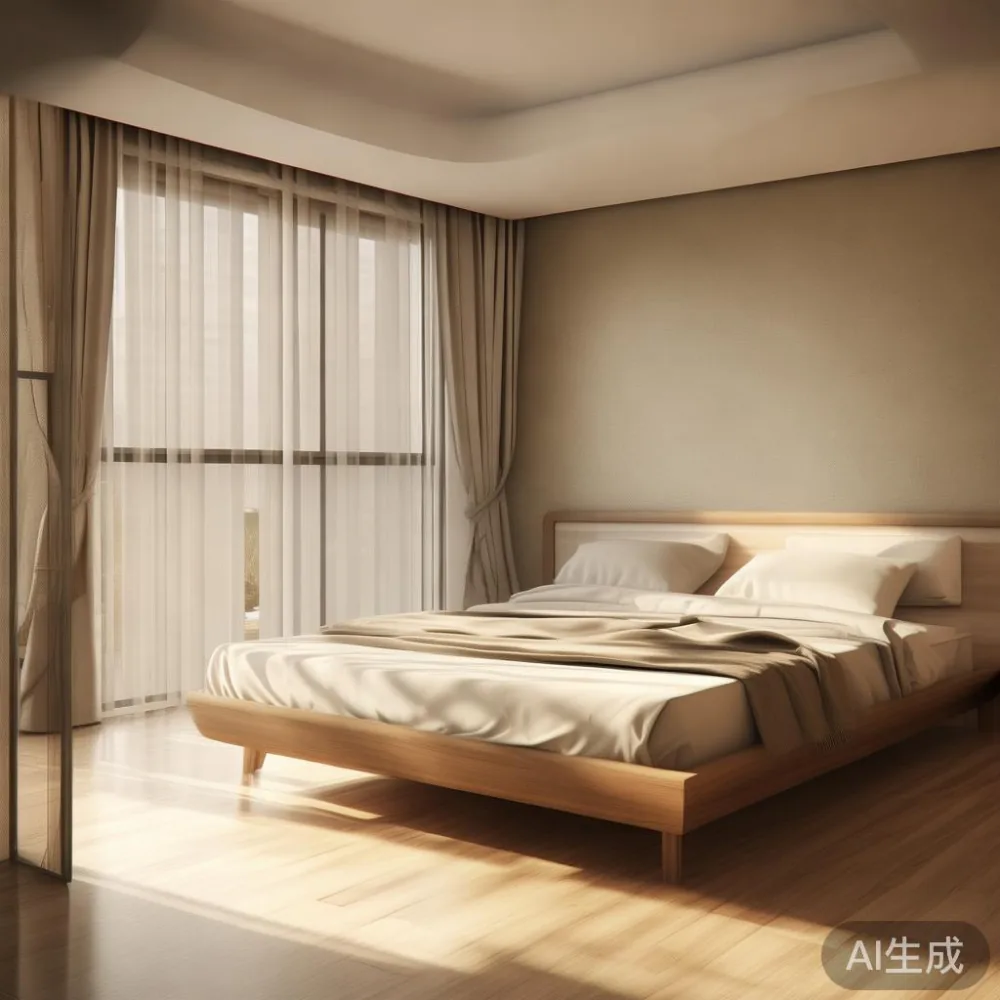
For Southeast Asian buyers, this matters because the seasonal swing is smaller than in temperate climates, but the absolute level is consistently high. A solid wood sofa in a dry Beijing apartment will crack from shrinkage; the same frame in a Tampines condo will cup and bow from swelling. The mechanics are identical, the symptom is opposite.
What humidity numbers should I actually worry about inside my flat?
Two thresholds matter. The first is your daily average. Anything between 45% and 65% relative humidity is the comfort zone for most kiln-dried hardwoods used in quality furniture: white oak, ash, walnut, beech. The second is your ceiling. Sustained readings above 75% are where mould spores germinate on raw timber within 48 to 72 hours, and where joints begin to seize rather than slide.
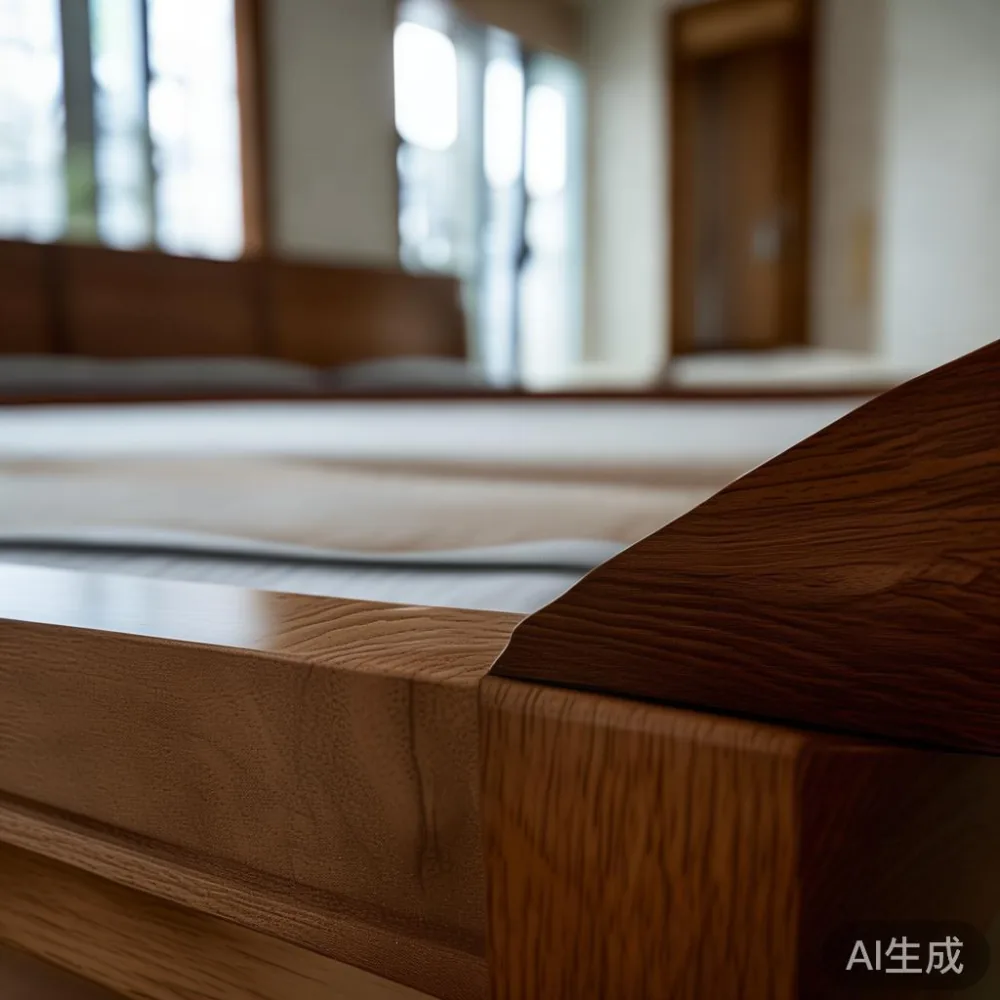
I keep a small hygrometer on my own bedside table, and the reading rarely drops below 68% even with the air-con running for six hours a night. In a Punggol Point Room without a flat or concierge dehumidification, the same meter hits 84% during a wet spell. If you are shopping for a bed frame, those are the conditions the wood will actually live in, not the climate-controlled showroom on the fourth floor of a Tai Seng warehouse.
How does humidity travel through an HDB block and reach my bed frame?
Most Singapore HDB flats are wrapped in a concrete skin with limited cross-ventilation, especially in newer BTO projects where stack-effect ventilation has been reduced for energy efficiency. Moisture enters through three predictable routes:
1. The service yard and kitchen, where cooking steam and drying laundry push humid air into the corridor pressurisation system.
2. The bathroom door, which is often left open during showers and can raise adjacent bedroom humidity by 8 to 12 percentage points within twenty minutes.
3. The bedroom window during a thunderstorm. I measured a 6% RH jump in my own room in under fifteen minutes during a December squall last year, with the window cracked 10 cm for cross-flow.
None of this is a problem for a glass-top marble table or a powder-coated wardrobe. It is a problem for a 45 kg solid wood bed frame sitting 15 cm off the floor on six contact points, breathing steadily through end grain at every joint.
Which bed frame designs survive Singapore humidity best?
Three construction choices make a measurable difference, and I recommend looking for all three when you compare quotes between SGD 1,800 and SGD 4,500:
- Mortise-and-tenon or dowelled joinery at the side rail to leg junction. These allow micro-movement without splitting. A bed frame screwed only with Confirmat-style furniture bolts will lock the wood in place and invite cracks at the rail.
- Floating panel construction on the headboard. A solid panel trapped in a groove can expand and contract without crushing the surrounding frame. Look for at least 3 mm of gap on each side of any wide panel.
- Kerf cuts or relief slots on the underside of large horizontal surfaces. These are stress-relief channels that prevent cupping. Reputable Foshan makers have applied this technique since the late 1990s.
A French light luxury bed frame in white oak with a woven cane headboard is a particularly clever choice for our climate, because the cane lets the frame breathe while the joinery does the structural work. The same logic applies to a post-modern light luxury bed frame with slim ash spindles and an open base: more air circulation, less trapped moisture.
What about delivery and lift access in older blocks?
This is where buying from a Foshan factory that ships consolidated containers actually helps the local buyer. A standard HDB passenger lift internal dimension is roughly 1.6 m deep by 1.1 m wide, with a door opening of about 0.9 m. A king-size bed frame in solid wood, even disassembled, can exceed those numbers on its longest component. I have watched two delivery teams in Clementi try to fit a 2.18 m side rail diagonally and fail; they ended up hoisting it up the service shaft, which added SGD 180 to the bill.
When you are comparing suppliers, ask for the packed carton dimensions in centimetres and the weight of the heaviest single box. A well-packed solid wood bed frame should not exceed 38 kg per carton if the side rails and slats are split into two packs each. Anything above 55 kg per box usually means the maker has skipped proper knockdown engineering.
Free shipping above US$350 is helpful, but what matters more is whether the freight forwarder has handled Singapore HDB access before. I have seen MIDHILL coordinate with three different local last-mile carriers for Tampines, Punggol, and Bukit Batok deliveries, and the difference between a 25-minute carry-up and a two-hour logistics puzzle usually comes down to how clearly the carton sizes were pre-staged at the Foshan warehouse.
How should I acclimatise a new bed frame before assembly?
Once the cartons reach your flat, do not assemble the bed frame for at least 72 hours. Stack the cartons in the bedroom with the lids open, and run the air-con or a dehumidifier to bring the room down to 60% RH if you can. The wood needs to equalise to your indoor conditions, and forcing a kiln-dried 8% moisture content board into an 80% RH room and bolting it together is the surest way to bow a side rail.
Two practical notes from my own move-in last month in a Sengkang BTO). I left the cartons open for five days because the bedroom dehumidifier took 96 hours to stabilise at 62% RH, and I placed 1.5 kg silica gel packs inside each carton to pull the residual shipping dampness out faster. None of this is exotic chemistry; it is what any seasoned furniture technician in the Tai Seng workshops will tell you over a coffee.
Is European light luxury wardrobe worth it for a Singapore bedroom, and does the same logic apply to my bed frame?
The short answer is yes, provided the European light luxury wardrobe uses the same kiln-drying and joinery standards as the bed frame you are considering. Many buyers focus on the wardrobe's external panels and ignore the internal dowel pins, which is exactly where humidity stress concentrates. If you are evaluating a European light luxury wardrobe in the SGD 3,200 to SGD 6,800 band, ask whether the back panels are 9 mm ply with ventilation slots or 18 mm solid wood trapped against the wall. The former will outlast the latter in a HDB corner by a comfortable margin.
For dining and living pieces, the same rules apply but the stakes are lower because a dining table and a solid wood sofa are typically moved seasonally or at least wiped down weekly. A bed frame sits in the same spot for a decade, which is why I always recommend spending an extra 8 to 12% on better joinery for the bed frame and accepting a slightly simpler solid wood sofa or nightstand if the budget is tight.
How do I maintain a bed frame through the November to January wet season?
Three habits keep the timber stable. First, vacuum the slats and the underside of the side rails every fortnight. Dust holds moisture against the grain and slowly raises the local humidity. Second, keep the bed frame at least 10 cm away from the external wall. I have measured a 4 to 7% RH gradient across a 30 cm gap on a north-east facing HDB wall during a December rain band, and that gradient is enough to cup a side rail over a single season. Third, refinish the high-wear zones every four to six years. A 0.3 mm coat of hardwax oil on the headboard top edge and the foot rail takes about 90 minutes and costs roughly SGD 35 in materials, which is much cheaper than replacing a bowed component later.
MIDHILL has offered lifetime refinishing on its solid wood collections since 2008, and I have used the service twice on a white oak dining table I bought from them in 2021. The technician sanded and re-oiled the surface in my driveway over a Saturday, and the table still measures flat within 1 mm across the 90 cm width a decade later. That kind of after-sales path matters more in our climate than in any temperate market, because humidity does not take nights off.
What should I budget for a humidity-resilient solid wood bed frame in Singapore?
For a queen-size white oak or ash bed frame with proper knockdown joinery, expect a landed price in Singapore between SGD 1,950 and SGD 3,400 including 9% GST. A king-size in the same specification runs SGD 2,400 to SGD 4,100. A complete set that includes two nightstands and a six-door wardrobe from the same collection will land between SGD 6,800 and SGD 11,200 before GST, with most Foshan exporters offering consolidated freight that drops another 12 to 18% off the per-piece rate.
If you are furnishing a 4-room BTO in Punggol or a 5-room flat in Tampines, the bed frame is the anchor piece, and it deserves the largest share of the furniture budget. A marble table in the dining area can be a budget-friendly engineered stone option without sacrificing the room's character, because stone is indifferent to humidity in a way that timber never will be.
Frequently asked questions from Singapore buyers
How long does delivery take from Foshan to my HDB door?
Sea freight to Singapore takes 8 to 14 days depending on the port rotation, plus 3 to 5 days for customs clearance and last-mile delivery. From order to assembly, plan on 21 to 28 days for a stocked model, and 45 to 60 days for a custom finish.
Will the 10-year structural warranty cover humidity-related warping?
Reputable makers distinguish between manufacturing defects and natural wood movement. Bowing within 4 mm across a 150 cm rail is usually considered acceptable seasonal movement; anything beyond 6 mm on a properly acclimatised frame is treated as a defect. Read the warranty wording carefully.
Can I return the bed frame if it does not fit my lift or corridor?
Most Foshan exporters offer 14-day returns on stocked models, but custom orders are typically non-returnable. The corridor width in a typical HDB block is 1.2 to 1.5 m, and the lift door is 0.9 m wide, so measure twice before confirming a custom headboard height.
Should I choose a European for dining room set or a solid wood sofa first for my new BTO?
Start with the bed frame and dining table, because those set the room proportions. A European for dining room collection in light oak or walnut will outlast a trend-led solid wood sofa, and you can refresh the upholstery every six or seven years without replacing the frame.
What is the difference between European sofa vs Nordic sofa, and does it matter for Singapore?
A European sofa vs Nordic sofa comparison usually comes down to silhouette and cushion fill. Nordic designs lean toward firmer foam and exposed timber frames, which suit our humidity better because there is less upholstery to trap moisture. European designs, including French provincial and Italian contemporary, often use deeper cushioning and closed bases that can develop mildew if the room stays above 75% RH for weeks. Either works, but the Nordic frame breathes better in a non-air-conditioned guest room.
How do I choose between European sofa vs French provincial sofa for a light-luxury look?
The European sofa vs French provincial sofa decision hinges on carving and leg profile. French provincial uses cabriole legs and deeper skirts, which are harder to clean in a dusty Singapore corridor and collect more moisture against the floor. A straight-legged European light luxury sofa sits higher and dries faster, which is why I lean that way for most local buyers.
How to choose French sofa without making a humidity mistake?
If you are working out how to choose French sofa pieces that will last in our climate, focus on three details. Pick a frame with a minimum 15 cm ground clearance, choose a sprung seat over a webbed-only base, and ask for a removable cushion cover so you can air it weekly. A French light luxury silhouette in beige linen is workable as long as the joinery and clearance are correct.
What Modern bed for 2026 should I shortlist for a new condo?
The best Modern bed for 2026 in our market will combine low-profile platform geometry, slatted ventilation, and a solid hardwood slat roll rather than a single MDF board. Light-luxury collections from established Foshan makers have shipped this exact specification for several seasons now, and the format is finally catching up with local expectations.
You can compare current specifications and finishes on midhill.co before shortlisting two or three local suppliers to visit. A bed frame is a fifteen-year decision, and the right answer is rarely the cheapest one on the showroom floor.