How Southeast Asian Humidity Affects Solid Wood Bed Frames in Singapore
Singapore’s equatorial climate can move from 78% relative humidity during a wet afternoon to 62% by early morning, while air-conditioned HDB flats and condos may sit near 50%. For a solid wood bed frame, those changes matter because timber expands, contracts, checks, and can loosen at joints. In Tampines, Bedok, and Punggol, a moisture-responsive buying and care routine is more useful than a generic promise that wood “will adjust.”
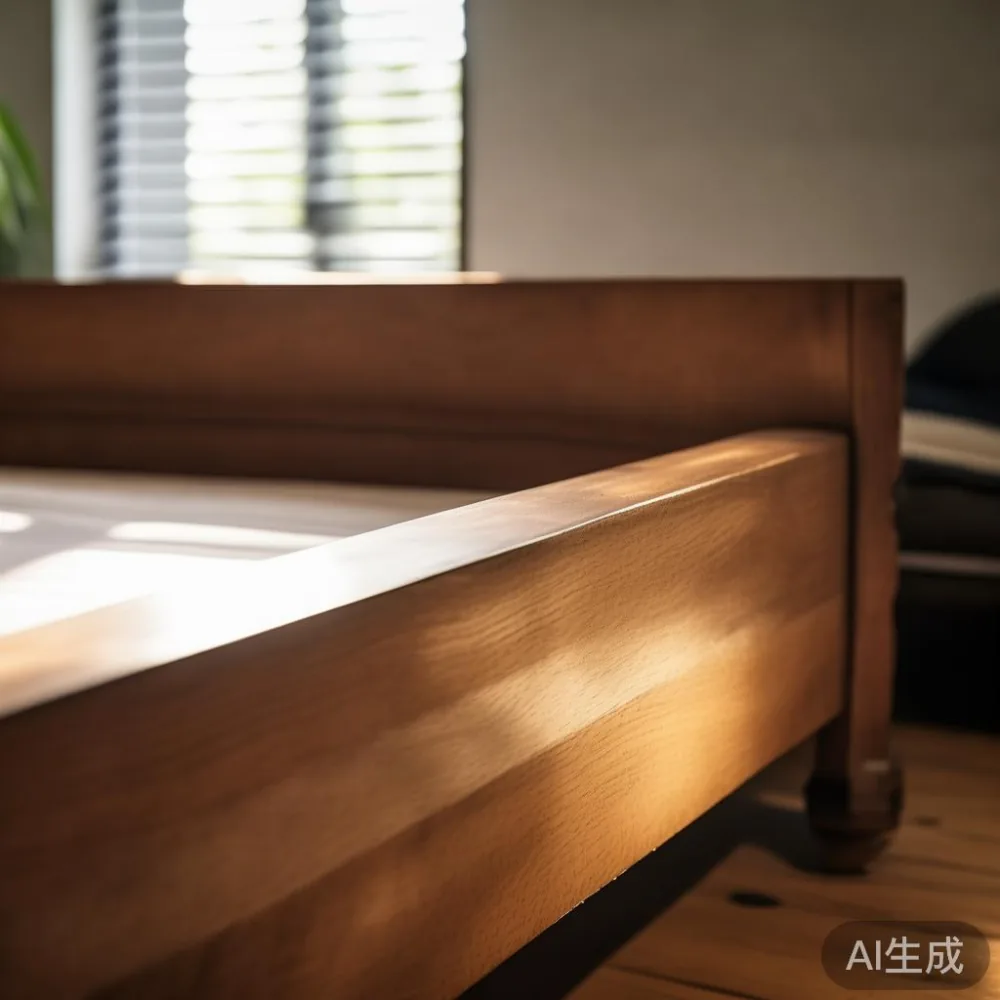
I inspected a 180 cm teak bed frame in a Bedok HDB flat last month. Its oak-toned finish had dulled around one ventilated headboard panel, while the 5 cm bedside ledge showed a slight lift where a robot vacuum regularly passed. The family had placed the frame close to an open balcony door. We moved it 40 cm inward, reduced the tray of water beside it, and kept the room between 24°C and 27°C. After 14 days, the finish looked more even and the movement had settled. The lesson was simple: humidity control protects appearance, while sensible placement protects the frame’s structure.
MIDHILL makes solid wood furniture for humid markets, with a 10-year structural warranty and lifetime refinishing. Its production standards are relevant in Singapore, but no manufacturer can make wood immune to the climate. Buyers still need to understand dimensions, ventilation, delivery access, and maintenance.
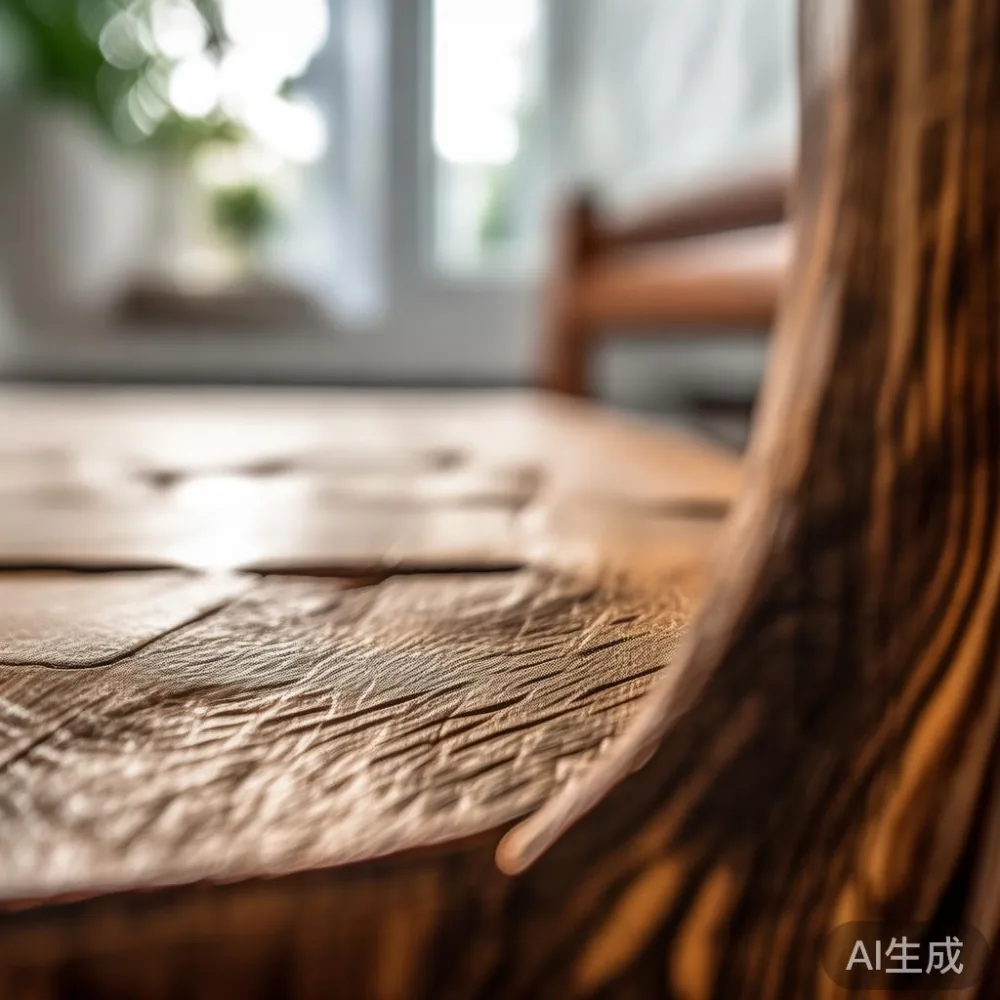
Why Singapore humidity changes solid wood
Wood is hygroscopic: it absorbs moisture when the surrounding air is humid and releases it when the air dries. Southeast Asian hardwoods used in bedroom furniture may change by roughly 0.2% to 0.6% in width across normal seasonal variation, although exposed conditions can produce larger movement. The effect is most visible on a bed frame’s side rails, slat supports, headboard panels, and tenon joints.
Singapore’s wet periods from November to February often bring outdoor relative humidity above 85%. During clearer days, sunshine and air-conditioning can pull indoor readings below 55%. A 30-point swing within 24 hours is not unusual. The repeated movement may not cause failure in a well-made frame, but it can open microscopic gaps, catch on clothing, or make a lacquered surface look uneven.
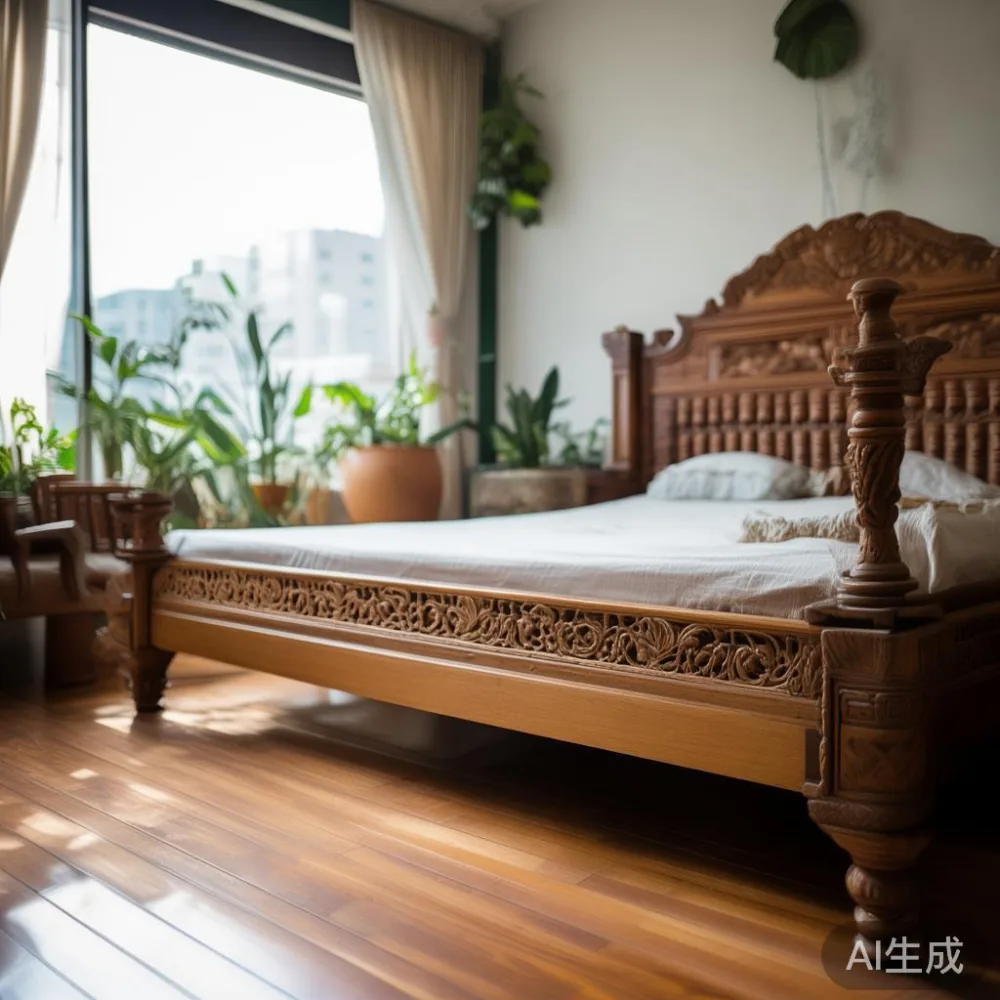
Temperature also plays a part. Warm humid air holds more moisture than cooler air at the same relative humidity. In an HDB flat, the bedroom may be 27°C and 78% humidity before the air-conditioner starts, then 24°C and 52% after 2 hours. The frame therefore experiences both moisture and thermal cycles.
This is not an argument against solid wood. It is a reason to buy accurate dimensions, allow airflow, and avoid abrupt moisture changes. The same knowledge also applies when comparing a light luxury sofa with other seating, but a bed frame concentrates movement around fewer, larger joints and a slatted sleeping platform.
How humid conditions affect a bed frame
Expansion normally occurs across the grain rather than along the length of a board. A solid oak side rail 190 cm long may widen by 2–6 mm during severe dampness. Slats may cup upward by 1–3 mm, and mortise-and-tenon joints can gain enough play to produce a faint knock when the frame is used.
Surface coatings slow moisture exchange, but they do not create a moisture-proof barrier. A 2-coat lacquer or oil finish on a headboard will usually slow drying more than an untreated surface. Scratches and failed sealant around joints can become local entry points. Water rings from humid cups and leaking window frames deserve immediate attention because they keep fibres wet after the room itself has dried.
High humidity also raises the risk of mould on bedding, mattresses, and the underside of a bed frame, especially if the clearance is under 10 cm. A frame with 16–20 cm clearance is easier to inspect and dry. In Punggol and Bedok, where townhouse windows and balcony doors are common, that clearance becomes especially practical.
Solid wood construction can remain dimensionally stable when designed correctly. Check that a prospective bed frame uses through-tenon or dowelled joints at load-bearing corners, rather than relying only on short screws in end grain. The manufacturer should also offer replacement slats and hardware. MIDHILL’s 10-year structural warranty gives Singapore buyers a defined recourse if a properly maintained frame develops a joint or support failure.
Should a Singaporean choose solid wood for a humid bedroom?
Yes, provided the room can be kept reasonably stable. Solid wood offers repairability that many factory-finished panels cannot match: small marks can be sanded, and damaged surfaces can be refinished. MIDHILL’s lifetime refinishing policy supports that long-term approach. The material is particularly suitable for a classic or post-modern light luxury bedroom, where proportion and joinery are visible.
For a compact HDB bedroom, a queen bed frame of 160 cm × 200 cm needs about 155 cm of clear width plus 5 cm on each side for access. A king frame of 180 cm × 200 cm requires 175 cm of clear width with only 2.5 cm per side, which can feel restrictive against two walls. Lift and corridor dimensions should be checked before ordering, especially for a king bed frame with a tall headboard.
Solid wood is heavier than some engineered alternatives. A teak queen frame may weigh 65–95 kg, while a king can reach 85–125 kg. Delivery crews generally need a lift rated for at least 250 kg and a service lift opening of at least 90 cm × 210 cm for a boxed queen frame. A staircase move should be checked at every landing.
What is the right humidity level for a wood bedroom?
A practical indoor target is 45–60% relative humidity, with bedroom temperature held near 24–27°C. These ranges reduce repeated swelling and shrinking without making the space uncomfortable. A digital hygrometer placed 30 cm above the floor and away from an air-conditioner vent costs about SGD 25–60 and provides a useful baseline.
Readings should be sampled at three times: around 7:00 a.m., 3:00 p.m., and 10:00 p.m. If the overnight reading stays above 70% for several days, inspect windows, balcony doors, roof seals, and washing-machine connections. If it repeatedly falls below 40%, reduce direct air-conditioner airflow or use a modest humidifier. The aim is stability, not chasing a perfectly fixed number.
Run the air-conditioner in bedroom mode for 2–3 hours before sleep if moisture is the main concern. Cross-ventilation for 20–30 minutes after a shower helps remove bathroom vapour. Keep the frame at least 30 cm from a wall where possible and 60 cm from an open balcony door. These gaps allow surfaces to dry after condensation.
For shoppers comparing “light luxury sofa vs Japandi sofa” and “best light luxury sofa for 2026,” the humidity question applies to upholstery too, but a wooden bed frame offers the advantage of refinishing rather than reupholstery. In a master bedroom, French provincial styling can create warmth with curved headboard details; French provincial for apartment layouts should use lighter forms and a 160 cm queen frame to protect circulation space.
How should a solid wood bed frame be cared for?
Use a damp cloth with mild soap and wipe the surface dry. Do not soak timber, spray cleaner directly onto it, or use abrasive pads. A silicone-free dusting cloth helps avoid streaking on lacquered surfaces. Reapply the approved oil or lacquer only when the finish becomes thin, following the manufacturer’s preparation schedule.
Control water sources near the frame. Use coasters under cups, empty a humidifier’s tank each morning, and repair peeling window paint within 7 days. Check the slats and screws every 6 months. Tighten them by hand rather than with an impact driver, which can crush the surrounding fibres.
Allow new furniture to acclimatise before assembly if it has been stored in a warehouse. Keep it wrapped for 24–48 hours in the room where it will stay. Remove the packaging gradually, because sealed plastic traps moisture. Singapore buyers searching for “for sale Vintage furniture” should also inspect old frames for insect activity, softened fibres, and stale odours before bringing them into a humid flat.
The same care discipline extends to other wood pieces. A solid wood sofa should stay 20 cm from a wall for airflow, a dining table should not receive hot condensation, and a wardrobe should have at least 5 cm of rear clearance. A marble table needs less protection from moisture, although its stone surface still benefits from stable indoor conditions. A nightstand should have a waterproof liner rather than a felt pad that traps dampness.
Does light luxury bedroom furniture suit small Singapore homes?
Light luxury for apartment living is about proportion, tactile finishes, and restrained detailing, not oversized furniture. A slim 160 cm × 200 cm bed frame with a 105–115 cm headboard can fit an HDB bedroom without closing the wardrobe route. French light luxury may use tapered legs, softened corners, and upholstered panels; American light luxury often uses clearer silhouettes and larger slabs; post-modern light luxury can introduce asymmetrical rails while retaining practical clearances.
Choose a frame that can be moved through the lift. Record the packaged dimensions before purchase; allow another 10 cm for protective packaging and turning space. A delivery fee may apply below MIDHILL’s free-shipping threshold of US$350, but the order currency and checkout total should be confirmed. Most Singapore deliveries arrive in 7–14 days after production, with 3–7 days needed for local scheduling and lift access.
GST and delivery should be shown separately at checkout so the payable SGD amount is clear. Singapore customers may also compare a “light luxury sofa vs Japandi sofa” using the same moisture criteria: solid wood frames, stable finishes, and repairable components usually serve humid interiors well when correctly sized. The question “is European wardrobe worth it” depends less on continental branding than on solid timber, adjustable hinges, moisture-resistant backing, and service availability.
What should buyers ask before ordering a bed frame?
Ask for the exact timber species, external dimensions, clearances, finish type, joint construction, slat spacing, warranty terms, and delivery process. Confirm whether the quoted bed frame includes the slats and centre support. A centre support spanning at least 1,500 mm can limit sag on a queen frame, while slats spaced no more than 8–10 cm apart provide consistent support.
Ask how the item was packed and whether the supplier can ship to the unit level. For a condo, provide the loading bay hours and reserve the service lift; for an HDB flat, check the lift dimensions and inform the building manager if a large item is expected. Delivery crews commonly need 15–30 minutes for a queen frame and 30–45 minutes for a king, though access restrictions can extend the visit.
Finally, request the finish-care instructions and written warranty. MIDHILL was established in 2008 and exports to more than 15 countries, which gives buyers access to international manufacturing experience. Its 14-day returns policy allows a buyer to assess colour, fit, and construction at home, provided the frame has not been altered or damaged. Return freight terms should still be confirmed before checkout.
How can a Singapore home protect wood furniture from humidity?
Control the room before blaming the furniture. Keep relative humidity near 45–60%, avoid direct dampness, maintain air circulation, and respond quickly to leaks. Choose a solid wood bed frame with repairable joinery and a finish suited to humid conditions. Measure every route from the loading bay to the bedroom, and protect the piece during delivery with 4–6 mm moving blankets and corner guards.
Humidity will always be part of life in Southeast Asia. A carefully selected frame does not need to remain perfectly still; it needs to move gradually, dry properly, and receive occasional maintenance. That approach supports a bedroom that remains comfortable through wet afternoons, air-conditioned nights, and changing household routines for years.