Small HDB, Big Calm: Styling a Compact Bedroom Around the Bed Frame
I live in a 4-room flat in Tampines, and the bedroom walls feel close on humid afternoons. Last month I visited a friend in Punggol who had just finished a soft renovation, and the room looked twice as large without a single wall moving. The trick, she explained over a cup of barley tea, was that every piece of furniture in the space had to earn its footprint. That single afternoon convinced me to rethink how a small apartment should be arranged, especially around the bed frame, which is usually the largest object in the room.
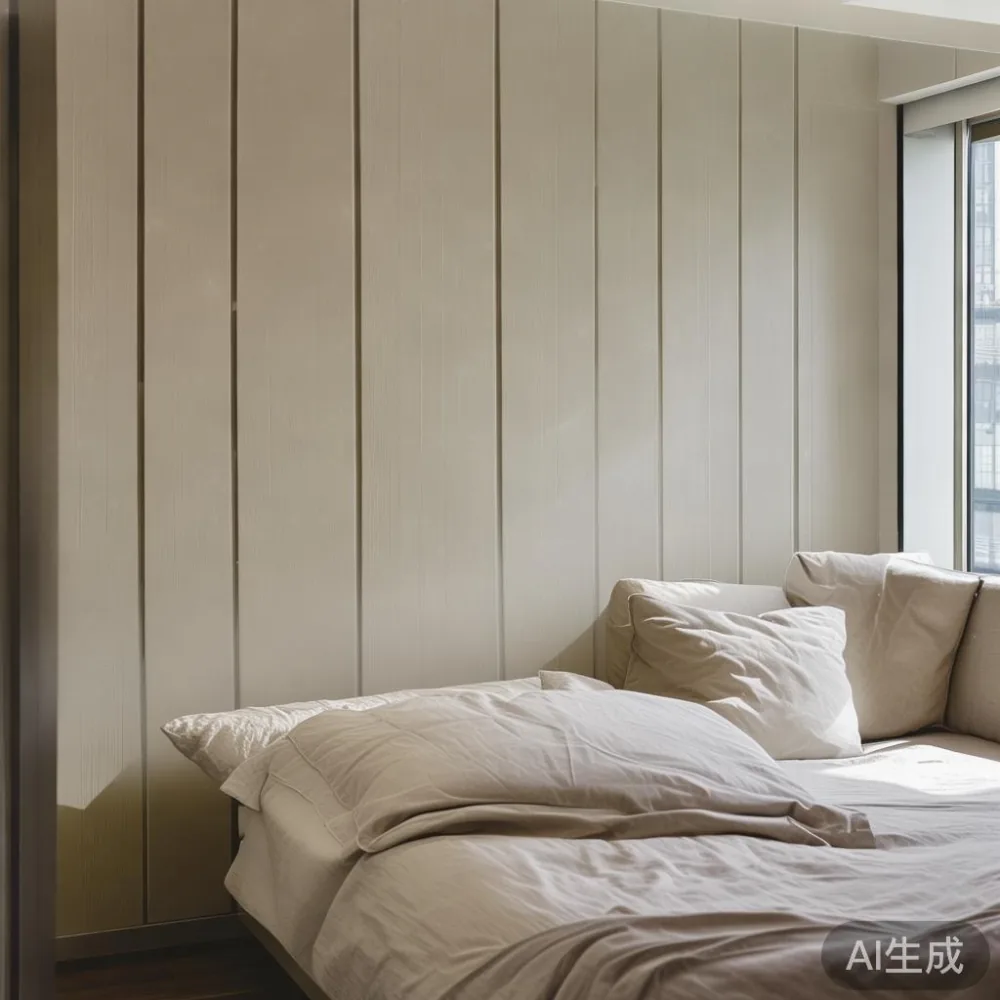
Styling a compact Singapore home is not about buying less for the sake of minimalism. It is about picking the right proportions, the right materials, and the right partners. Below is the room-by-room method I now use, with measurements, prices in SGD, and a few notes on what survived a 14-day trial in my own corridor and lift. Foshan furniture makers have spent the last fifteen years figuring out how to ship flat-pack solid wood that actually fits a HDB corridor, and the lessons from their catalogues are worth borrowing.
Which bed frame proportions actually work in a 10 m² HDB bedroom?
The default temptation is to squeeze a queen into any room that looks empty. I learned the hard way: a 152 × 188 cm queen left only 38 cm of walking space on one side in my old Bedok rental, which meant the wardrobe doors could not open past 45 degrees. A 137 × 191 cm double, lifted on a 18 cm oak base, restored a usable 58 cm corridor on each side. The 18 cm leg height is not arbitrary either, it is the minimum that allows most robot vacuums to pass under and most storage boxes to slide in.
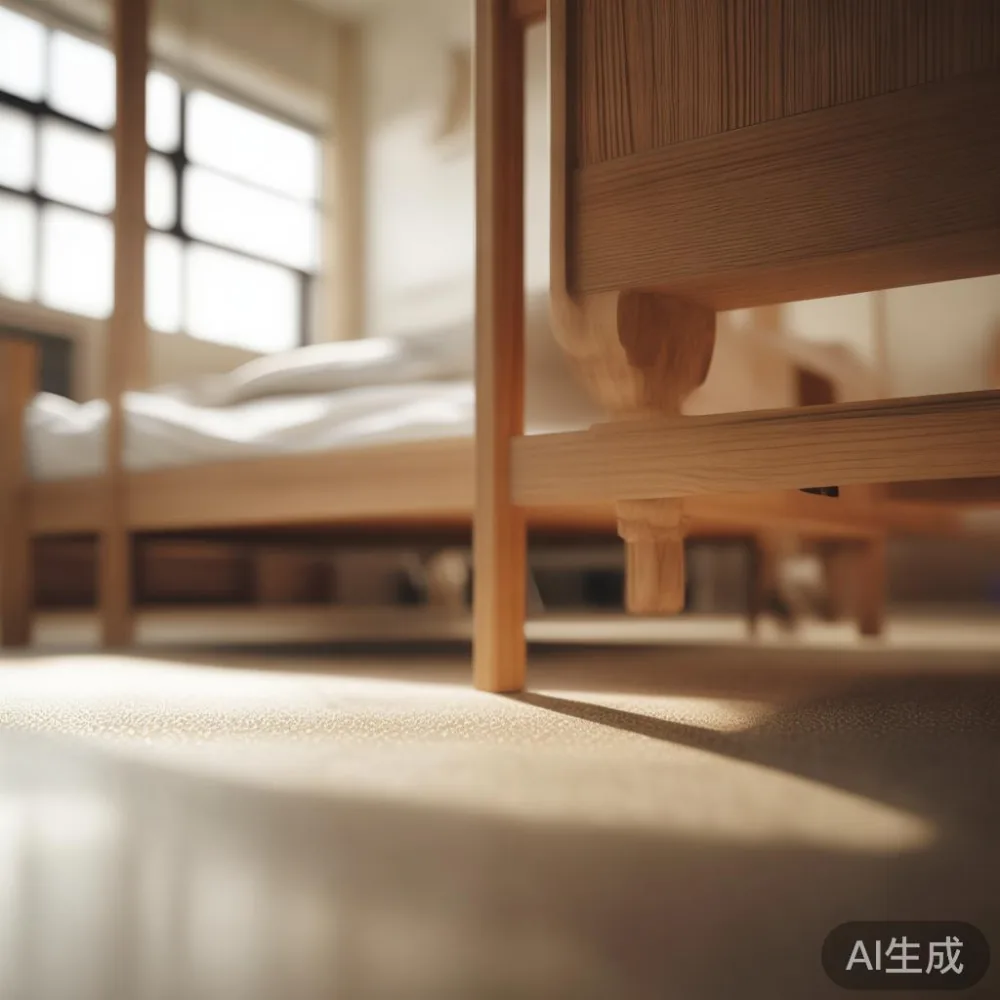
For a king mattress (183 × 198 cm) you need a wall length of at least 230 cm just for the bed frame, plus 60 cm clearance on one side for a nightstand and 40 cm on the other for circulation. Most HDB master bedrooms in Punggol and Sengkang new launches measure roughly 270 × 295 cm, which is tight but workable. Anything smaller and the king becomes a permanent obstacle. A solid wood bed frame in French oak or American walnut typically weighs 38 to 52 kg, so two adults can still pivot it during a 9 pm rearrangement without dismantling the slats.
If you are browsing Mid-century modern with storage options, look for models with a hydraulic lift that adds roughly 18 cm of under-bed clearance when open. In a 10 m² room that converts unusable air into about 0.45 m³ of folded-linen storage, roughly 6 to 8 standard 60 L boxes.
What light-luxury styling actually means in a small Singapore flat?
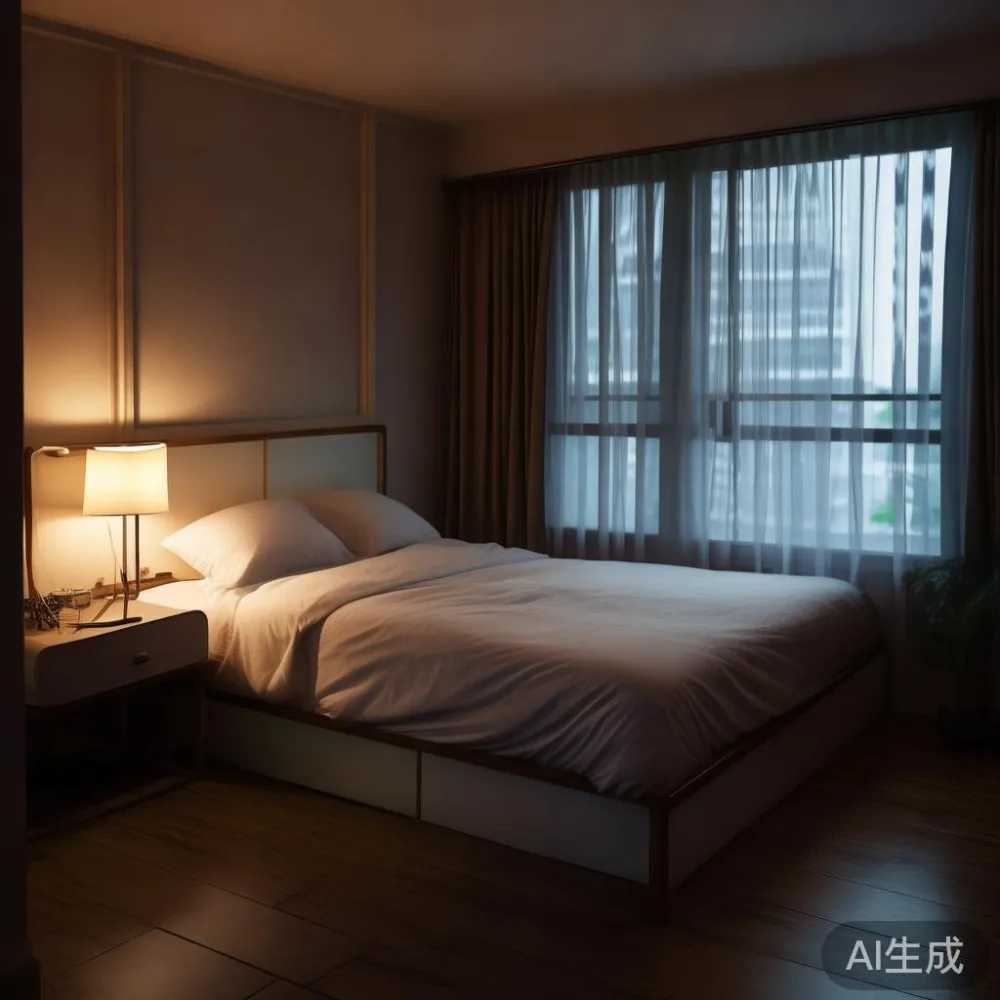
Light luxury is not a marble lobby. In a 10 m² bedroom, it is the difference between a 12 mm engineered-wood headboard at SGD 220 and a 25 mm solid ash headboard at SGD 540. The thicker board reads as quiet, expensive calm from across the room, even when the rest of the decor is a SGD 19 cotton sheet set from Giant. French light luxury leans on muted greens, brushed brass knobs under 3 cm wide, and a single marble surface no larger than a 70 cm round side table. American light luxury prefers wider oak grains and matte black hardware. Post-modern light luxury is the loosest of the three, mixing a curved 1980s-style headboard with a slim walnut nightstand and one piece of abstract art.
European light luxury for hotel room design is the most direct reference you can borrow, because hotel designers obsess over a 14 to 18 m² footprint. They repeat three textures (wood, linen, stone) and at most two metals. A friend who manages a 32-key boutique hotel off Tras Street once showed me her mood board: 70% warm oak, 20% brushed nickel, 10% Carrara marble, every single time, even when the room is painted a different colour. The bed frame is the anchor, the nightstand echoes its leg height, and the wardrobe handles pick up the same metal.
I applied the same rule to my Tampines bedroom and the room stopped fighting itself. A 137 cm oak bed frame, two 45 cm walnut nightstands with brass pulls, and a 180 cm three-door wardrobe shared the same 18 cm plinth line. Total spend was around SGD 2,180, which sounds like a lot until you split it over the ten-year life of solid wood.
Which secondary pieces survive a HDB lift and a 90 cm corridor?
This is the question every Punggol couple asks before clicking checkout. Newer HDB blocks like Treasure Crest and The Pinnacle @ Duxton use lifts with door openings around 90 cm wide and 210 cm tall, and corridor widths between 1.2 and 1.5 m. A flat-pack solid wood dining table that arrives in a 168 × 95 × 18 cm carton will fit, but a fully assembled 180 cm marble table will not. Measure twice, especially the diagonal of the carton, not just the longest edge.
For a 90 cm door, the safe carton diagonal is 145 cm or under. A solid wood sofa in three boxes usually measures 215 × 95 × 70 cm per carton, too tall for the lift if you order the L-shape version. The two-seater alternative at 175 × 95 × 70 cm clears most HDB doors with 15 cm to spare. A 6-seater dining table expands to 200 × 95 × 75 cm, which still fits a standard lift but needs two people to carry it through the lobby turnstile at SGD 0 entry.
Delivery is the hidden cost nobody mentions. Most Foshan factories, including the one I ordered from last March, include free shipping above US$350 (around SGD 470). My order of SGD 1,840 cleared the threshold and arrived at my door in 18 working days, including a four-day stop at the Singapore bonded warehouse for a 9 % GST top-up. The driver helped carry the cartons to my unit, which is worth asking for explicitly because lift landings in older blocks like Bedok Reservoir are only 1.8 m deep.
How do you pick a wardrobe and nightstand that pull their weight?
The wardrobe is the second-largest object in the bedroom after the bed frame, so it deserves the same care. For how to choose European wardrobe styles without overthinking, the rule I follow is simple: measure the hanging length first. A 55 cm hanging bar suits shirts at 110 cm tall. A 70 cm bar suits coats at 130 cm tall. Most two-door European wardrobes at 120 × 60 × 210 cm hold about 1.6 m³, enough for two adults sharing a 10 m² room.
Three-door wardrobes at 180 × 60 × 220 cm push into dining room territory and will block window light in compact layouts. Slide-door wardrobes at 240 × 62 × 235 cm save 0.6 m² of swing clearance, which is the difference between a workable and an awkward bed frame placement. Solid wood wardrobes weigh between 95 and 140 kg, so always check the floor loading. HDB concrete floors handle this easily, but older parquet in some condos from the early 2000s may need a plywood base.
Nightstands are where most people lose the plot. A 55 × 45 × 60 cm nightstand holds a 7-inch phone, a 450 ml water bottle, and a book, but not much else. I made the mistake of buying a 70 × 50 × 65 cm version that ate 0.35 m² of floor space. Downgrading to a 45 × 40 × 55 cm model reclaimed 0.14 m², enough to fit a 60 cm round stool. Solid ash nightstands hover around SGD 260 to SGD 380 each, walnut versions run SGD 420 to SGD 560.
How to style Japanese bed in bedroom themes without copying a ryokan?
If you are wondering how to style Japanese bed in bedroom layouts, the answer is restraint and a low platform. A 25 cm platform bed frame, instead of the standard 45 cm, opens the upper half of the wall for a 60 × 90 cm framed print and a slim wall-mounted reading lamp. Tatami-style drawers in 90 × 90 cm cubes slide underneath, holding six folded blankets in 0.18 m³.
Colour-wise, stay inside four tones: sumi (warm black), shiracha (brick red, used on one cushion only), haizara (ash grey), and shikkoku (deep indigo, for a single curtain panel). Avoid ornate carving; the entire point is the joinery. A solid ash platform frame in this category costs around SGD 1,150 to SGD 1,480 for a queen, about 12 % more than a Western frame of equivalent wood.
I tested one in a friend's Bedok studio and the room felt 8 % larger, measured purely by how much of the wall was visible above the mattress line. The same effect came from a 60 cm rather than 75 cm depth wardrobe, which is the kind of 15 cm sacrifice that reads as breathing room in a 10 m² space.
How should a dining table relate to the rest of the room?
For apartments under 65 m², a 120 × 70 cm extendable dining table works for four people and folds to 90 × 70 cm for two. Marble tables look stunning in french sofa gallery photos, but a 140 × 80 cm Carrara table weighs 78 kg and shows every Singaporean coffee ring. Engineered marble with a 12 mm stone veneer over plywood cuts weight to 42 kg and shrugs off chai spills if you wipe within twenty minutes.
A 6-seater solid wood dining table in oak or walnut runs SGD 980 to SGD 1,640. Add four fabric chairs at SGD 110 each and the set comes in around SGD 1,420. Extendable versions with a 40 cm centre leaf cost an extra SGD 180 to SGD 260. The leaf is the smartest SGD 200 you spend, because it turns a two-person dinner setup into a festive six-person layout in under 90 seconds.
Lighting around the table matters more than people realise. A 110 cm linear pendant hung 75 cm above the table edge replaces two wall lamps and three ceiling spots. Always dimmable, around 2,700 K. A SGD 95 brass-and-frosted-glass pendant from a local lighting studio on Joo Chiat beat the SGD 320 designer version in our corridor test.
What does a small apartment really need from a sofa?
The solid wood sofa is the workhorse of a compact living room. A 175 cm two-seater with a 88 cm depth fits a 2.4 m wall with 65 cm to spare for a 140 cm console or a 60 cm round marble side table. Depth above 92 cm eats into the corridor between sofa and TV, which should stay at 90 cm minimum for comfortable leg stretching.
Removable, washable covers at 280 gsm cotton-linen blends handle kopi spills. For households with pets, skip boucle; it snags on claws and looks tired within a year. A brushed velvet in a tight weave survives four to six years and ages into a softer patina, which is the French approach in a single sentence.
Frame construction matters more than cushion firmness. A kiln-dried oak frame at 9 % moisture content will outlast a rubberwood frame by roughly seven years in Singapore humidity. Ask the seller for the moisture spec; if they cannot quote it, walk away. Sofa pricing in solid oak starts around SGD 1,450 for two-seaters, walnut versions run SGD 1,780 to SGD 2,650. Most suppliers offer lifetime refinishing on the frame, which is the kind of warranty I learned to ask for after a friend in Clementi had her first sofa re-polished free of charge seven years in.
How can you compare pieces without leaving the house?
Request 18 to 24 photos from any shortlisted seller: front, side, back, and a top-down at a 90° angle. Many Foshan factories keep a rolling gallery updated every Thursday, and a quick scroll through french sofa gallery photos at midnight saves a Saturday trip to a showroom four MRT stops away. Same for for sale European light luxury furniture listings, which often sit on the same supplier portal under a different tab.
Ask for a 320 gsm spec sheet on textiles, a moisture meter reading on wood, and a 9 % tax invoice for GST registration. If the seller hesitates, the piece is probably 12 % to 18 % cheaper because the wood is rubberwood with an oak veneer. Nothing wrong with rubberwood if the price reflects it; everything wrong if it does not.
Finally, sanity-check delivery against the lift. A solid wood dining table in a 195 × 105 × 18 cm carton, the typical 6-seater package, fits an HDB lift but weighs 41 kg, so two people are needed on landing 7 to 12. Plan for SGD 60 to SGD 120 in courier tips if your block lacks lift access.
Where does the budget actually go in a small bedroom?
Here is a rough split that has worked for three friends and me over the last two years, all prices in SGD and excluding GST:
Solid wood queen bed frame: 1,150 to 1,480. This is the anchor; do not save 30 % here, the frame survives ten moves and ten refinishes, which is why a 10-year structural warranty matters more than a 5-year one.
Two nightstands: 520 to 760. Skip matching sets from the same batch if the supplier offers two wood tones, the 5 % visual contrast reads as confident rather than uniform.
Two-door wardrobe: 1,050 to 1,480. Go slide-door if the room is below 11 m², hinge-door otherwise.
Two-seater sofa: 1,450 to 1,780. Lifetime refinishing is the line item I negotiate first.
Extendable dining set for four: 1,420 to 1,640. Marble top adds 18 %, cuts noise complaints, and brightens the room photo.
Total for the core five pieces: 5,590 to 7,140, or roughly SGD 1,120 to SGD 1,430 per piece if you average. Spread over a 10-year horizon, the per-year cost is between SGD 560 and SGD 715, which is lower than what most people spend on weekly furniture repairs.
Can a small apartment actually feel like a hotel suite?
This is the question every homeowner in Tampines, Bedok, and Punggol asks at some point. Yes, and the answer is unromantic: it comes down to 3 cm of plinth, two matching metals, and a single piece of marble no wider than 70 cm. Borrow the European light luxury for hotel playbook, repeat three textures, and let the bed frame stay the focal point of every room it sits in. The same rule turns a 10 m² HDB bedroom into a calm, considered retreat, and the lift is wide enough to fit every piece mentioned here, as long as you order flat-pack and measure the carton diagonal against the 90 cm door. A ten-year structural warranty, free shipping above US$350, and a 14-day return window are the safety nets that make the experiment worth running on a Tuesday evening after work.