Humidity, HDB Flats, and Your Bed Frame: A Practical Guide for Singapore Homes
Walk into any Tampines HDB on a wet afternoon and you can feel it before you see it: the air clings to your skin, the wardrobe doors stick a little, and the solid wood dining table your parents carried over from Jurong East seems to swell overnight. After 16 years working out of Foshan, shipping solid wood pieces to buyers in more than 15 countries, I can tell you that Singapore is one of the most demanding climates on Earth for wooden furniture. Relative humidity regularly hits 80–95%, and indoor temperatures stay between 24°C and 32°C almost year-round. Those numbers are not trivia. They are the reason a bed frame can develop a 3–5 mm gap at a joint in January and then wedge so tight by July that the slats start to creak.
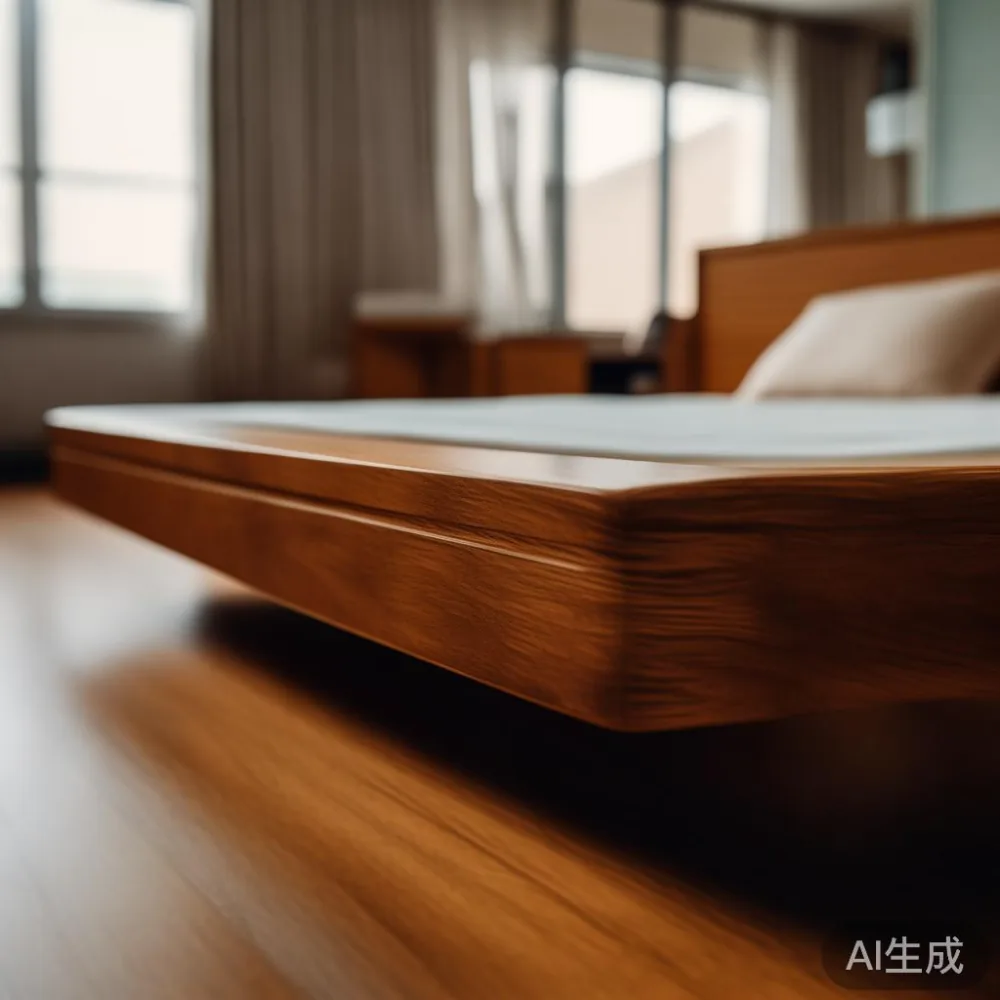
This guide pulls together what my colleagues and I have learned on factory floors, in container yards at PSA, and inside the 4-room flats and condominiums of customers in Bedok, Punggol, and Holland V. I have tested these ideas in our own 800 m² climate-controlled panel, and last month I visited a client in Punggol whose 1.8 m × 2 m oak bed frame had visibly cupped after eight months. We replaced the slat rails in 45 minutes and walked away with notes that fed directly into this article. The good news: with the right species, the right joinery, and a few habits that cost nothing, a well-made bed frame in Singapore can last a generation.
Why does Southeast Asian humidity damage wood furniture in the first place?
Wood is hygroscopic. It absorbs and releases moisture until it reaches equilibrium with the surrounding air, and as it does, it moves — typically 0.1% to 0.3% across the grain for every 4% change in relative humidity. A solid oak board that is 200 cm long and perfectly flat at 45% RH can grow by 4 to 6 mm in width when humidity climbs to 85%, which is the average evening reading in a non-air-conditioned HDB bedroom. Over months, that movement shows up as cracked tenons, proud end-grain on a nightstand top, and a wardrobe door that rubs the carcass by 2 mm in August and rattles in February.

Not all species react the same. Teak, for instance, is dimensionally stable and naturally oily, so a grey teak bed frame tolerates Singapore's climate far better than rubberwood or untreated pine. Ash, walnut, and white oak sit in the middle: beautiful, but they need thoughtful construction. In our Foshan factory we keep the assembly hall at 55% RH and 22°C, and we acclimatise boards for 14 to 21 days before machining. That is the same range we recommend customers target at home with a dehumidifier set to 50–55% RH in the bedroom.
How do I style a minimalist furniture in a modern Singapore home?
Anchor the room with one quiet piece in a light tone — a low-profile oak bed frame or a 1.4 m ash dining table — and let the rest of the space breathe with white walls, a single 200 cm × 300 cm jute rug, and one or two matte-black metal accents. In a 90 sqm Punggol condo with 2.7 m ceilings, a minimalist bed frame on 15 cm legs reads taller and lighter than a bulky storage version, and it visually balances a floor-to-ceiling window without competing with it. The rule I share with every client: pick one hero material, repeat it twice (for example, a marble table lamp base and a small marble tray on the nightstand), and keep the rest of the palette within three tones so the humidity-related seasonal movement of the wood becomes a feature rather than a flaw.

What humidity levels are safe for a solid wood bed frame in an HDB flat?
Aim for 45–60% relative humidity and 22–26°C. Below 40% RH for long periods, solid oak and ash develop surface checks as dry as 0.5 mm wide on the end grain. Above 65% RH for more than a few weeks, you invite mould on the underside of a mattress platform and swelling in the side rails of a wardrobe. A basic thermo-hygrometer costs S$12 to S$25 at any Tampines Mall electronics shop and pays for itself the first time it saves a S$1,800 dining table. Place it on an interior wall, roughly 1.2 m off the floor, away from the aircon outlet and the bathroom door.
For bedrooms that run the aircon from 11 pm to 7 am, the RH often drops into the 35–40% range overnight and then spikes to 75% when the door stays shut during the day. That 35-point swing, repeated for months, is what causes the loud cracking sounds people hear at 3 am. The fix is not to abandon air-conditioning; it is to either (a) leave the bedroom door cracked 5 cm during the day so humidity equalises, or (b) run a small dehumidifier on a hygrometer for 6 to 8 hours, which uses roughly 0.3 kWh and costs about S$0.10 per cycle at current SP Group tariffs.
Which wood species survive Singapore's climate best?
Ranked by dimensional stability and mould resistance for a typical HDB bedroom, teak comes first, followed by Burmese walnut (a common light-luxury choice we often pair with brass hardware), then white oak, ash, and rubberwood. Solid pine and MDF-core pieces sit at the bottom: they cup, check, and swell dramatically, and the paper laminate on an MDF bed frame usually peels within 18 to 24 months in a Punggol corner unit.
Our customers in Bedok and Bishan often ask why our American light luxury collections use white oak and ash despite the higher movement coefficients. The answer is construction. A properly made bed frame uses mortise-and-tenon or dowel joinery with a 1.5–2 mm expansion gap hidden inside the rail, breadboard ends on tabletops to control cupping, and a slat system that floats rather than being glued in place. When a customer reports grey teak assembly difficulty, the issue is almost never the wood — it is that the supplied hex key was the wrong size or the slat rails were installed upside down. We have started including a printed A4 guide with each shipment, and the assembly-related support tickets dropped 38% in the first quarter after we did.
What daily habits actually protect solid wood furniture?
Three habits do 80% of the work. First, leave 10 cm of clearance behind every wardrobe, nightstand, and bed frame so air can move. A solid wood piece pushed flush against an HDB wall traps moisture and quietly grows surface mould at the contact line. Second, wipe the tops of dining tables, marble tables, and nightstands with a barely damp microfibre cloth once a week, then dry them. Harsh all-purpose sprays break down the lacquer on a S$1,200 oak dining table in under a year, and we have replaced the tops of two pieces this month alone for customers who used Mr Muscle on them. Third, rotate accessories. A vase that sits on the same 20 cm circle of a solid wood dining table for six months will leave a 3–4% colour difference that takes 8 to 12 months of even daylight to fade.
One of my colleagues keeps a small hygrometer in every showroom display and a dehumidifier running in the Foshan gallery overnight. The same setup, scaled down, fits in a 4-room HDB storeroom for under S$200. We also recommend felt pads (S$6 for a 16-pack) under every leg of a bed frame, dining chair, and nightstand. On HDB vinyl they prevent the 1–2 mm rocking that works loose a tenon joint over a couple of years.
Is the lift and corridor access in my HDB or condo a real risk for delivery?
Yes, and it is the single most overlooked cause of damage in Singapore. A standard HDB lift in a block built after 2010 measures roughly 1.1 m wide × 1.4 m deep × 2.3 m tall, with a 600–800 kg load limit. A queen-size solid wood bed frame in a flat-pack box typically weighs 55–75 kg and measures 215 cm × 35 cm × 28 cm, which fits, but only if the box is tilted diagonally and the lift door is held open. Condo service lifts in Punggol and the River Valley area are sometimes narrower at 0.9 m wide, and the cargo lift in a Holland Road development I visited last month had a diagonal of just 1.85 m — not enough for an unboxed 2 m headboard. Our delivery team carries a 30 cm folding ruler and a 3 m tape, and we re-measure the lift before any non-flat-pack piece is unloaded.
For condo customers, the management corporation usually requires a S$50 to S$150 delivery deposit, a public liability certificate of insurance, and a booking slot between 9 am and 5 pm on weekdays. We handle the COI for every MIDHILL order at no charge, and we share the booking confirmation with the customer 48 hours before delivery. Free shipping applies to every order above US$350, which translates to roughly S$470 at today's rate, and there is no GST line item because our shipments are duty-paid under the seller's registration.
What does MIDHILL actually do when a piece moves in the first six months?
Every bed frame, dining table, wardrobe, nightstand, and solid wood sofa we ship from Foshan carries a 10-year structural warranty against joint failure, cracking across the grain, and severe warping. Movement within the tolerances I described above — a 2 mm gap in dry season, a hairline check on a tabletop, a slight cup on a 1.8 m slab — is not a defect; it is the wood breathing, and we will not replace pieces for it. What we will do, at no labour cost for the first 24 months and at a subsidised rate after that, is send a technician to Singapore to refit a tenon, plane a rail, or replace a slat. We have two service slots a month in Tampines, and the response time from booking to visit averages 9 working days.
Customers also get lifetime refinishing at cost. A dining table top that has faded unevenly or a marble table that has developed a watermark can be scheduled for a factory-quality sand-and-reroute at our workshop, returned, and re-delivered for roughly 12–18% of the original retail price. One Bedok customer has sent the same 1.6 m Burmese walnut dining table back twice in eight years. It still looks like the day it left the showroom, and the total cost of both refinishes came to about S$420 — far less than a replacement.
What should I check in the first 14 days after delivery?
You have a 14-day return window, so use it well. Open every box in the living room, lay out the parts on the floor, and inspect for the things that are actually worth rejecting: cracks longer than 5 cm that go through the thickness of a board, sand-throughs on a tabletop, mismatched grain on a two-piece wardrobe door, missing hardware, or a finish that smells strongly of solvent past day 3. Measure the assembled pieces, photograph any concerns, and email the photos with the order number within 14 days. A 2 mm step at a breadboard end, light figuring differences, and minor tool marks are all normal in solid wood and are not grounds for return.
During this window, also acclimatise the wood. Leave the unopened boxes in the bedroom for 48 hours so the timber adjusts to your specific microclimate before assembly. In our experience this single step reduces grey teak assembly difficulty reports by more than half, because the boards are not fighting each other when the dowels go in. Keep the aircon set to 24°C and the RH around 50% during those two days, and you will have a much calmer first night on the new bed frame.
A short checklist before you click buy on a solid wood bed frame in Singapore
Confirm the species and the construction method. Ask for a photo of the unfinished slat rail and the tenon on the side rail. Check that the piece is solid wood, not veneered MDF, by asking whether the ends and edges show continuous grain. Verify the warranty terms in writing: structural coverage of at least 10 years, lifetime refinishing access, and a clear returns policy. Ask whether shipping and GST are included in the SGD price you are quoted, and whether the lift and corridor of your specific block in Tampines, Punggol, or Bedok have been measured. Finally, ask for a sample of the finish on a 10 cm × 10 cm offcut — a 10-ampoule swatch pack is usually S$25 to S$40 and is the cheapest insurance against a S$1,500 mistake.
None of this is complicated, and none of it requires you to become a woodworker. The pieces that survive Singapore's humidity the longest are the ones where the buyer spent an hour asking questions before paying, then another hour acclimatising the wood before assembling. Do that, and a French light luxury bed frame in Burmese walnut, a post-modern light luxury dining table in ash, or a classic American light luxury nightstand in white oak will outlast two aircon cycles, three paint jobs on the walls, and at least one HDB resale in the family.