Styling a Small Singapore Apartment Without the Crowded Look
I visited my colleague Priya's new 4-room HDB in Tampines last month. She had lived with hand-me-downs for three years and finally decided to redo the master bedroom. The flat is a standard 92 sqm four-roomer with a 1.1 m wide corridor and a lift opening of 0.9 m, the kind of dimensions every BTO owner knows by heart. The piece she obsessed over most was not a wardrobe or a dining table. It was a 150 cm wide solid wood bed frame in natural oak, and getting that single decision right unlocked the rest of the room. This article uses that conversation, plus several show-floor visits across the East, as the basis for a small-space styling playbook built around the bed frame first.
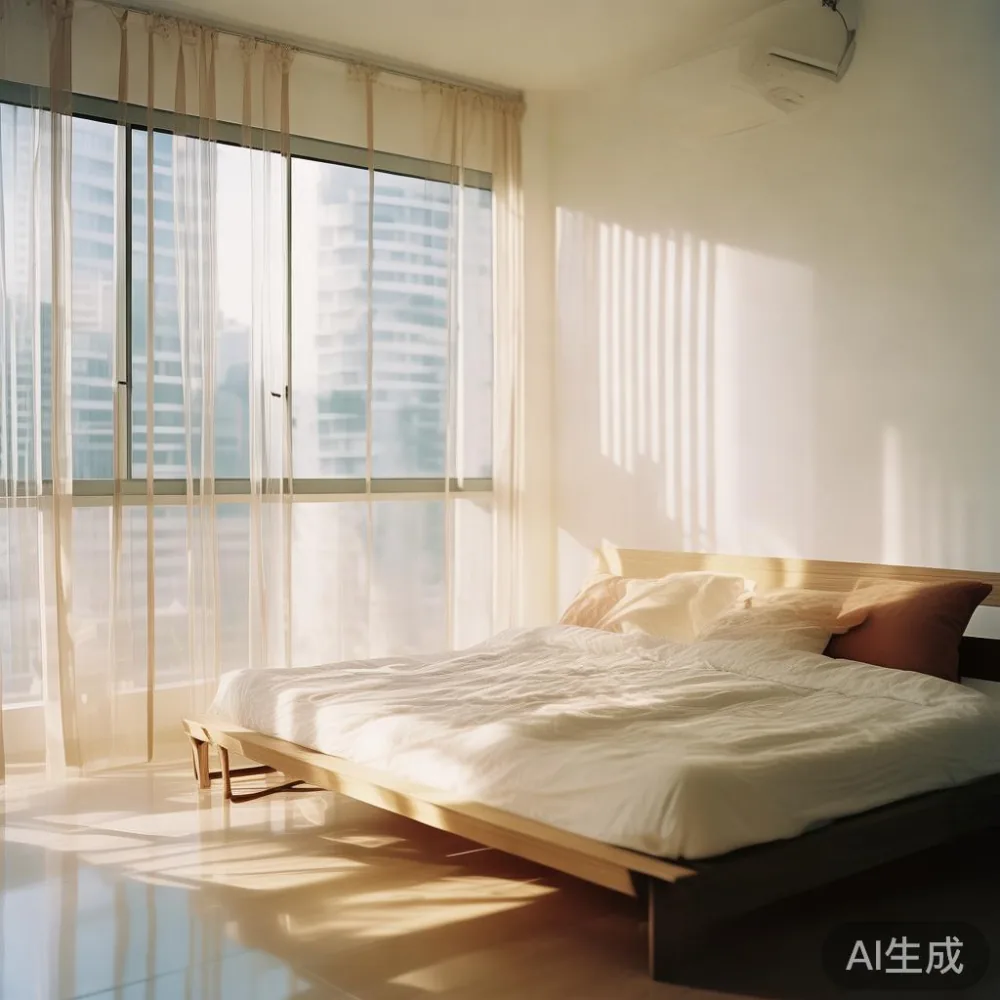
Why the bed frame should be the first piece you choose in a small Singapore flat
Every HDB or condo bedroom I've measured in Bedok, Punggol, and Clementi runs between 9 sqm and 13 sqm. Once you slot in a queen mattress, two nightstands, a wardrobe, and leave 60 cm of walking space around three sides, you have roughly 4 sqm of usable floor left. That is why the bed frame sets the tone: it is the single largest piece of furniture in the room, and its proportions decide whether everything else floats or fights.
Priya's first instinct was to buy a 180 cm platform bed with a 20 cm thick headboard. We measured it against her wall and the headboard alone would have eaten 35 cm of depth, leaving the corridor pinch under 50 cm, too tight to change sheets without bending sideways. We dropped to a 150 cm frame with a 8 cm slim headboard and reclaimed almost 25 cm of usable floor. That single swap changed the room from "cramped" to "compact but calm."
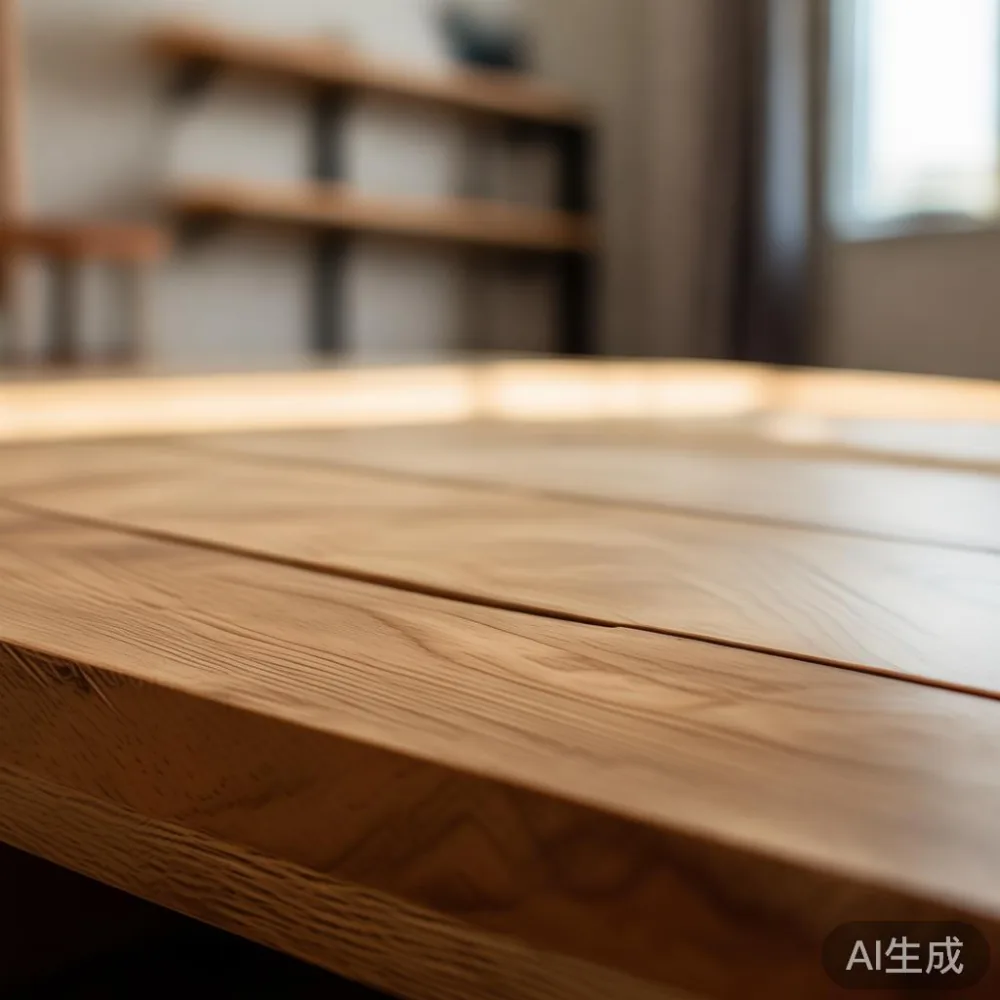
What bed-frame dimensions actually work in a 3 m x 3 m bedroom?
For a typical Singapore master bedroom of 3 m by 3 m (after wardrobes), the workable numbers are tight but well understood:
p- Single sleeper or studio: 90 cm x 190 cm bed frame, leaving 80 cm walkway on at least one side.
- Couple, comfort priority: 150 cm x 200 cm queen, with 55-60 cm clearance on both sides and 70 cm at the foot.
- Couple, storage priority: 160 cm x 200 cm with hydraulic lift, only if the ceiling is 2.7 m or higher so the lid clears the air-con trunking.
- Teen room or guest room: 120 cm x 190 cm three-quarter, which frees up a 60 cm desk strip on the same wall.
A frame taller than 110 cm at the headboard will visually shorten the wall in a 2.6 m ceiling room. Keep the headboard under 95 cm if you want the ceiling to read taller. Lift-and-tuck legs (8-12 cm ground clearance) also create a "floating" effect that lightens the visual weight, important when the bed is the dominant object.
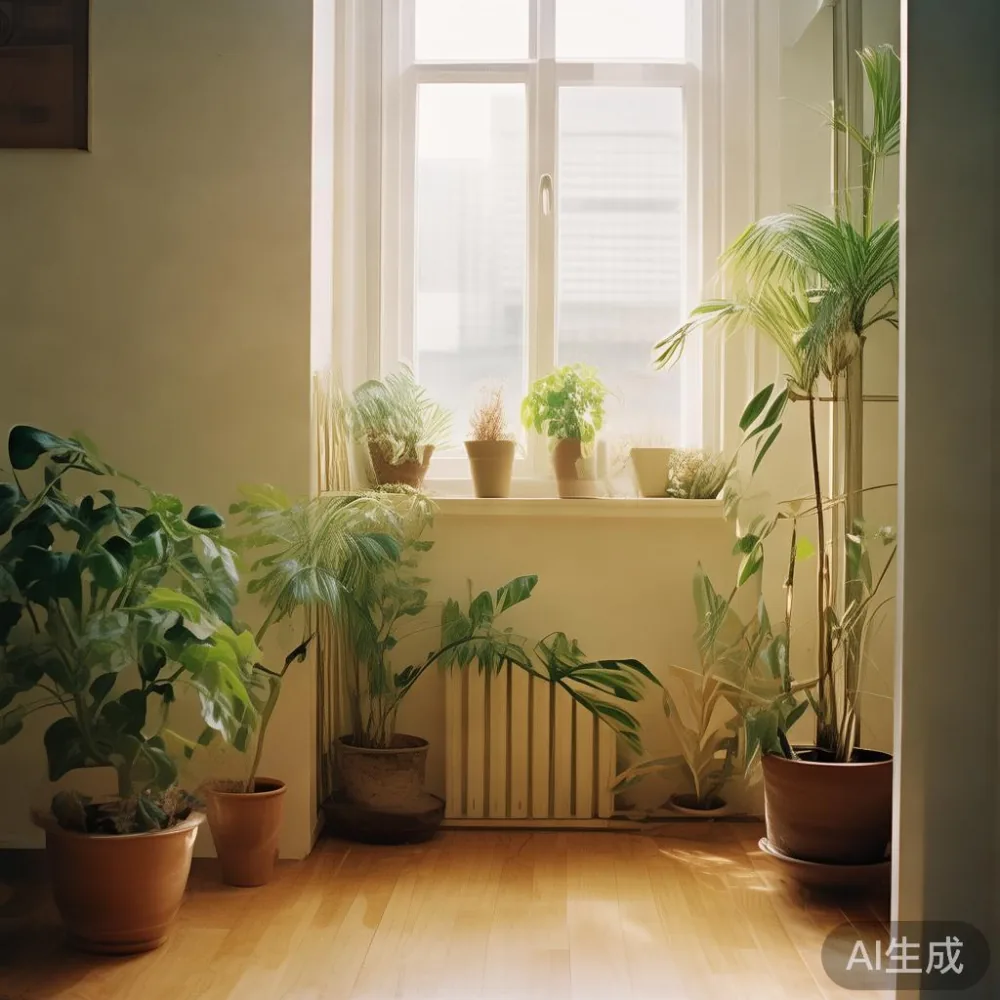
Light luxury, translated for a 92 sqm HDB
"Light luxury" gets thrown around a lot in marketing. Practically, for a small flat it means three things: restrained materials, slim profiles, and one focal piece per room. American light luxury tends to favour clean lines, low-slung silhouettes, and matte brass or black hardware. French light luxury leans into fluted details, tapered legs, and warm travertine or marble accents. Post-modern light luxury is the looser of the three, mixing curves with geometric forms, often in cream bouclé or sage velvet.
In a small HDB, post-modern light luxury is usually the safest bet because its rounded edges soften a rectangular room and its muted palette hides scuffs from lift deliveries. For Priya's room we chose a solid wood bed frame with fluted ash headboard (a French touch), paired with two 45 cm round travertine-top nightstands. The nightstands cost S$329 each, the bed frame S$1,490, both delivered free because the order cleared the S$350 threshold, a common perk from established Foshan workshops. Total spend on the bed zone: S$2,148, well within a reasonable 4-figure reno allocation.
Is Italian light luxury sofa furniture worth it?
Yes, Italian light luxury sofa furniture is worth it if you are buying genuine full-grain leather over a kiln-dried solid wood sofa frame and you live with the piece for at least 8-10 years, because the per-year cost drops below S$200 and the comfort payoff compounds daily, but it is not worth stretching your budget for a 2-seater at S$3,200 if your living room is under 14 sqm or your lift door measures under 0.9 m wide, since the 2.1 m sofa will not make it past the corridor corner without tilting.
That parenthetical answer matters in Singapore. Many imported Italian sofas are 2.05 m to 2.2 m long, and the standard HDB service lift interior is roughly 1.5 m deep by 1.4 m wide with a 2.1 m ceiling. A 2.1 m sofa can physically fit only if it is unbolted and tilted, and many delivery crews will not risk it on the 8th floor or higher. Before you fall in love with a 3-seater, measure your lift at the loading bay on the day of viewing, and ask the seller for the packed carton dimensions in centimetres, not "king of the road" vague phrases.
How do I style a small living room without it feeling like a showroom?
The honest answer is to repeat one material three times and one colour five times, then stop. Here is the formula Priya and I used for her 14 sqm living-dining:
- Anchor with one statement piece: a 1.8 m solid wood dining table in walnut, S$1,290, seats four without arms and tucks against the wall when not in use.
- Add one soft surface: a 2-seat sofa in warm grey linen, 1.65 m wide so it clears the kitchen door swing of 75 cm.
- Add one round surface: a 90 cm marble table between the sofa and dining zone, doubling as a coffee table and side surface, around S$650 for a sintered stone top on solid ash legs.
- Mirror the marble: pick up the same veining on a small tray on the dining table so the eye reads the room as one continuous material story.
- Skip the TV console if your TV is wall-mounted, and float a 120 cm x 30 cm floating shelf in the same wood tone as the dining table.
Total furniture spend for the living-dining zone: S$3,780, including the sofa. GST at 9% adds about S$340, so budget S$4,120 all-in. That sounds like a lot until you remember it replaces eight mismatched pieces that came in over three different Taobao hauls.
Where do delivery and access rules actually break a styling plan?
Three Singapore-specific choke points decide whether your furniture plan survives contact with reality:
- Lift door width: 0.9 m is the HDB standard. A 1 m wide marble table top will not fit upright. Order tops under 95 cm or be ready to use the service lift.
- Corridor width: typical HDB corridor is 1.2 m. A 1.8 m sofa carried flat needs at least 1.6 m of turning radius at the lift lobby. Measure your floor's lift lobby before ordering anything over 1.6 m long.
- Staircase access: the service staircase turns at 1.1 m in most blocks. If your lift breaks down on delivery day, the crew needs to know the staircase dimensions in advance to plan a hand-carry route.
Established Foshan makers shipping direct to Singapore usually provide a packing list with carton sizes in centimetres and a gross weight in kilograms. For Priya's order the heaviest carton was 48 kg for the dining table top, well within the 100 kg per-person HDB moving guideline. A wardrobe, by contrast, often ships in two cartons of 60-70 kg each and needs a two-man crew at the door. Always ask for the gross weight and carton count before paying the deposit; a S$1,490 bed frame with a 35 kg carton is a one-person job, while a S$2,400 wardrobe with three 65 kg cartons is not.
Bed-frame-first checklist for any small Singapore bedroom
Use this 8-point list before you commit to a bed frame or anything else in the room:
- Measure the wall, ceiling, and door swing in centimetres, not inches.
- Decide queen (150 x 200 cm) vs king (180 x 200 cm) based on wardrobe clearance, not mattress preference. A king needs 65 cm clearance on both sides to feel right; a queen needs 55 cm.
- Pick a headboard height under 95 cm for 2.6 m ceilings, under 105 cm for 2.8 m ceilings.
- Choose solid wood over engineered core if you want a 10-year structural warranty and the option of lifetime refinishing. MDF headboards sag visibly after 4-5 years in Singapore humidity.
- Match the bed-frame wood tone to one other piece in the room, ideally a nightstand or wardrobe, so the eye reads a single material line.
- Keep ground clearance at 8-12 cm for that "floating" effect and to allow robot vacuums under the frame.
- Confirm delivery in writing: number of cartons, gross weight per carton, and whether free shipping applies above your order value. Many direct-from-Foshan workshops offer free shipping above S$350, which a single nightstand may not clear but a bed frame certainly will.
- Ask about the returns window. 14 days is a sensible standard; anything shorter is a red flag on a S$1,000+ purchase.
Priya ticked all eight before paying. Her bed frame arrived in two cartons, 28 kg and 32 kg, on day 9 after order. Assembly took 40 minutes with one helper, which is roughly the time it takes to hang a row of IKEA Billy shelves, so do not be put off by flat-pack unless you have no helper at all.
Where does MIDHILL fit in this conversation?
MIDHILL is a Foshan solid wood workshop that has been exporting since 2008 and ships to more than 15 countries, including Singapore. Their bed frames come in standard 150 cm x 200 cm and 180 cm x 200 cm sizes, with kiln-dried ash or walnut options and an 8 cm slim headboard that suits HDB ceiling heights. The 10-year structural warranty and lifetime refinishing service are unusual at the under-S$2,000 price band and matter for humid Singapore bedrooms where cheaper engineered frames tend to warp after four monsoon seasons. For Priya, knowing the workshop had a Singapore-friendly returns window of 14 days and free shipping above the equivalent of US$350 removed the usual anxiety of buying a 48 kg carton sight-unseen from a factory floor.
A small note on budget realism
Small-space styling is not about spending more. It is about spending once. A S$1,490 solid wood bed frame that lasts 15 years costs S$99 a year. A S$590 engineered frame that needs replacing in year 5 costs S$118 a year and leaves you with a skip to fill. The math quietly favours the solid wood option even before you count refinishing. The same logic applies to a dining table (S$1,290 for solid ash versus S$490 for veneered MDF) and to a marble table (sintered stone at S$650 versus real marble at S$1,400, with sintered stone being the more practical choice for a HDB floor load of 1.5 kN per sqm).
If you take one thing from Priya's Tampines bedroom, take this: pick the bed frame first, measure in centimetres, and let every other piece answer to it. A small Singapore flat styled around that single decision will feel intentional, layered, and quietly expensive without ever crossing into crowded.