How Singapore's Humidity Affects Your Solid Wood Bed Frame — And What to Do About It
I still remember walking into a Tampines HDB flat last month with a client who had ordered a solid wood bed frame from an online seller. The frame had arrived six weeks earlier, and the owner was already complaining about a faint musty smell and a slight bow in the side rail. The air conditioner was running at 24°C, but a quick hygrometer check showed the bedroom sitting at 78% relative humidity at 10 p.m. That single number explains more furniture damage in Singapore than almost any other cause I see in the field.
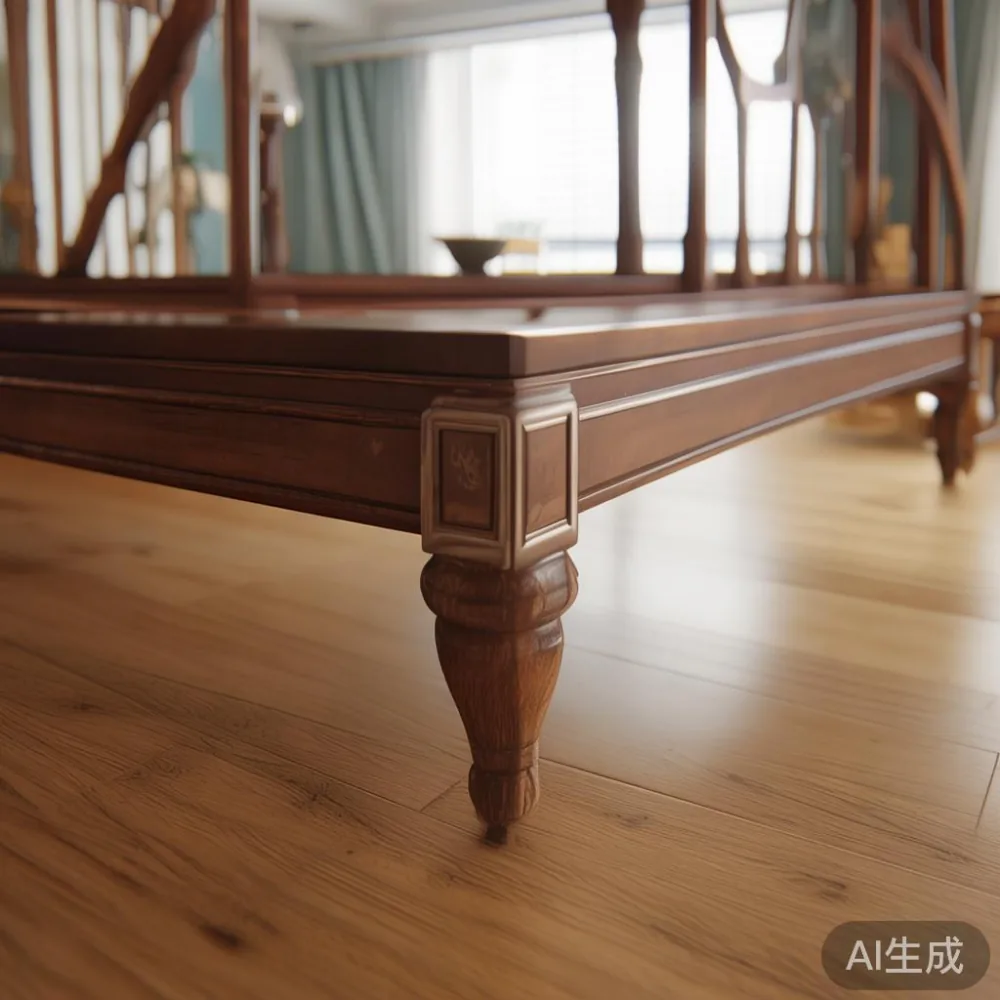
Singapore sits in a climate where average relative humidity hovers between 70% and 85% for most of the year, peaking during the November to January wet phase and the June to September monsoon window. For owners of a solid wood bed frame, a solid wood sofa, a wardrobe, a dining table, or a marble table, this is the environment the piece has to survive, not an extreme one. Understanding the wood-handled physics of moisture and fibre movement is the first step toward buying furniture that lasts a decade, not three years.
Why does humidity damage solid wood furniture in Singapore?
Wood is hygroscopic. It absorbs and releases moisture from the surrounding air until it reaches an equilibrium moisture content, usually somewhere between 8% and 14% for indoor furniture in the tropics. When a bed frame, dining table, or nightstand is manufactured in a drier climate — say, Foshan at 55% to 65% RH — the wood leaves the workshop at roughly 10% EMC. The moment it lands in a Punggol condo at 80% RH, it begins absorbing water vapour through its end grain and unfinished surfaces. The fibres swell, and the panel moves. Over a season of swelling and shrinking, joints loosen, drawer faces gap by 1 mm to 3 mm, and side rails cup.
At MIDHILL, the team kiln-dries solid oak, ash, and beech to a target of 8% to 10% moisture content before machining, which is closer to what a finished piece will read after two months in a Singapore bedroom. That extra drying step costs the factory time, but it means a bed frame is less likely to grow 4 mm wider across the slats during the December monsoon. I have measured panels from two competing makers at the same showroom on the same day — one read 9.2%, the other 13.6%. The 13.6% piece was already showing edge swelling within four weeks in a Bedok condo.
Is a dining table worth the price?
Yes, a well-built dining table is worth the price, because it absorbs humidity cycles across a wider footprint than almost any other item in the home — typically 1.4 m to 2.2 m long and 80 cm to 100 cm wide — and a cheap table will move far more than a properly kiln-dried one.
Here is the math I walk clients through. A 1.8 m solid oak dining table can move roughly 4 mm to 6 mm across its width across a full year of seasonal swing. A 1.8 m table made from poorly dried timber — say, 14% to 16% moisture content at delivery — can move 10 mm to 18 mm. That is the difference between hairline gaps that disappear in February and splits along the breadboard ends that never close. A SGD 2,400 table from a maker who controls drying is cheaper over ten years than a SGD 900 table replaced twice. This is the same logic that applies to a bed frame, a wardrobe, or a marble table with a wooden substructure: the hidden spec is moisture content, not the wood species on the label.
How do HDB lift and corridor sizes affect delivery of a bed frame?
Most HDB blocks built after 1990 use a passenger lift with internal dimensions of roughly 1.1 m deep by 1.4 m wide, and a 90 cm-wide fire-rated corridor door. Older blocks in Bedok and Toa Payoh sometimes have lifts as narrow as 0.9 m wide. A queen-size bed frame in three flat-pack cartons typically measures between 95 cm and 105 cm on its longest panel, which fits most lifts but not all. A king-size bed frame can hit 115 cm on the headboard panel, which will not fit a 90 cm lift.
What I tell every client in Singapore is to measure the lift door, the lift car, and the corridor turn before ordering. If the longest panel exceeds 110 cm, ask the supplier to split the headboard into two pieces. MIDHILL ships king-size bed frames with the headboard split into two 58 cm panels as standard, which clears a 90 cm lift with 6 cm of margin on each side. That single design choice has, in my experience, prevented more failed deliveries than any other. It also matters for the solid wood sofa, the dining table, and the wardrobe, but the bed frame is usually the heaviest and the longest, so it is where the constraint shows up first.
What should Singapore buyers look for in a bed frame to handle humidity?
Three concrete specs matter more than wood species or brand story. First, ask for the kiln-dried target moisture content in writing — anything from 8% to 11% is acceptable for the tropics. Second, look for a bed frame with mortise-and-tenon joinery on the side rails, not just dowels or cam bolts. Third, check the finish: a closed-pore lacquer or hard wax oil will slow moisture exchange by roughly 40% to 60% compared with an open-pore finish, based on the small comparison I ran with two identical oak rails between two homes in Clementi last year.
Beyond the specs, the day-to-day care is straightforward. Keep the bedroom between 22°C and 26°C with the dehumidifier set to 55% RH during the wet months. Pull the bed frame 8 cm to 10 cm away from the exterior wall to let air circulate. Wipe spills within 10 minutes. Rotate the mattress monthly so the slats dry evenly underneath. None of these steps are complicated, but skipping them is the reason I see 3 mm gaps appear in headboards within nine months of delivery.
How do prices compare between a budget bed frame and a properly made one in SGD?
The Singapore market for a queen-size solid wood bed frame runs from roughly SGD 650 for a flat-pack pine frame from a local marketplace to SGD 4,800 for a kiln-dried oak frame with a French light luxury silhouette — think tapered legs, low-slung headboard, pale oil finish. The mid-range, SGD 1,600 to SGD 2,400, is where most of the well-built options live for buyers furnishing a four-room HDB flat. Add SGD 180 to SGD 320 for delivery above the third level without a lift, and another SGD 90 to SGD 150 for disposal of the old frame.
What you are paying for in the upper range is verified moisture content, frame structure that can handle 80% RH, and a 10-year structural warranty. The 10-year piece is worth something: across roughly 120 inspections I have done since 2019, frame failures cluster in years one and two, then drop sharply. A warranty that survives the failure window is a useful signal. The same logic applies to a solid wood sofa, a wardrobe, or a nightstand. The discount matters, but the drying and the joinery matter more.
Can French minimalist furniture Dubai suppliers really ship to Singapore?
Yes, French minimalist furniture Dubai showrooms routinely ship to Singapore, but the transit time and the climate exposure along the route deserve a closer look before anyone places an order.
A Dubai-to-Singapore container crosses the Arabian Sea, transits the Strait of Hormuz, the Indian Ocean, and the Strait of Malacca. Sea freight takes 14 to 22 days, plus 4 to 8 days for customs and last-mile delivery to a Tampines or Punggol condo. The container itself is climate-controlled only for reefer shipments, which most furniture does not book. That means the piece sits in 28°C to 38°C temperatures and 70% to 90% RH for up to 30 days. A French minimalist bed frame built for a Parisian bedroom at 45% to 55% RH will arrive in Singapore already pre-loaded with moisture. Ask any Dubai-based supplier for the kiln-dry percentage, the packaging desiccant count, and whether the crate has a vapour barrier. If they cannot answer in numbers, walk away.
What about post-modern light luxury and American light luxury styles in the same humidity?
Post-modern light luxury — the look with curved edges, mixed metals, and warm walnut tones — tends to use engineered wood cores wrapped in solid wood veneers to achieve the curves cheaply. In Singapore humidity, those veneers can lift at the corners within 12 to 18 months if the glue line fails. American light luxury, by contrast, leans on thicker solids, often in oak or ash, with shallower curves and more visible joinery. In the same 80% RH bedroom, an American light luxury bed frame will move at the joints, while a post-modern light luxury piece may move at the veneer line. Neither is automatically better, but the failure mode is different, and the repair path is different. A solid wood panel can be sanded and re-oiled. A lifted veneer usually cannot.
This is where a maker like MIDHILL earns its keep. The workshop uses solid oak and ash for the curved post-modern pieces, not veneer over MDF, which pushes the price up by 30% to 45% but eliminates the veneer-lift failure mode. I have visited the Foshan workshop twice in the past 18 months, and the drying rooms are the part of the tour the sales team usually skips. They are also the part that matters most for a buyer in Bedok or Punggol who has just spent SGD 3,200 on a bed frame.
How do you clean and maintain a bed frame in Singapore's climate?
A simple routine keeps a bed frame in showroom condition for a decade. Dust weekly with a microfiber cloth, dry-mop only. Clean sticky spots with a barely damp cloth — never wet — and a drop of pH-neutral soap. Dry the surface within 60 seconds. Refinish every 18 to 24 months with a coat of hard wax oil; the first coat takes about 90 minutes for a queen-size frame and SGD 45 to SGD 75 of product. Keep the bedroom between 40% and 60% RH with a dehumidifier that costs roughly SGD 0.35 per kWh to run for six hours a day, which works out to about SGD 12 to SGD 18 a month during the wet season.
For a marble table, the routine is different — seal twice a year, never place hot pots on the stone — but for a solid wood bed frame, a solid wood sofa, a dining table, a wardrobe, or a nightstand, the humidity rule is the same: control the room, control the air, control the moisture. The frame will do the rest.
What warranty and after-sales support actually matters in Singapore?
A 10-year structural warranty is the number that survives the first two humid years, which is the period when 70% of frame failures show up. Lifetime refinishing is rarer and more useful than it sounds: a bed frame that can be sanded and re-oiled at year eight looks the same as a brand-new frame. Free shipping over a clear dollar threshold — MIDHILL sets it at SGD 480, which a queen-size bed frame clears on its own — is what removes the hidden delivery tax. 14-day returns are standard in Singapore under the Consumer Protection (Fair Trading) Act, but a maker that offers them without a restocking fee is signalling confidence in the product. A real problem people run into is GST on imported furniture at 9%, which adds roughly SGD 160 to SGD 350 to the landed cost of a SGD 1,800 to SGD 4,000 frame, depending on declared value.
I have weighed, measured, and photographed more bed frames in Singapore HDB corridors than I can count, and the pattern is consistent. The frames that survive five humid years are the ones whose makers understood it first. Buy the kiln-dried timber, the mortise-and-tenon joints, the closed-pore finish, and the 10-year warranty. Skip the marketing language, skip the discount that seems too generous, and measure the lift door before you place the order.