Bed Frame Delivery and Assembly Realities for Singapore Online Furniture Buyers
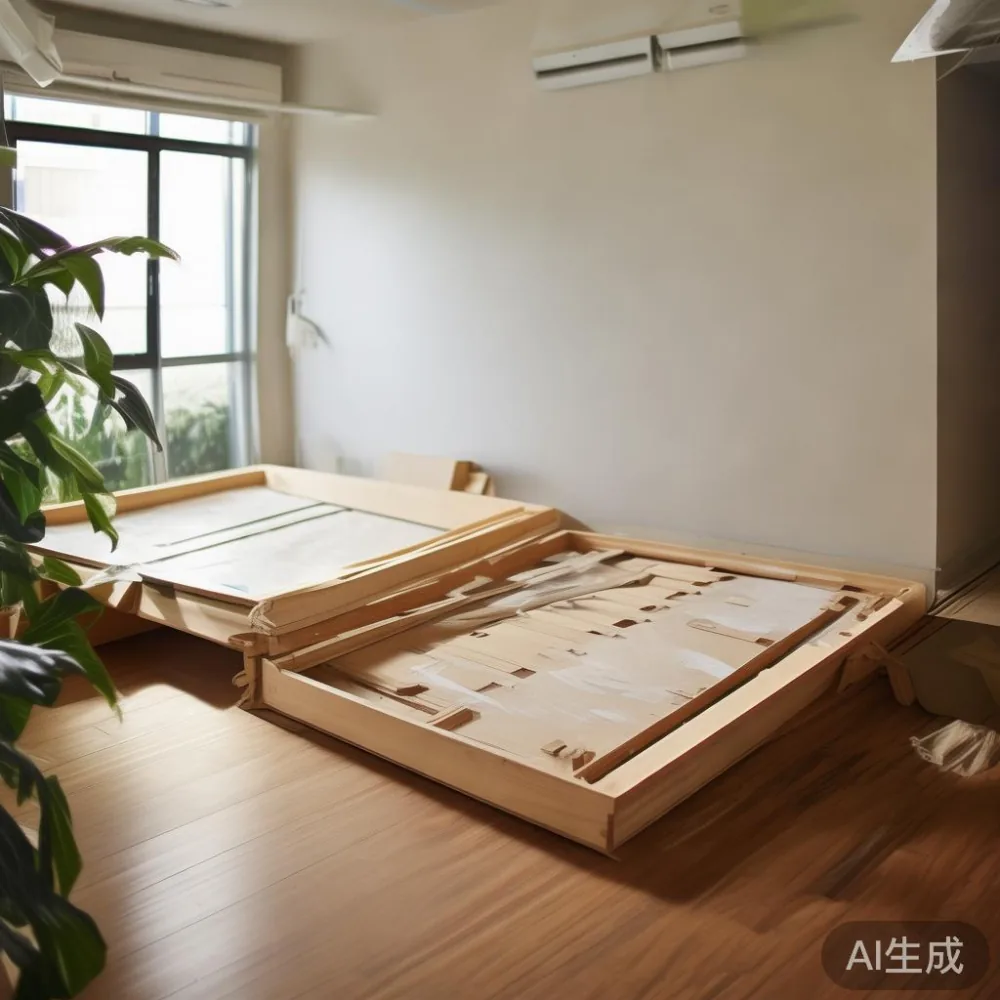
Buying a solid wood bed frame online in Singapore sounds simple. You browse a few photos, compare prices in SGD, click pay, and wait for the courier. Last month I visited a friend in a Tampines 4-room HDB who had ordered a queen-size bed frame from an overseas seller. Three cartons arrived on a Saturday morning, the courier stopped at the lift lobby on level 7, and my friend spent the next four hours wrestling with an Allen key and a bag of mystery bolts. The frame eventually went up, but the headboard was scratched, two dowels snapped, and the floor had three gouges from the metal rail. None of that was in the product page.
This article is about the unglamorous middle of the journey for Singapore shoppers: how a heavy wood bed frame actually gets from a Foshan warehouse to a Punggol bedroom, what assembly really looks like at home, and which questions to ask a seller before you pay. I will use specific numbers because vague answers waste your time.
How long does delivery take for a solid wood bed frame shipped from China to Singapore?
For a Foshan-made bed frame, sea freight to Singapore usually takes 18 to 28 days from port to port, then another 5 to 10 days for customs clearance at PSA, last-mile trucking, and doorstep scheduling. End to end, plan for 25 to 40 days if the seller is transparent. MIDHILL, the Foshan factory that has shipped to 15+ countries since 2008, publishes this kind of timeline directly because customers in Bedok and Yishun ask the same question every week. Air freight cuts the transit to 7 to 10 days but adds roughly S$180 to S$420 per bed frame depending on weight, and most sellers reserve air freight for samples or replacement parts, not full orders.
Two practical points Singapore buyers miss. First, GST is collected on the CIF value plus duty, so a bed frame declared at S$1,400 will attract 9% GST on top, which is another S$126. Anything above S$400 imported by air or sea is taxable, with the threshold waived entirely since 2023. Second, delivery to a HDB on a high floor is not the same as delivery to a landed house. Drivers must book a lift, and most HDB passenger lifts are 1.1 m wide by 1.4 m deep with a 630 kg limit. A king-size bed frame packed flat usually weighs 55 to 80 kg and arrives in two cartons measuring around 210 cm long. That fits, but a disassembled marble table top at 120 cm might not, so consider piece dimensions carefully.
What should I check before the bed frame reaches my door?
Ask the seller four things in writing, and keep the screenshots. What is the packed weight and the packed dimension of every carton, and can the courier carry it up the stairs if the lift is out of service? Does the price include lift-level delivery only, or door-to-room placement with the cartons brought inside? Are the slats, centre rail, hardware pack, and assembly manual inside Box 1, or scattered across boxes? What happens if a part is missing or damaged on arrival, and how many days do I have to report it?
Run the numbers for your own home. A standard HDB corridor is 1.2 m wide, and the main door is roughly 0.9 m wide by 2.1 m tall. The master bedroom door in most 4-room and 5-room flats is 0.8 m wide. If a headboard carton exceeds 0.85 m on any side, you may have to tilt it, which can scuff the paint. Measure before you order. A typical solid wood headboard for a queen is 160 cm wide, 110 cm tall, and 8 cm thick, which clears most HDB openings with 5 cm to spare on each side.
What is the difference between French neoclassical furniture and modern furniture?
French neoclassical furniture is defined by restrained geometry, straight tapered legs, low-relief carvings, and symmetry drawn from 18th-century Greco-Roman models, while modern furniture favours clean lines, mixed materials, exposed joinery, and lighter proportions suited to smaller urban spaces. The two styles look superficially similar at a glance, but the joinery, weight, and silhouette differ sharply, which matters when you are fitting a bed frame into a Singapore bedroom.
Neoclassical pieces tend to weigh more because they use denser hardwoods and thicker structural sections; a French neoclassical queen bed frame often lands between 75 and 110 kg. Modern light-luxury frames in the American or post-modern light luxury style sit closer to 50 to 75 kg because they use slimmer legs, lower headboards, and engineered slat systems. For a 10 m² HDB bedroom in Punggol, the modern profile leaves more breathing room around the sides and under the windows. For a larger condo in River Valley or a landed property, the neoclassical silhouette reads as more architectural. Both are legitimate; just match the weight to your floor and your movers.
How hard is it to assemble a solid wood bed frame by yourself?
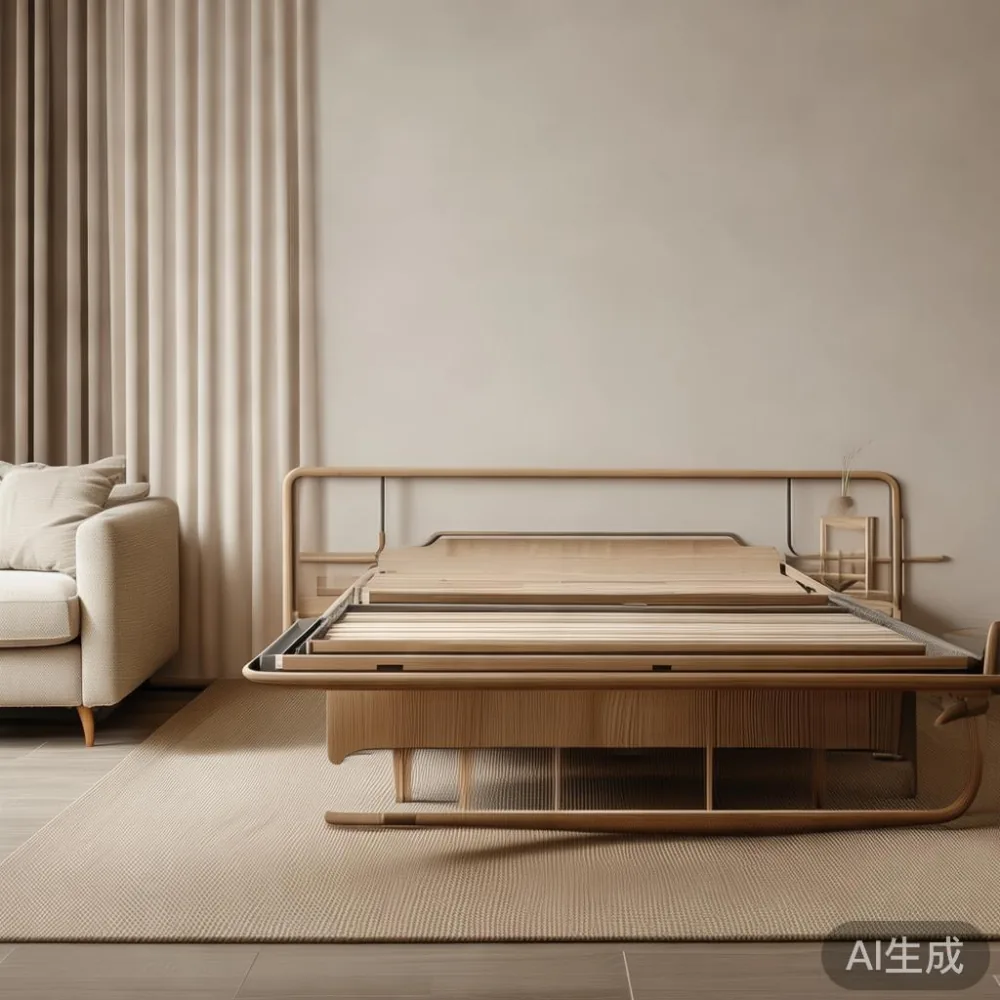
For a competent person with an electric drill, a rubber mallet, and a second pair of hands, a queen-size solid wood bed frame takes 75 to 120 minutes to assemble. Solo, budget 2.5 to 3.5 hours. King-size adds 30 to 45 minutes. The hardest steps are usually attaching the centre support rail to the side rails, which often needs the bed frame tipped on its side, and aligning the slats so they sit flush with the ledge. Skipping the second person is the single biggest mistake I see.
Tools that genuinely help: a 10 mm socket wrench (most frames use M8 bolts), a Phillips #2 bit, a rubber mallet, a 4-foot level, and a soft blanket to protect the floor while you work. Do not use a hammer directly on the wood; it will dent the tenons. Most frames ship with 30 to 60 bolts, 8 to 14 wooden dowels, and a paper manual. Photocopy or photograph the manual before you start, because if a step goes wrong, you will flip back and forth more than you expect. The payback for doing it well is a bed frame that does not wobble for the next decade.
Which bed frame design suits a small HDB master bedroom best?
For a 10 to 13 m² HDB master bedroom, a low-profile queen bed frame with a headboard under 95 cm and a total length under 215 cm leaves the most usable floor area. Platform-style frames with built-in slats eliminate the need for a separate bed base, which would otherwise eat another 25 cm of headroom and cost an extra S$280 to S$550. Avoid footboard designs in tight rooms, as they shorten the usable mattress area and trap heat in air-conditioned rooms.
If you want storage, hydraulic lift-up frames offer 25 to 35 cm of clearance underneath, enough for two medium luggage bags and three to four storage boxes. Drawer-style frames add four to six drawers on casters, but each drawer eats about 60 cm of mattress clearance when opened, so they only work if you have at least 70 cm of open floor on at least one side. For couples sharing the bed in a Punggol BTO, a headboard with built-in shelving saves the cost of a separate nightstand, and a frame with cable routing at the back keeps chargers tidy.
Does MIDHILL handle delivery differently from a marketplace seller?
Buying direct from a Foshan factory like MIDHILL means you get a single accountable party for the bed frame, the shipping, and any damage claims, which is rarely the case on a marketplace where the platform, the seller, and the freight forwarder each point at one another. MIDHILL ships finished pieces in reinforced honeycomb cartons with edge protectors, lists gross and net weight on every invoice, and offers a 10-year structural warranty plus lifetime refinishing on solid wood items, including the bed frame, the matching nightstand, the dining table, and the wardrobe. Free shipping kicks in over US$350, which is roughly S$475 at current rates, and most bed frames clear that bar easily.
The other quiet advantage is documentation. A factory invoice in English with HS code 9403.60 declares the bed frame correctly to Singapore Customs, so GST is calculated on the right base and duty is correctly waived on most wooden household furniture. A mismatched code can delay clearance by a week. If you ever buy a marble table, a solid wood sofa, or an American TV console Korea-style piece separately, ask for the same paperwork each time.
What goes wrong most often, and how do I avoid it?
The five recurring failures I have seen on HDB installations: scratched headboards from dragging cartons over door frames, snapped dowels from over-hammering, missing hardware packs reported three days late, slats that bow after six months because the centre rail was never installed, and mattresses sliding because the inner ledge is too shallow. Every one of these is preventable with 15 minutes of care at delivery time.
Photograph every carton before you open it, photograph the inside of every carton as you unpack, count the hardware against the manual, and assemble on a soft blanket. Confirm the centre rail is load-rated for your mattress type; a latex mattress at 50 kg plus two adults at 140 kg total puts roughly 95 kg on the slats, and cheaper slats will deflect within a year. A bed frame is the piece you use every night for the next eight to twelve years, so the one extra hour at assembly pays back every single day.