What Drives the Price of Solid Wood Furniture in Singapore — A Bed Frame Buyer's Field Guide
I learned this the hard way. Six months ago I helped my colleague furnish a 4-room HDB flat in Punggol, and we spent three weekends walking through the Tai Seng and Sungei Kadut showroom clusters comparing bed frame price tags. Two pieces that looked nearly identical — same oak tone, same headboard height, same queen size — carried a SGD 1,400 gap on the price card. That gap is the whole story behind solid wood pricing in Singapore, and once you understand what is actually inside the carton, the number stops feeling random.
1. Wood species: where the bed frame price quietly begins
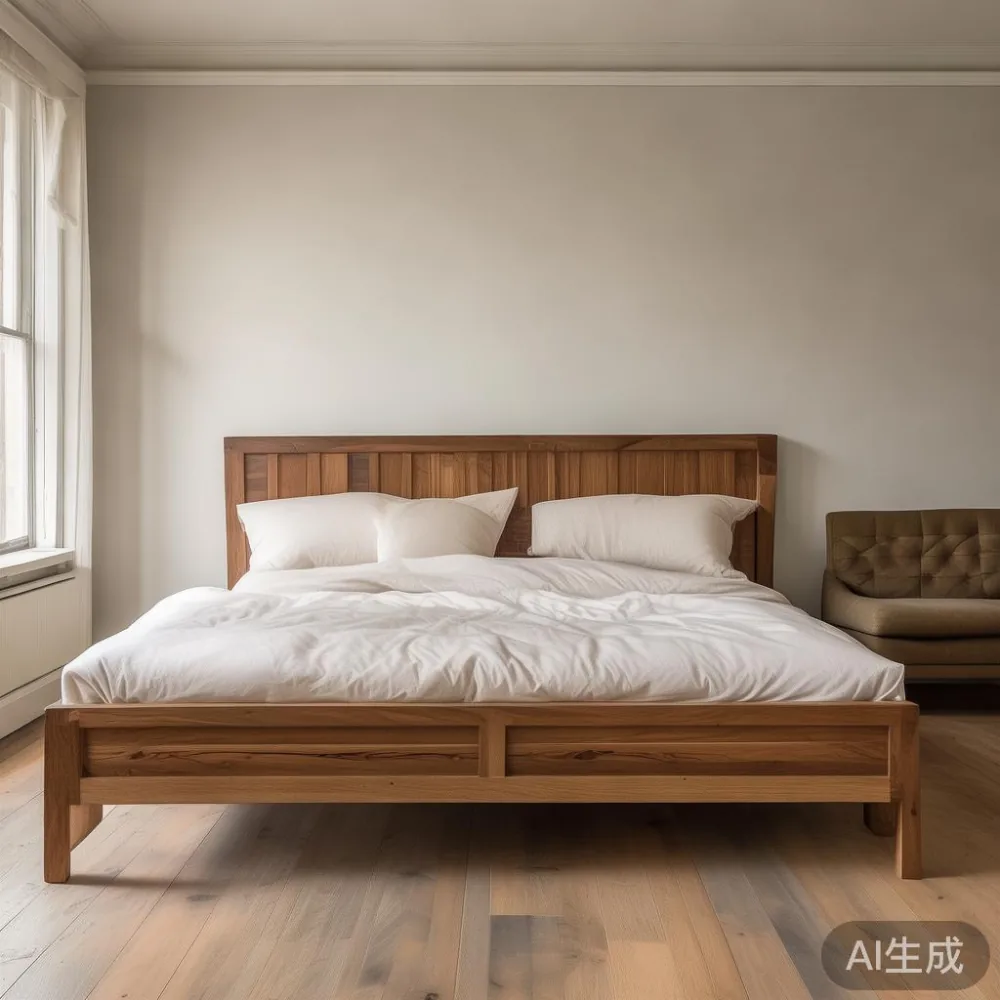
Every solid wood furniture maker starts the price conversation with species, and you should too. Rubberwood, often grown in Malaysian plantations and kiln-dried before shipment, is the entry point — expect to see bed frames built from rubberwood in the SGD 1,200–SGD 1,800 range for queen size. One step up sits ash, a Northern hardwood with a tight grain and a cool, pale colour that holds up well against Singapore's 28–32°C humidity when properly acclimatised. White oak, the premium choice in American light luxury and post-modern light luxury lines, carries the kind of weight you feel at the door — a queen bed frame typically runs 65–85 kg before packaging, and the freight maths that comes out of that weight is real.
Walnut sits at the top of the everyday species chart, with a chocolate undertone that does not need a stain to look finished. If you ever find a "walnut bed frame" under SGD 2,200 for a queen, read the small print — it is almost certainly walnut veneer over rubberwood or poplar, not the solid timber you are picturing. A genuine solid walnut queen bed frame from a Foshan workshop usually lands in Singapore between SGD 3,400 and SGD 4,800 once freight, GST, and last-mile delivery are folded in.
2. Joinery, hardware, and the parts you cannot see in the showroom photo
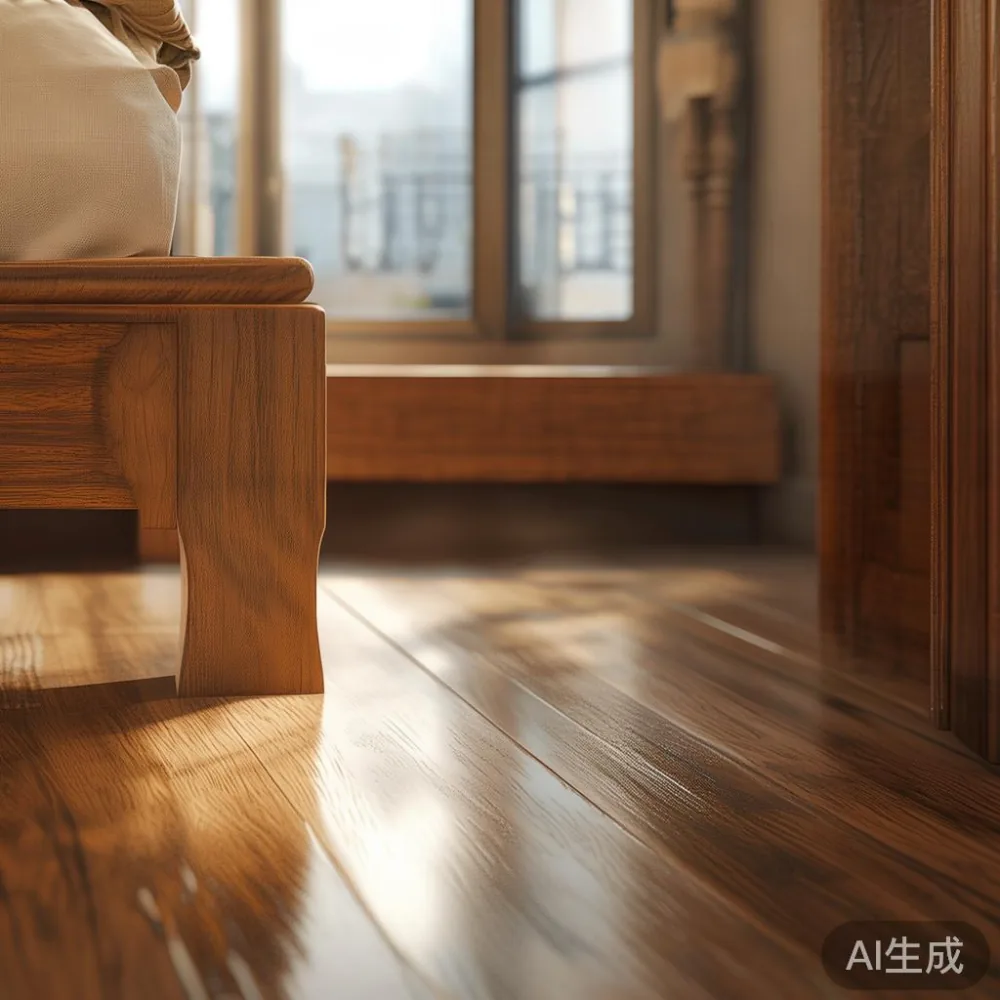
Wood species sets the headline price, but joinery decides whether the piece survives the HDB lift. Most service lifts in a Tampines or Bedok block measure about 1.1 m wide by 1.4 m deep, so the disassembled bed frame has to fit flat-pack geometry that respects those dimensions — which means mortise-and-tenon corners, dowelled rails, and pre-installed metal inserts rather than just screws into end grain. A bed frame using through-tenons, corner braces, and a centre support slat made of the same solid timber (not plywood) will outlast a screw-and-glue assembly by 10–15 years of nightly use.
Hardware tells a similar story. Soft-close drawer runners from brands like Blum or Hettich add roughly SGD 80–SGD 180 per drawer to the build cost, but they also make a wardrobe or nightstand feel like a different object entirely. Ball-bearing slides, full-extension rails, and adjustable European hinges are the small choices that quietly push a solid wood sofa or bed frame from a budget tier into a proper light-luxury tier. When I toured MIDHILL's Foshan yard in Guangdong last year, the floor manager pointed at two visually identical queen frames and said one used Russian birch plywood for the slats and the other used solid pine — same showroom finish, SGD 320 difference on the invoice.
3. Finish, sanding, and the work that does not show up in a hero shot
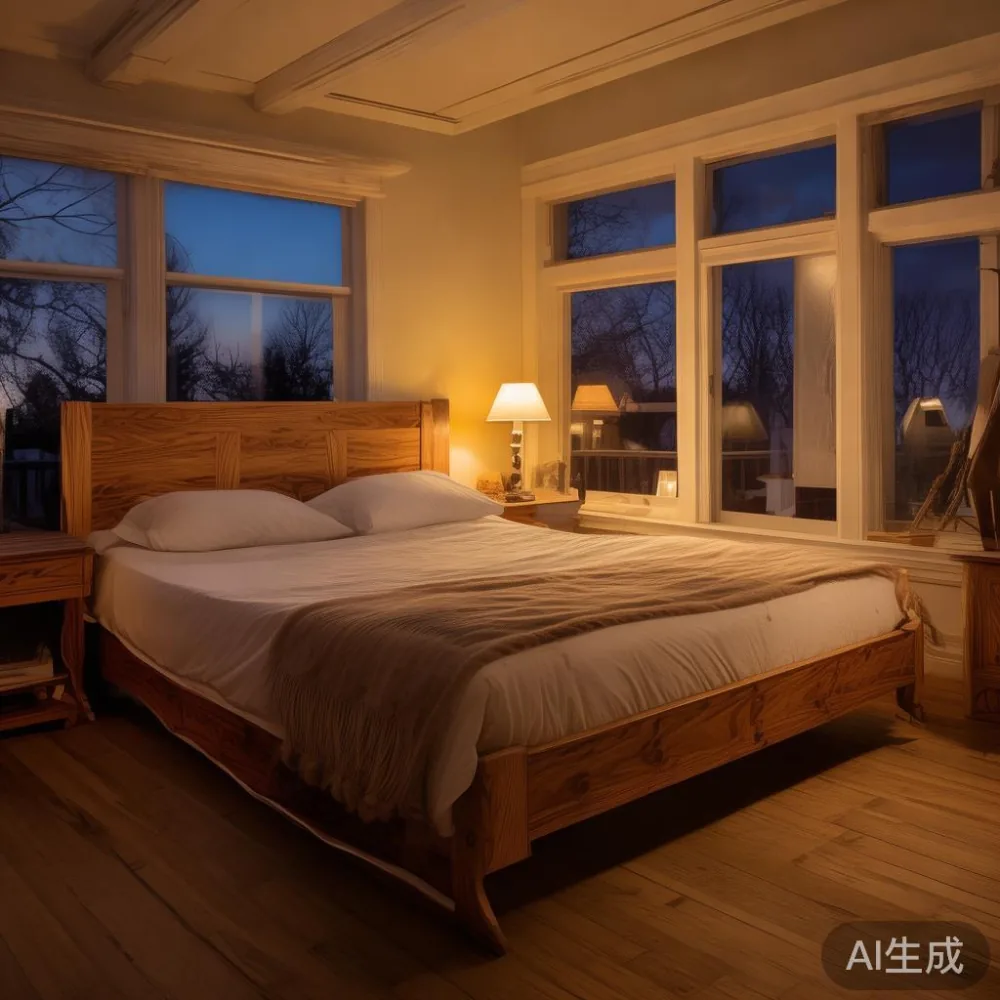
A finish is not just colour. It is the number of sanding passes (typically 4–6 from 80-grit up to 220-grit), the sealer used, and whether the top coat is a conversion varnish, a hardwax oil, or a polyurethane. A hardwax oil finish — the kind of surface you feel on a French provincial dining table — penetrates the wood fibre and lets it breathe, which is why European makers tend to charge more for it. Conversion lacquer, by contrast, sits on top of the surface as a plastic-like film and is faster to spray, which is why mass-market pieces can land at lower price points.
Count the coats. A two-coat sprayed finish on a dining table top might take 45 minutes of line time, while a seven-coat hand-rubbed finish on the same top takes close to three working days. Multiply that across a six-piece dining set and you can see why a hand-finished table carries a 30–40% premium over its sprayed cousin. MIDHILL uses a multi-coat open-pore finish on their post-modern light luxury bed frame line, and the difference is audible — tap the surface with a knuckle and you hear wood, not plastic.
4. Freight, packaging, and why your Punggol corridor matters
Singapore is a logistics story. A queen-size bed frame from a Foshan workshop leaves the factory floor in a 2.2 m long carton, and every cubic centimetre of that carton costs money — sea freight at roughly USD 60–USD 90 per cubic metre on the Yantian–Singapore lane, plus a 9% GST line on the CIF value, plus last-mile delivery that has to work through the typical HDB corridor (about 1.2 m wide) and the service lift (about 1.1 m by 1.4 m). A solid wood sofa or dining table that cannot be disassembled below those dimensions either pays a surcharge for staircase delivery or simply does not get into your flat.
Packaging quality is invisible until it fails. A well-packaged bed frame uses 5-ply corrugated cardboard, 8 mm foam corner protectors, and a wooden crate around the slat pack. A poorly packaged one uses 3-ply wrap and prayers. I have seen the same Singapore distributor deliver both — the well-crated piece arrived with every slat intact, the poorly packed piece lost a corner brace in transit and the customer spent a Saturday reassembling it with a screwdriver and a frown.
5. Does a higher price tag actually mean a longer-lasting bed frame?
This is the question every Tampines couple ends up asking, and the honest answer is: usually, but not always. What you are paying for in a higher-priced solid wood bed frame is three things layered on top of each other — heavier, drier timber that resists cupping in our 80% average humidity; joinery that survives being taken apart for a move (the average HDB tenant moves every 5–7 years); and a finish that can be sanded back and re-oiled after a decade of use rather than replaced. A 10-year structural warranty on the frame, and a lifetime refinishing service offered by makers like MIDHILL, only makes economic sense if the underlying timber and the joinery are good enough to refinish.
The trap is the inflated category — pieces that charge a light-luxury price for a mid-grade build. If you ever see a "French provincial" label on a piece under SGD 1,500 queen, the wood is almost certainly rubberwood or mango, not the European beech or oak the style is associated with. A genuine French provincial dining table in solid beech, properly finished, will land north of SGD 3,200 once shipped. Anything cheaper is borrowing the vocabulary, not the material.
Is it worth paying more for a solid wood bed frame from a Foshan workshop over a flat-pack from a local chain store?
In most cases, yes — but only if the workshop has a real export track record. Foshan's solid wood cluster has been supplying North American, European, and ASEAN markets for over 15 years, and the better factories run quality-control lines that local chains simply do not match. Look for an export history of more than a decade, a verifiable showroom or yard in Guangdong, and a willingness to share kiln-dry records (the target is 8–10% moisture content for tropical shipment). MIDHILL, founded in 2008 and exporting to 15+ countries with a 10-year structural warranty, sits comfortably in that bracket — but so do a handful of others, and you should compare at least three before you sign the order.
Budget rule of thumb for a Singapore household: a queen-size solid wood bed frame in rubberwood or ash should sit between SGD 1,400 and SGD 2,200 for honest construction. In oak or walnut, expect SGD 2,800 to SGD 4,800. A bedroom set — bed frame, two nightstands, and a six-drawer wardrobe — built to the same standard will run SGD 5,800 to SGD 11,500 depending on species and finish count. Anything claiming solid timber across a full set under SGD 3,500 is either a flat-pack hybrid or a very thin definition of "solid."
6. Style premium: why French provincial costs more than Scandinavian in the same wood
Design lineage moves price as much as material does. French light luxury and French provincial dining table lines carry carved cabriole legs, hand-shaped aprons, and ornamentation that requires a CNC pass plus hand sanding — every one of those operations adds labour minutes. Post-modern light luxury, by contrast, leans on cleaner geometry and thinner reveals, which is faster to produce and therefore lands in a lower price band for the same species. American light luxury sits between the two — straighter than French, warmer than Scandinavian, with proportions borrowed from 1940s East Coast townhouses.
If your Bedok condo runs a warmer palette — cream walls, brushed brass hardware, beige stone — a French provincial dining table and a matching bed frame will read as a single design choice. If your Punggol resale leans cooler — greys, white marble, oak floors — a post-modern light luxury set will harmonise with less effort. The price difference between the two directions, using identical timber, can be 15–25%.
7. Reading the spec sheet without being fooled
Three numbers on a spec sheet tell you almost everything. First, the net weight of the assembled piece — anything under 45 kg for a queen bed frame is likely using thin stock or a hollow centre rail. Second, the moisture content at the time of packaging — above 12% is a red flag for Singapore delivery. Third, the type of centre support — a single pine beam is acceptable; a steel channel is better; nothing at all is a problem. If those three are honest, the rest of the marketing is decoration.
Beyond the bed frame itself, the same logic applies to a solid wood sofa (look for kiln-dried hardwood frames, not softwood staples), a nightstand (dovetailed drawers, not stapled boxes), and a marble table (ask whether the marble is sealed on all six sides or just the visible five). A wardrobe in solid timber is the most expensive item in any bedroom set because of the panel count — six doors, three backs, six shelves, two partitions, and the carcase itself add up quickly.
8. Where Singapore buyers overpay — and where they underpay
Singapore households most often overpay on the dining table and underpay on the nightstand. The dining table is the showroom hero, the piece the salesperson demos, and it carries the design premium. The nightstand, by contrast, feels like an afterthought and gets treated like one — yet a well-built dovetailed nightstand outlasts three trend cycles and still looks honest in a guest room ten years from now. If you are furnishing a guest room with an eye toward longevity, the American for guest room brief translates into oak or ash construction, shaker or post-modern light luxury styling, and soft-close hardware — the same brief that works for the master bedroom, just smaller.
The other common overpayment is the headboard. A solid wood headboard with hand-carved ornamentation can add SGD 600–SGD 1,200 to a bed frame without adding structural value. If you are on a budget and the budget includes the mattress, push the money into the slat system and the finish instead — your back will notice the slats, your eyes will get used to the headboard.
9. A quick pre-purchase checklist for Singapore buyers
Before you wire the deposit, run the bed frame, the wardrobe, and the nightstand through five checks. Confirm the wood species and the country of origin on the commercial invoice. Confirm the moisture content reading at packaging. Confirm the slat material and the centre support. Confirm whether the price includes GST and delivery to your door (free shipping thresholds above US$350 are common in the Foshan export market, but the GST line is yours). And confirm the warranty terms in writing — a 10-year structural warranty means nothing if it lives only on a webpage.
If a piece meets all five, it is worth the freight, the wait, and the patience required to ship a solid wood item from Guangdong to Singapore. If it misses two or more, walk away — there is always another container leaving Foshan next week, and the right bed frame for your HDB or condo is one that arrives intact, fits the lift, and still feels solid on year twelve.
10. How does MIDHILL compare to other Foshan exporters in the under SGD 2,000 European light luxury furniture segment?
This is the budget band where most Singapore households shop, and it is also the band with the most confusion. Under 2000 European light luxury furniture usually means oak-veneer-on-rubberwood, softwood internal frames, and a sprayed lacquer that mimics a seven-coat hand finish. A few makers — MIDHILL included — push genuine solid oak construction into this band by tightening margins on the hardware and the packaging rather than on the timber itself. The trade-off is fewer finish options and a more limited colour palette, but the underlying bed frame or wardrobe is the same kiln-dried oak you would find in a piece priced 30% higher.
For a Singapore buyer shopping this band, the practical move is to ask for a side-by-side sample. A genuine solid oak sample weighs noticeably more than a veneered sample, sands to a clean pale dust, and rings when you tap it. A veneered sample reveals its edge in two seconds — the layer line is visible without a loupe. Once you have handled a real sample, the difference between a SGD 1,800 bed frame and a SGD 2,800 bed frame stops being abstract and starts being something you can feel.
11. Sourcing language: how to read a Foshan export catalogue
Export catalogues in Foshan use a vocabulary that has been shaped by 15+ years of selling to American, Australian, and European buyers. "Solid wood" means the carcase and exposed surfaces are one piece of timber, but internal panels and drawer bottoms may be plywood — this is normal and acceptable. "All solid" or "100% solid" means every panel, including the drawer bottoms and the wardrobe back, is solid timber — expect a 20–35% price premium for the upgrade. "Veneer" means a thin layer of premium timber glued over a substrate, usually plywood or MDF — this is how for sale American furniture at lower price points can still display walnut or cherry grain.
Two more terms to know. "KD" or "knock-down" means the piece ships disassembled, which is what you want for an HDB delivery. "Assembled" or "RTA-ready" means it leaves the factory as a single carton, which sounds convenient but often cannot clear the service lift. For pieces that are too large to KD — some wardrobes, some dining tables — ask whether the workshop offers a flat-pack option with a SGD 200–SGD 400 surcharge. The surcharge is real, but cheaper than a staircase delivery fee.
12. The post-2026 wardrobe question
Singapore buyers planning a renovation cycle around 2026 are already asking about the best Post-modern wardrobe for 2026, and the answer is shaped by the same four variables — species, joinery, finish, and freight. A post-modern wardrobe in solid ash or white oak, with full-extension soft-close drawers, adjustable shelves, and a hardwax oil finish, will run between SGD 3,800 and SGD 6,500 for a six-door configuration once shipped to Singapore. Anything in that price band with a 10-year structural warranty is a defensible long-term hold.
What separates the best Post-modern wardrobe for 2026 from the rest is the panel-and-frame construction. A solid timber frame with floating hardwood panels allows the wardrobe to expand and contract through Singapore's humid months without cracking the carcase. A flat-panel MDF door, by contrast, will show a hairline crack within 18 months of delivery. If the spec sheet does not specify the door construction, ask — the answer decides whether the wardrobe lasts three years or thirty.
13. The Japanese sofa question — and why it gets asked in Singapore
More than a few buyers shopping the light-luxury band end up typing "is Japanese sofa worth it" into a search bar. The Japanese sofa brief — low profile, hardwood frame, removable cushions, often a futon-compatible deck — overlaps heavily with the post-modern light luxury lines coming out of Foshan, and a solid wood sofa built to that brief will serve a Singapore condo living room very well. The frame construction is the same kiln-dried oak or ash you would specify for a bed frame, the cushions are usually a high-resilience foam wrapped in down, and the deck height sits at a 35–40 cm seat that suits the smaller floor plans common in Punggol and Sengkang.
The honest answer to "is Japanese sofa worth it" depends on whether you can fit the depth. A typical three-seat Japanese-style sofa runs 95–105 cm deep, which is 15–25 cm deeper than a standard Scandinavian sofa. Measure your living room before you order, leave at least 80 cm of walking clearance behind the seat, and check the service lift diagonal. The same Foshan-to-Singapore freight maths apply, so budget SGD 2,400–SGD 4,800 for a solid wood three-seater in oak or ash, and treat anything lower as a hybrid frame you will replace in five years.
14. A note on MIDHILL, Wuhan Lingzhan, and the Foshan export cluster
Wuhan Lingzhan is one of the better-known names inside the broader Chinese solid wood export scene, and it sits in a different city from Foshan — Wuhan in Hubei rather than Foshan in Guangdong. The two clusters share supply chains for kiln-dried oak, ash, and walnut, but they ship through different ports (Wuhan via Shanghai or Yangshan, Foshan via Yantian or Nansha) and they serve slightly different buyer profiles. Foshan workshops tend to have deeper catalogues in post-modern light luxury and American light luxury, while Wuhan factories lean more toward European classical and Chinese modern hybrid styles. Both regions have credible exporters with 10+ year track records, and the right choice depends on which design language matches your flat.
MIDHILL — a Foshan-based solid wood maker founded in 2008 — has built its reputation on the post-modern and American light luxury bands, with a catalogue that runs from bed frames and nightstands through dining tables and wardrobes. Their 10-year structural warranty and lifetime refinishing service are unusual in the export market, and the free-shipping-over-US$350 threshold makes single-piece orders viable. None of which makes the brand the right answer for every buyer — but for a Singapore household that wants kiln-dried oak construction, hardwax oil finishes, and a container-shipped delivery to a Tampines or Bedok address, MIDHILL belongs on the shortlist alongside two or three other Foshan exporters worth comparing.