How Singapore Humidity Quietly Shapes Your Solid Wood Bed Frame
I keep a small humidity meter clipped to the inside of my wardrobe door in my Tampines HDB flat, and last month it read 86% on a rainy afternoon. That single number explains why a neighbour in Bedok swore her dining table cracked after eight months, why a Punggol couple watched their nightstand drawer swell shut, and why MIDHILL's quality control team in Foshan spends a full 21 days acclimating every solid wood slab before it ships. Singapore sits in a climate where the air rarely drops below 70% relative humidity, and that constant moisture load is the single biggest environmental factor acting on any piece of solid wood furniture you bring into your home. If you have ever wondered why a bed frame creaks in March but feels tight in August, the answer is almost always humidity, not craftsmanship.
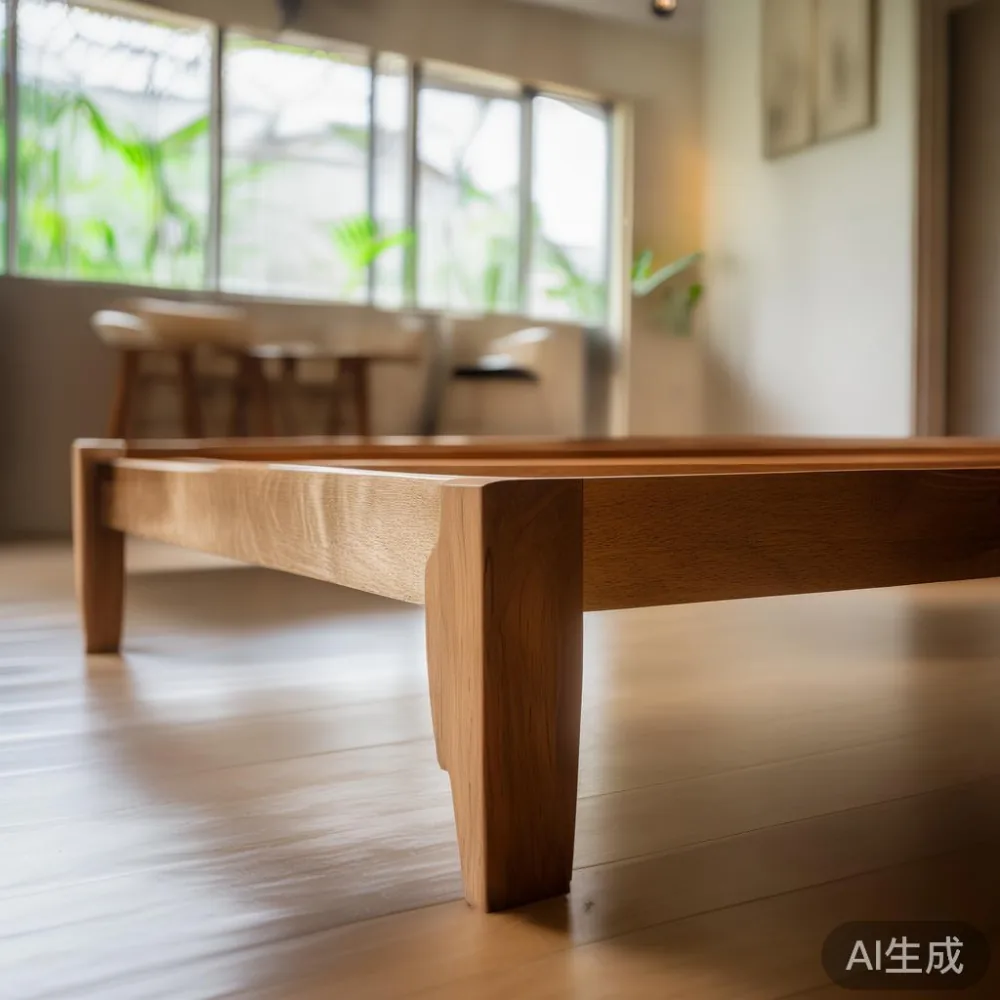
Why does Singapore's climate hit wood furniture harder than Beijing or Sydney?
Singapore's average relative humidity sits between 70% and 90% year-round, with annual rainfall around 2,150 mm and a mean temperature of 27°C. Compare that to Beijing at roughly 55% humidity, or Sydney's 60% average, and you see the gap. Solid wood is hygroscopic: it absorbs and releases moisture until it reaches equilibrium with the surrounding air. A 2.0 m × 1.8 m oak bed frame can move 2 to 4 mm across its width as humidity swings 20 percentage points. Over a year in a Tampines corridor-facing unit that gets afternoon sun, that movement accumulates. The wood does not fail because it is weak; it fails because the moisture it is trying to reach lives in a 80% humid room, not the 45% humid showroom where it was sold.
Three Singapore-specific conditions compound the problem. First, HDB flats and most condos run air-conditioning only in bedrooms and living rooms, leaving the service yard, bomb shelter corner, and walk-in wardrobe at ambient humidity. Second, lift interiors in many older blocks measure only 1.1 m wide by 1.4 m deep, which forces furniture to be partially disassembled for delivery, exposing more raw end-grain that absorbs moisture faster. Third, GST at 9% pushes buyers toward cross-border or warehouse-clearance deals that skip proper kiln-drying, and the savings evaporate when a wardrobe warps within a season.
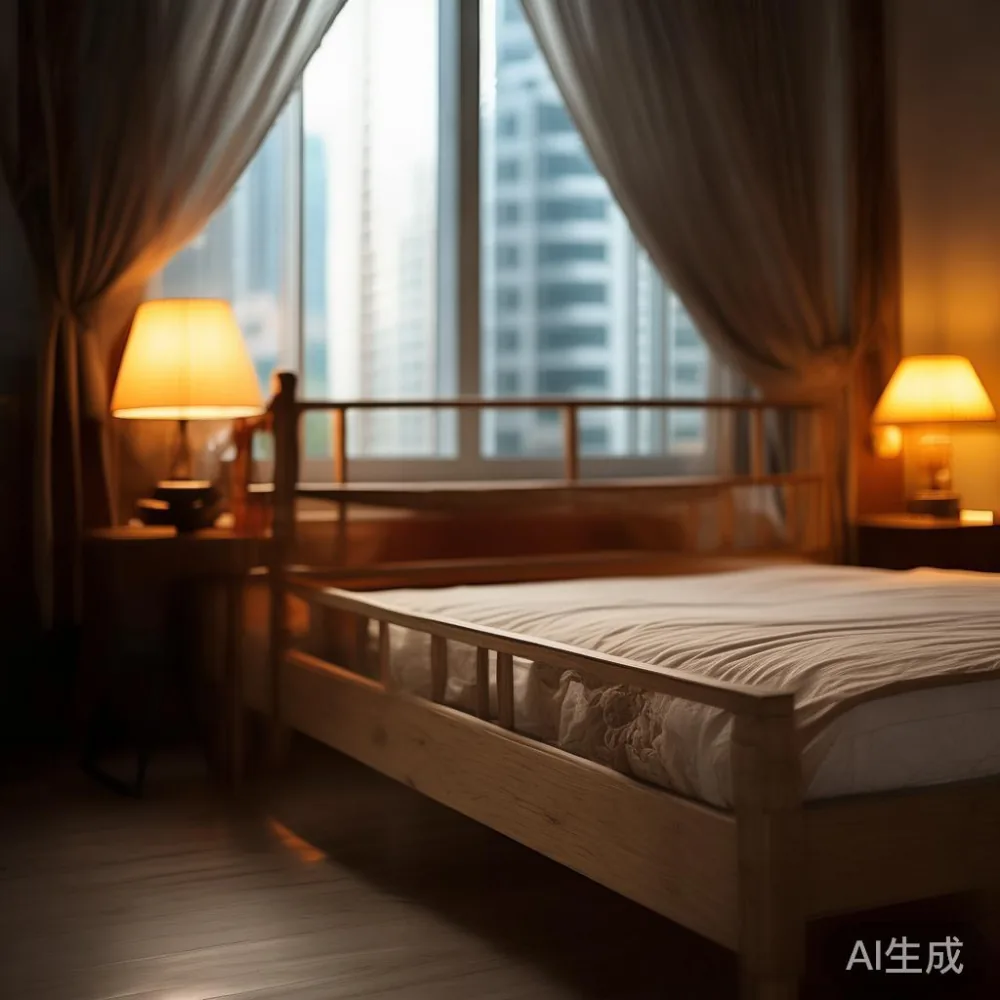
How do I style a Post-modern armchair in a small apartment?
A Post-modern armchair looks composed in a compact Singapore living room when you anchor it with one large-scale element, leave 60 to 70 cm of walk-way around it, and let the curves do the visual work against a flat wall. That is the rule I gave a friend who was fitting a 92 cm-wide Post-modern armchair into her 28 sqm Punggol one-bedder, and it read like a deliberate design choice rather than a squeezed-in chair.
Pair the armchair with a slim-profile marble table (60 cm diameter works for most HDB layouts) and a single arc lamp. Skip the matching ottoman if your walkway is under 70 cm; a small solid wood stool reads lighter and can move to the dining table when guests arrive. If your unit faces west, angle the chair 30° away from direct afternoon glare so the fabric does not fade unevenly. Keep the wall behind it a warm off-white, and let one brass or matte-black accent on the floor lamp tie back to the chair's metal leg caps. The trick is restraint: in a small apartment, one sculptural piece per zone beats three mid-sized ones every time.
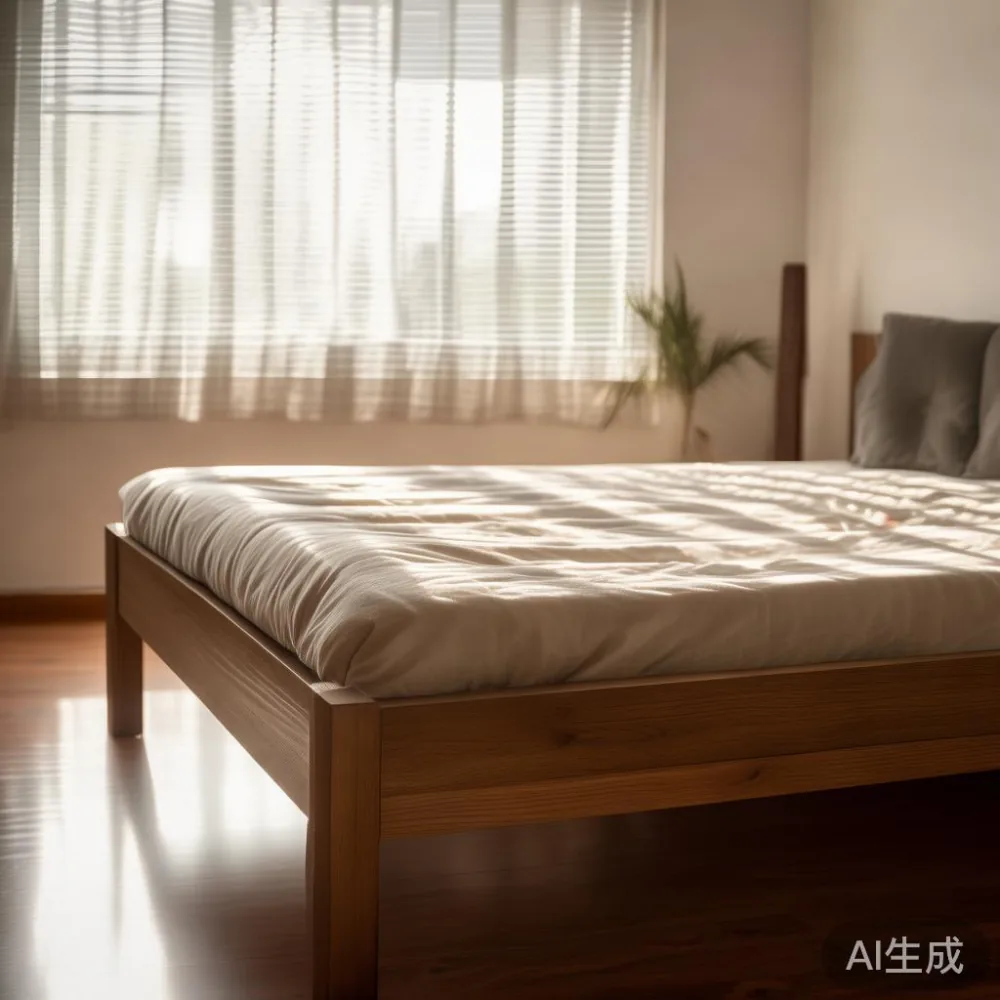
What actually happens inside a bed frame when humidity rises?
Wood moves mostly across the grain, not along it. A typical queen-size bed frame with slats absorbs and releases moisture through the underside of the slats, the inside faces of the side rails, and the end-grain of the headboard posts. End-grain can soak up water 10 to 15 times faster than the long face of the board, which is why cracks almost always start at the ends of slats or at the joints where posts meet rails. When humidity climbs from 70% to 88% over a wet December, the slats swell, push outward against the side rails, and the bed frame feels rigid. When the air dries back to 65% in a heavily air-conditioned bedroom, the slats shrink and the side rails loosen, producing that tell-tale creak when you roll over.
Glue joints are the second casualty. Standard PVA wood glue softens when humidity cycles repeatedly, and casein or hide glue, while traditional, fails faster in tropical conditions. Bed frames joined with mortise-and-tenon plus mechanical draw-bored pegs survive the longest because the pegs keep the joint tight even if the glue film softens. Floating panels, used in wardrobe doors and some dining table tops, are designed to move: the panel sits in a groove with 3 to 5 mm of expansion room, so it can swell sideways without cracking the frame. If you see a bed frame with glued-and-screwed side rails and no floating allowance in the slat grooves, expect movement within the first year in Singapore.
Which solid wood species hold up best in a Tampines or Bedok flat?
After watching hundreds of pieces cycle through showrooms and customer homes, I rank the common solid wood furniture species this way for tropical performance:
1. White oak and European oak. Tight grain, high density around 755 kg/m³, and natural tyloses that slow moisture movement. A white oak bed frame in a properly air-conditioned bedroom can hold within 1 mm of its original dimension across a full year. MIDHILL builds most of its bed frame line in European oak for this reason, and pairs it with a German Osmo hardwax oil finish that lets the wood breathe instead of sealing it under polyurethane.
2. Ash. Slightly more elastic than oak, around 670 kg/m³, and very stable when quartersawn. Good for dining table tops wider than 90 cm.
3. Teak (old-growth, not plantation). Natural oils resist humidity swings, but modern plantation teak from Southeast Asia is younger, softer, and moves more. Old Burmese teak is excellent but expensive and increasingly hard to source.
4. Rubberwood. Widely used in the region and very affordable, but it moves noticeably between 60% and 85% humidity. Fine for a nightstand, risky for a 2 m wardrobe.
5. Pine and MDF-core veneers. Pine moves the most per percentage-point humidity change, and MDF swells permanently if it ever gets wet. Both belong in dry, air-conditioned guest rooms, never near a window or service yard.
What can a Singapore homeowner actually do day to day?
You cannot change the climate, but you can manage the microclimate around your furniture. Five habits that cost almost nothing:
• Keep a digital hygrometer in the bedroom and the living room. A S$12 to S$25 unit from any DIY shop is enough. Aim for 45% to 60% in air-conditioned rooms, 55% to 65% in naturally ventilated ones.
• Run the air-conditioning for 2 to 3 hours before bed, not all night. A 9,000 BTU inverter unit costs roughly S$0.18 per hour at the new 2024 tariff, so a 3-hour pre-cool is about S$0.54 per night and pulls bedroom humidity under 65%.
• Pull the bed frame 10 to 15 cm away from the external wall. The condensation zone behind a wardrobe or bed frame against a west-facing wall can hit 95% even when the room reads 75%.
• Wipe spills within 5 minutes, especially on marble table tops where moisture can creep into the wood sub-frame through the joint.
• Rotate slats and flip the mattress quarterly. Uneven moisture exposure is what causes the familiar dip-and-bow that people blame on the mattress.
Is the corridor and lift access really a furniture problem?
Yes, and it is one most online furniture stores ignore. Standard HDB corridor clear width is 1.2 m, with lift cars around 1.1 m × 1.4 m × 2.3 m internal. A solid wood bed frame in king size is 1.91 m × 2.13 m when fully assembled, so it cannot enter as one piece in 90% of Singapore blocks. Reputable Foshan makers like MIDHILL design their bed frames for the Southeast Asian market with knock-down side rails that fit a 0.9 m × 1.8 m carton, plus pre-drilled draw-bore pegs so reassembly takes two people about 25 minutes with a single 10 mm hex key. Free shipping over US$350 (roughly S$475 at current rates) covers curbside delivery to ground-floor lobbies; upstairs carry-in to the unit is usually quoted separately at S$25 to S$60 per floor depending on lift access.
The same logic applies to wardrobes wider than 1.0 m and dining tables longer than 1.6 m. If a retailer cannot tell you the carton dimensions, the assembly time, and the longest single piece that will go into your lift, they have not actually thought about Singapore delivery. A 14-day return window (common in the industry) is meaningless if the carton is too big to get out of your corridor without damage in the first place.
How does a French light luxury or American light luxury finish behave in humidity?
French light luxury tends to use warm oak tones, brushed brass, and soft linen upholstery with a slightly aged patina. The patina is forgiving: small surface movements disappear into the visual texture. American light luxury leans cooler, with cleaner lines, painted lime-wash finishes, and matte black hardware; any movement or cracking shows immediately because the finish is uniform. Post-modern light luxury, the third common styling, mixes curved silhouettes with stone accents, often pairing a solid wood sofa frame with a marble table top. The marble is dimensionally stable, but the wood sub-frame still moves, so a good Post-modern corner sofa saudi arabia and Singapore buyer alike should check that the marble is mounted on a slotted sub-frame that allows 3 to 5 mm of seasonal movement.
Finishes matter as much as species. Conversion varnishes and 2K polyurethanes block moisture exchange almost completely, which sounds good until the wood wants to move and the finish cracks instead. Penetrating hardwax oils, applied in two to three thin coats, let the wood continue to breathe while still repelling spills. For a nightstand or wardrobe door in a tropical climate, a hardwax-oil finish will outlast a thick lacquer by years, and it can be spot-repaired without sanding the whole panel.
What does a serious warranty actually look like for Singapore buyers?
Read the small print before you fall for the headline number. A 10-year structural warranty on a bed frame should cover joint failure, slat cracking under normal use, and frame warping beyond 4 mm across 1.8 m. It should not exclude "humidity damage," "tropical climate," or "environmental movement." Lifetime refinishing, which MIDHILL includes on its solid wood sofa, dining table, wardrobe, and bed frame lines, means the factory will sand and re-oil your piece at cost for as long as you own it. For a queen bed frame, that service runs roughly S$180 to S$320 including return logistics, far less than buying a replacement every 7 to 8 years.
Pair the warranty with shipping terms. Free shipping over US$350 (about S$475) to a Singapore address, with delivery lead time of 35 to 50 days by sea from Foshan, is the realistic baseline for a Foshan maker exporting to 15+ countries. Air-freight upgrades cut that to 10 to 14 days but add roughly S$220 to S$400 per piece. 14-day returns on unused, unassembled stock in original cartons are standard; custom sizes and finishes are usually final sale, so confirm dimensions twice before placing a custom dining table order.
Where most Singapore furniture buyers go wrong
Three patterns I have seen repeat in customer homes across Tampines, Bedok, and Punggol over the past three years. First, buying a wardrobe or dining table during the December monsoon, when the showroom humidity is 80% and your home is 65%, so the piece shrinks within six weeks and joints gap open. Second, choosing MDF-core panels with a 2 mm oak veneer because the price is S$400 less than solid oak, then watching the veneer bubble after one wet season. Third, treating a Post-modern armchair or solid wood sofa like an outdoor piece because the showroom sample was near a window; the same finish indoors behaves very differently when it is no longer air-conditioned every night.
The honest path is to accept that Singapore humidity is non-negotiable, choose the right species and finish for each category, give the bed frame and wardrobe 10 cm of breathing room from external walls, run the air-con for a few hours before bed, and buy from a maker whose warranty does not blame the weather for problems the joinery should have prevented. A solid wood bed frame built with quartersawn oak, mortise-and-tenon joints, draw-bore pegs, and a breathable hardwax-oil finish will look better at year ten than most flat-pack pieces look at year two, and that is the only number worth caring about.