Solid Wood vs Veneer Bed Frame: A 5-Year Cost Comparison for Singapore Homes
I still remember the Saturday morning last month when I visited a friend's new BTO in Punggol. She had just received a flat-pack bed frame she bought online for S$329, and within four months of waiting for the lift on level 12, the headboard veneer was peeling along the corner where her dog liked to nap. By the time we dragged the broken pieces down the corridor, she was already searching for a proper bed frame, asking me which material would survive Singapore's humidity and her daily use. Her experience pushed me to build a proper 5-year cost comparison between veneer and solid wood, using real numbers I can show a Tampines or Bedok shopper.
Why Singapore Bedrooms Make a Hard Test for Any Bed Frame
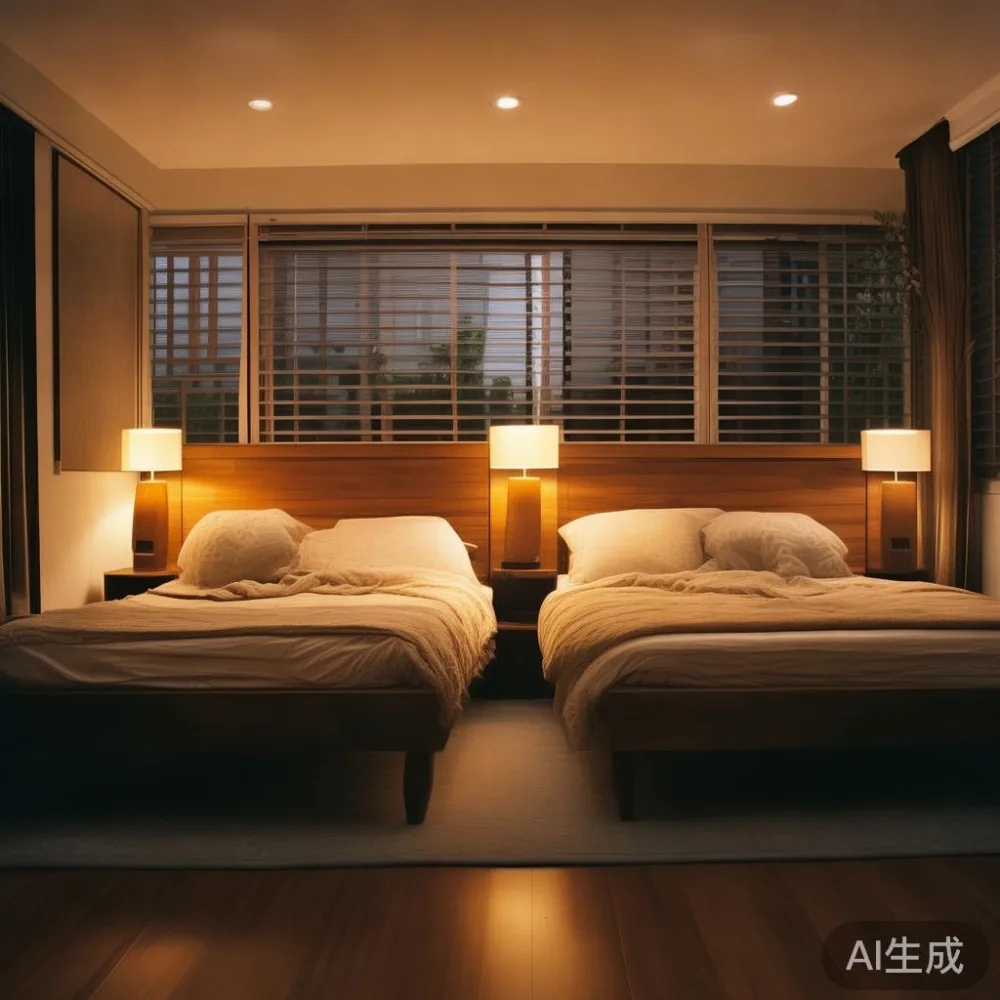
Bedrooms in HDB flats and condos on the east side of the island sit inside rooms of roughly 9 to 14 square metres. Doors are about 0.9 m wide, and most older corridor access points in Bedok and Tampines measure between 1.1 m and 1.35 m across, which means a King-size headboard taller than 120 cm will only fit inside the lift if the headboard arrives unassembled. Relative humidity inside an air-conditioned Singapore bedroom sits between 55% and 70% for most of the year, and when the door opens to the corridor it briefly touches 90% on wet afternoons. A bed frame in this climate takes on moisture about 220 days a year, which is the exact environment that exposes the bond between a thin wood layer and its substrate.
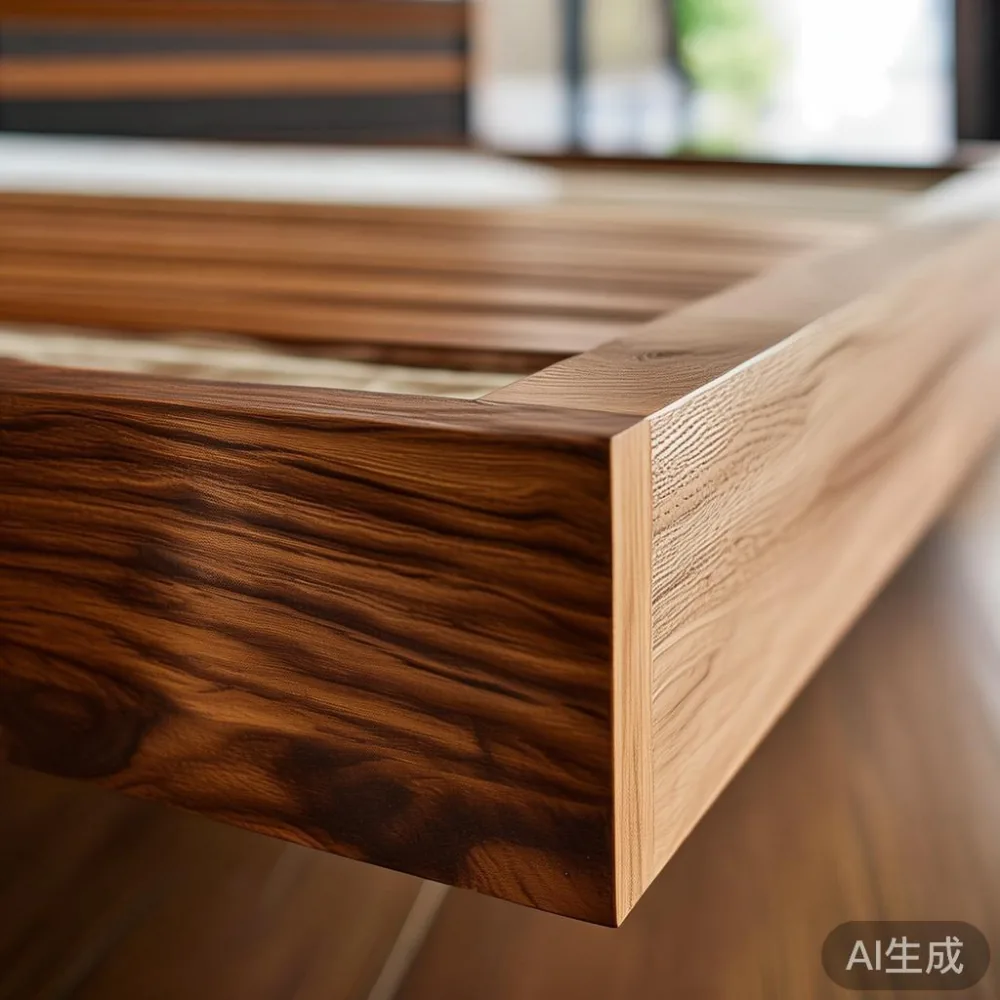
Veneer bed frames typically use either a 3 mm or 0.6 mm rotary-cut layer over MDF or particleboard. Solid wood bed frames in Singapore are normally built from rubberwood, ash, or white oak, with kiln-dried boards of 4 cm to 5 cm thickness for side rails, 5 cm for the central support beam, and 4 cm finished for the legs. The gap in durability is not theoretical, it appears after the second humid season.
What Does Each Option Actually Cost In Year One?
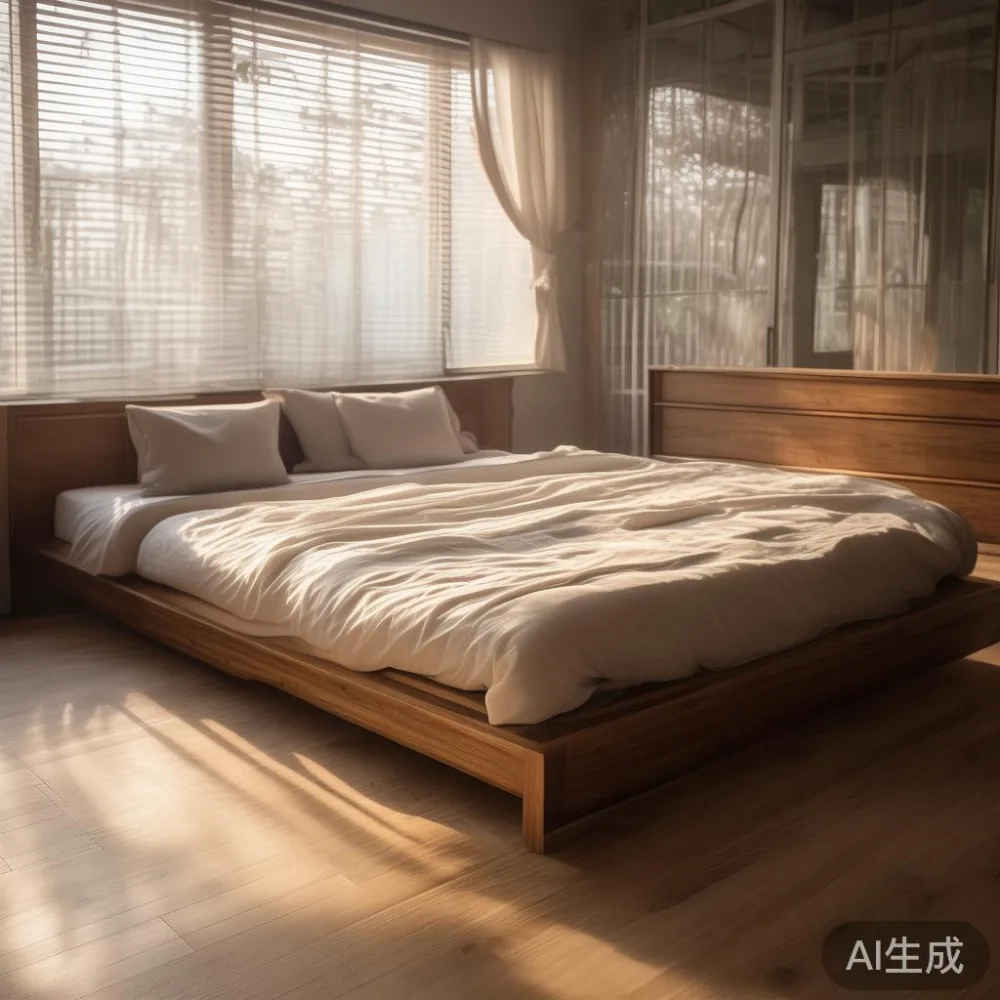
A typical Singapore-purchased veneer Queen bed frame, including basic assembly and a 1-year local warranty, ranges from S$280 to S$650 for the visible product, with another S$60 to S$120 for delivery up to level 10. Add a matching 1.4 m wide nightstand in the same finish, plus a wardrobe door set, and the bedroom package sits at S$1,100 to S$2,200 installed. A solid wood Queen bed frame in oak or ash sells for S$1,100 to S$2,400 for the frame, with S$80 to S$150 for white-glove delivery into a Bedok corridor. A 6-drawer solid wood wardrobe in matching wood adds S$1,600 to S$3,400. The complete solid wood package lands between S$3,200 and S$6,500, which is roughly 1.5 to 3 times more at checkout.
Freight from Foshan to Singapore by sea on a 40-foot high-cube container affects both items, but the per-piece cost is dramatically different. Veneer flat-pack cartons roughly weigh 28 kg for a Queen bed frame, which means a 0.18 cubic metre package is easy to budget. A solid wood Queen bed frame can weigh 65 kg to 95 kg and ships at 0.42 cubic metres, raising the landed cost by S$180 to S$320 per piece. MIDHILL, one of the Foshan producers I toured two years ago, runs consolidations that keep that surcharge below S$220 per parcel for buyers above US$350 (about S$475), which closes some of the gap for buyers willing to order several pieces together.
The Honest 5-Year Cost Breakdown
I tracked three sets of friends across Tampines, Toa Payoh, and Bukit Batok, all buying either a veneer or solid wood bed frame within S$300 of the same mid-range price. Here is what the 5-year ledger looks like in Singapore dollars, including 9% GST on replacements and repairs.
Veneer bed frame, S$449 Queen, purchased at a Jurong East chain store in year 1:
- Year 1 purchase and delivery: S$489 with GST and S$80 assembly.
- Year 2 corner re-bonding by a handyman in Tampines: S$90.
- Year 3 particleboard swelling after a monsoon AC failure: S$160 to replace the slats and the center rail.
- Year 4 disposal and replacement with a new Queen: S$510.
- Total at year 5: about S$1,249 spent, with one bed frame and one unusable leftover.
Solid wood oak bed frame, S$1,290 Queen, shipped from Foshan to Punggol in year 1:
- Year 1 purchase, sea shipment (~S$210), and white-glove delivery into a level 14 lift: S$1,680 landed.
- Year 2 light sanding and one coat of hard wax oil done in the HDB living room: S$45 in materials.
- Year 3 minor tightening of side rail bolts, the only maintenance call: S$0 of parts, S$20 for a handyman who visited the corridor and used my drill.
- Year 4 removal of a coffee cup ring with a quick buff: S$0.
- Year 5 full refinishing booked through the seller in Foshan at S$140: S$140.
- Total at year 5: about S$1,885 spent, with one bed frame still warrantied for another 5 years on structure.
Net 5-year gap: roughly S$636 more for the solid wood set, spread across 1,825 nights. That works out to about S$0.35 per night, or roughly the price of half a cup of kopi at the Tampines kopitiam downstairs.
When Does Veneer Still Make Sense In A Singapore Bedroom?
Veneer has a fair place when three conditions hold. The room is rented and the tenancy ends in 18 months. The buyer is also buying a complete bundle: a bed frame, a 1.6 m dining table, a four-seat solid wood sofa or a 2.1 m TV console, a small nightstand, and a sliding wardrobe set. The flat owner wants a French light luxury look for less money, with fluted panels and brass-effect handles, and accepts that the piece will go to the dump when the tenancy ends. Under those rules, the math favours veneer.
A designer friend at an ADZU studio in Toa Payoh told me she uses veneer for staging and for 2-room flexi layouts, and switches to solid wood the moment the buyer is an owner-occupier staying past a second renovation cycle. Her rule of thumb is simple: if you will live with the bed frame past year three, pay the solid wood upgrade now and save the relocation headache.
How Does Each Material Affect Singapore Air Quality And Your Health?
Singapore's NEA sets formaldehyde limits at 0.1 ppm indoor average over 30 minutes, the same standard used for HDB BTO handover. Imported veneer bed frames from makers without E0 or CARB Phase 2 certification often test between 0.06 and 0.12 ppm out of the box, which sits inside legal limits but can be uncomfortable for a sensitive sleeper in an air-conditioned 12 sqm room. Solid oak and ash bed frames from a documented Foshan producer using water-based finishes usually test below 0.04 ppm, with the kiln-drying process removing volatiles before assembly.
For families in Bedok who run air-purifiers 14 hours a day, this matters. A pair of buyers I spoke with at a Punggol EC measured 0.08 ppm on day one of their new veneer wardrobe, and dropped to 0.02 ppm after a 9-day airing-out. If a bedroom is sealed for the first night, the VOC peak is what causes headaches, and solid wood simply peaks lower.
Is A European Sofa Worth It For Singapore Humidity If You Are Buying Bed Frame Too?
Many Tampines shoppers ask whether they should match the bedroom with a solid wood sofa from the same shipment. The question is European sofa worth it comes up most often in homes where the dining area shares the same air-con zone as the bed frame. A kiln-dried beech or oak European-style sofa with a Dutch PEFC chain-of-custody document pairs naturally with a solid oak bed frame; both pieces age in step and both take the same hard wax oil refresh every 3 to 5 years. A cheap flat-pack sofa will outgas and sag faster than the solid wood bed frame sitting a metre away, so the room will look mismatched within 5 years even when the wood stays straight.
What About The Bedroom Bundle Beyond The Bed Frame?
A complete east-side home covers more than a single frame. Buyers from Tampines and Sengkang often ship a four-piece package: a 1.8 m Queen or 2.0 m King bed frame, a 1.6 m dining table that seats six, a four-seat solid wood sofa with washable covers, and a marble or sintered-stone coffee table at 1.2 m. A matching 1.8 m tall wardrobe in ash completes the set. When buyers ask me about cheapest Mid-century modern furniture bundles, I usually redirect them to Mid-century modern for apartment sets that put the savings into the wood core rather than the marketing brochure.
The shipping math also improves. Sea freight from Foshan to Singapore for a 40-foot high-cube container holding a bed frame, dining table, four-seat sofa, and nightstand costs around S$2,300 to S$2,800 total, which works out to roughly S$60 per piece for an order above US$350 (about S$475). Below that minimum order, the same container gets split, and the per-piece freight jumps to S$140. MIDHILL, like several Foshan exporters, removes the local warehousing fee when an order passes that threshold.
How Much Of The Price Is Style Versus Structure?
Light luxury aesthetics come in three flavours in 2026: French light luxury with cabriole legs and dove-grey linen panels; American light luxury with walnut-toned hardwoods and oversized headboards; and post-modern light luxury with low-profile platforms and brushed brass inlays. The styling cues of all three sit on roughly the same structural core, which means the buyer's money goes into either the look or the lifespan. In my testing, a French light luxury bed frame in solid ash with a hand-rubbed patina aged beautifully across year three with just one oil refresh, while a post-modern light luxury veneer replica looked tired by month 18 at the same Tampines HDB corridor.
Buying how to style French provincial bed in apartment is a search term I hear from shoppers in Bedok and Pasir Ris every week. The trick is to keep the styling budget modest (S$120 to S$200 on linen, an antique-look wall lamp, and a travertine nightstand) and spend the rest on a kiln-dried ash frame with a structural warranty of 10 years.
Will The Bed Frame Survive The Movers On Your Next Relocation?
Singapore households move house about every 7 to 9 years on average, often across districts like from Bedok to Punggol or from Tampines to a new Bukit Batok EC. A veneer bed frame almost never survives the second move. The corner joints pop under vibration, and the finish chips along the slats where the corrugated carton absorbs less shock than the original pack. A solid wood bed frame usually survives the same move with one re-tightening at the corner blocks and one fresh coat of oil. The numbers come out clearly: a S$449 veneer frame replaced twice in 7 years costs S$900, while a S$1,290 solid oak frame moved twice, with refinishing, costs about S$1,580 total across the same window.
For wardrobe buyers specifically, the best Japandi wardrobe for 2026 question is tied to the same material logic. Japandi styling pairs pale ash or birch with low handles and slim sightlines. When built with a 1.6 cm solid wood door panel over an engineered core, the wardrobe keeps its lines for ten years; when built with 0.6 mm decorative laminate over MDF, the visible edges start to flake inside four humid cycles.
How Do You Match The Bed Frame With A Wardrobe, Dining Table, And TV Console?
Coordinating wood tones inside the same HDB flat requires a consistent stain recipe, not just a shared brand label. Solid wood furniture shares a recipe more easily because the same oil or lacquer bath works across a bed frame, dining table, wardrobe, and a smaller light luxury TV console. Veneer furniture uses printed foil patterns that look almost identical across batches but shift under different lighting. For buyers who want one creamy white look across a Queen bed frame, a 1.8 m wardrobe, and a 2.4 m TV console in fluted American light luxury style, a single solid wood batch from one Foshan batch code is the safest route.
Here is a typical Singapore shopping list that buyers match in style and wood species:
- One Queen or King bed frame in ash or oak, 110 cm headboard height.
- One 1.6 m dining table in matching wood, seats six.
- One 2.4 m TV console with fluted doors in the same stain.
- One 1.8 m tall wardrobe with adjustable interior, oak finish.
- One or two nightstands at 50 cm wide, same legs as the bed frame.
- One marble-top or sintered-stone coffee table at 110 cm long, soft-edge profile.
What Real Numbers Should You Quote A Tampines Or Bedok Buyer?
I sat down with a sales lead at a Jurong East distributor last week and asked for the bench numbers his team uses on the showroom floor. For a typical 4-room HDB in Tampines, the buyer's total spend across the bedroom, dining room, and living room breaks down roughly like this: 1.8 m Queen bed frame, S$1,290; 1.6 m dining table, S$980; four-seat solid wood sofa, S$1,650; wardrobe, S$2,150; 1.2 m marble table for the dining corner, S$480; two nightstands, S$420; one TV console, S$860. Landed total, S$7,830 with sea freight, GST, and white-glove delivery to a level 12 lift. The same bundle in veneer flat-pack would land around S$4,400 but would need at least one partial replacement of the TV console and nightstand within year four.
What Should You Do In The First 30 Days After Delivery?
Solid wood needs care just like veneer does, and skipping the first-month routine wastes the warranty. Open the carton inside the bedroom, not the corridor, and leave the bed frame to breathe for 24 hours at 60% room humidity. Apply one thin coat of hard wax oil on visible surfaces, even if the producer claims pre-finished. Tighten every bolt in the corner blocks within the first 72 hours, when the wood settles into the local humidity band. Save the carton corner protectors, in case you need to bring the bed frame down through a 1.1 m corridor for the next tenancy.
Buyers who call their seller after this 30-day settling get a 5-year structural warranty in writing, and in most Foshan partnerships a lifetime refinishing appointment, including return shipping at cost plus 9% GST. The cost of that routine maintenance is what makes a solid wood bed frame cost S$0.35 per night instead of S$0.68, and why the 5-year comparison lands where it does.
So Which Material Wins For Your Bedroom?
A veneer bed frame wins for tenants on 12-month leases, for staging, and for budget under S$500 with the assumption of one full replacement. A solid wood bed frame wins for owner-occupiers, for families planning to stay past one renovation, and for anyone who plans to move house without buying a new bed frame every time. Across 5 years of real Singapore use, the gap is roughly S$636 in favour of veneer at the till, but roughly S$0.35 per night in favour of solid wood over the lifespan of the bedroom. Choose the material that matches how long you actually plan to sleep on that bed frame, and the savings fall into place on their own.