How Humidity in Southeast Asia Affects Solid Wood Bed Frames
Humidity is rarely the first thing Singapore homeowners think about when choosing a solid wood bed frame, yet it can determine how the frame feels, moves and ages. In Tampines, Bedok and Punggol, apartments may feel consistently warm because of high outdoor humidity, enclosed corridors and air-conditioning that switches on and off throughout the night. Wood reacts to those changes by expanding, contracting and occasionally developing small surface marks. The right species, finish and care routine can make a bed frame well suited to local conditions without treating it as a display piece kept away from real life.
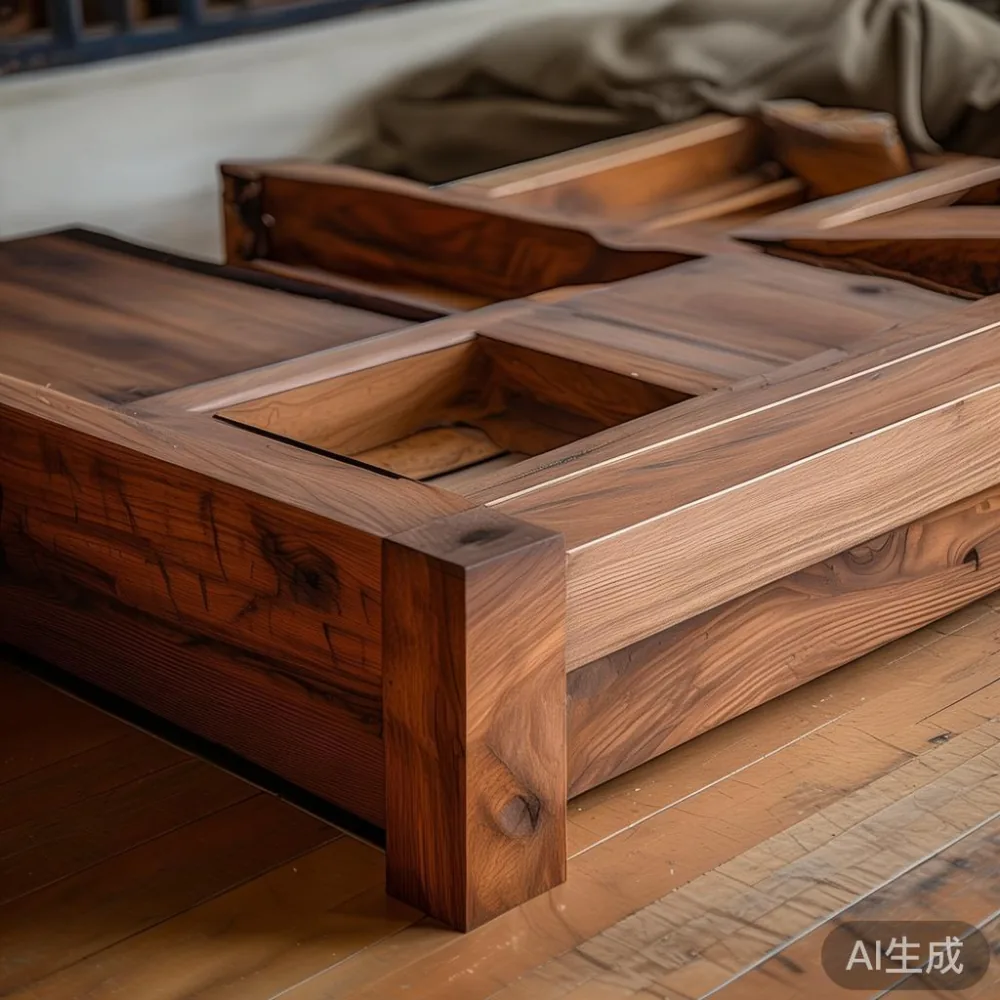
At MIDHILL, we design solid wood furniture for homes where comfort, proportion and practical durability matter. A bed frame must accommodate Singapore mattress sizes, compact lift access and the realities of HDB living. It should also complement a dining table, solid wood sofa, wardrobe, nightstand or marble table without looking disconnected from the room.
This guide explains how tropical humidity affects wood furniture, how to identify movement in a bed frame, and what precautions help preserve a solid wood finish. It also includes measurements, price examples in SGD and practical guidance for Singapore residents.
How does humidity change solid wood in a Singapore bedroom?
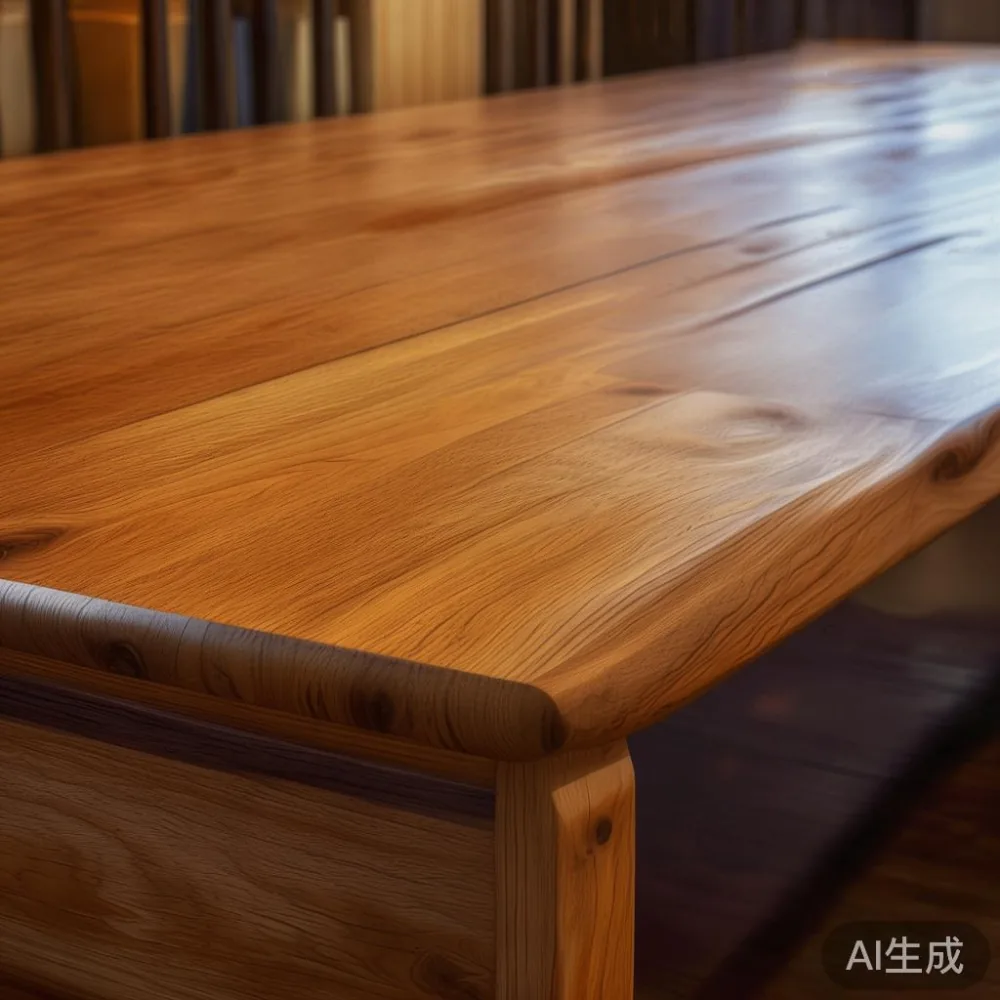
Wood contains moisture, and its moisture level responds to the relative humidity around it. When the air is humid, cells absorb moisture and the board may swell across its width. When the air becomes drier, the board gives up moisture and contracts. A movement of 1–3 mm across a well-made component is often normal; larger gaps, twisting or persistent cracking deserve closer attention.
Singapore’s coastal location creates a broad humidity challenge. Outdoor readings can vary noticeably between wet and dry periods, while the air inside an apartment is often around 55–75% relative humidity. HDB flats without bedroom windows may remain more stable, but a unit near an open corridor or balcony can experience greater fluctuations. Air-conditioning lowers humidity during the day, then the room warms overnight as the system stops.
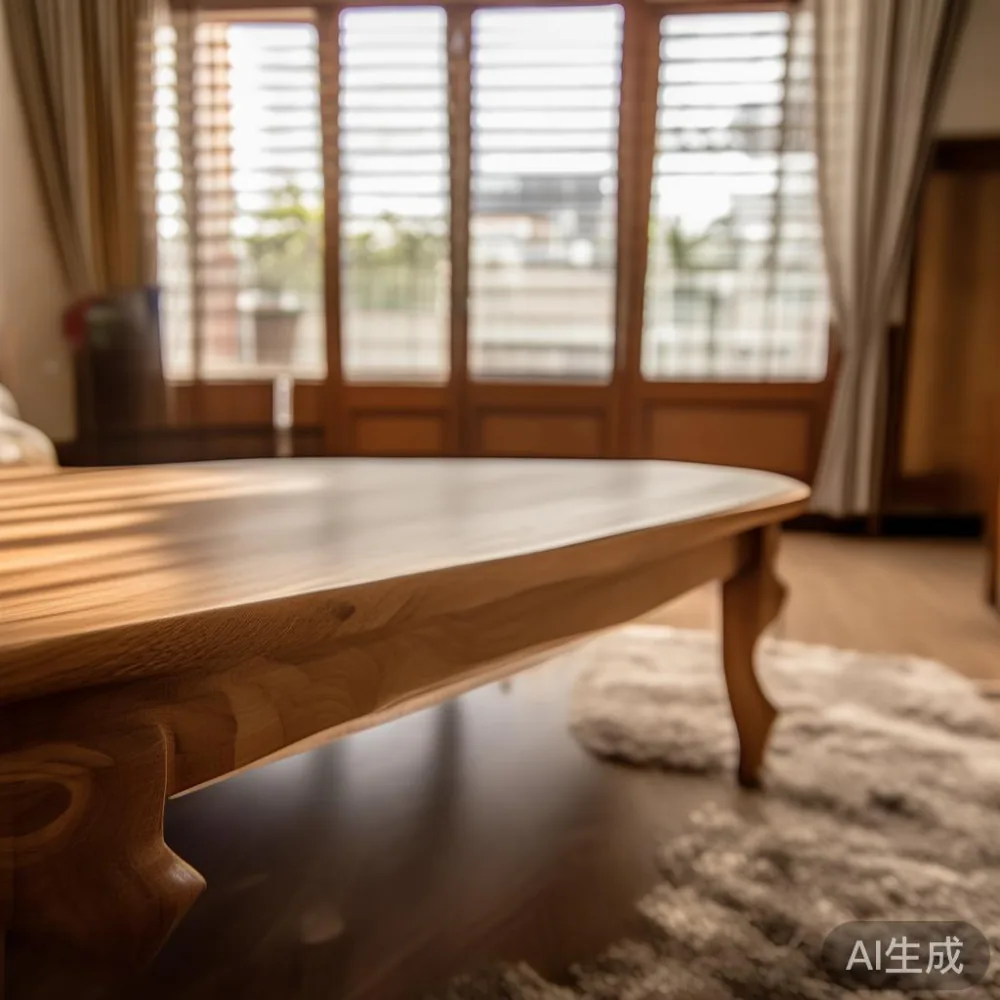
That repeated cycle matters. A bed frame beside an exterior wall may see a different environment from one placed against an internal partition. The side facing a cooler bedroom wall can contract slightly more than the warmer side. These forces explain why a quality solid wood bed frame may develop fine checks in the finish rather than dramatic movement. A frame made with kiln-dried timber, stable joinery and an appropriate finish has a better chance of handling the cycle calmly.
Humidity does not automatically ruin wood. It changes its dimensions gradually and predictably. The main risk comes when furniture is exposed to moisture for many hours, such as beside a leaking window or in a room with persistently poor ventilation. Mould, peeling finish and swollen components are more serious signs than a small movement line that closes as the weather changes.
What dimensions and materials work best for HDB flats and condos?
Most Singapore bedrooms use a mattress measuring 152 cm by 203 cm, although Queen and King sizes are also common. A bed frame should be checked against the actual mattress rather than a rounded size label. For a queen mattress, an external frame width of about 160–170 cm gives a useful clearance of 4–9 cm on each side. For a king mattress at 183 cm by 203 cm, an outer width near 188–198 cm is more practical.
Floor space is not the only constraint. A common HDB lift internal width is around 110 cm, with a door opening of roughly 90 cm, but building specifications vary. A boxed bed frame wider than 108 cm may not fit through the lift or around a tight corridor turn. Slatted models or knock-down frames can make delivery and installation easier. Their joints should still lock firmly, with no more than about 3 mm of visible play.
For smaller bedrooms, designers often allow 60 cm of circulation beside one side of the bed and 75 cm along the other. This gives space for a nightstand approximately 45–55 cm wide and a person to make the bed. In a Tampines flat with a tightly arranged bed frame, choosing a low-profile base can also preserve visual openness. Post-modern light luxury works well here through clean profiles, warm timber and restrained decorative details rather than a heavily ornamented headboard.
Solid hardwood options commonly used for furniture include oak, ash, beech, rubberwood and walnut. Each has a different response to moisture and a different visual character. Oak and ash generally offer useful stability, while rubberwood can provide a lighter appearance at a more accessible price. Walnut is valued for its darker grain. The species should be suited to the room’s conditions, not chosen only for its colour photograph.
How can I tell if a solid wood bed frame has moved because of humidity?
Start with a visual inspection. Look along the headboard, footboard, side rails and top edges for fine vertical lines. A hairline check of less than 1 mm may be a surface finish response, especially if it closes during a drier period. Gaps that continue to widen, boards that no longer meet cleanly, or a rail that feels uneven may point to a larger moisture-related movement or a joint issue.
Measure rather than guess. Mark the position of a sliding door or drawer front with removable tape, then check the alignment after 24 and 72 hours. Record changes in millimetres and note the relative humidity at the same times. A 1–2 mm shift during a day is manageable; repeated movement beyond 3 mm warrants attention from the supplier.
Last month I visited a colleague’s three-room flat in Bedok to examine a solid wood bed frame installed near a west-facing window. Its outer rail had opened by approximately 2 mm during a humid week. We moved the frame 30 cm away from the wall, improved cross-ventilation and reduced direct air-conditioning airflow. The rail closed within four days and the finish showed no lasting distortion. The experience confirmed that distance from a temperature and moisture source can matter as much as the timber itself.
Customers often ask about the appearance of knot marks, mineral streaks and slight tonal differences. In solid wood, these features are part of the material, not automatic defects. However, deep splits, loose tenons, sharp edges or a pronounced bow are not ordinary variations. Ask for clear photographs and measurements before deciding whether a frame needs adjustment.
What is the best way to control humidity around a bed frame?
Keep the frame away from dampness while allowing normal room ventilation. A relative-humidity reading between 45–65% is comfortable for occupants and helpful for wood. A simple digital hygrometer placed near the bed, but not directly against an air-conditioning vent, costs about SGD 25–45 and allows better decisions. If readings remain above 70% for weeks, consider improving airflow or using a dehumidifier rather than repeatedly wiping the furniture.
Leave a small gap between solid wood furniture and cold exterior walls. Around 5–10 cm can reduce condensation risk, provided the arrangement does not create an impractical gap for cleaning. Do not place bedding or curtains directly against the frame if they trap moisture. Rotate a mattress every 2–4 weeks, and ventilate the bedroom for 15–30 minutes after air-conditioning use, especially after showers.
Cleaning should be gentle. Dust with a soft cloth slightly dampened with water, then dry immediately. Avoid silicone-heavy polishes, ammonia, alcohol-based cleaners and rough wet cloths. A pH-neutral wood cleaner is generally suitable. Apply it sparingly and test an unseen 10 cm by 10 cm area first. Cleaning a nightstand or wardrobe takes less than 10 minutes and helps prevent grime from entering open grain.
Solid wood furniture should not be treated like a glass display cabinet. Use coasters and mats on a nightstand, protect a dining table from hot dishes, and keep a marble table free of standing water. These habits reduce finish wear without isolating the wood from the room. If the frame came with an oil, wax or lacquer finish, use the matching maintenance product at intervals suggested by the maker.
Is Italian light luxury bed worth it in Singapore’s climate?
The phrase “is Italian light luxury bed worth it” makes sense as a question about style and construction, but country of styling should not be confused with climate readiness. A solid timber frame with stable joinery and a moisture-aware finish can work well in Singapore. Italian light luxury often emphasises proportion, gentle curves, upholstered surfaces and careful visual balance. French light luxury similarly draws on pale woods, refined profiles and calm contrast.
The practical questions are more useful than a label. What is the frame’s total weight? How many people are needed to carry it? Will the assembled width pass the lift? Does the finish tolerate humid conditions, and can replacement parts be obtained? A bed frame weighing 45–65 kg may require two people and a stair or lift check before delivery.
Modern Italian light luxury furniture may include upholstered panels, which need protection from spillages and prolonged moisture exposure. Solid wood components still require sensible humidity control. For an HDB bedroom, a simpler design can be easier to maintain than a deeply buttoned headboard with many fabric folds.
Price should be compared by the complete offer rather than by timber name alone. A locally delivered solid wood bed frame in the SGD 900–1,600 range may include assembly support, a 10-year structural warranty and returns, while a USD-converted international price can exclude these services. Any quoted figure should state whether GST, delivery to the block, lift carrying and installation are included.
Will a solid wood bed frame survive delivery through narrow corridors?
It can, but measurements should be confirmed before dispatch. Ask the supplier for the packed box dimensions, the largest assembled component and the estimated weight. In many HDB blocks, the critical points are the ground-floor entrance, lift lobby, lift car, landing and bedroom doorway. A frame with a 190 cm headboard may need entry through a 90 cm door and a right-angled corridor turn.
Some designs use three separable sections, each around 70–100 cm wide, while others arrive as a complete unit. Knock-down construction can reduce the volume handled by delivery workers, although it also introduces more joints that must be aligned. Check that screws reach through suitable metal inserts and that the fittings are included. It is better to add 5–8 cm of working clearance than to force a large component into a tight passage.
For hotels, lobbies and serviced residences, delivery planning is equally important. A mid-century modern for hotel project may use repeatable bed frame modules, but traditional detailing must still account for staff handling and air-conditioning differences. Searches for for sale Vintage furniture often surface attractive old pieces, although many are not engineered for contemporary mattress support or tropical humidity.
Buyers comparing eras can also study 2026 Mid-century modern furniture for its tapered forms and practical silhouettes. Those shapes suit many compact Singapore rooms, but the construction matters more than the decade. A straight frame with a supportive slat system, centre rail and 25–30 cm clearance below may be easier to clean than a low, enclosed structure.
For wardrobe planning, a useful search phrase is how to style European light luxury wardrobe in bedroom. A pale European-style wardrobe can visually balance a darker bed frame, yet it should also be positioned away from wet zones. If the wardrobe sits beside a bathroom wall in a HDB flat, inspect that wall for dampness before installation.
What warranty and aftercare should I look for when buying a bed frame?
Look for written coverage of structural components, not a vague promise about appearance. A 10-year structural warranty can provide confidence for joinery and frame failure, while refinishing coverage may depend on the supplier’s conditions. Ask whether scratches, normal movement below a stated tolerance, fading and moisture exposure are included. Obtain the policy in English and keep the order record, dimensions and finish details.
MIDHILL provides a 10-year structural warranty and lifetime refinishing for eligible furniture, supported by more than 15 years of manufacturing experience since 2008. Its service terms are designed to give owners a route for long-term care. A furniture maker should also explain preparation, transport and the number of days required for assessment or refinishing work.
Returns and delivery terms deserve equal attention. A 14-day return window gives a limited period for checking fit and appearance, especially when the frame has been assembled. Free shipping over US$350 is useful for overseas orders, but Singapore buyers should still confirm the final SGD charge, GST and delivery days to the specific block. A practical expectation is 7–14 delivery days for stock items, while made-to-order pieces may require 30–60 days.
Before accepting a bed frame, inspect the corners with a bright light, check the slat spacing, and confirm that all fixings are present. The slats should support the mattress without visible sagging. The headboard should sit squarely, and the side rails should meet cleanly. Photograph the delivery condition from several angles, including the underside and hardware.
How do I choose a bed frame that suits Singapore’s climate and my room?
Begin with the mattress, then measure the room. Note the ceiling height, air-conditioner position, nearest wall and circulation route. A queen mattress needs an appropriate internal fit, while the outer frame should remain within the space needed to make the bed. For a compact HDB room, a frame with a slim profile and a low headboard can preserve openness without making the bed feel narrow.
Next, examine the timber and finish. Ask whether the wood was kiln-dried, how it was acclimatised and whether the finish is suited to humid interiors. Look for stable construction, clean drilling, secure dowels and mechanical joints where appropriate. Also check the underside for unfinished surfaces that could collect moisture.
Style can then follow the home. French light luxury works with cream textiles, pale timber and curved details. American light luxury often combines darker wood with clean lines and generous upholstered elements. Post-modern light luxury may use mixed shapes, restrained contrast and tactile materials. The bed frame should be the room’s anchor, while a nightstand, solid wood sofa, dining table, wardrobe or marble table supports the wider composition.
Finally, compare the complete ownership terms: price, GST, delivery days, carrying service, returns, warranty and refinishing. A solid wood bed frame priced at SGD 1,200 with local delivery and clear aftercare may offer more practical value than a lower-cost model that requires uncertain assembly or replacement parts.
Humidity in Southeast Asia makes careful selection and maintenance important, but it does not make solid wood furniture unsuitable for the region. Stable construction, sensible placement, controlled indoor humidity and regular gentle care allow a solid wood bed frame to remain comfortable and visually strong for many years. The right approach is practical rather than overly protective: understand how the timber moves, keep water away from it, and preserve the ability to maintain and refinish the piece when life inevitably leaves a mark.