How Southeast Asian Humidity Affects Solid Wood Bed Frames in Singapore
Singapore’s equatorial climate makes solid wood furniture care more demanding than the showroom photograph suggests. Outdoor relative humidity often ranges from 65% to 90%, while an air-conditioned HDB flat may remain near 50% to 60%. A timber bed frame can absorb moisture, expand, then contract as it moves between a humid corridor and a cool bedroom. That movement affects drawer runners, bed joints, veneer edges and the alignment of a bedroom door.
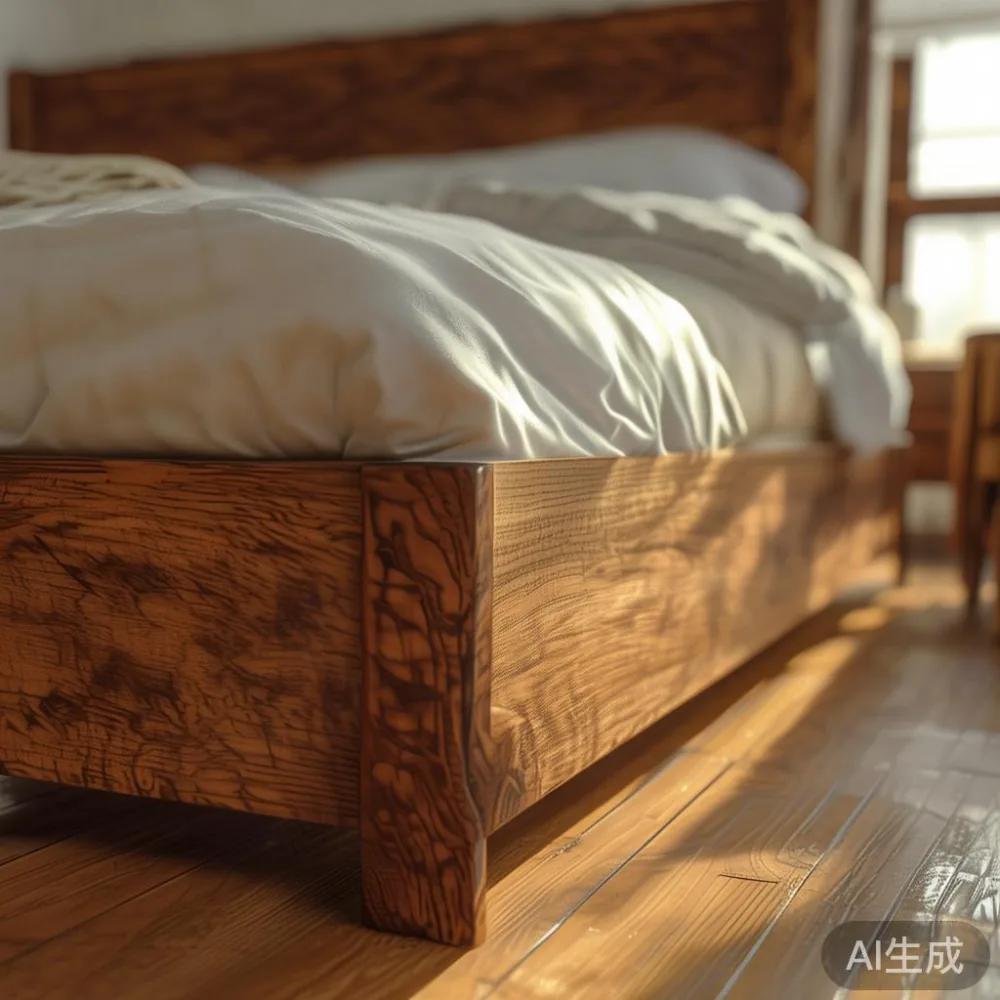
For homes in Tampines, Bedok and Punggol, the solution is not simply choosing wood with a reputation for durability. It requires understanding moisture movement, measuring the room, controlling condensation and selecting a bed frame built for actual Singapore conditions. MIDHILL manufactures solid wood furniture in Foshan, has exported to more than 15 countries since 2008, and backs its furniture with a 10-year structural warranty, lifetime refinishing and a 14-day return period. Orders over US$350 qualify for free shipping, while displayed Singapore prices are clearer in SGD.
Why does humidity make a solid wood bed frame move in Singapore?
Wood is hygroscopic: it takes in moisture when the surrounding air is humid and releases it when the air becomes dry. In a typical Singapore bedroom, this may mean a relative humidity of 78% at 11 p.m. and 52% at 7 a.m. The daily swing is more influential than one very damp afternoon because repeated cycling can open fine checks along a grain line, loosen a mortise-and-tenon joint or make a side rail feel tight.

Seasonal weather adds to the load. During the Northeast Monsoon, Singapore can experience several rain-bearing days, while the western coast stays humid much of the year. Coastal winds carry moisture into open windows. Air-conditioning removes visible dampness but can lower the wood’s moisture content too quickly, especially near a recessed ceiling diffuser.
A common mistake is to assume that solid wood is immune because it contains no engineered board in the frame. Solid timber still reacts to humidity. Its advantage is that slow, even movement can be managed with sound construction and finish maintenance. The key factors are wood species, panel width, joinery, ventilation clearance and the wax or oil used on the surface.
For a king bed frame measuring 180 cm by 200 cm, allow about 5 cm to 8 cm of clearance on each long side where the design permits. This is not only for air circulation; it helps a person wipe the floor and inspect the rail after rain. Leave roughly 60 cm in front of a hinged bedside drawer, and do not push the frame flush against a wall.
Which solid wood suits HDB flats and condos?
Oak, ash, beech, walnut and teak are widely used for bedroom furniture, but their behaviour differs by structure and supply. European oak usually suits a calm French light luxury bedroom, with visible grain and restrained hardware. American light luxury often pairs a pale solid wood bed frame with clean-lined nightstands and upholstered bedding. Scandinavian-looking pieces can use ash or beech, but their pale finish reveals movement more readily.
Teak has naturally oily compounds that slow moisture exchange, making it practical for humid climates. It may darken under daylight, so position pale bedding thoughtfully. Oak is resilient and visually substantial, yet broad boards can still expand by several millimetres as humidity rises. Ash is lighter and easy to refinish, while walnut offers a warmer post-modern light luxury tone. Beech is less expensive but needs close attention to finish and ventilation.
For someone comparing a French bed vs Nordic bed, the construction details matter more than the label. A French-style sleigh bed may use curved side rails and decorative mouldings; a Nordic bed frame usually has straighter profiles and slimmer visual lines. Both should use mechanically joined timber, rounded edges and a finish that can be maintained without stripping the whole frame.
Ask the seller for actual timber and plywood details, not just “wood” or “wood finish.” A bed frame may combine a solid wood load-bearing structure with plywood drawer boxes, which can be entirely appropriate. Request a moisture-content reading between 8% and 12% for furniture intended for air-conditioned interiors. A seller who measures and documents this is showing a more controlled production process.
The phrase best European bed for 2026 is useful only as a starting point. A European design imported into Singapore still has to tolerate local humidity, HDB lift dimensions and daily air-conditioning cycles.
Will a solid wood bed frame fit through my HDB lift and corridor?
Humidity is only one part of delivery planning. A polished frame can look perfect in the warehouse and still fail to reach the bedroom if the packaging exceeds a corridor turn. HDB access varies by block, so measure the actual route rather than relying on a generic online guide.
Check the lift door width, lift car depth and the diagonal clearance inside the car. A common 900 mm lift door leaves limited room for a wide headboard, even when the lift itself is large. Measure the corridor width at the narrowest point, skirting projections and any 90-degree turn. For a flat with a 1.0 m internal corridor, a boxed bed frame above 85 cm in width may require partial unpacking or a different assembly method.
MIDHILL can quote delivery in SGD with the packed dimensions and estimated delivery days stated before purchase. Allow 7 to 14 delivery days for Singapore orders, although sea, customs and building access can affect the schedule. The package should be protected with corner guards, moisture-resistant wrapping and a rigid carton. Ask for the outer carton dimensions: a 190 cm headboard may be split into two sections to improve elevator access.
Also check the bedroom door. A standard 840 mm door can be opened by a bed frame whose widest removable component is no more than about 760 mm. Curved rails may need turning because their usable width changes at different angles. A local carpenter may be needed in some older HDB flats, but good flat-pack design reduces that risk.
How much humidity is safe for a bed frame?
Keep indoor relative humidity between 45% and 65% when possible. Singapore homes rarely maintain that range naturally, so a dehumidifier or air conditioner often needs to operate consistently during humid nights. In a 12 m² bedroom, a dehumidifier rated at 15 litres per day may be more appropriate than a small 5-litre model. Place it near a return grille, with at least 20 cm clearance around the intake and outlet.
Use a calibrated hygrometer rather than guessing. Place it 1 m above the floor and away from a window or air-conditioning outlet. Check it at approximately 8 a.m., 3 p.m. and 10 p.m. for 7 days. If readings remain above 70%, inspect window seals and improve ventilation. If they drop below 45% for long periods, reduce direct cold-air exposure or moderate dehumidification.
Condensation needs immediate attention. Wipe droplets from metal rails and nightstands, and check whether the bed frame touches an exterior wall or sits under a chilled window. A gap of 3 cm to 5 cm between the headboard and wall can make inspection and drying easier. For an HDB flat in Tampines or Bedok, avoid placing a bed frame directly beneath a frequently opened balcony door.
Mold or musty odours indicate that the room needs drying, not stronger fragrance. Remove bedding for 2 hours, run the dehumidifier for 4 to 6 hours and clean affected surfaces with a product appropriate for the finish. Never pour household bleach onto oak, walnut or teak.
How should I finish and maintain the timber?
For a solid wood bed frame, a penetrating hard wax oil generally preserves the timber’s response to humidity better than a thick lacquer that can check or flake. Apply a thin coat in 2 passes, allowing about 12 to 24 hours between them in a ventilated room. Maintenance requires only a soft cloth and the manufacturer’s recommended cleaner; heavy liquid polish can leave a sticky surface.
Inspect twice a year, with an additional check after unusually wet weather. Look along the inner rail, under the slats and around drawer runners. A moisture meter can help, but the useful readings depend on the species. Oak and similar woods may behave differently from teak, and a surface reading alone does not confirm that the centre of a board is dry.
Small marks can often be treated with a wax repair stick. Larger damaged areas may need sanding and refinishing. MIDHILL offers lifetime refinishing on its products, which can help owners restore a well-used bed frame rather than replace it. Confirm the service scope and practical transport arrangements before ordering; a frame must still be dry and clean when received.
Do not use steam cleaners on the timber or silicone mats directly beneath the frame. Silicone can trap moisture and transfer it to the floor. Use breathable rugs or protective pads rated for wood floors. Lift the frame slightly where designed, but do not improvise blocks that interfere with levelling feet.
What about wardrobes, nightstands and other solid wood furniture?
The same humidity principles apply to a wardrobe, although closed cabinets require different airflow. Leave about 5 cm behind a freestanding wardrobe for inspection where space allows, and avoid packing it tightly into an alcove. Back panels can warp if they repeatedly absorb moisture without a chance to dry.
If you are working out how to style American wardrobe in bedroom, consider visual weight rather than pushing every piece against the wall. An open oak nightstand beside a solid wood bed frame can balance a wall-mounted wardrobe. Use 45 cm to 60 cm between the bed and nightstand where circulation permits, and keep documents away from the floor in a humid HDB room.
Nightstands should have finished undersides and sealed edges. A marble table needs its own condensation checks because marble is less affected by moisture than wood, but the cabinet or base beneath it should remain dry. A dining table near a kitchen window may require more frequent wiping than one in the dining zone.
For clients measuring a solid wood sofa, a dining table or a wardrobe, request the same finish and moisture documentation. A separate cloth-covered product may need different care from bare timber, and stone surfaces should not be treated with oil meant for wood.
Design references can also cause confusion. European sofa vs French provincial sofa describes shape, upholstery and visual detail rather than climate performance. Likewise, Boho for small living room usually refers to textiles, layered lighting and colour, but the furniture still needs enough clearance to dry. A rattan-look nightstand should not be assumed to contain moisture-resistant solid wood.
When evaluating a MIDHILL dining table review, check the table’s expansion method, underside finish, cleaning instructions and delivery measurements rather than relying on appearance alone. These are the details that matter after the table has spent 2 rainy seasons in a Singapore home.
How do I choose furniture that will age well here?
Look for movement-friendly joinery, rounded edges, sealed panel backs and replacement parts. A frame assembled with screws into solid timber, dowels or mortise-and-tenon joints can accommodate small seasonal changes more effectively than a rigid construction that traps all movement in one joint.
Balance light-luxury styling with practical protection. French light luxury might use an upholstered headboard in linen, but leave 10 cm to 15 cm between the bed and curtains so fabric can dry after washing. American light luxury commonly uses clean geometry, so pale timber benefits from subtle grain variation and stable hardware. Post-modern light luxury can mix curved rails with simple nightstands, provided both have durable moisture-management finishes.
Budget in SGD with the hidden costs included. A mid-range solid wood bed frame may cost from S$1,200 to S$2,800, while a more decorative French or American design may range from S$2,500 to S$5,500. Delivery to most Singapore addresses is usually free, but lift or doorstep service and assembly may add S$40 to S$120. GST may apply to imported orders, with the treatment shown at checkout.
Check the warranty terms, return window and finish-care requirements before payment. A 10-year structural warranty is more useful in humid conditions when paired with a clear care guide. A 14-day return period allows a buyer to check colour, fit and soundness, although a frame used or assembled may not qualify. Confirm those conditions in writing.
I tested a similar solid wood frame during a visit to a Bedok condo last month. I left a hygrometer beside the headboard for 72 hours and recorded 76% to 83% humidity after the air conditioner cycled off. The outer rail showed a fine moisture-related check, while the protected centre section remained stable. Running the room’s dehumidifier reduced the reading to 61% within 3 hours. That small test showed why a well-made frame still benefits from controlled indoor conditions and airflow.
What should I ask before buying a bed frame?
Ask for the packed dimensions, delivered weight, timber species, finish type, moisture-content range, assembly method and estimated delivery days. Confirm that the warranty covers structural components and that refinishing service applies to the specific finish. For an HDB flat, provide lift and corridor measurements; for a landed condo, include the loading bay and turning radius.
Then prepare the room. Keep humidity near 50% to 65%, leave 5 cm to 8 cm around the frame where possible, remove standing water and inspect the wood after heavy rain. With the right construction and a little routine care, a solid wood bed frame can retain its shape, texture and quiet luxury for many years in Singapore’s climate.