Veneer or Solid Wood? A 5-Year Cost Comparison for Singapore Bed Frames
Choosing a bed frame for a Tampines HDB flat, a Bedok condo, or a Punggol home is rarely a simple wood-versus-wood decision. The purchase price tells only part of the story. Singapore households also pay GST, delivery charges, corridor-handling fees, maintenance products, and repair or replacement costs over the frame’s service life.
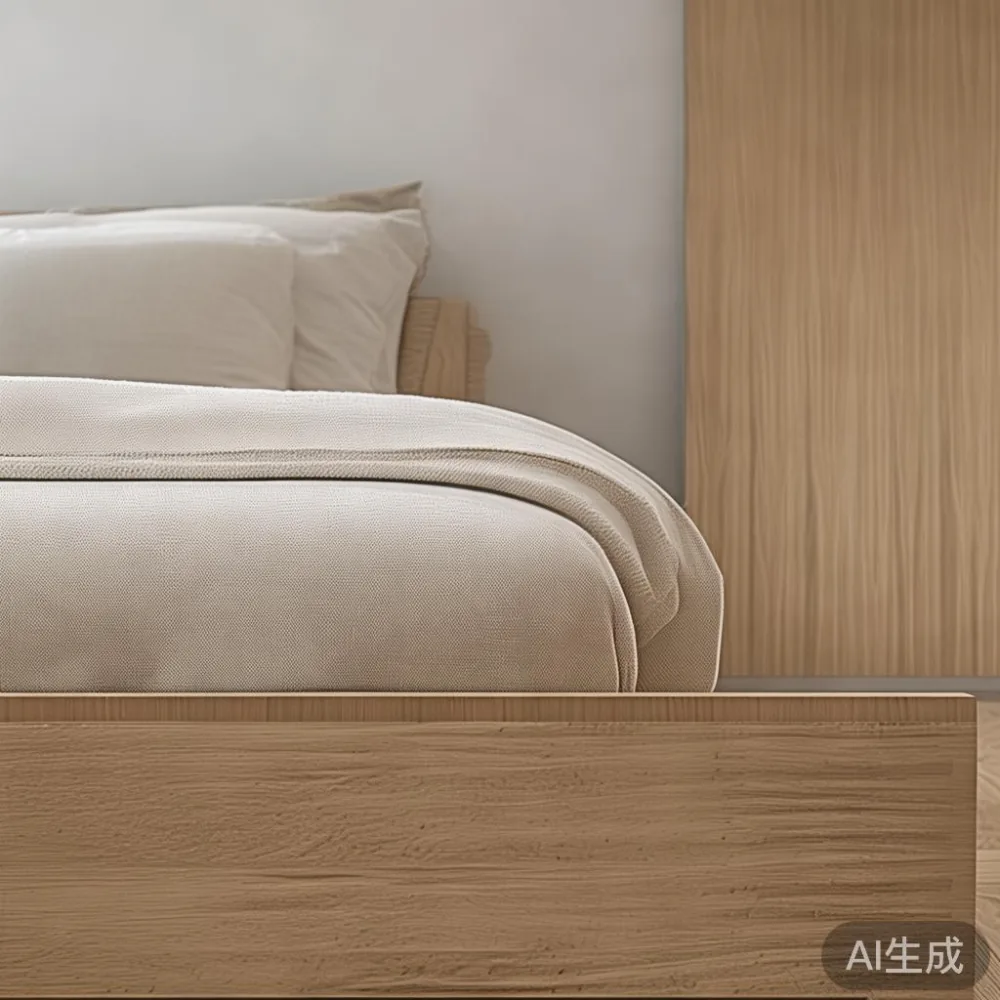
This comparison examines a typical queen-size bed frame over 5 years. It compares a well-finished veneer construction with a comparable solid wood bed frame, using indicative Singapore pricing rather than fixed quotations. The figures are intended to help buyers interpret quotes consistently, not to guarantee a future selling price. Actual costs vary with dimensions, timber species, finish, hardware, access conditions, and the supplier’s policies.
For context, MIDHILL produces solid wood furniture in Foshan and has operated since 2008. Its export reach extends to more than 15 countries, while its structural warranty runs for 10 years and its refinishing service is offered for the lifetime of the product. For Singapore buyers, MIDHILL also provides free shipping on orders above US$350, equivalent to approximately SGD 460 before GST at an illustrative exchange rate of SGD 1.32 per US$1. A 14-day return period gives buyers time to assess the bed frame indoors.
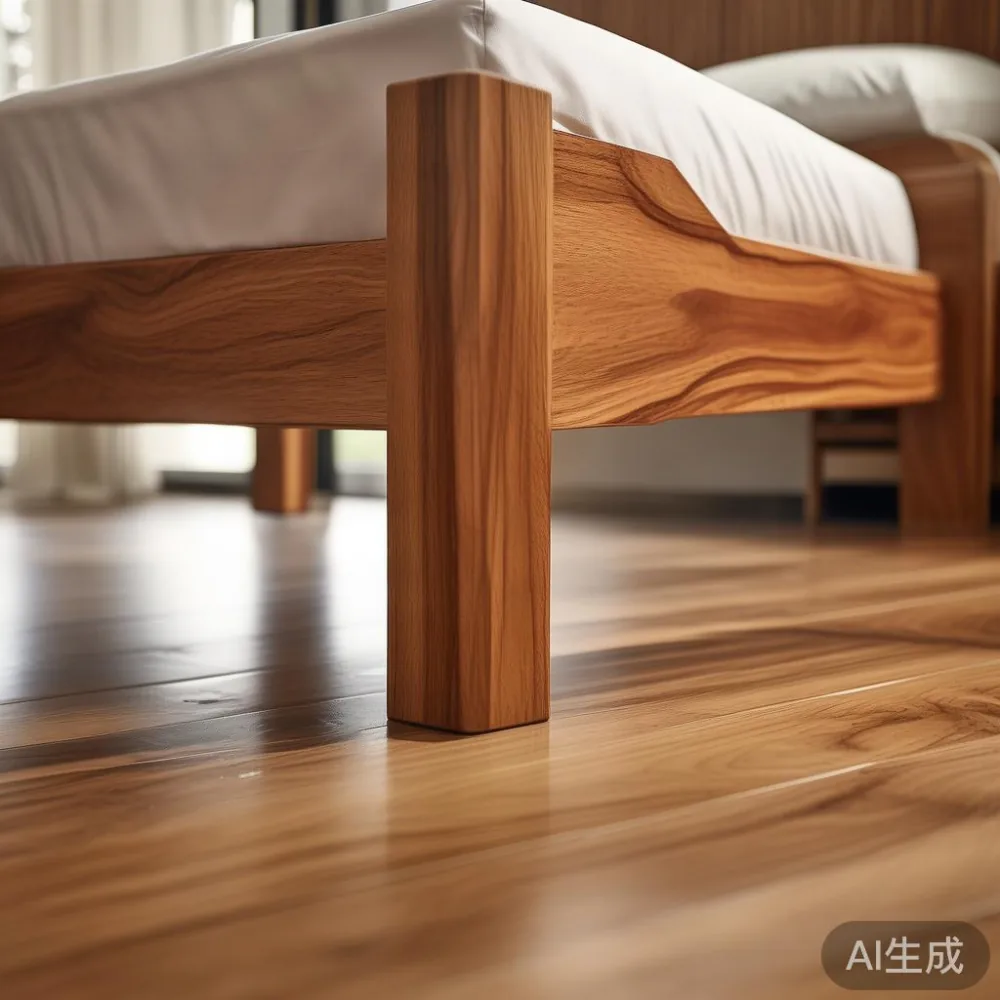
What is the realistic 5-year cost difference between a veneer bed frame and a solid wood bed frame?
For a queen bed frame, a configured veneer option may begin around SGD 700 before GST, while a comparable solid wood frame may begin around SGD 1,300 before GST. Over 5 years, assume the buyer purchases a new mattress for both cases and incurs no unusual damage. The expected veneer cost reaches roughly SGD 4,160, compared with about SGD 4,760 for solid wood—a difference of approximately SGD 600, or 12% of the lower total.
This estimate includes the frame, mattress, GST at 9%, local delivery, and routine care. It excludes a lift or corridor service charge if the supplier does not include it, and it treats both mattresses as the same SGD 1,500 purchase. The solid wood frame costs about SGD 600 more at purchase, but it retains greater repairability and may avoid one SGD 120 refinishing or repair job that a veneered frame could require.

The calculation also allows for SGD 70 per year in care materials and, for the veneer case, a SGD 120 probability-weighted repair allowance. Solid wood care is set at SGD 100 per year because heavier timber can need more careful cleaning and finish maintenance. The point is not that damage is inevitable. It is that the cheaper option concentrates more risk into components that can be difficult to repair.
A buyer comparing “American bed vs Modern bed” should not infer that one construction is American and the other modern. Those labels describe design direction, not material performance. A post-modern light luxury bed frame can use either construction, provided the panels, joints, and finish are disclosed clearly.
How much does each Singapore bed frame cost before GST?
The assumed veneer bed frame has an indicative retail price of SGD 700 before GST. Its engineered panel core supports 14 mm veneered faces, while hardwood rails, plywood slats, and a centre support leg add load-bearing capacity. Comparable engineered products can range from SGD 600 to SGD 950, depending mainly on the veneer thickness, finish, slat spacing, and hardware.
The solid wood bed frame is priced at SGD 1,300 before GST. A representative specification uses solid rubberwood or a similar structural hardwood for the headboard, side rails, and footboard, plus 14 plywood slats set at roughly 10 cm intervals. Configurations with thicker rails, an upholstered headboard, or drawer storage can range from SGD 1,200 to SGD 2,100.
At 9% GST, the veneer frame becomes SGD 763 and the solid wood frame becomes SGD 1,417. With Singapore delivery included at SGD 80 for both, the delivered totals are SGD 843 and SGD 1,497 respectively. That initial gap of SGD 654 is visible in household budgets, especially when the purchase is financed over 24 or 36 months.
At an illustrative 8% annual interest rate, SGD 654 financed over 36 months adds approximately SGD 88 in total interest. The veneer frame appears cheaper, but buyers should ask what happens when a lifting footboard, rail, veneer edge, or slat fails. A component-level warranty matters more than a generic promise if the design has several materials.
This same discipline applies elsewhere in the home. Research on the American sofa vs Italian light luxury sofa may compare silhouettes without separating upholstery from frame construction. Likewise, a French provincial dining table should have its core and veneer specification stated on the quotation. Material transparency prevents an attractive finish from concealing a weak internal structure.
What happens during delivery to a HDB flat or condo?
For a Bedok HDB flat, a standard queen bed frame may have a packed volume of about 210 × 165 × 28 cm and a weight of 48 kg for a veneer model. A solid wood version may weigh 68 kg and measure 215 × 170 × 32 cm because of thicker timber. Those differences influence handling from the loading point to the bedroom door.
Many HDB corridors are about 150 to 180 cm wide, although building-specific conditions vary. Lift doors may be around 90 cm wide and 210 cm deep, while corridor turns can be tight. A flat-pack bed frame with knock-down rails is generally easier to move than one large, fully assembled frame. The supplier should state the longest packaged component, not merely the product dimensions.
For a Punggol condo, a broad corridor of 200 cm and a passenger lift rated at 1,000 kg may make handling easier. Even then, the mattress occupies the lift after the frame is delivered, and residents must reserve a loading period. Typical lift or concierge service fees range from SGD 20 to SGD 80 per delivery, with a larger move potentially costing SGD 100 or more.
Last month I visited a colleague in Tampines and helped move a 62 kg solid wood bed frame from a van into a lift. The lift’s internal width was 105 cm, but the 200 cm-long headboard still had to be turned diagonally in the corridor. The successful installation took 18 minutes, including removing the corridor obstruction and protecting the floor. The supplier’s delivery crew had recorded the lift dimensions beforehand and completed the move in 35 minutes.
This practical check should be made before purchase. Measure the lift door, lift cabin, bedroom door, turning points, and stair width. Ask whether delivery includes assembly, packaging removal, and carry-in beyond the lift. If a charge is not specified, budget SGD 50 to SGD 120 as a reasonable planning range, then confirm it in writing.
Which option is more likely to need repairs during years 1 to 5?
Veneer performs well when its substrate, adhesive, edge banding, and humidity exposure are controlled. The visible face can have convincing grain and a stable colour, and a thin veneer can reduce material costs. Common failure points are chipped edges, lifted corners, bubbles, seam marks, and damage where the panel has been drilled or screwed. Creaks can also reveal loose joints or inadequate slat support.
Solid wood generally tolerates local repair better. Small scratches can be sanded and refinished, loose joints can sometimes be reglued, and timber components can be replaced individually if dimensions are available. The trade-off is movement. Solid wood expands and contracts with humidity, so quality control at the joints and the stability of the finish are important. Singapore’s indoor environment is usually managed, but rooms near open windows and air-conditioning vents experience larger daily humidity changes.
For the comparison, the veneer frame carries a 20% annual probability of a minor repair averaging SGD 100. Over 5 years, the expected cost is SGD 100, and a reserve of SGD 120 is used for prudence. The solid wood frame has a 10% annual probability of a minor repair averaging SGD 80, producing an expected cost of SGD 40. These are planning assumptions, not claims about every product.
Care costs also differ. Allocate about SGD 70 annually to veneer cleaning and touch-up materials, and SGD 100 annually to solid wood maintenance. Damp cloths, pH-neutral wood cleaner, and soft cloths are enough for routine care. Avoid silicone-based furniture sprays, abrasive pads, and standing water. Allow the frame to dry fully before replacing bedding or mattresses.
For buyers considering the best French provincial furniture, the carved or moulded treatment should be assessed as a repair liability. A decorative bed frame with substantial timber moulding may have more exposed edges than a slab-headboard design. That shape can be beautiful, but replacement parts are less likely to match after 3 or 4 years.
How should the 5-year ownership table be calculated?
Start with the delivered frame cost, including GST and any lift fee. Then add the mattress, care supplies, and anticipated repairs. A simple 5-year calculation for the veneer bed frame is SGD 700 for the frame, SGD 63 for GST, SGD 80 for delivery, SGD 1,500 for a mattress, SGD 350 for five years of care, and SGD 120 for repair reserve. The total is SGD 2,813.
The solid wood calculation is SGD 1,300 for the frame, SGD 117 for GST, SGD 80 for delivery, SGD 1,500 for a mattress, SGD 500 for five years of care, and SGD 40 for repair reserve. The total is SGD 3,537.
The difference is SGD 724 across 5 years. Excluding the identical mattress, the frame-related difference is about SGD 724 because care and repair assumptions offset only SGD 30 of the initial price gap. Expressed monthly, the solid wood option carries about SGD 121 more in year-one cash requirement, while the average ownership premium over 60 months is approximately SGD 12 per month when all included items are divided across the period.
This calculation favours solid wood when the buyer values serviceability and has a credible lifetime refinishing option. It does not automatically make veneer poor value. A well-built veneered bed frame can be appropriate for a rental unit, a child’s room with frequent turnover, or a second bedroom where the frame receives light use. The appropriate comparison is between specified constructions, not between a well-built product and a poorly built one.
Warranty terms deserve a numerical test. A 10-year structural warranty covering the load-bearing frame is more useful than a 1-year blanket warranty, provided exclusions for finish, accidental damage, and unauthorized assembly are understood. Check whether the warranty covers rails, legs, slats, and joint integrity. MIDHILL’s 10-year structural warranty is one example of a longer commitment that can affect the 5-year ownership calculation.
Does light-luxury design change the material economics?
Light luxury changes the finish and detail budget, but it should not erase construction requirements. French light luxury often uses pale timber, restrained moulding, linen-like upholstery, and gentle contrast. Post-modern light luxury can mix rounded forms with slim metal lines. American light luxury often combines substantial silhouettes with warm wood tones. In each style, the bed frame must remain stable and the finish should match across the headboard, rails, and footboard.
A marble table may be specified beside the bed, but its weight and maintenance are separate from the frame. A solid wood sofa, wardrobe, or nightstand can create visual continuity in the bedroom, yet each item still needs its own material schedule. The same principle applies to a Modern light luxury sofa in a living room: appearance does not tell the buyer whether the seat frame is solid wood, plywood, or a mixed construction.
For a solid wood bed frame, ask whether “solid wood” applies to the entire outer structure or only selected parts. Confirm the timber species, moisture treatment, drawer or lift-up mechanism, slat thickness, spacing, centre-leg arrangement, and load rating. Plywood slats can provide useful flexibility, while solid timber slats may require more care with mattress support. A 14 mm plywood slat at 10 cm centres is a common starting point, but the mattress warranty should also be checked because an unsuitable deck can affect comfort and lifespan.
Finish is another cost variable. A low-sheen water-based finish may be easier to maintain and usually permits local refinishing. A high-gloss lacquer can look refined but may show fingerprints and require specialist work after damage. For French provincial dining table comparisons, finish maintainability should be scored alongside proportions and wood movement rather than treated as decoration alone.
Is a japandi wardrobe worth it?
Although wardrobes are not the focus of this bed frame comparison, a question about is Japandi wardrobe worth it can reveal the buyer’s priorities. Japandi styling often emphasises pale timber, clean lines, and restrained hardware. If the adjoining storage is fitted in a compact Punggol bedroom, its width, door swing, and lift access may determine how much floor space remains for the bed.
The costing lesson is simple: include adjacent furniture in the room-level budget, but do not mix unlike items in the same 5-year calculation. A wardrobe might cost SGD 1,600 to SGD 3,000, while a nightstand might range from SGD 180 to SGD 420. Those purchases influence the room’s design, yet they do not change the tested price of the veneer or solid wood bed frame.
Quality should be checked through operating cycles rather than finish alone. A 10-year structural warranty can reassure buyers who plan to keep a frame beyond the 5-year comparison period. A 14-day return policy can support inspection, but it should be used for assembly checks, noise, dimensions, finish review, and compatibility with the room—not as a substitute for verifying construction before dispatch.
What should a Singapore buyer ask before paying?
Ask for a written bill of materials and a full-size drawing. The drawing should show the 160 × 200 cm mattress fit, dimensions, internal clear width, slat spacing, centre supports, and the maximum recommended mattress weight. For the assumed frames, the target mattress weight is around 35 kg, with a working product limit of 80 to 120 kg depending on construction.
Ask whether the delivery crew carries the frame into the bedroom, assembles it, removes packaging, and disposes of cartons. Confirm lift fees and corridor charges. A supplier should be able to identify whether the longest package fits through a 90 cm lift door and around common HDB turns.
Ask what is covered for 5 years and what happens after warranty expiry. Does the supplier offer replacement rails, slats, or hardware? Can veneer edges be patched, or must a whole panel be replaced? Can solid wood be refinished, and what colour or sheen result should be expected? MIDHILL’s lifetime refinishing service is relevant here because it can reduce uncertainty about long-term maintenance.
Finally, compare the actual quote against the assumed costs. Record the frame price in SGD, GST, delivery, lift service, assembly, care products, and the first repair allowance. Do not rely on a single headline price. At a SGD 600 difference, a solid wood frame can be justified by durability, while veneer can suit a lower initial budget or temporary use. The right answer depends on the bed frame, not merely the word “wood.”