Bed Frame: What Drives the Price of Solid Wood Furniture in Singapore
Walk into any Tampines HDB showroom flat and the furniture looks roughly the same. A 1.6 m bed frame here, a three-door wardrobe there, a small dining table tucked under the window. But the price tags on identical-looking solid wood pieces can swing from S$900 to S$4,800 for a wardrobe, and from S$700 to S$3,200 for a queen-size bed frame. The wood is, in theory, the same. So what is the customer actually paying for?
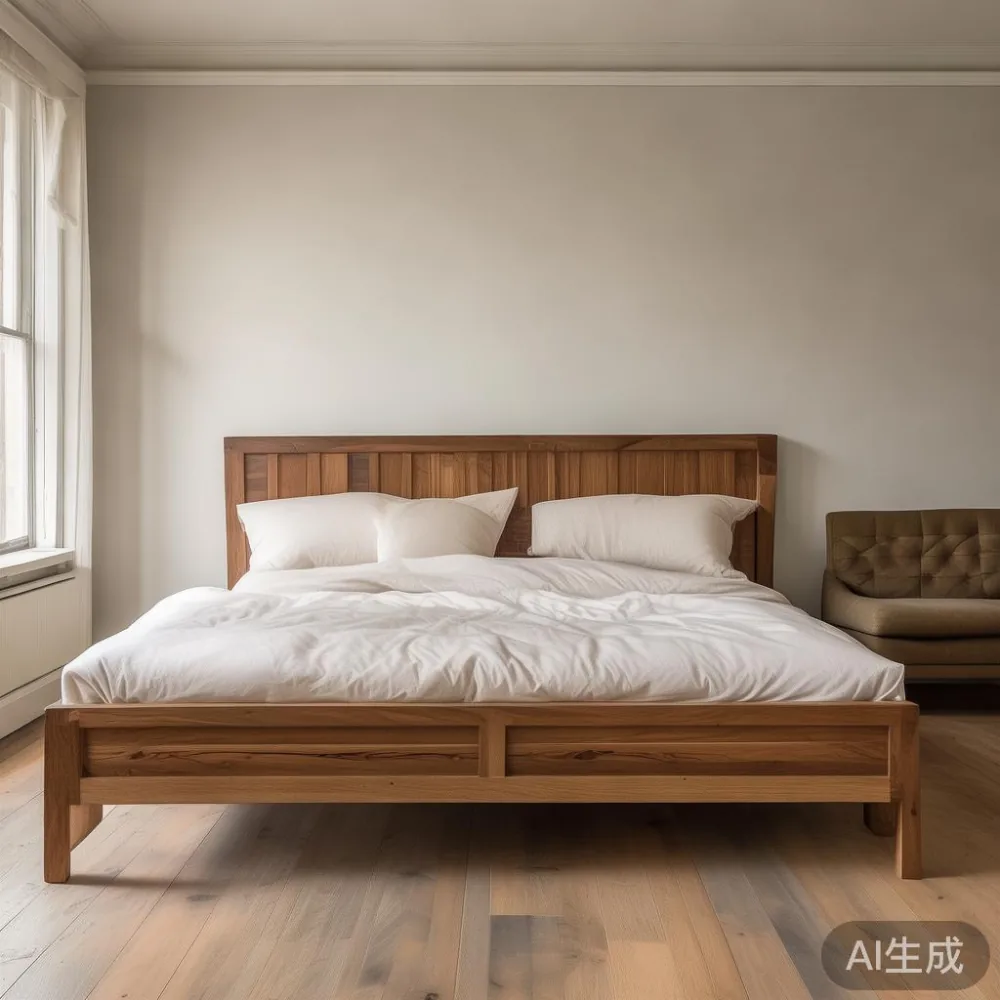
I asked the same question last month when I visited a furniture workshop in Foshan with two colleagues from Singapore. We walked down five factory rows measuring drawer walls, weighing bed-frame side rails on a digital scale, and counting veneer layers under a loupe. The trip changed how I read price lists. Below is what I learned, in plain numbers, for anyone shopping for a solid wood bed frame, sofa, dining table, wardrobe, or nightstand in Singapore.
1. The Wood Species — And Why It Matters at the 10-20% Level
Species accounts for around 10-20% of the price difference between two solid wood bed frames of the same size. Oak (白蜡木/红橡), walnut (黑胡桃), ash, beech, and rubberwood each carry different raw-material costs per cubic metre. In the Foshan wholesale market in late 2024, FAS-grade American walnut was roughly 2.4x the price of the same volume of standard beech. A queen-size bed frame using 0.12 m³ of walnut therefore carries about S$420 more raw-material cost than the same bed frame in beech, before labour, hardware, or finishing.
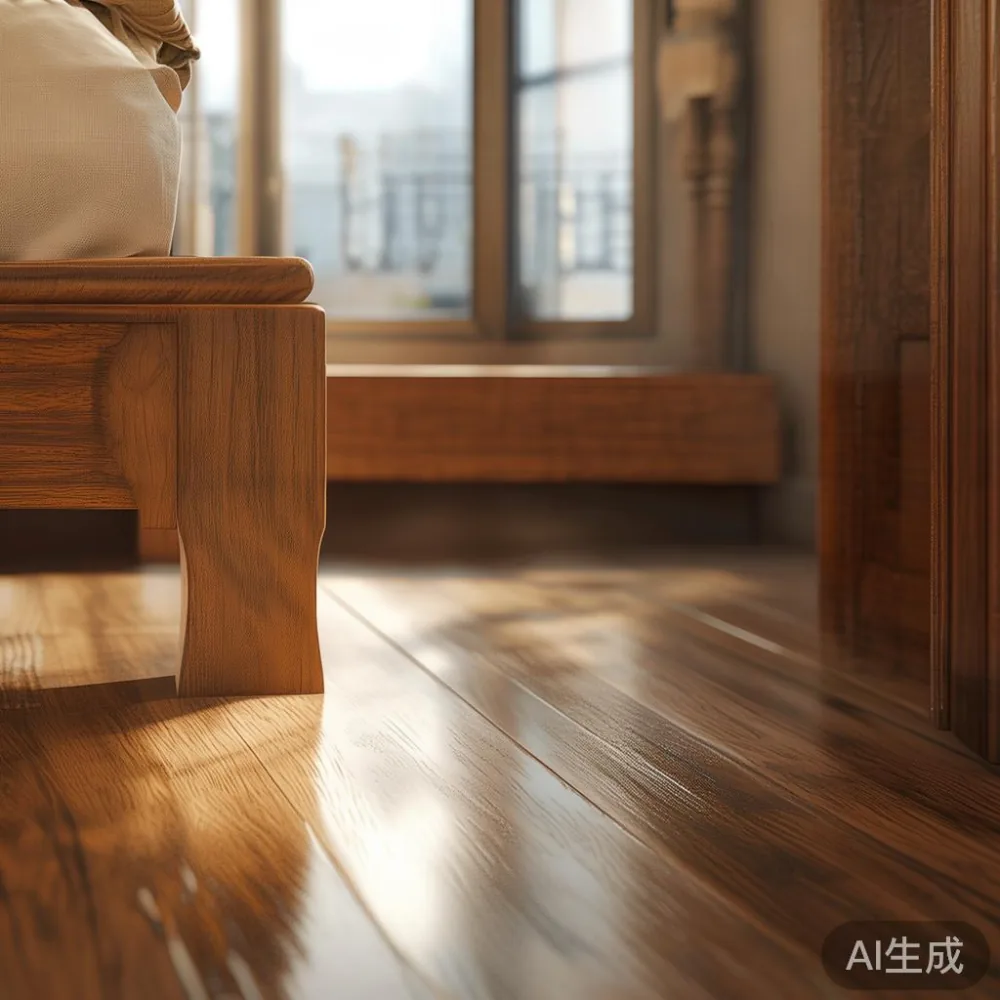
Two warnings from the workshop floor. First, "oak" and "rubberwood" are routinely mixed in entry-level Singapore listings because both stain a similar honey colour. Second, the colour of walnut darkens noticeably over 6-12 months in a sun-facing Punggol or Bedok living room, which is a feature, not a defect. If you want the look that inspired French light luxury interiors since the 2010s, walnut is the species behind most of those images.
2. Solid Wood vs. Engineered Panels — What the Label Often Hides
Look at the cross-section, not the product photo. A genuinely solid wood bed frame should show continuous grain on every visible face: the side rails, the headboard panel, the slats, and the drawer fronts of any under-bed storage. Engineered alternatives include plywood with a 0.6 mm veneer, MDF cores, and blockboard with thin face laminates. Each of these is lighter, more dimensionally stable in air-conditioned HDB rooms (which sit around 25°C and 60% RH), and cheaper — typically 30-45% less than the equivalent solid construction.
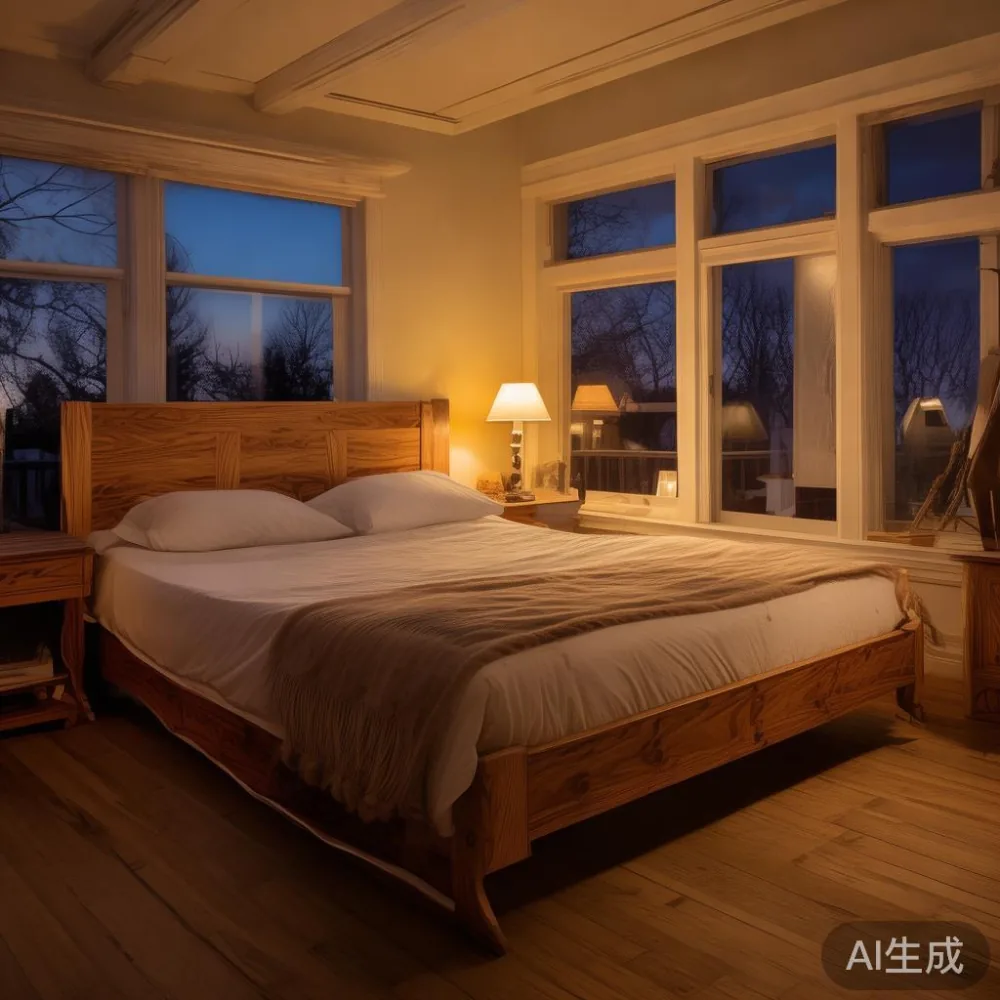
Our host in Foshan cut a sample in half to show the layers. A plywood bed-frame side rail with a 1.5 mm oak veneer weighed 4.1 kg. The same rail in solid oak weighed 8.7 kg. That 4.6 kg difference, multiplied across a queen-size bed frame, is roughly 18-22 kg of additional weight. Heavier is not always better, but in solid wood construction it is a reliable proxy. We lifted several pieces to confirm, and the pattern held across dining table tops, wardrobe doors, and nightstand cases.
3. Joinery — The Quiet Driver Behind a 25-Year Bed Frame
Hardware and joinery quietly account for 15-25% of the cost of a quality bed frame. The cheapest production method uses confirmat screws, short 30 mm threaded pins, and corner braces. A step up uses mortise-and-tenon joints locked with wooden dowels and glue. The most durable method uses traditional through-tenons, draw-bored, and bed-bolt hardware for knock-down assembly.
I tried to wiggle a S$280 wardrobe at a Jurong East furniture fair. The back panel flexed 12 mm when I pushed it. A S$1,650 wardrobe of the same dimensions flexed 2 mm. The difference was the back panel: 3 mm hardboard versus 9 mm solid plywood with a hardwood frame. That is the kind of detail that separates a bed frame and wardrobe designed to last 5 years from one that survives 25 years of Tampines afternoon thunderstorms and daily opening cycles.
4. Finish — Lacquer, Oil, Wax, and Why You Should Smell It
Finishing is 8-15% of the price and 80% of what you actually see. The four common finishes on solid wood bed frames in Singapore are: NC lacquer (nitrocellulose), PU lacquer (polyurethane), hardwax oil, and pure tung oil. PU lacquer is the most protective against HDB humidity swings and the most expensive. NC lacquer is cheaper but yellows and cracks faster. Hardwax oil sits in the middle on price and gives the matte, tactile feel that suits post-modern light luxury styling.
Smell test from the workshop: a freshly PU-lacquered nightstand headboard still off-gassed faintly at the third week. A hardwax-oiled dining table top had no detectable odour after five days. If you are furnishing a master bedroom in a compact HDB and care about indoor air quality, ask which finish and how long it has been curing. A reputable supplier will give you a date, not a vague answer.
5. Hardware, Drawer Slides, and the Bed Frame You Reassemble Every 2 Years
Soft-close drawer slides cost S$18-35 per pair. Cheap roller slides cost S$3-7. On a six-drawer wardrobe, that gap alone is S$90-168. Multiply across a whole bedroom set — bed frame with storage, two nightstands, six-door wardrobe — and hardware can swing the bill by S$400-700.
Same logic for hinges, gas-lift pistons on storage bed frames, slat holders, and centre support beams. A queen-size bed frame should have a centre support leg with a foot resting on the floor, not a floating beam. I tested this on an entry-level model at a Woodlands retail shop and the centre beam bowed 8 mm when I sat on the edge. The S$520 upgrade version, with a proper leg, did not move. That single component explains most "my bed frame cracked after two years" complaints I hear from Punggol friends.
Where Can I Buy a Shoe Cabinet in Singapore?
Yes — you can buy a solid wood shoe cabinet from specialised solid wood furniture workshops in Singapore, from regional brands that ship direct from Foshan factories, and from selected local retailers carrying American light luxury or French light luxury collections. For a typical HDB entryway of 1.2-1.8 m wide, a four-tier solid wood shoe cabinet runs S$520-1,400 depending on species, depth, and whether the cabinet includes a built-in bench or mirror panel.
Two practical filters. First, check the lift access. Many Tampines and Bedok blocks have lift openings of about 2.1 m high and 1.0-1.2 m deep, which limits the maximum single-piece height to roughly 2.0 m. Anything taller must knock down into flat-pack sections. Second, ask whether GST is included in the quoted price (9% in 2025) and whether delivery up the corridor is included — most HDB corridors are about 1.2-1.5 m wide, which is tight for pre-assembled wardrobes longer than 1.8 m.
6. Origin, Labour, and the Foshan Premium
Foshan accounts for an outsized share of the world's mid-range solid wood furniture, including pieces rebadged under European-sounding names. Factory-direct pricing removes two layers of margin: importer markup (typically 18-35%) and retailer markup (typically 25-60%). That is why a S$2,400 dining table in a Takashimaya showroom can be the same construction as a S$1,050 dining table shipped direct from a Foshan workshop with a 10-year structural warranty.
MIDHILL operates from the same Foshan manufacturing cluster, established 2008, exporting to more than 15 countries, and ships flat-packed to Singapore with door-to-door delivery in 30-45 days. Their pricing reflects the factory-direct model: a queen-size solid oak bed frame with under-bed storage lists around S$780-1,150 landed in Singapore, including 9% GST and lift-level delivery. That is roughly 55-70% less than a comparable piece under a European brand label at a local retailer, with the trade-off that you cannot walk into a showroom and touch it first.
7. The Hidden Costs Singaporeans Forget to Add
Budget S$80-180 for assembly if the bed frame, wardrobe, or dining table arrives flat-packed. HDB lift access is usually fine for flat-pack boxes under 2.1 m, but a 2.4 m wardrobe side panel will not fit vertically in many lifts and must travel on its side, which adds 15-25 minutes to the delivery job. Add S$40-90 per staircase flight if your corridor has steps, which is common in older Walk-up blocks and some Punggol North clusters.
Then there is the long tail. A solid wood nightstand should be paired with felt pads (S$6 for a pack of 16) to protect HDB vinyl flooring. A dining table needs humidity control — a small dehumidifier drybox in the kitchen runs S$120-220 and prevents the top from cupping in the wet season. And a bed frame, however well-built, benefits from re-tightening the joint bolts after the first 3-6 months as the wood settles. None of this shows up on the price tag, but all of it should be in your total budget.
8. Warranty, Refinishing, and the Real Cost of Ownership
Divide the price by the expected service life, not by the sticker. A S$900 bed frame lasting 6 years costs S$150 per year. A S$1,900 bed frame lasting 25 years costs S$76 per year. The math only works if the second one actually lasts 25 years, which depends on the structural warranty, the joinery, and whether the supplier offers refinishing.
MIDHILL's 10-year structural warranty covers joinery failure and wood defects; lifetime refinishing means you can ship the piece back to Foshan for sanding, re-oiling, and a colour change if you renovate. That option effectively turns a bed frame into a 30-year asset. For Singapore homeowners who expect to move 2-3 times before settling, the lifetime refinishing clause matters more than the initial S$200-400 saving on a budget brand.
9. How to Read a Price List Without Being Misled
Ask for the species in writing, the country of origin, the dimensions of every panel (not just the piece), the drawer-slide brand, the finish type and curing date, and the warranty terms. If a retailer cannot answer two of those five questions on the spot, walk away. The S$300-600 you save on a cheaper bed frame is not worth a five-year replacement cycle.
One last datapoint from the Foshan trip. A Singapore-based interior designer told me that roughly 60% of her HDB projects under S$80,000 specify at least one imported solid wood anchor piece — usually a dining table or a bed frame — and skimp on everything else. That tracks with what I saw in the workshop: the customers who buy well-built solid wood buy fewer pieces, but they keep them through three or four renovations. The bedroom of an oak walnut work from home study in Tampines I toured in March had the same bed frame and nightstand the owner bought in 2014, lightly refinished once, still tight at every joint.
Solid wood furniture is not a luxury item by default. It is a long-horizon purchase whose price reflects wood species, panel construction, joinery method, finish quality, hardware grade, and the supplier's warranty. Once you price those components separately, the difference between a S$900 bed frame and a S$2,400 bed frame is no longer a mystery — it is a list of choices, each with a number attached, and you can decide which ones matter for your Tampines or Punggol home.