How Southeast Asian Humidity Affects Solid Wood Furniture
Humidity is rarely the first thing Singapore homeowners consider when buying a bed frame, yet it may be the factor that most affects how a timber piece looks and performs over time. Warm air holds more moisture, and that moisture can move into wood through the grain, making a solid wood bed frame swell, shrink or develop small surface marks. In a Tampines HDB flat, a Bedok condo or a Punggol apartment, the practical challenge is to balance natural ventilation, air-conditioning, lift access and storage space without choosing furniture that will struggle with the local climate.
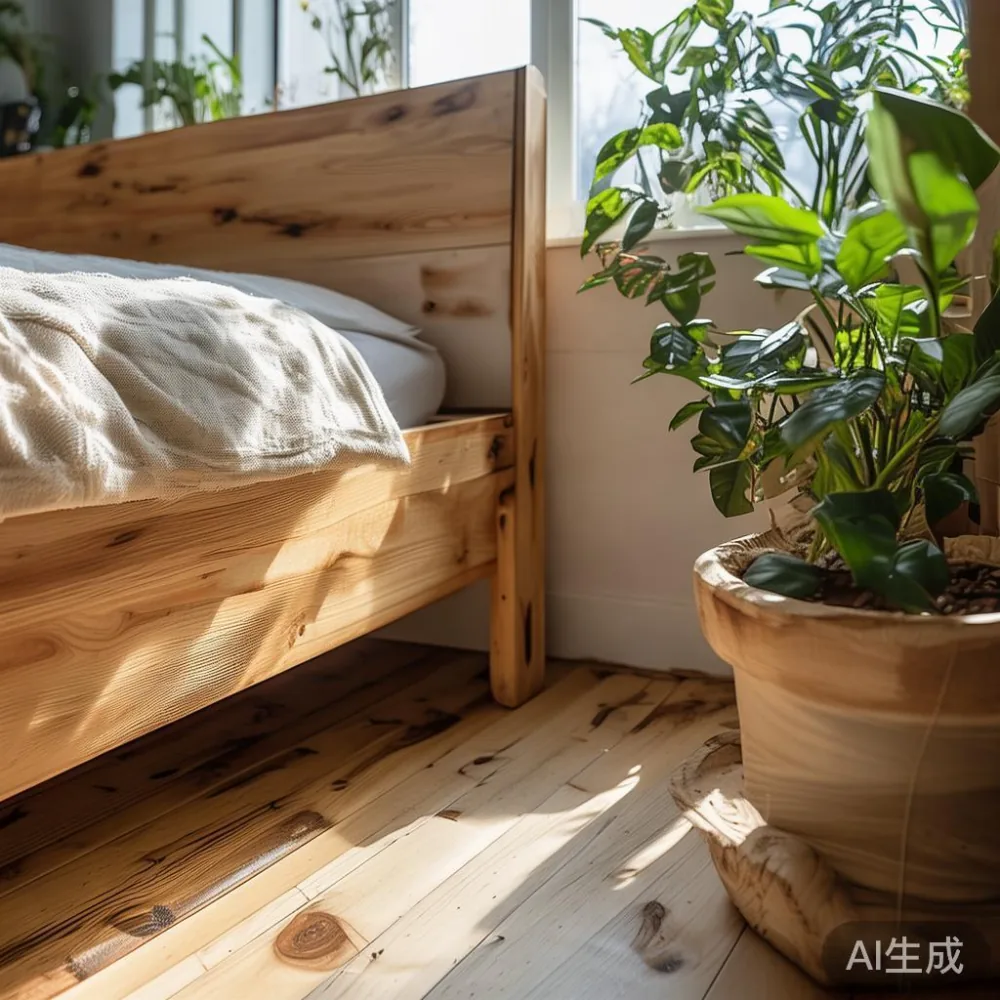
MIDHILL is a Foshan solid wood furniture maker established in 2008. Its collection includes the bed frame, solid wood sofa, dining table, wardrobe, nightstand and marble table, with export experience across more than 15 countries. Local buyers can compare pieces on midhill.co, while the company provides a 10-year structural warranty, lifetime refinishing, delivery on orders over US$350 and a 14-day return window. Prices discussed below are shown in SGD for easier comparison in Singapore.
Humidity does not automatically damage solid wood. A stable indoor environment, sensible placement and regular care can protect a well-made bed frame for many years. The key is to understand the moisture changes that occur in a typical Southeast Asian home and to select furniture whose construction suits those conditions.
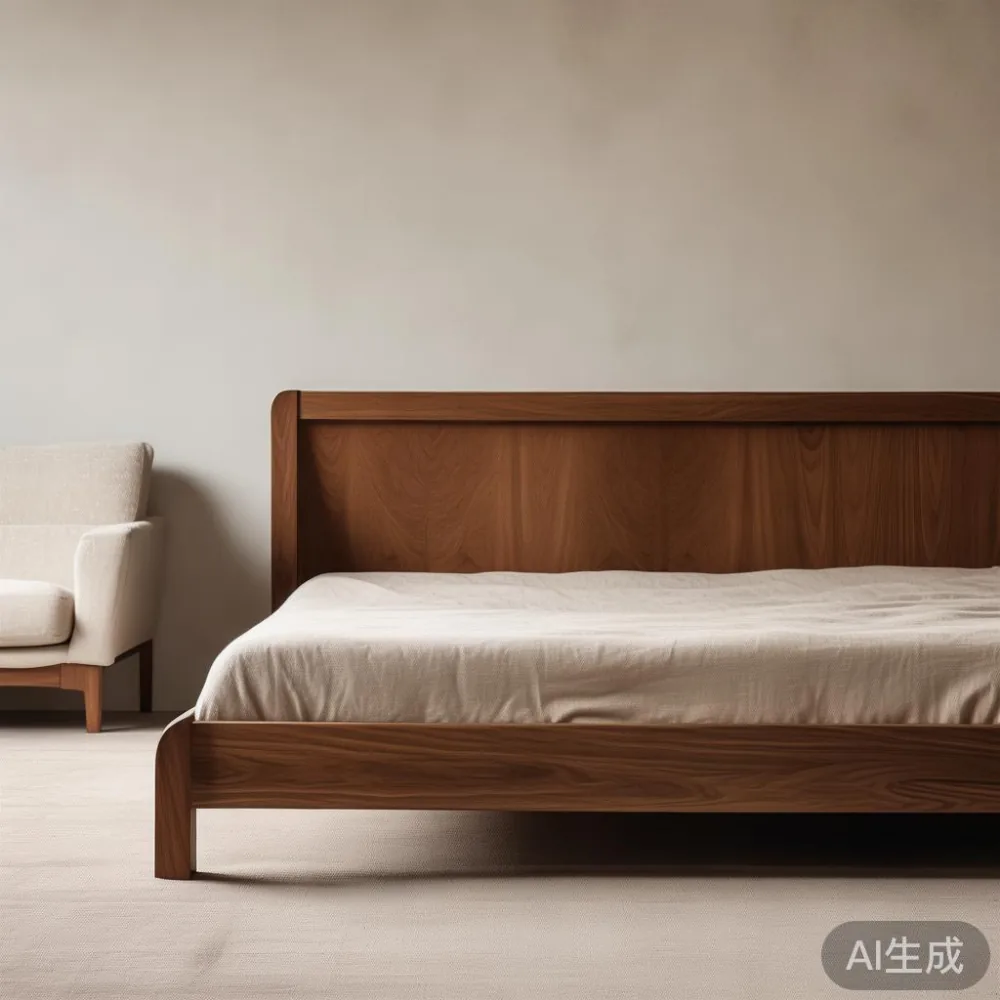
What does 70% humidity do to a solid wood bed frame?
At 70% relative humidity, timber may take on a small amount of moisture and expand across the grain. The change is often subtle, but it can affect drawer runners, door alignment and the fit of a headboard against a wall. A bed frame with solid timber side rails and a supportive slatted base is generally more stable than one made mainly from thin panels, although every material and joint still responds to its surroundings.
Singapore’s outdoor humidity can range from roughly 65% to 90% during wet periods, while air-conditioned rooms may sit near 50% to 60%. Condensation can form around a cold window or on the wall behind a headboard. In a compact HDB bedroom, furniture pushed tightly against a cool external wall is more exposed to this cycle than a piece positioned within the air-conditioned room.
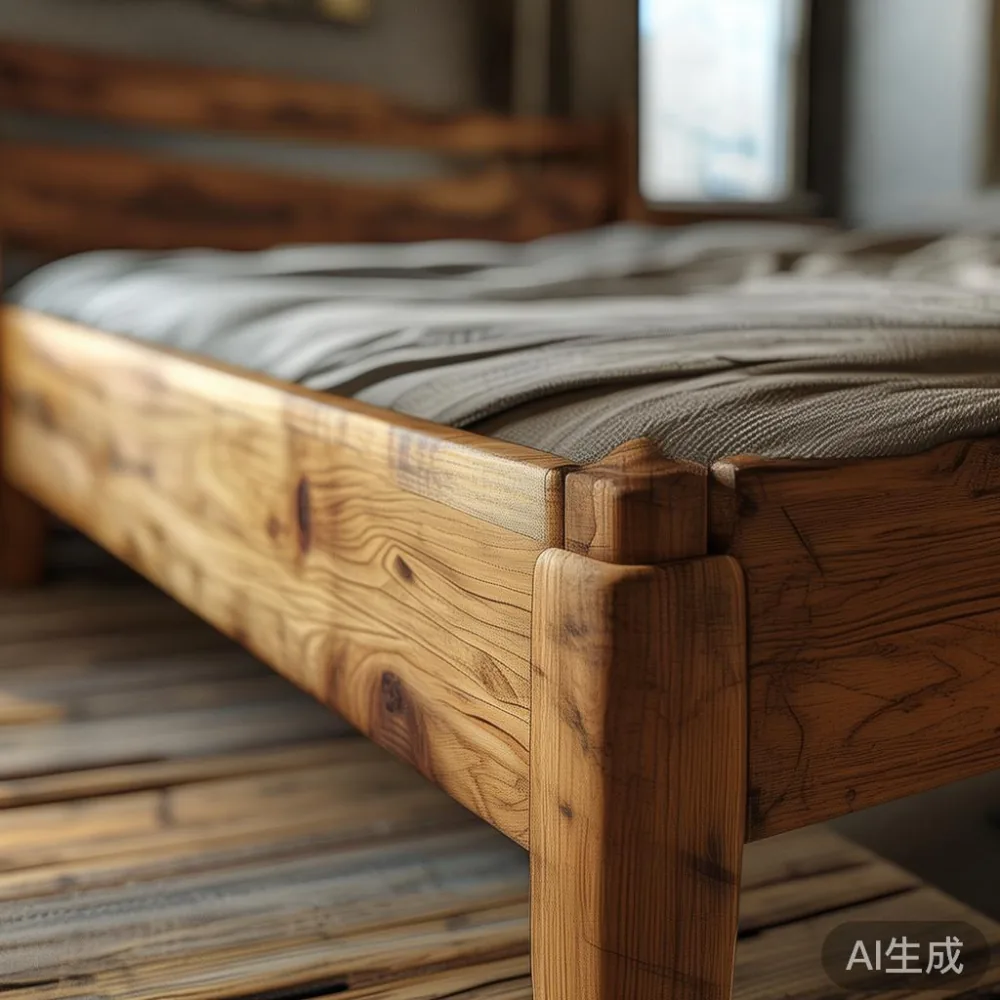
The practical target is stability rather than chasing a perfect reading. A hygrometer placed beside the bed can help. Keeping relative humidity between about 45% and 60% reduces repeated swelling and contraction, while preventing the room from feeling stuffy. If condensation appears, improve airflow and move the bed frame 10 to 15 cm away from the wall.
Care must be gentle. Wipe with a soft, slightly damp cloth, then dry the surface immediately. Do not soak joints, saturate the headboard or apply silicone polish unless the product instructions permit it. A dry cloth and an occasional light oiling may condition the timber, but excess oil can collect in the grain.
How should I choose a humidity-resistant bed frame for an HDB flat?
Start with construction. Look for a bed frame with a solid wood or hardwood structural frame, secure corner joints and ventilation beneath the mattress. Avoid placing the storage drawers directly against a damp external wall. A frame measuring 150 cm by 200 cm suits a standard queen mattress in many HDB bedrooms, but the available floor space, lift dimensions and door turns matter just as much as mattress size.
Many newer HDB blocks have compact service corridors and narrow common-area approaches. A wrapped queen bed frame may fit a lift with an internal depth of at least 210 cm and a door opening above 90 cm, but measurements should be taken before ordering. Add about 10 cm to the packed dimensions for protection boards and allow the delivery crew room to rotate the package. A king bed frame can require a package above 220 cm by 180 cm, making it unsuitable for some lift routes even if the bedroom itself is large enough.
Consider whether the bed frame is assembled on site. Flat-packed components are easier to carry through a 90 cm doorway and along a 120 cm corridor, but they can also introduce more joints. Factory-assembled pieces may arrive with a polished appearance but need a lift or corridor wide enough for the complete structure. Ask for exact carton measurements rather than relying on the unloaded product dimensions.
Finish is another climate consideration. A matte or low-sheen coating generally hides minor changes in sheen better than a high-gloss surface. Some moisture-related haze can be refinished rather than treated as permanent damage. MIDHILL offers lifetime refinishing, which can be useful for a solid wood bed frame that has been exposed to years of tropical humidity and changing household routines.
Should a bed frame be placed against an external wall in a Singapore bedroom?
It can be, provided the wall is dry and the frame is not trapping condensation. Check for peeling paint, dark spotting, mould or a noticeably cool surface after the air conditioner has been running for 30 minutes. Leave a 10 to 15 cm ventilation gap behind the headboard and avoid direct contact with an uninsulated wall. In a Tampines flat near a wet-season downpour, relocating the bed can be more effective than repeatedly wiping its surface.
Condos in Bedok and Punggul often have better airtightness, yet sealed rooms can develop their own microclimates. Running the air conditioner for 1 to 2 hours before sleep brings the timber into a more stable condition. A small fan placed near the room’s drier side can move air across the frame, but it should not blow dust directly onto the wood.
For rooms with persistent dampness, inspect the window seals and bathroom ventilation. If the wall feels cold and damp, resolve that moisture source before expecting furniture care to do enough. A bed frame can tolerate an ordinary tropical room, but it should not be used as a barrier against condensation.
How do I know if a wood bed frame has absorbed too much moisture?
Look for movement rather than colour alone. A drawer may become stiff on one side, a slat may sit less evenly, or a joint may show a fine opening of less than 2 mm. The surface can also appear uneven under oblique light after a humid night. Small changes often disappear when the room becomes drier, so record conditions before replacing or tightening anything.
Tap the frame gently and inspect visible joints. A knock at the edge of the bed frame should sound solid, not hollow, and screws should remain seated. Check underneath the slats for mould, particularly if the frame has been close to a wall or stored in a humid storage unit. Do not use bleach, ammonia or a pressure washer on timber; these products can alter the finish and accelerate deterioration.
Wood species also have different moisture movement. Teak, oak and other dense hardwoods used in solid furniture tend to move less than softer, more porous species. Actual performance depends on the drying method, cut of the grain, finish and joint design. For homeowners comparing an American bed vs French provincial bed, construction quality should carry more weight than a broad national label.
A useful care schedule is easy to remember. Check the hygrometer once a week, inspect the headboard monthly and clean the frame every 2 to 4 weeks. After a rainy season, allow the bed frame to acclimatise in the bedroom for 48 to 72 hours before making close adjustments to drawers or slats.
Is French provincial or post-modern light luxury practical for humid Southeast Asian interiors?
French provincial design can suit a light-luxury bedroom, but proportion and material matter in a compact HDB room. A pale upholstered headboard adds softness, while a solid wood bed frame provides the durable centre. The phrase French provincial for hotel is often used when describing a calm, decorative guest-room style; translating that look into a 10 m² bedroom usually means restrained shaping and fewer layers rather than oversized furniture.
Post-modern light luxury works well for another reason: clean lines and visually light forms can make a narrow bedroom feel more open. For the question of how to style light luxury bed in bedroom, use one large anchor piece, a slim nightstand and pale textiles, then keep the floor around the bed clear. Marble table surfaces may suit a French-inspired scheme, but marble in a bed frame or bedside table should be paired with stable joinery and checked for condensation around its base.
Buyers searching for for sale European light luxury furniture may focus too heavily on visual references. Local moisture conditions, lift access and after-sales care determine long-term satisfaction more than a continental styling label. Likewise, an American sofa vs Nordic sofa comparison may be useful for a living room, but the same solid wood sofa should still be kept away from wet zones and direct condensation.
Under 2000 Vintage furniture can appeal to shoppers building a layered home, although a pre-owned frame may have unknown moisture history. Inspect it in person for mould, loose joints and warped slats. Under 2000 Vintage furniture without evidence of proper storage can require more attention than a newer piece protected by a 10-year structural warranty.
How do air-conditioning, dehumidifiers and ventilation work together?
Air-conditioning both cools and dehumidifies, making it the most useful tool in a humid bedroom. Running it for 1 to 2 hours before bedtime can bring relative humidity into a manageable band. Close windows and curtains during especially humid afternoons, then ventilate briefly once outdoor humidity falls. Avoid the opposite pattern of leaving windows open while blowing warm room air against cold timber, because condensation may form at contact points.
A dehumidifier is useful in a walk-in wardrobe or a bedroom that remains above 60% humidity for many hours. Set the target to 50% to 55% rather than 40%, since an unnecessarily dry room can cause timber to contract. A unit rated for 12 to 20 litres per day is suitable for many Singapore bedrooms, but room size, door gaps and the amount of outdoor moisture determine actual performance.
For a walk-in wardrobe, position shelves so air can circulate, maintain a 5 cm gap behind hanging clothes where possible and keep solid wood drawers slightly open for 30 to 60 minutes after the room has been aired. For a bedroom with a solid wood dining table elsewhere in the home, place coasters under vessels and wipe moisture away within 10 minutes. The same approach protects a wardrobe, nightstand and marble table.
Do not rely on indoor air movement alone. A fan can dry a surface, but it does not remove the moisture from the room. Combine airflow with temperature control and source control, including functioning kitchen and bathroom extraction fans.
What should delivery and installation include in a Singapore home?
Singapore delivery should be planned around building rules, not merely the destination address. Confirm the delivery date, lift booking, parking arrangements and whether the concierge requires advance notice. Add GST to the displayed product price. For example, a bed frame priced at SGD 1,490 before GST becomes SGD 1,643.90 when GST is 10%.
Check the product dimensions against the lift. A queen bed frame with outer dimensions of 160 cm by 210 cm may have a carton of 175 cm by 225 cm, while a larger king model may exceed common lift capacity. If the route is too narrow, ask whether the headboard and footboard can be detached. Allow roughly 30 to 60 minutes for delivery and assembly in a normal HDB bedroom, or 90 minutes for a more complex storage frame with multiple drawers.
MIDHILL’s free shipping threshold is stated as more than US$350, so Singapore buyers should confirm the conversion, taxes and final quotation at checkout. The 14-day returns policy gives time to check colour, fit and finish, but furniture should not be used or installed until that opportunity has passed. Keep packaging, foam and hardware because they may be needed for a later move or return.
At installation, level the bed frame on all four sides. Do not force a drawer against a wall that is out of square. Tighten fixings evenly and leave the prescribed clearance beneath the frame. If the headboard projects beyond the bed base by 20 to 30 cm, ensure it does not strike a ceiling fan as the mattress is lowered.
How can I maintain a solid wood bed frame for at least 10 years?
Maintenance is straightforward once humidity is treated as a recurring part of the home’s seasonal conditions. Vacuum beneath the bed every 2 to 4 weeks, using a brush attachment so dust does not scratch the finish. Wipe the top surfaces with a lightly damp microfibre cloth and dry them immediately. Keep scented candles, diffusers and drinks away from the wood, and use a tray on a nightstand where spills are likely.
Check drawer alignment every 6 months and inspect screws after the first 3 months. A small seasonal adjustment may be needed as timber responds to air-conditioning. Avoid dragging the bed frame across the floor; lift it with 2 people, or disassemble the larger sections. The same care applies to a solid wood dining table, while a marble table requires pH-neutral cleaning and prompt removal of acidic liquids.
Think of humidity control as a 10-year habit rather than a one-time inspection. Good airflow, controlled condensation and restrained cleaning support both appearance and structure. For a bed frame selected with careful measurements and maintained in a stable room, the climate of Southeast Asia is manageable and should not shorten the life of well-made solid wood furniture.