How Southeast Asian Humidity Affects Solid Wood Furniture
Humidity is rarely the first subject that comes to mind when choosing a solid wood bed frame for a Singapore home. Yet in Tampines, Bedok and Punggol, where HDB flats and private condos sit close to the equator, moisture can influence how timber expands, contracts and feels across the year. Air-conditioning may keep a bedroom near 24–27°C during the day, but relative humidity can still move between roughly 55% and 80% around the coast, particularly during the wetter months and in units without strong dehumidification.
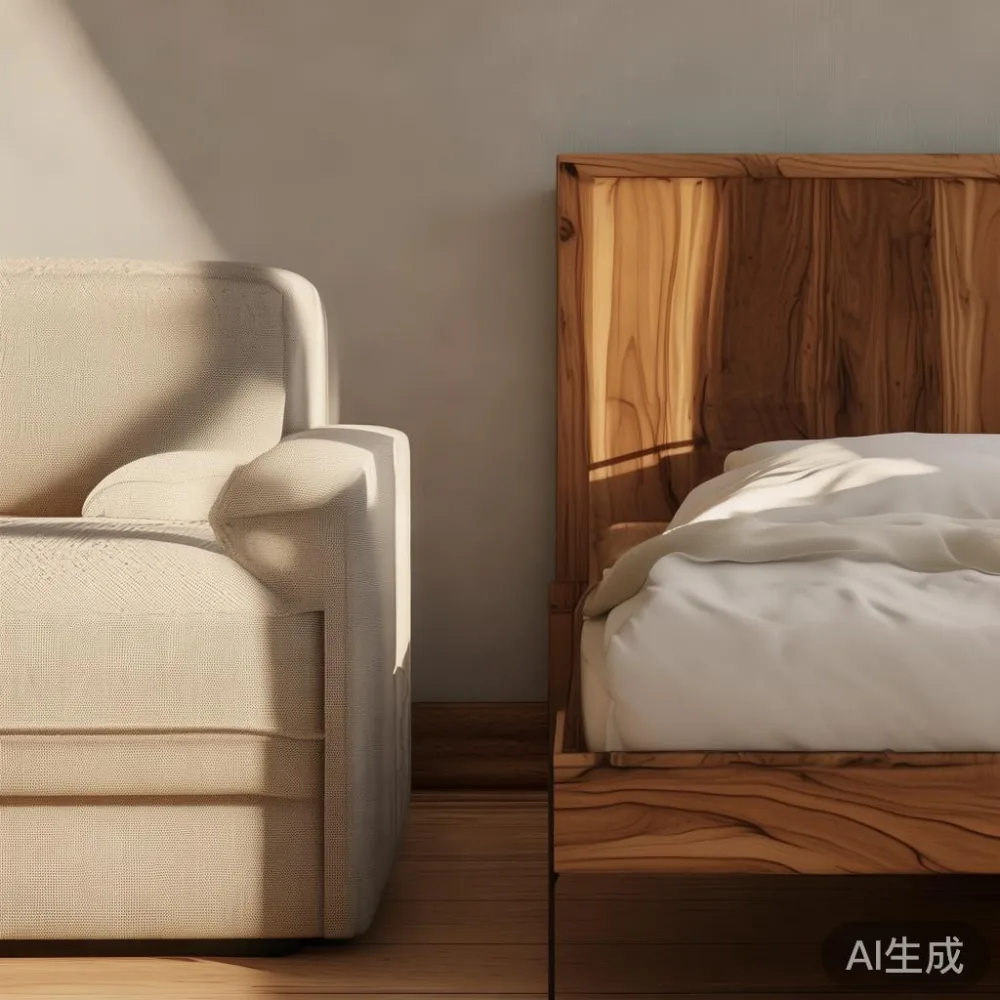
The practical consequence is not that solid wood should be avoided. Well-made solid wood furniture is intended to respond to its surroundings. The concern is unmanaged fluctuation: a bed frame positioned beside a window, directly against an air-conditioning vent, or repeatedly moved between a dry living room and a more humid bedroom can develop small changes in joint alignment, surface finish or stability. Understanding those patterns helps homeowners protect a purchase while preserving the character of natural timber.
This guide examines how humidity affects wood furniture in Singapore, the measurements worth checking before delivery, and the care routines that suit local HDB flats and condos. The focus remains on the bed frame, with brief comparisons to a solid wood sofa, dining table, wardrobe, nightstand and marble table where their material or room placement creates a useful lesson.
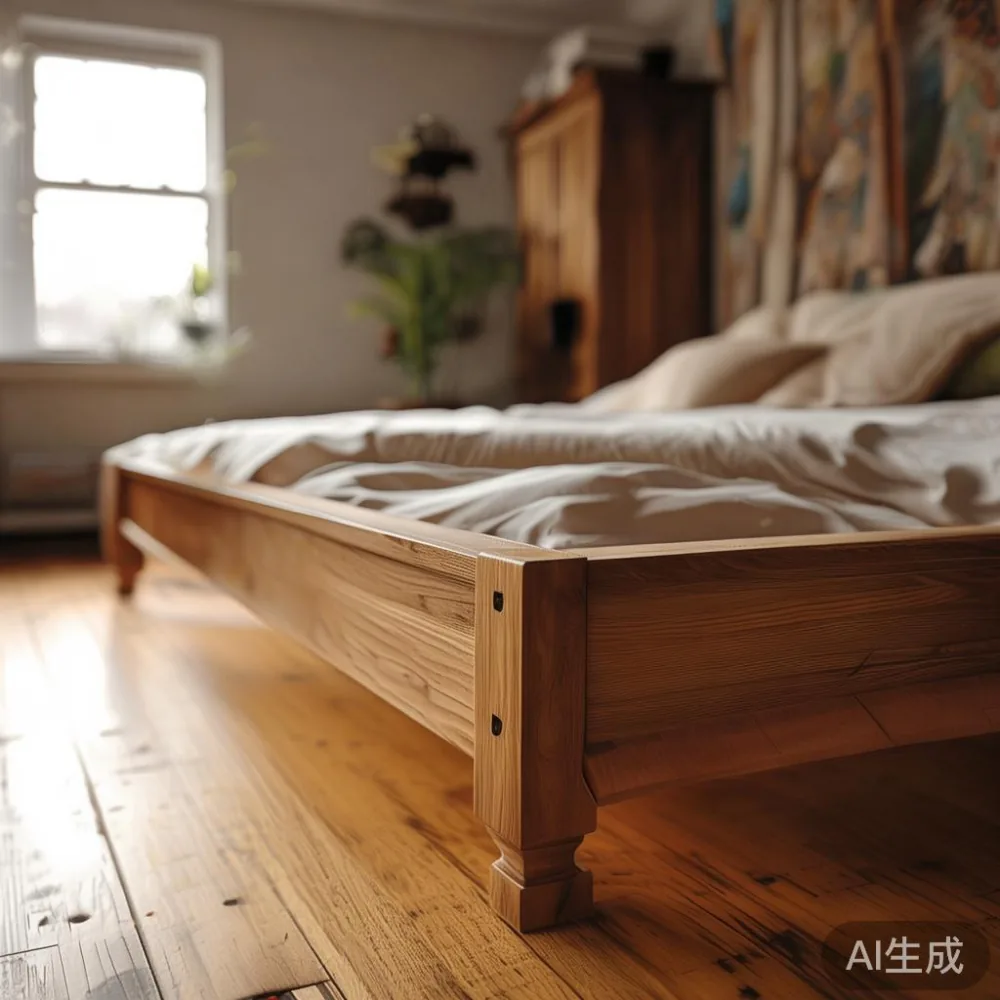
Why does humidity make solid wood furniture move?
Wood is hygroscopic, which means it absorbs moisture from the surrounding air and releases it when the air becomes drier. Its response is not perfectly symmetrical across every board. Grain direction, sawn orientation, density, finish thickness and the distance from the timber’s outer edge all affect movement. In a broad practical sense, high humidity can make components swell slightly, while dry air can cause shrinkage. Over repeated cycles, an inexpensive frame with weak joinery may show looser joints or uneven movement that a properly engineered frame is better able to accommodate.
Singapore’s coastal location creates a useful example. A room facing the west in Bedok may warm rapidly after 2 p.m. and receive direct sun for about 2–3 hours. A room-facing corridor in an HDB block may remain cooler, but receive less natural airflow. Both can feel warm to occupants while having different humidity patterns. An air-conditioner removes moisture as it cools; a dehumidifier does the same while operating without the same cooling effect. A bedroom maintained near 50–60% relative humidity gives wood a more stable environment than one alternating sharply between 70% and 40%.

For a 160 × 200 cm queen bed frame, the outer width may vary by several millimetres as humidity changes. A gap that measures 3 mm during a dry afternoon might narrow to 1 mm after rain. That amount is normal for many solid wood constructions. A gap near 10 mm, binding parts that touch the floor or a headboard that rocks by more than about 2 mm can indicate assembly, floor-level or movement issues that should be investigated rather than attributed automatically to the weather.
Finish also matters. Factory-applied matte lacquer generally creates a stable protective barrier, while a thinner oil or wax finish offers a more tactile surface and may need more frequent maintenance. Neither approach makes wood moisture-proof. A sealed surface slows moisture exchange; it does not stop movement within the timber. The care plan should account for that distinction.
What humidity levels are comfortable for Singapore bedrooms?
A relative humidity reading between 50% and 60% is a practical target for a bedroom containing solid wood furniture. In Singapore, many residents encounter readings of 65–75% during humid evenings and periods of continuous rain. Short peaks are generally manageable. Persistent readings above 70%, condensation on a window or a musty smell near skirting boards indicate that moisture is accumulating and that ventilation or dehumidification needs attention.
Place a calibrated hygrometer near the bed frame rather than beside an exterior wall or directly in an air-conditioner outlet. Check it at approximately 8 a.m. and again at 9 p.m. for 7 consecutive days. Record both readings instead of judging the room from one moment. A simple target is variation of no more than 10–15 percentage points across a normal day. If the range is wider, inspect the air-conditioner filter, run the bedroom cooling for 15–20 minutes before sleeping and use a dehumidifier where the unit permits.
Temperature and humidity work together. Warm air can hold more moisture, so a room at 30°C and 65% relative humidity may feel more humid than one at 25°C at the same reading. Keeping the bedroom around 24–27°C with 50–60% humidity is more useful than chasing an isolated number. For mould and dust-mite control, surfaces should be kept dry; for timber, consistent conditions are usually more important than forcing a reading toward an unrealistically low level.
HDB interiors add another layer. Some rooms share walls with corridors and lifts, where heat and moisture can gather. Private condos may have larger windows, stronger glazing and higher cooling capacity, but wide sliding doors can still connect a dry living room to a humid balcony. Position a bed frame away from glazing that experiences condensation and avoid pushing it tightly against a wall if the rear board needs ventilation. A clearance of about 5 cm between the back of the frame and the wall is sensible for cleaning, although specific product designs may require less.
How should I measure a bed frame before it enters my HDB flat?
Measure the route before ordering, not after. A queen bed frame may arrive in cartons roughly 165–180 cm long, 65–85 cm wide and 20–35 cm high, depending on whether the headboard, legs and slats are packed together. For a king frame, cartons may reach about 185–205 cm. Check the actual carton dimensions with the supplier rather than assuming the assembled dimensions will pass every turn.
At the HDB lift lobby, measure the clear width and the diagonal needed to turn a carton into the lift. If the lift car is 110 cm wide and 140 cm deep, a 150 × 60 cm carton can turn inside more easily than a 180 × 80 cm carton. The larger carton may need to stand upright, but only if the lift height is at least about 190 cm and the package can be handled safely. A common failure is measuring the doorway while ignoring the landing, the fire door swing or the narrow angle just beyond it.
Corridors deserve the same attention. A 120 cm corridor may look generous, yet a 200 cm-long carton requires careful angling rather than a straight pull. Remove obstacles, protect corners and reserve a clear route of at least 110–120 cm where possible. In tight HDB approaches, the bed frame may be delivered in 2–4 packages instead of one large carton. This reduces handling risk and can make the route substantially easier.
Compare the frame’s assembled dimensions with the bedroom and the door opening. For a queen mattress measuring 152 × 191 cm, a 160 × 200 cm frame leaves about 4 cm on each side and 4.5 cm at the foot. Exact clearances vary by design, so verify the mattress and frame together. Confirm that the headboard can be fixed near a socket, and place the bed at least 15–30 cm from a window if condensation is common. These details reduce moisture exposure and make future cleaning easier.
Does Singapore humidity cause mould on a solid wood bed frame?
Wood can develop mould when its surface remains damp and poorly ventilated. A normal increase in humidity does not automatically create mould, and factory-finished solid wood is not a food source for mould. Problems are more likely under a mattress, inside an unventilated storage box, beneath a tightly fitted platform or around a foot touching a wet floor. The surface should be dry, and the frame should not be enclosed in plastic for weeks.
Look for several warning signs together: a musty smell, black or green spotting, a tacky finish, persistent dampness under the slats or moisture collecting at wall/floor junctions. A dark shadow beneath a dust sheet is not mould; it may simply be blocked light. Clean the area with mild detergent suitable for the finish, dry it with airflow and address the source. If spots return within 7–14 days, have the surface tested or assessed rather than applying stronger chemicals that could damage lacquer.
Useful monthly habits include checking behind the headboard, lifting the mattress to inspect the slat area and keeping textiles off a wet floor. In humid periods, run a dehumidifier or air-conditioner for 20–30 minutes before bedtime, then allow the room to stabilise. Do not aim hot air directly at the bed frame for hours, because repeated drying and wetting can produce more movement than a stable environment. Use the air-conditioner’s normal low or auto fan mode where available.
The same moisture awareness applies to nearby products. A solid wood dining table should have clearance from walls and kitchen steam. A wardrobe should not be pushed into a persistently damp corner without a gap for airflow. A marble table does not absorb moisture in the way timber does, but its base, adhesives and adjacent wood can still be affected by prolonged dampness. A nightstand with a drawer needs space behind it so its back can dry after cleaning.
Is outdoor humidity bad for a light-luxury bed?
Humidity can soften the mood of a room even when the furniture itself remains sound. French light luxury often relies on pale woods, gentle curves, upholstered surfaces and layered textiles. The effect can feel appropriate in a bright HDB bedroom if the timber is stable and the palette reflects the humid climate. Dark stains may show dust and fingerprints more readily, while a restrained finish can make everyday care less demanding.
Homeowners comparing European light luxury bed vs Modern bed should look beyond the name and examine construction, dimensions and finish. A European-inspired frame may use decorative mouldings or a shaped headboard, requiring more clearance and careful dust removal. A Modern bed with straight lines and slatted construction may suit a Punggol studio more efficiently. In either case, solid timber, reinforced joints and a finish suitable for tropical conditions remain the meaningful distinctions.
Light-luxury styling does not require a large bedroom. The phrase Modern for small living room is usually associated with compact seating, but the same spatial discipline can apply around a bed: use a slim 40–50 cm nightstand, wall-mounted lighting where safe wiring allows and a restrained palette rather than crowding the bedside. For a compact room, a solid wood sofa can add continuity if its width is limited to roughly 160–180 cm and its legs allow cleaning underneath. If comparing options, a guide to how to choose light luxury sofa should include the room’s humidity exposure, upholstery maintenance and the dimensions of lift access.
For another material comparison, European light luxury sofa vs Italian light luxury sofa is less about humidity resistance than craftsmanship, proportion and repairability. The frame beneath either sofa must remain dry, and any wood components should receive the same gentle care. A marble table introduces a different maintenance issue: acidic liquids can etch the surface, so spills should be wiped promptly. The lesson across these categories is consistent: material knowledge matters more than a style label.
For coordinated interiors, how to style European light luxury sofa in bedroom is unconventional because a sofa usually belongs in a living room. If a small HDB flat has an open sleeping and living zone, a compact sofa may define the lounge area. Keep it 60–90 cm away from the bed frame, use washable throws and avoid placing either piece where condensation collects. The bedroom should remain visually quiet, with one focal element and enough exposed floor area for ventilation and cleaning.
How often should I care for a solid wood bed frame in Singapore?
Check a solid wood bed frame every 2–4 weeks during humid periods. Dust with a soft microfibre cloth, inspect the joints and wipe any damp patch immediately. Avoid spraying cleaner directly onto the wood. Apply a small amount of suitable cleaner to the cloth, test it on an concealed area and wipe along the grain. A separate dry cloth helps prevent moisture from remaining on lacquered surfaces.
Do not use household bleach, ammonia, abrasive pads or concentrated alcohol unless the finish manufacturer confirms compatibility. These products can cloud lacquer, strip wax or leave patches that look like water damage. Neutral, pH-balanced wood cleaner is generally more appropriate. If the frame has an oil finish, follow the product-specific renewal interval, which may be 6–12 months in a humid climate. Lacquered frames may need only cleaning and occasional inspection rather than annual re-finishing.
Minor changes should not trigger immediate sanding or tightening. Record the movement, check whether the frame is level and allow the timber to respond to the room. The legs may need adjusting if the floor slopes. A spirit level can reveal a difference of roughly 2–3 mm over 100 cm, which is worth checking. Persistent creaking may come from loose hardware, moving slats or contact between components; investigate the source rather than treating sound as proof of moisture failure.
For weekly care, vacuum beneath the bed and around the headboard. For monthly care, inspect wall contact, drawer or under-bed storage, window condensation and the rear ventilation gap. Once every 12 months, check exposed fixings and confirm that the frame remains stable. If the furniture was supplied with care instructions, those instructions take priority because finishes vary.
What should I ask before buying furniture for a humid Southeast Asian home?
Ask whether the bed frame is solid wood throughout or uses solid wood with engineered components, and request the dimensions and weight of the delivered cartons. Also ask about the finish, expected seasonal movement, joining method and warranty coverage. MIDHILL is a Foshan solid wood manufacturer established in 2008, exporting to more than 15 countries and providing a 10-year structural warranty, lifetime refinishing and 14-day returns. Its delivery terms include free shipping above US$350, although the site’s published threshold should be checked against any Singapore-specific quotation.
Because the warranty and refinishing terms are specific, confirm what documentation accompanies the bed frame and whether refinishing applies to the finish or only to structural components. It is also sensible to clarify delivery timing in working days, lift-access charges and GST. Prices should be shown in SGD for a Singapore purchase, with the 9% GST stated separately where applicable. Local quotations can then be compared on the same basis rather than by an overseas sticker price.
Check whether the supplier has dealt with Singapore buildings before. A company familiar with HDB lift sizes, condo loading areas and corridor turns is more likely to ask useful questions about access. Provide the building’s floor, lift width and depth, and the longest carton dimension. If collection is required, arrange it at least 3–7 days after the estimated delivery date to avoid storage in a humid corridor.
Product planning can remain focused on the bed frame while allowing room-wide coordination. Ask for a solid wood sofa, dining table, wardrobe, nightstand or marble table in matching finishes if the home needs them, but request humidity guidance for each material. The furniture should fit the architecture rather than dictate that every piece occupy the same footprint.
How do I keep a bed frame stable through Singapore’s wet and dry months?
Start with placement. Keep the frame 15–30 cm from windows that develop condensation, allow about 5 cm behind the headboard where possible and maintain space along the sides for airflow. Centre the mattress so it does not press unevenly against the rails. Use a breathable mattress protector and avoid sealing the underside with airtight plastic.
Next, control the room. Maintain approximately 50–60% relative humidity and 24–27°C where practical. Run cooling or dehumidification consistently, inspect the air-conditioner filter every 2–3 months and use a hygrometer for at least 7 days. If readings regularly exceed 70%, improve ventilation or obtain advice on a suitable dehumidifier for the room’s area.
Finally, inspect rather than overreact. Check the bed frame every month in humid weather, clean it gently and record any movement. A 1–3 mm seasonal change can be normal; larger gaps, persistent rocking, damp patches, mould-like spotting or joint failure should be documented with photographs and raised with the supplier. Stable placement, measured humidity and regular care give solid wood the best chance of aging gracefully in Singapore’s HDB flats and condos.