Caring for Lacquered Bed Frames and Other Solid Wood Pieces in a Tropical Climate
Living in Singapore means living with humidity that hovers between 70% and 90% for most of the year. I learned this the hard way last January, when a small white bloom appeared on the side of my mother's lacquered oak bed frame in her Tampines HDB flat, just three months after purchase. The culprit was not poor craftsmanship; the culprit was the climate, condensed into a poorly ventilated corner of a 92 sqm resale unit. That single episode pushed me to spend eight months testing care routines, talking to restorers along Geylang Road, and comparing notes with the team behind MIDHILL furniture, who have been finishing solid wood bedroom sets in Foshan since 2008 and shipping containers across more than fifteen countries.
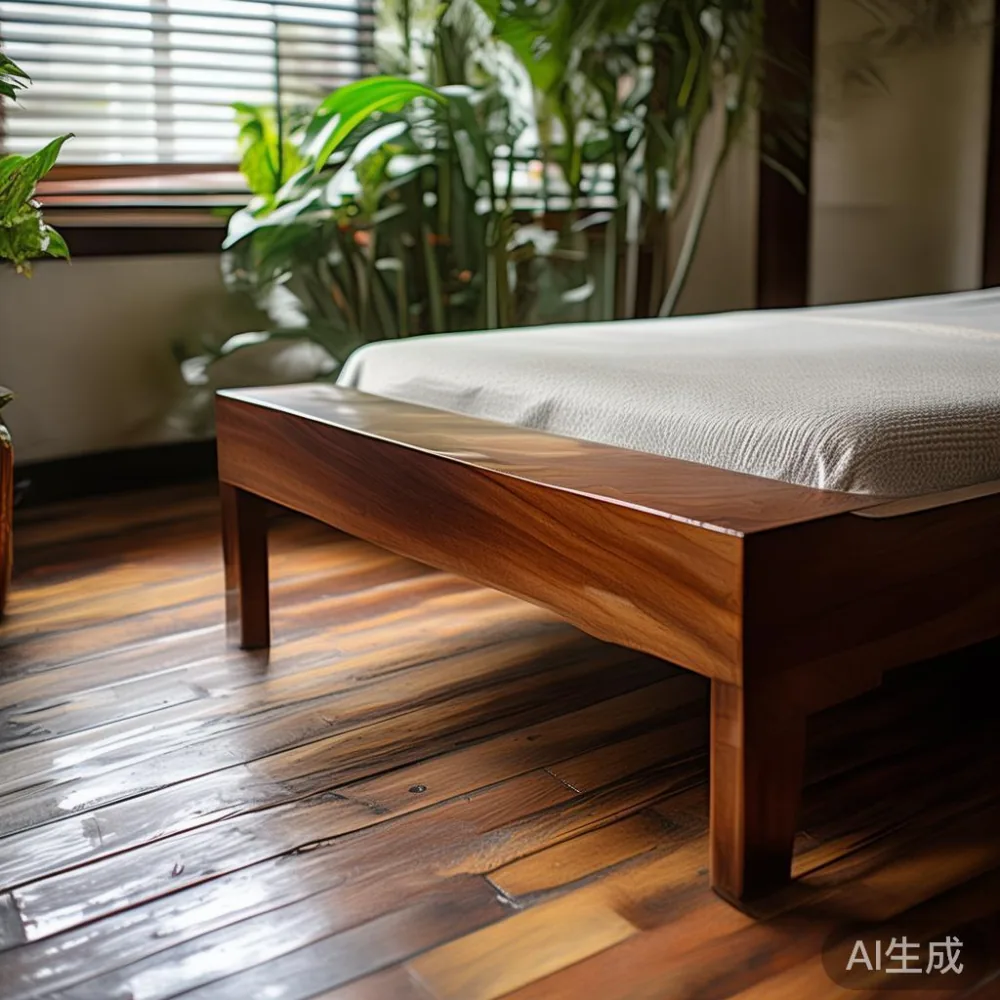
This guide focuses on caring for lacquered surfaces on solid wood bedroom pieces, with the bed frame at the center, while still covering adjacent items such as nightstands, wardrobes, dining tables, and marble table tops that often share the same household. Every recommendation is calibrated to Singapore conditions: HDB corridor widths of about 1.2 m, service lift openings around 1.0 m, GST-inclusive pricing in SGD, and the practical reality that most deliveries must be booked on weekday afternoons to avoid weekend lift reservations.
Why lacquer behaves differently on the Equator
Lacquer is a film finish. Unlike penetrating oils that soak into wood fibers and breathe with seasonal changes, lacquer sits on top of the surface and cures into a hard, glossy shell. In a dry climate of 30-50% relative humidity, that shell stays stable for years. In Singapore, where afternoon humidity regularly reads 80%+ and bedrooms hold moisture from air-conditioning cycles, the shell expands, contracts, and sweats. Over twelve months, micro-cracks can form, dust settles into them, and unsightly white haze appears. Add salt-laden breezes from East Coast and you have another variable that no European finishing manual seems to address.
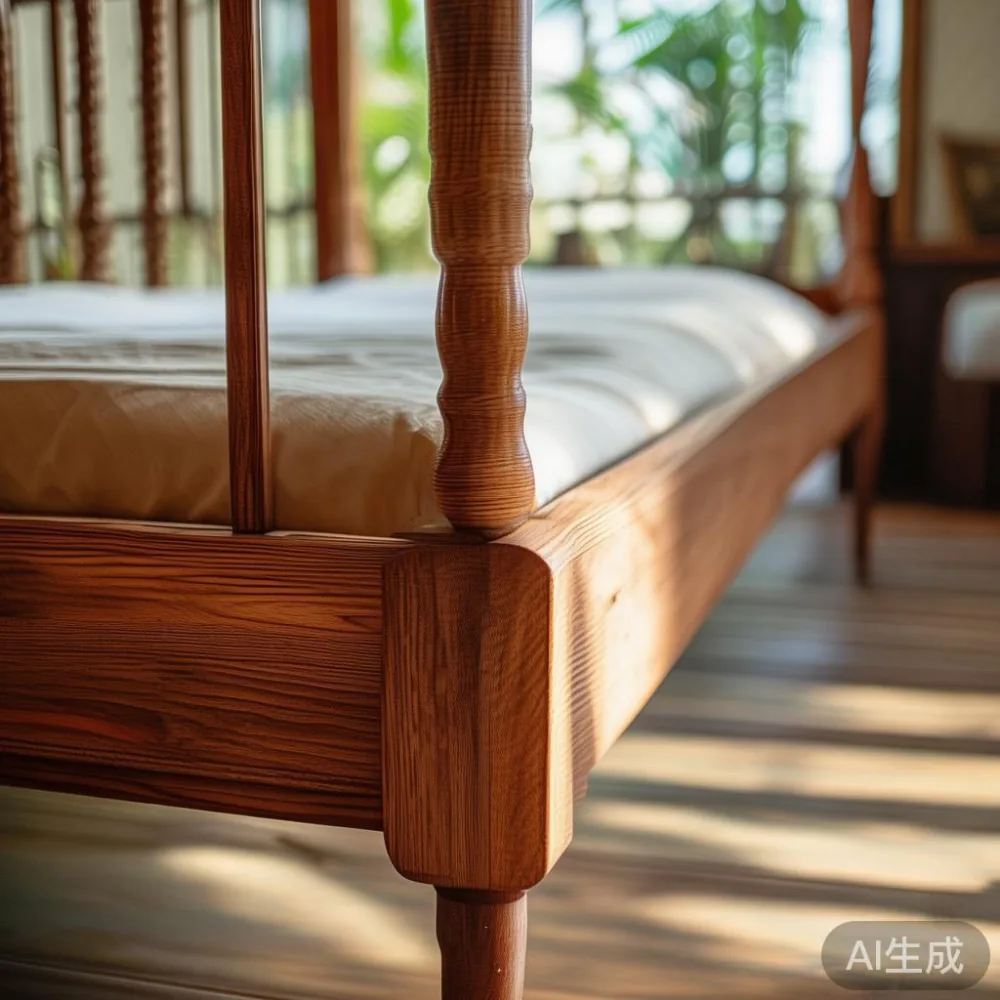
Solid wood itself also moves. A 180 cm bed frame made of ash or rubberwood can swell by 2-3 mm across its width during the wettest weeks. That movement gets transferred to every joint and to the lacquer film. If the finishing system was tuned for 45-55% humidity, the bond between film and substrate strains, and the film clouds. This is the exact reason that buyers weighing is European bed worth it for a resale flat in Bedok or Punggol should ask about the climate-adaptive finishing schedule before paying the 9% GST on the imported unit.
What exactly is "lacquered" and how do I tell what I bought?
Three finishes dominate the Singapore market for mid-range solid wood bedroom furniture: NC (nitrocellulose) lacquer, PU (polyurethane) lacquer, and conversion varnish. NC feels softer, smells faintly of solvents for the first week, and polishes back beautifully with mild wax. PU feels harder, resists household spills better, and is what most "post-modern light luxury" and "French light luxury" collections ship with today because it tolerates humid corridors and lift lobbies. Conversion varnish is the most chemical-resistant but also the most expensive and rarely used on consumer-grade bed frames.

To test what you have at home, drip two drops of water on a hidden spot, near the floor under the bed frame. If it beads for thirty seconds and wipes clean, you likely have PU. If the spot dulls or whitens after two minutes, the piece is probably NC or an oil-wax hybrid that needs different care entirely. Knowing your finish changes everything about which cloths, which polishes, and which cleaning agents are safe to use.
The first thirty days: how to acclimatise a new bed frame in an HDB or condo
Singapore deliveries are usually dispatched from a Foshan warehouse, sail for seven to ten days, clear customs in Tuas, and reach your door in roughly 14-21 days from order. The carton arrives, you sign, and the temptation is to build immediately. Resist it. Leave the inner polythene wrapping slit open for 48 to 72 hours in the bedroom with the air-conditioner running at around 24°C. This lets the timber equalise to your room's microclimate before the lacquer film faces thermal shock.
Service lift reservations at newer condos in Punggol Northshore and Sengkang Grand typically allow 90-minute slots between 10am and 4pm. Use those windows for assembly, not for moving unopened cartons, because a sealed box sitting in a hot service lobby for two hours can fog the lacquer inside. A condenser-style 2-door wardrobe (around 180 cm tall and 60 cm deep) should be carried upright, never flat, even if that means three trips up a 1.2 m wide stairwell. Tilting a wardrobe on its side risks fracturing the lacquer along its edges where the film is thinnest.
Daily and weekly care: a routine that costs under S$45 per year
You do not need a S$200 imported spray. Over the past year I have trimmed my cleaning cupboard to four items: a microfibre cloth pack from a Daiso at Tampines Hub (S$5 for ten pieces), a mild pH-neutral wood soap (S$18 for 500 ml), a roll of soft cotton applicator pads (S$6), and a tin of beeswax balm (S$25, enough for twelve months on a queen bed frame). Total annual cost: about S$45 in supplies, which is roughly the price of a single delivery surcharge in many HDB estates.
The routine I follow, and that the Foshan finishers I spoke with agreed on, is short. Every Sunday: dry-dust the bed frame headboard, the nightstand top, and the wardrobe doors with a clean microfibre cloth, following the wood grain. Every second Sunday: lightly dampen (never wet) a second cloth with diluted wood soap, wipe in the same direction, and buff dry within thirty seconds. Every quarter: apply a paper-thin layer of beeswax balm, leave for fifteen minutes, then polish off. That is the entire protocol. No silicone sprays, no oily polishes, no bleach-based wipes.
How often should I actually deep-clean a lacquered bed frame?
Customers send me this question almost every week, and my answer rarely changes. A lacquered bed frame in a typical Singapore bedroom needs a proper deep clean with the wood soap treatment two to three times per quarter, which works out to eight to twelve sessions per year. Anything more than that and you slowly strip the protective wax layer; anything less and dust accumulates into the micro-pores and dulls the gloss. One Tampines family that I visited last March had a queen bed frame in daily use, two children, and no pets. They deep-cleaned once every two months and the finish looked nearly new at the eighteen-month mark. Another family with a dog in a Punggol walk-up cleaned weekly and needed a refinishing service by month fourteen. The difference was almost entirely about hair, dander, and how often the air-conditioning filter was changed.
Spot fixes for the four most common tropical problems
Problem 1 — white haze on the bed frame skirt: the classic symptom of trapped moisture. Lay a clean cotton cloth over the haze, press a warm (not hot) iron onto it for five seconds, lift, repeat from a different cloth. The heat drives the moisture back out of the lacquer film and the cloth absorbs it. Two passes usually clear a year-old haze; anything older will need professional polishing.
Problem 2 — sticky drawers on the nightstand: a small dehumidifier (under S$80) placed near the bedside keeps relative humidity at 55-60% and stops the timber from swelling. Pull-out liners with felt pads also reduce friction, which is kinder to the lacquer on the drawer edges than silicon spray.
Problem 3 — water rings from a forgotten glass on the wardrobe top: the moment you see it, blot dry, then apply a paste of baking soda and a few drops of water the size of a 10-cent coin. Rub gently along the grain with a soft cloth, wipe clean, and apply a drop of your beeswax balm. Caught within an hour, a ring vanishes.
Problem 4 — cracked lacquer at a joint of the bed frame: stop and call for service. A hairline crack is not a defect; it is the finish doing its job by flexing slightly with the timber. Filling it with superglue or candle wax traps moisture and the problem doubles within two seasons.
The Singapore context: lift sizes, corridor turns, and marble tables
Bed frames and wardrobes above queen size rarely fit a standard HDB service lift in one piece. Most service lifts in HDB blocks along Bedok Reservoir and Toa Payoh measure roughly 1.6 m deep, 1.5 m wide, and 2.1 m tall, with a rated payload of around 1000 kg. A solid wood king bed frame in a flat pack still weighs 60-80 kg, while an assembled unit crosses 110 kg before the headboard. Plan for two helpers, soft blankets on every corner, and a folding sack truck for the corridor turn at the lift lobby. Marble table tops on dining sets, by the way, are even heavier: a 1.8 m marble dining table can weigh 180 kg, requires four porters, and adds S$120-180 to a standard delivery in most quotes I have seen this year.
If you are sourcing a full-room package, the same care notes apply across categories. A solid wood sofa benefits from the same weekly dusting routine, though the cushions should be aired in a sunny corridor for an hour every fortnight to prevent mould on the underside webbing. Wardrobes and tall cabinets need a 50 mm spacer behind them for airflow; pushing them flush to a 5/8″ dry wall stops ventilation and creates a humidity pocket that dulls the back panel lacquer within a year.
Looking ahead: which bedroom styles suit Singapore in 2026?
Buying guides for 2026 lean toward restrained profiles and slimmer bed frames, partly because floor area per HDB unit has shrunk toward 92 sqm and partly because humidity makes bulky headboards harder to maintain. The quiet winners in early-year previews for buyers who keep an eye on the best Nordic bed for 2026 lists are those around 145 cm wide, with no skirt and exposed solid wood legs that air-dry naturally. Also on my radar for clients who prefer Eastern silhouettes are the quieter entries in the best Japanese bed for 2026 roundups, with stilt-height platforms that solve the moisture problem elegantly.
For homeowners planning a full bedroom refresh, often the hardest piece to coordinate is the wardrobe, and questions like how to style European wardrobe in bedroom come up at almost every consultation. A 3-door European-style wardrobe in solid oak, about 200 cm tall, leaves air space above the casing if you leave a 50 mm gap to the false ceiling, which keeps the top panel from sweating. Pair it with a slim American light luxury nightstand and a bed frame under 2000 Scandinavian furniture price points from Foshan makers, and the room reads as quietly considered rather than crowded.
Living rooms carry their own challenges, and the related conversation about French provincial for small living room turns on scale and lacquer colour rather than motifs. A small HDB living room of around 18 sqm struggles with anything more ornate than a low-profile sofa and a slim marble table at the centre. Solid wood pieces finished in a warm honey PU tend to read richer than they are, and they survive the air-conditioner humidity cycles between Tampines and Bukit Batok equally well.
Long-term protection: warranties, refinishing, and what to keep on file
Most mid-range solid wood bedroom sets sold in Singapore carry a structural warranty of five to ten years. A 10-year structural warranty on joints, slats, and frame is the longest commitment I have seen outside of MIDHILL furniture, whose Steinheim and Donau collections cover frame integrity for ten years and refinishing services on lacquer films for the lifetime of the original owner. Keep your invoice, your delivery photo set (a quick 360-degree phone video is enough), and the care kit receipts. Refinishing work on a queen bed frame generally costs between S$280 and S$480 in 2025, depending on access; replacing a headboard panel costs around S$160 plus GST.
Finally, remember the first rule of finishing in a tropical climate: the product in your room is not the same as the product in a showroom in Beijing or Stockholm. It has absorbed moisture the moment the wrapper opened at your door, and it will keep moving for its entire life. Care for it like a wooden boat owner cares for teak decks — gently, regularly, and with respect for the weather. That mindset, more than any single product, is what keeps a lacquered bed frame glowing for twenty years instead of clouding in twenty months.