Small-Apartment Bed-Frame Styling for Singapore Homes
A compact HDB flat in Tampines or a narrow condo bedroom in Bedok can still feel calm, generous and visually expensive. The difference rarely comes from adding more furniture. It comes from measuring the room, choosing pieces with controlled proportions, and creating a clear path from the bedroom door to the window. A carefully selected bed frame can anchor the room without turning every remaining centimetre into a storage compromise.
At MIDHILL, we design solid wood furniture for practical homes rather than showroom display rooms. Our 10-year structural warranty reflects the long service life we expect from each piece, while lifetime refinishing gives owners a way to renew the surface as their home evolves. The measurements below suit typical Singapore apartments, including common HDB bedroom dimensions of approximately 270 cm × 330 cm and more compact layouts near 220 cm × 270 cm. They are guides rather than fixed rules, so measure your own walls, doors and lifts before ordering.
What makes a small bedroom feel less crowded?
Begin with the space you cannot move. Identify the door swing, the position of existing sockets and the route between the bedroom and bathroom. A 90 cm door needs about 100 cm of clear access for comfortable use, and the bed should not interrupt that route. In an HDB flat, a common 85 cm wide bedroom door may open directly into the side of a bed placed against the wrong wall. Swapping the bed orientation by 90 degrees often solves the problem without replacing the room.
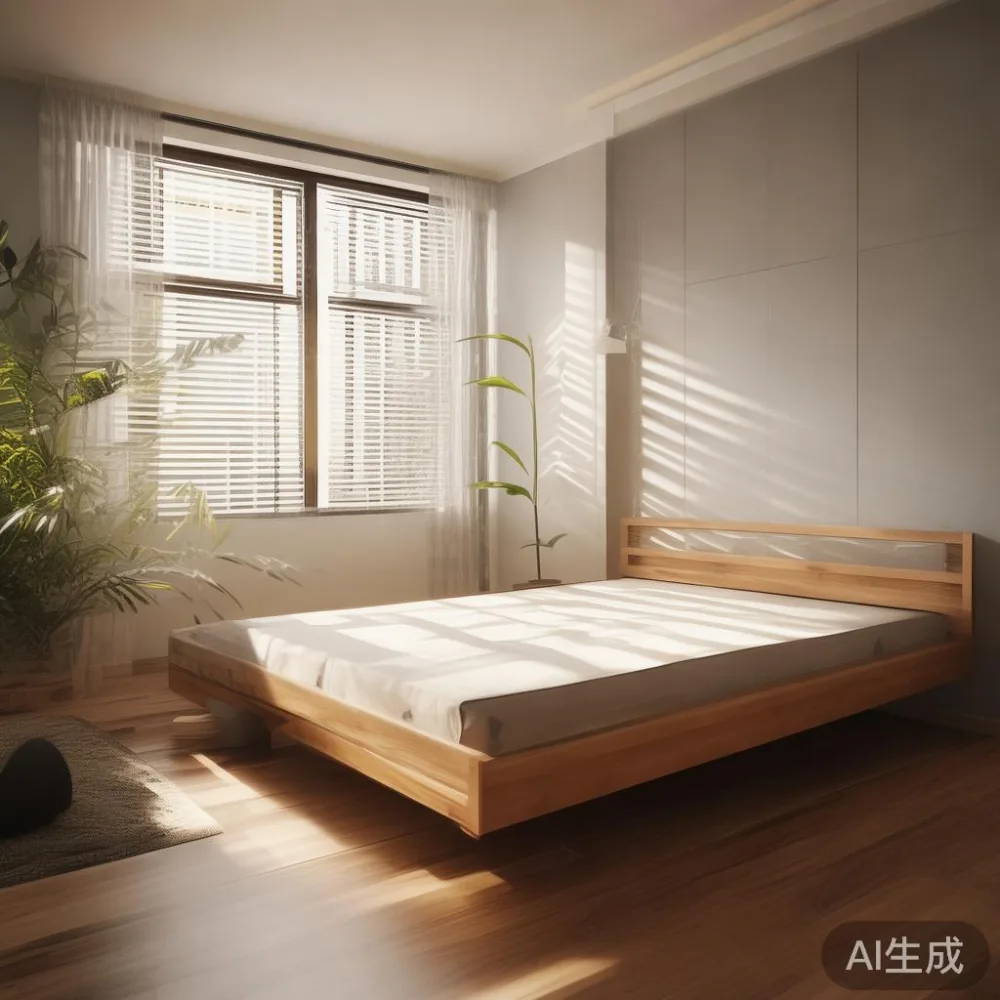
Scale matters more than style labels. A queen bed measuring 155 cm × 200 cm leaves only 57.5 cm on each side in a 270 cm wide room, which is usable for slim nightstands but tight for daily movement. A king bed at 180 cm × 200 cm leaves 45 cm per side in the same room. That may work for one occupant, but it becomes frustrating in a two-person bedroom and during housekeeping. In a 240 cm wide room, a 140 cm × 200 cm queen gives 50 cm per side and generally feels more balanced.
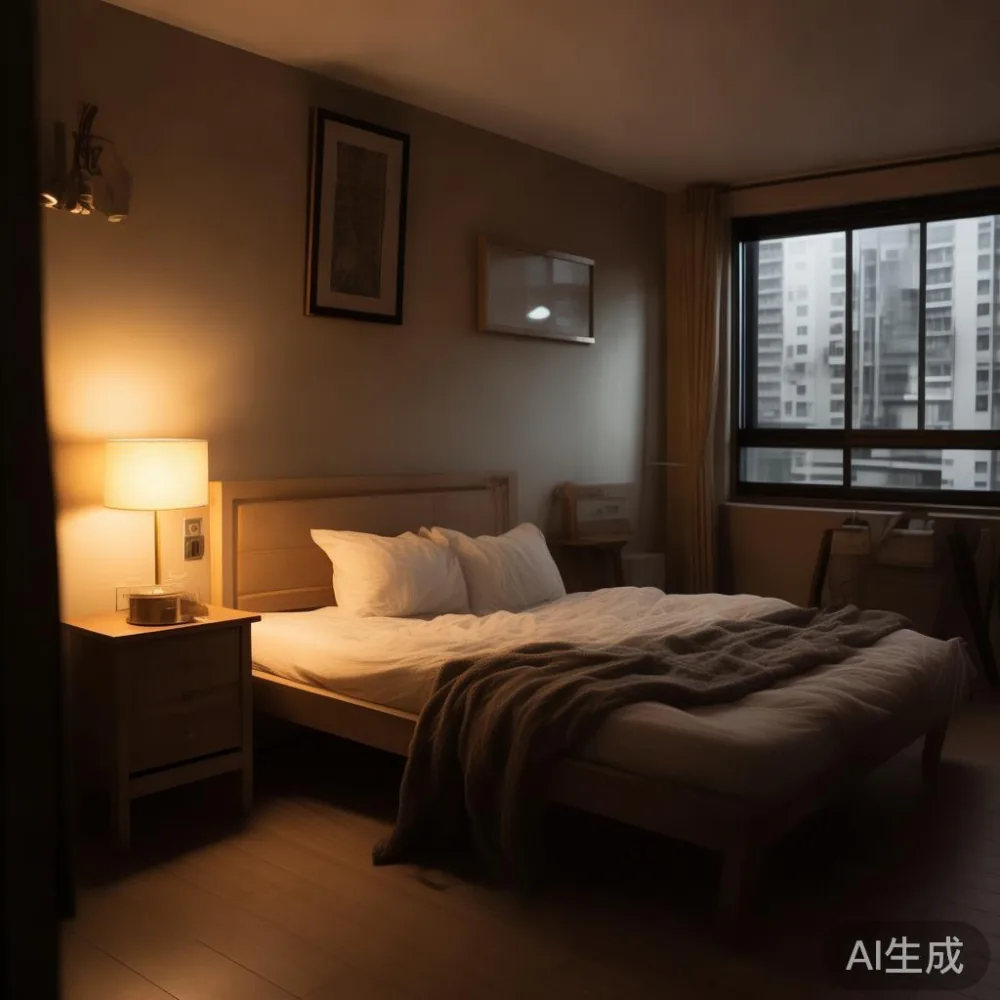
Keep visible objects to three levels: low, medium and tall. A low bed, one pair of wall-mounted lights and a single framed artwork create more visual space than a tall headboard, bulky bedside units and several open shelves. Curtains should hang close to the ceiling, and the largest uninterrupted floor area should remain near the doorway or window. The goal is not emptiness; it is controlled breathing room.
How should I choose a bed frame for a compact Singapore bedroom?
Measure the mattress first, then allow for the frame’s outer dimensions. A mattress may be labelled queen while the frame is 162–168 cm wide. Confirm the final footprint, including any footboard projection. For walls with skirting, leave a 3–5 cm gap behind the bed. This prevents the skirting from preventing a flush fit and makes vacuuming easier.
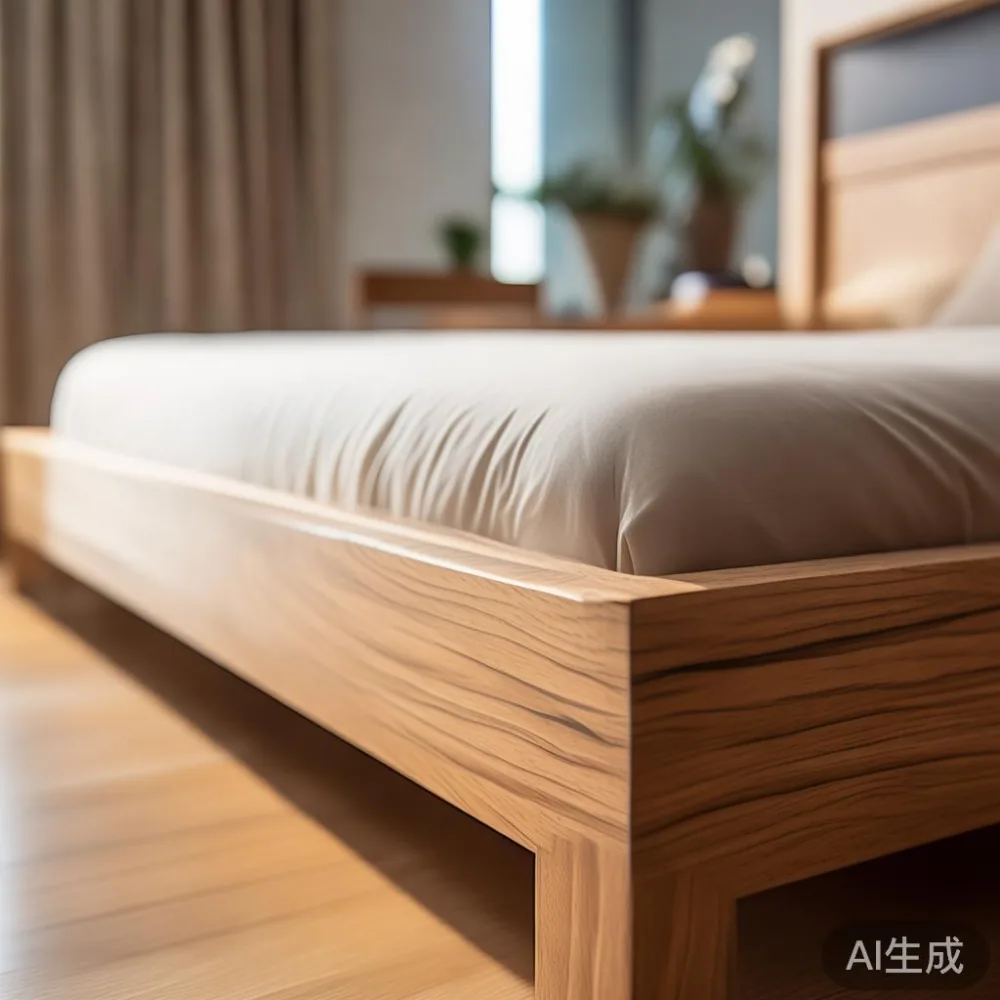
For most compact HDB bedrooms, a solid wood bed frame with a low-profile headboard is more space-efficient than a high, deeply sculpted model. Look for rounded outer rails rather than sharp corners if the bed sits close to a walkway. A frame height of 25–35 cm is convenient for daily use, although lower frames create a stronger sense of openness. Under-bed clearance of 18–22 cm can accommodate a suitcase and 2–3 storage boxes, provided you measure the actual frame rather than relying on a nominal figure.
Think about the delivery route before selecting a large frame. Many HDB corridors are around 120–150 cm wide, while some apartment corridors are narrower. A rigid bed frame wider than 100 cm may need to enter diagonally or be assembled in the bedroom. Compact lift cars may also restrict the size of a flat-packed carton. Ask the supplier for the package length, width and weight; a package around 95 cm × 45 cm × 18 cm will generally be easier to handle than one exceeding 110 cm in length. Two delivery staff and a 10–14 day lead time are sensible allowances for made-to-order solid wood pieces.
When comparing quotations, confirm whether delivery and installation are included, and whether the quoted price includes Singapore GST. For local purchases, the standard 9% GST applies when the seller is GST-registered. Furniture delivery to a lift lobby is common, but carrying a bed frame into the unit may involve a flight of stairs, a service lift booking or a corridor-management notice. MIDHILL can quote these access conditions before dispatch, avoiding an expensive last-minute mismatch.
Can a light-luxury bed frame suit an HDB flat?
Yes, if “luxury” means proportion, texture and finish rather than oversized ornament. French light luxury works well with curved rails, softened corners and pale oak. American light luxury suits a straight-lined frame, warm walnut tones and restrained brass details. Post-modern light luxury can introduce a slim upholstered headboard, a floating side shelf or a gently arched profile without filling the room with decorative objects.
A light-luxury bedroom often begins with 3 dominant colours: warm white, soft beige and natural wood. Add one darker accent no larger than about 20% of the visible wall area. For example, pair an off-white wall with a light-oak bed frame, oatmeal bedding and one charcoal cushion. This keeps the room composed while giving the eye somewhere to rest.
For a guest room, the phrase light luxury for guest room often brings to mind hotel styling, but a practical apartment needs more flexibility. Use a bed frame with concealed storage or an under-bed gap, add one narrow nightstand and fit a wall lamp instead of a table lamp. Keep the palette lighter because the room may need to become an office within minutes. If a movable chair is required, choose one weighing about 4–5 kg so it can be moved by one person without scraping the floor.
The bed frame should also relate to the architecture. In a flat with plain white walls and aluminium window frames, curved oak edges soften the hard lines. In a newer condo with stone-look flooring and darker metal details, a rectilinear walnut frame creates a more deliberate composition. Avoid making every object ornate; one detailed piece is enough when the surrounding room is compact.
How do I make a small bedroom look larger with lighting?
Use vertical light and layered illumination. Replace a central ceiling fixture with a dimmable flush light, if wiring permits, and add either wall-mounted reading lights or slim pendant lights. A 40–45 cm pendant centred over a 155 cm queen bed can visually define the sleeping zone without adding a broad bedside footprint.
Keep table-lamp shades below eye level when seated. A shade diameter of 25–30 cm works on a 35–40 cm nightstand. Warm light around 2700–3000K suits timber finishes and makes the room feel more restful. The total lamp brightness should be adequate for reading, but separate zones prevent the room from appearing uniformly bright and boxy.
Mirrors should face a useful source of light rather than simply being fixed to the smallest wall. A 40 cm × 120 cm mirror on the side opposite the bed can reflect the window and increase apparent depth. Do not cover the entire wall with reflective panels; 1 carefully placed mirror is often enough in a room of 6–9 square metres.
For HDB windows, consider full-height curtains mounted 10–15 cm beyond the frame. The wider visual treatment makes the opening appear larger. Use a sheer plus an opaque layer rather than heavy blackout fabric alone. This preserves privacy in Tampines or Punggol units facing neighbouring blocks while allowing soft daylight during the day.
What is the best European wardrobe for 2026 in a small bedroom?
The question of the best European wardrobe for 2026 depends less on national origin than on usable depth, door clearance and internal organisation. In many Singapore bedrooms, a fitted wardrobe protruding 55–60 cm from the wall leaves insufficient space for a bed placed opposite. An alternative is a shallow wardrobe 45–50 cm deep, designed around hanging garments, drawers and folded storage rather than full-depth coats.
Sliding doors can avoid blocking a narrow walkway, but they require more front clearance because each panel slides across the opening. Hinged doors need less operating depth, yet each door needs roughly 55–60 cm of swing space. In a small room, a 120 cm wide wardrobe with two 60 cm hinged doors may be easier to use than a 150 cm unit with sliding panels if the walking route is tight.
For an internal guide, if you want to know how to style French provincial wardrobe in room, keep the surrounding furniture simple: choose a straight-lined bed frame, pale textiles and 2–3 wall colours. A carved wardrobe with a pale finish can work, but ornate details compete with ornate bedding. If your wardrobe already has curved profiles, use plain bed linen and clean-lined lighting.
Likewise, if you are considering how to style French sofa in room, remember that this is a broader styling principle rather than a requirement to place a sofa in the bedroom. In a studio or compact multipurpose living area, a slim solid wood sofa with a seat depth of 52–56 cm can preserve circulation space. In a dedicated bedroom, the principle becomes simpler: echo the sofa’s upholstery colour in one cushion or throw, then leave the bed frame as the primary feature.
Install a wardrobe only after checking the skirting, electrical outlets and bed position. A 2–3 cm scribe allowance around fitted furniture prevents minor wall unevenness from causing installation problems. Shared wardrobes can be divided into 2 equal sections, each around 60–75 cm wide, provided the internal rail and shelf positions suit both occupants. That arrangement usually feels more ordered than assigning one narrow section to each person in a much wider unit.
Which nightstands and surfaces should sit beside the bed?
Choose a nightstand that fits the actual gap, not the style catalogue. In a 270 cm wide room with a 160 cm bed frame, each gap is about 55 cm, making a 35–40 cm nightstand comfortable. A 45–50 cm unit may still fit, but it narrows the route to the side of the bed. A wall-mounted shelf around 25–30 cm deep can work where floor space is scarce.
Height should be close to the mattress top. For a mattress surface at 50–55 cm, a nightstand around 45–55 cm high is convenient. Drawer fronts should open without hitting the bed frame; allow at least 5 cm clearance. Store only daily items in the top drawer so the visual surface remains uncluttered.
For surfaces with a more decorative finish, a marble table can serve as a compact bedside base, but consider weight and maintenance. A 35 cm square marble table may weigh 12–18 kg, while a solid wood nightstand might weigh 6–9 kg. Marble suits a calm, pale scheme, though veining can look visually busy in a very small room. Choose a restrained pattern rather than a high-contrast one.
If you are planning a living-dining area as well, search for MIDHILL dining table wholesale information before buying a large solid wood dining table. A round table of 100–110 cm diameter can seat 4 people more comfortably in a narrow zone than a rectangular 160 cm table, and its centre is easier to move past. Keep at least 75–90 cm between the table edge and nearby walls or furniture for chair use. For a dining table, inspect the extendable mechanism, the apron clearance and whether leaves are stored separately.
Can I use storage without making the bedroom feel like a storeroom?
Yes, but storage should support the bed rather than dominate it. An under-bed ottoman is useful when it reaches no higher than the frame’s lower rail and leaves the mattress supported. A hydraulic lift bed can add useful volume, although its mechanism may need 20–30 cm of side clearance for access. Confirm the opened height and test whether the mattress returns to a stable position before settling on the design.
For luggage, a 65–75 cm wide ottoman can conceal 2 medium-sized suitcases. Add a 3 cm air gap around the frame if possible, and use a mat to prevent wheels from indenting the floor. Open shelving is less suitable for a visually small bedroom because it displays its contents. Closed storage with flush fronts and slim handles keeps the room quieter.
The mattress itself should match the frame’s visual scale. A 10–15 cm mattress on a low frame creates a clean horizontal line. A very thick mattress combined with a high headboard can make the composition appear heavier. Linen in light grey, beige or muted sage will bridge oak, walnut and painted finishes without introducing another strong colour.
What should I check before ordering furniture for my flat?
Create a measurement sheet with 7 numbers: bedroom width and length, skirting depth, door width, lift-door dimensions, lift-car depth, corridor width and the longest stair turn. Measure the lift opening as well as the internal diagonal; a cabinet may pass through the doorway but fail to turn inside the car. Add 5–10 cm to the packed dimensions when estimating handling space.
Review the supplier’s commercial terms in writing. MIDHILL has exported to more than 15 countries since 2008 and supports a 10-year structural warranty, but local delivery arrangements should still be confirmed for your specific address. For orders above US$350, the brand’s free-shipping threshold is available, though Singapore delivery, GST and access charges should be clarified separately. Returns are accepted within 14 days under the stated policy, with the item’s condition and packaging requirements checked before collection.
Allow realistic production and delivery windows. A standard in-stock piece may arrive in 5–10 days, while a made-to-order solid wood bed frame may take 30–45 days, followed by 3–7 days for local delivery to the Tampines, Bedok or Punggol area. Longer periods can occur during peak furnishing seasons. Confirm the dispatch date, installation responsibility and damage-inspection procedure.
Last month, I visited a colleague’s two-room HDB flat in Bedok with a bedroom measuring 267 cm × 305 cm. Her 160 cm × 200 cm bed frame had been placed directly opposite the wardrobe, leaving only 43 cm for the main passage. We moved it to the wall beside the window, added 28 cm wall-mounted lights and replaced a 45 cm nightstand with a 30 cm floating shelf. The usable route increased to approximately 64 cm, and the room appeared noticeably calmer after removing the floor lamp. The exercise reinforced a simple rule: optimise circulation before styling.
How do I create one coherent room rather than a collection of furniture?
Repeat 2 materials, not 5. For example, light oak on the bed frame can return in the nightstand, while brass appears on only 2 small pieces. A marble table, if included, can connect with a pale stone-look bathroom surface without making the bedroom feel overly decorated. Keep textiles to 2–3 colours and use one pattern at a time.
Begin with a large neutral foundation, then place the bed frame against the longest uninterrupted wall. Add vertical elements at unequal heights, such as a 180–200 cm framed print and a 45 cm nightstand. The contrast prevents the room from looking flat while avoiding the crowded effect of evenly spaced decorative objects.
Artwork should relate to the bed’s width. Above a 155 cm queen, a 70–90 cm wide print is often visually comfortable. A pair of 30 × 40 cm prints can work on a narrow wall, but their frames should align precisely with the bed’s centre line. Avoid hanging art so low that it becomes the first object touched from the bed.
Finally, leave a deliberate blank area. In a 6–9 square metre bedroom, approximately 35–50% of the visible floor should remain free of loose furniture. This is not wasted space; it is circulation, luggage space and visual calm. A well-proportioned bed frame, controlled lighting and only the required storage can make a Singapore apartment feel larger without removing functionality.