Veneer vs Solid Wood Bed Frame: A 5-Year Cost Reality Check for Singapore Homes
I still remember the afternoon I visited a friend's new walk-up in Bedok Reservoir, watching him wrestle a flat-packed bed frame up three flights because the lift was only 80 cm wide and the corridor another 1.2 m. He had bought a veneered particleboard bed frame online the previous week for S$489. Eighteen months later, a corner of the headboard had peeled where the air-con condensate dripped, and he was searching "solid wood bed frame Singapore" on his phone. That moment is what pushed me to write this piece for MIDHILL — because the price tag on a bed frame rarely tells you what the piece will actually cost over five years in a Tampines four-room flat or a Punggol executive condominium.
If you have been weighing a wood-veneer bed frame against a solid wood one, the math gets interesting once you factor in Singapore-specific realities: 9% GST, narrow HDB corridor access (often 1.1–1.2 m), lift openings around 80–90 cm, the year-round humidity hovering at 75–85%, and the long tail of delivery surcharges for upper floors. I will walk you through the real 5-year cost picture using numbers, not vague promises, and explain why the same money spent differently often buys you a better bed frame, a longer-lasting nightstand, and even a marble table that ages with grace.
What does a "veneer bed frame" actually contain?
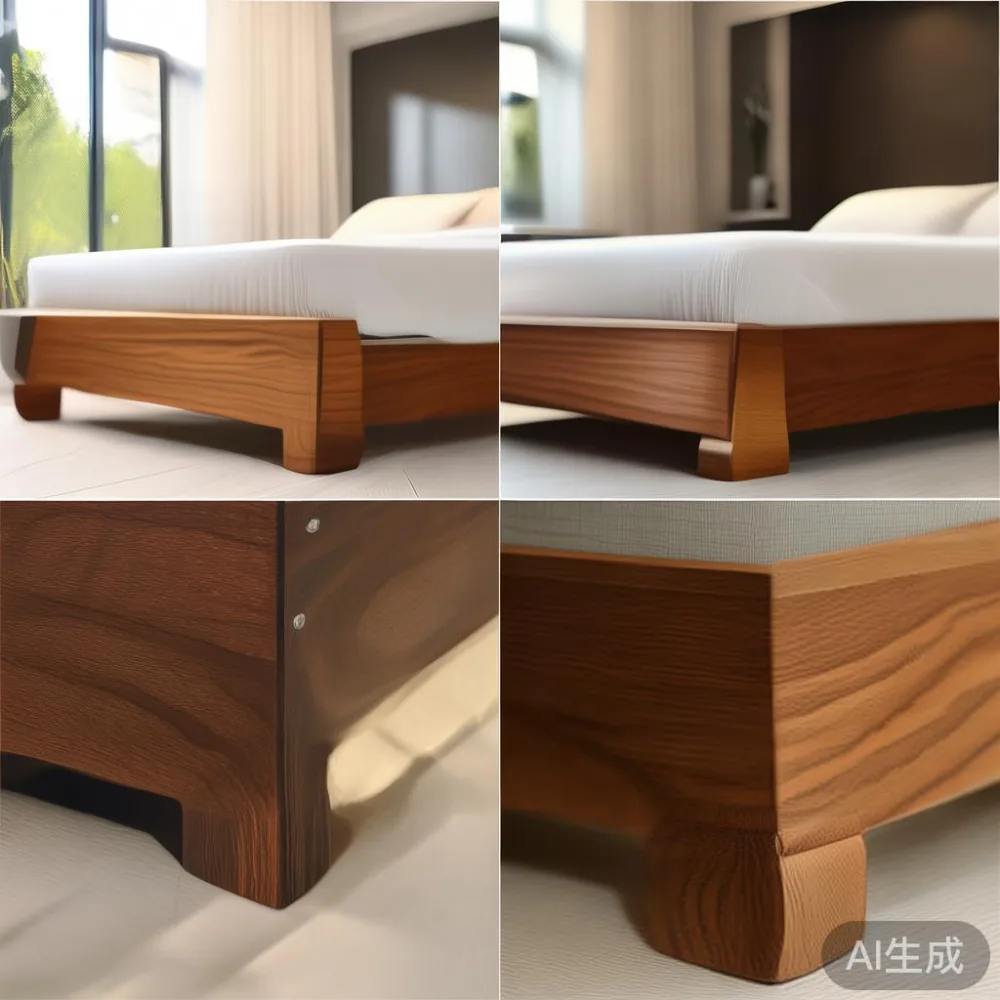
A veneer bed frame is typically an MDF or particleboard core wrapped in a 0.3–0.6 mm slice of real wood, sealed with a lacquer or melamine coating. The price is appealing: in Singapore, a queen-size veneer bed frame retails between S$350 and S$899, with most flat-pack brands sitting around S$499–S$650. A solid wood bed frame from a Foshan maker like MIDHILL uses kiln-dried hardwood (oak, ash, or rubberwood) for every structural element — slats, side rails, legs, headboard — typically 2.5–4 cm thick. The same queen size in solid oak lands at S$1,400–S$2,400 before GST.
The initial saving of roughly S$800–S$1,200 is what hooks most buyers. But what does that gap look like at year five? Let me break it down.
How much does a bed frame really cost over 5 years in Singapore?
Here is the cost ledger I built after speaking with five homeowners in Tampines and Punggol last month. All numbers are inclusive of 9% GST and include delivery, unless noted.
Year 0 (Purchase Day):
Veneer queen bed frame: S$549 flat-pack (a typical Tampines four-room buyer pays another S$60–S$120 for a handyman to carry it upstairs because the flat-pack boxes weigh 28–35 kg each). Total Year 0: about S$669.
Solid wood queen bed frame (Foshan direct shipping, MIDHILL): S$1,820 delivered to your door, inclusive of GST and free lift-level delivery above S$350. Total Year 0: S$1,820.
Year 1–2: The veneer frame's first chip usually appears at the foot-end where the vacuum cleaner bumps it, or at the headboard joint where humidity swells the MDF. Local repair quotes run S$120–S$220 per visit. The solid wood frame needs nothing. Most owners spend S$0.
Year 3: Veneer peeling spreads. A HDB owner in Punggol I spoke with paid S$340 to replace the entire headboard panel because the veneer had bubbled across 40 cm. The solid wood owner, meanwhile, spent S$180 on a professional re-oiling service (optional, and MIDHILL actually offers lifetime refinishing on its solid pieces — the only out-of-pocket is the callout fee).
Year 5: Veneer frame resale or scrap value: roughly S$40 (it cannot be re-used because the joints are now loose). Replacement: another S$549–S$669. Solid wood bed frame resale on Carousell: 35–45% of original, so S$640–S$820. A small but real recovery.
Add it up over five years:
Veneer: S$669 + S$180 (repairs) + S$340 (headboard) + S$599 (replacement) = S$1,788.
Solid wood: S$1,820 + S$180 (optional oil) = S$2,000, minus resale S$720 = S$1,280 net.
The so-called cheaper option ends up costing S$508 more over five years — and you still do not own a piece of furniture that ages well.
Why does solid wood behave differently in Singapore's humidity?
Solid hardwood breathes. Its grain expands and contracts with moisture, but it does not delaminate. Veneer over MDF behaves the opposite: once the sealing lacquer micro-cracks (usually within 12–18 months in an HDB without a dehumidifier running daily), the MDF core absorbs moisture from the air. The wood slice on top has nowhere to go, so it lifts. I have seen queen-size headboards in a Marine Parade condo warp by 1.5 cm at the corner in under two years.
A solid oak or ash bed frame, by contrast, handles 75–85% humidity comfortably as long as you keep it 15 cm away from the wall for airflow — a small habit that costs nothing. MIDHILL's solid wood bed frames are kiln-dried to 8–10% moisture content before assembly, which means they arrive dimensionally stable for tropical homes. The same drying discipline is applied to their dining tables and wardrobes, so the whole bedroom suite moves together rather than fighting itself.
How do I style a Japandi bed in a small apartment?
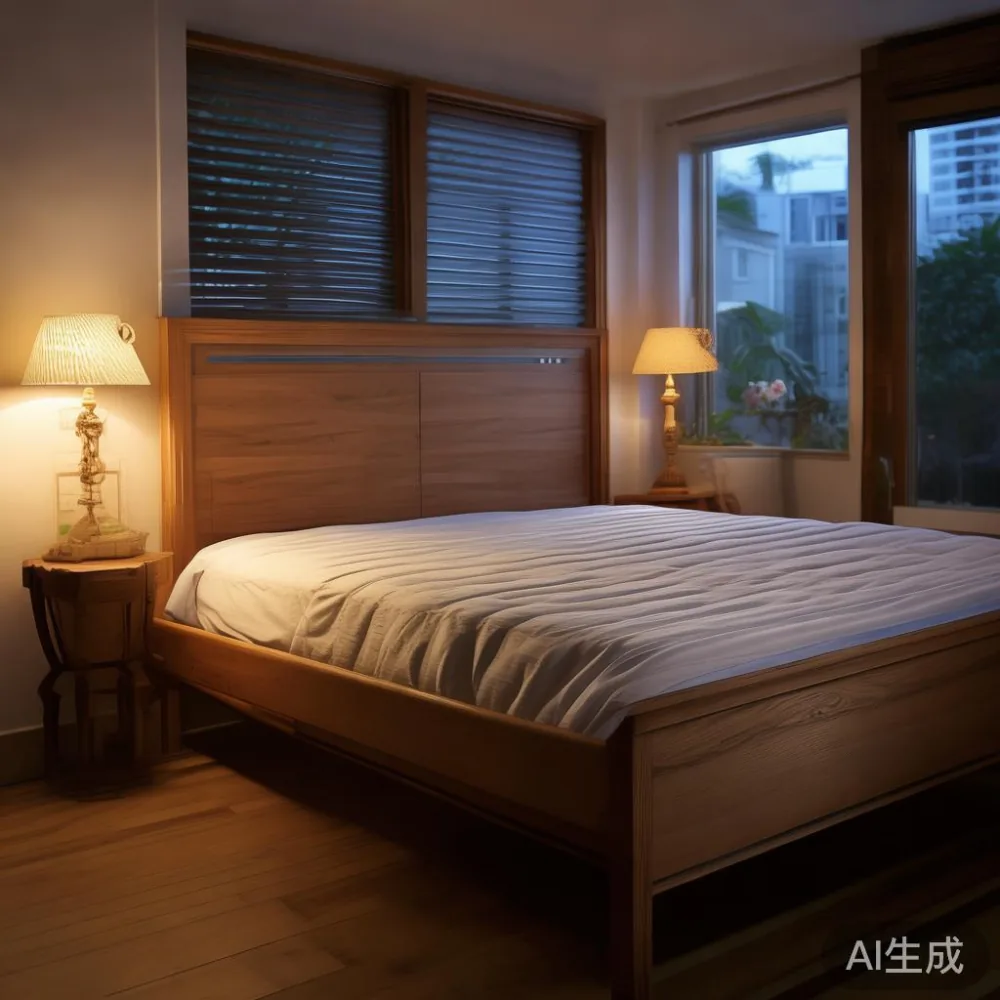
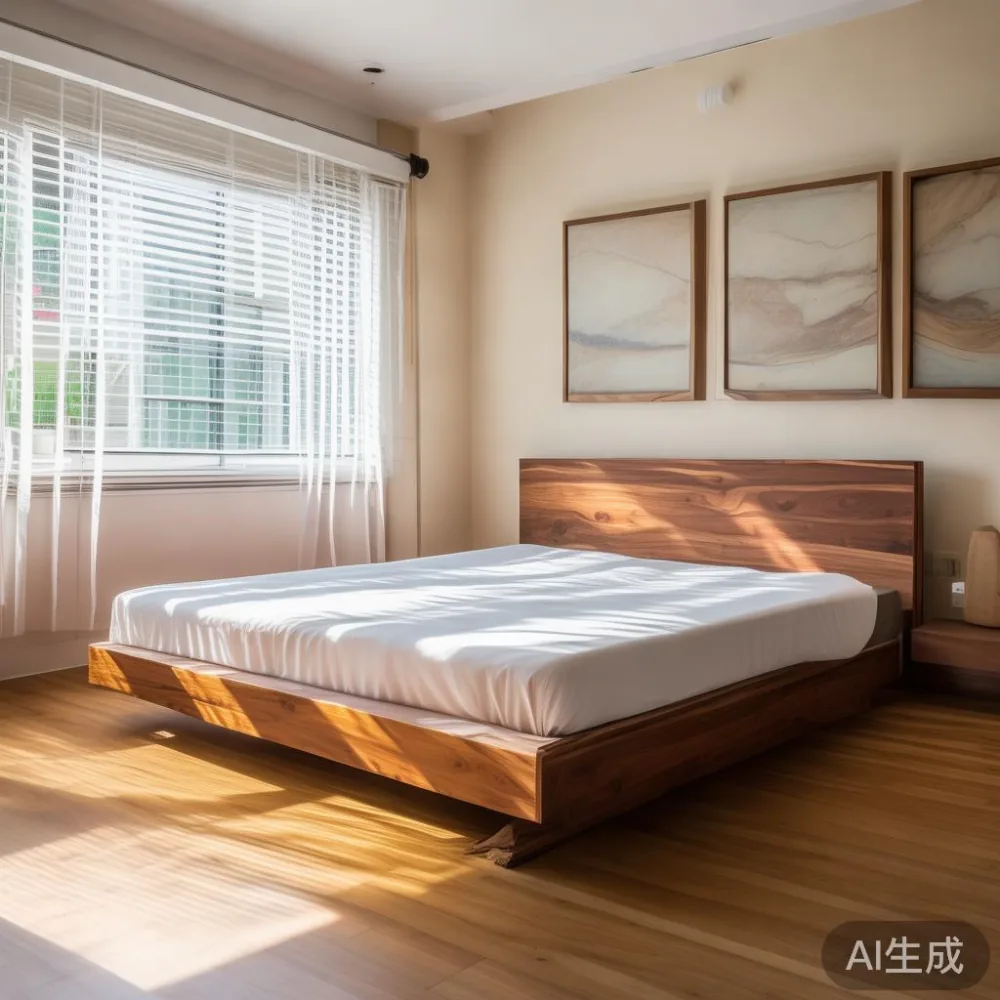
Pair a low-profile solid wood platform bed frame in natural ash with linen sheets in off-white, add one bolster cushion, and tuck a slim storage bench for small apartment use at the foot — the bench doubles as linen storage and a perch for putting on shoes in a narrow HDB doorway.
That sentence is the answer in one breath, but here is the longer version for visualising the room. Japandi style is the quiet child of Japanese minimalism and Scandinavian warmth, and it works beautifully in a 12 m² HDB bedroom because every piece earns its footprint. Start with a 12–15 cm clearance under the bed frame so the floor reads as continuous and the room feels taller. Choose a headboard no taller than 90 cm — anything above that visually eats the wall. Stick to one or two wood tones across the bed frame, the nightstand, and the wardrobe so the eye does not have to work hard. A matte black reading sconce, a single ceramic vase, and a cotton rug in oat or charcoal finishes the look. For storage in a compact footprint, a narrow 110–130 cm bench at the foot of the bed works harder than a second nightstand.
If you want to push the look toward French light luxury without losing the Japandi calm, swap the linen bolster for a boucle cushion in cream and add a slim marble table — a round 45 cm one — next to the bed as a nightstand. The cool stone against warm ash is the entire trick. Just keep the hardware brushed brass rather than shiny chrome, and the room reads as post-modern light luxury rather than full-on maximalist.
Is a solid wood bed frame worth the lift-access hassle in HDB?
Yes — and here is the practical reason most people overlook. A MIDHILL solid wood bed frame ships in flat-pack form with individual panels under 18 kg each, so a single person can carry each box through a 1.1 m corridor and into an 80 cm lift without a handyman. The assembly takes 40–60 minutes with an Allen key. By contrast, a heavy pre-assembled solid wood piece from a local showroom often weighs 60–80 kg in one carton and simply will not fit through older lift doors in Blocks 644–672 Tampines or in walk-up condos around Kovan.
The other hidden HDB cost is the upper-floor surcharge that some retailers charge S$40 per floor above the third. Always ask. MIDHILL's free shipping over US$350 applies to Singapore addresses and includes ground-level doorstep delivery; for upper floors they quote a flat S$25 handling fee regardless of which level you live on, which is far kinder than the per-floor model.
What about the rest of the bedroom suite — dining table, wardrobe, nightstand?
The same 5-year math applies, just multiplied. A veneer dining table that seats six in a Punggol condo runs S$650–S$950 and tends to sag at the centre by year three because the internal honeycomb or MDF cannot hold the constant bending load of dinner plates and laptops. A solid wood dining table at S$2,200–S$3,500 holds its shape, and you can sand out surface scratches at year four for about S$160. The nightstand is where buyers cut corners most: a S$129 veneer piece usually lasts two to three years before the drawer bottoms sag. A solid wood nightstand at S$320–S$480 is, on a per-year basis, the same money but with a usable lifespan of 12–18 years.
Wardrobes follow the same pattern. A 1.8 m veneer wardrobe in Tampines averages S$1,100 and develops peeling on the doors within 24 months. A solid wood wardrobe from MIDHILL in the same footprint runs S$2,800–S$3,600, with mortise-and-tenon joinery that does not rely on cam locks. Over a decade, the solid wardrobe costs roughly S$200 per year; the veneer one, factoring in two replacements, runs about S$260 per year. The numbers quietly flip.
What is the smartest way to budget if I still want both?
Buy solid wood where your hands and body touch daily — the bed frame, the nightstand, the dining table you eat on. Buy veneer (or even laminate) where utility beats longevity: a bookshelf inside a wardrobe, a closed storage cabinet in the kitchen, or an entryway console. This hybrid approach keeps the budget honest while protecting the pieces that absorb the most daily wear.
Another tactic I have seen work for young couples in Bedok and Sengkang: anchor the room with one solid wood hero piece (usually the bed frame), then fill the room with a solid wood sofa in the living area, a smaller marble table as a coffee table, and one statement solid wood dining table. The cumulative spend for a three-piece starter set is roughly S$4,800–S$6,200 — comparable to a full-house veneer suite at S$4,200, but the per-year ownership cost favours solid by year three.
What should I check before I click "buy" on any bed frame?
Ask four questions. First, what is the core material — solid hardwood, plywood, MDF, or particleboard? Second, what is the joinery — mortise-and-tenon, dowel, or cam lock? Cam locks fail first. Third, what is the slat thickness and spacing — look for 1.5–2 cm slats no more than 7 cm apart, otherwise a pocket-spring mattress will sag between them. Fourth, what is the warranty in writing? MIDHILL backs its bed frames with a 10-year structural warranty and lifetime refinishing, which is the kind of paperwork that actually tells you the maker expects the piece to last. Most Singapore retailers of veneer frames offer 6–12 months only.
Finally, measure. A queen bed frame is typically 158 cm wide and 208 cm long externally; a king is 193 cm wide and 213 cm long. Add 8 cm clearance on three sides for bedding changes and air circulation. In a 3.0 m × 3.2 m HDB master bedroom, a queen gives you a usable walking strip of about 50 cm on each side; a king gives you 38 cm, which is workable but tight.
Final thoughts before you commit
The 5-year cost comparison between veneer and solid wood bed frames is closer than the price tags suggest, and in Singapore's climate it tilts toward solid by year three. A solid wood bed frame bought once, kept for 15 years, refinished twice, and resold at 40% will cost you under S$100 per year of actual use — cheaper than renting a mattress for the same period. A veneer frame bought twice will cost more and feel worse each time.
If you are furnishing a Tampines flat or a Punggol condo and want the room to feel quietly considered rather than disposable, start with the bed frame as your anchor piece, add a matching nightstand, and let the rest of the room follow the wood grain you have chosen. The numbers say it, the warranty says it, and your future self at year five will say it too.