Veneer or Solid Wood? A 5-Year Cost Comparison for Singapore Bed Frames
A bed frame occupies the centre of a bedroom, yet its true cost is not obvious from the price tag. Veneer can produce a convincing oak, walnut or ash appearance for less money, while solid wood carries a higher initial cost but may prove more economical across five years of use. For Singapore homeowners furnishing HDB flats and condos in Tampines, Bedok and Punggol, that decision also involves lift access, corridor turns, humidity, GST and the amount of space available for assembly.
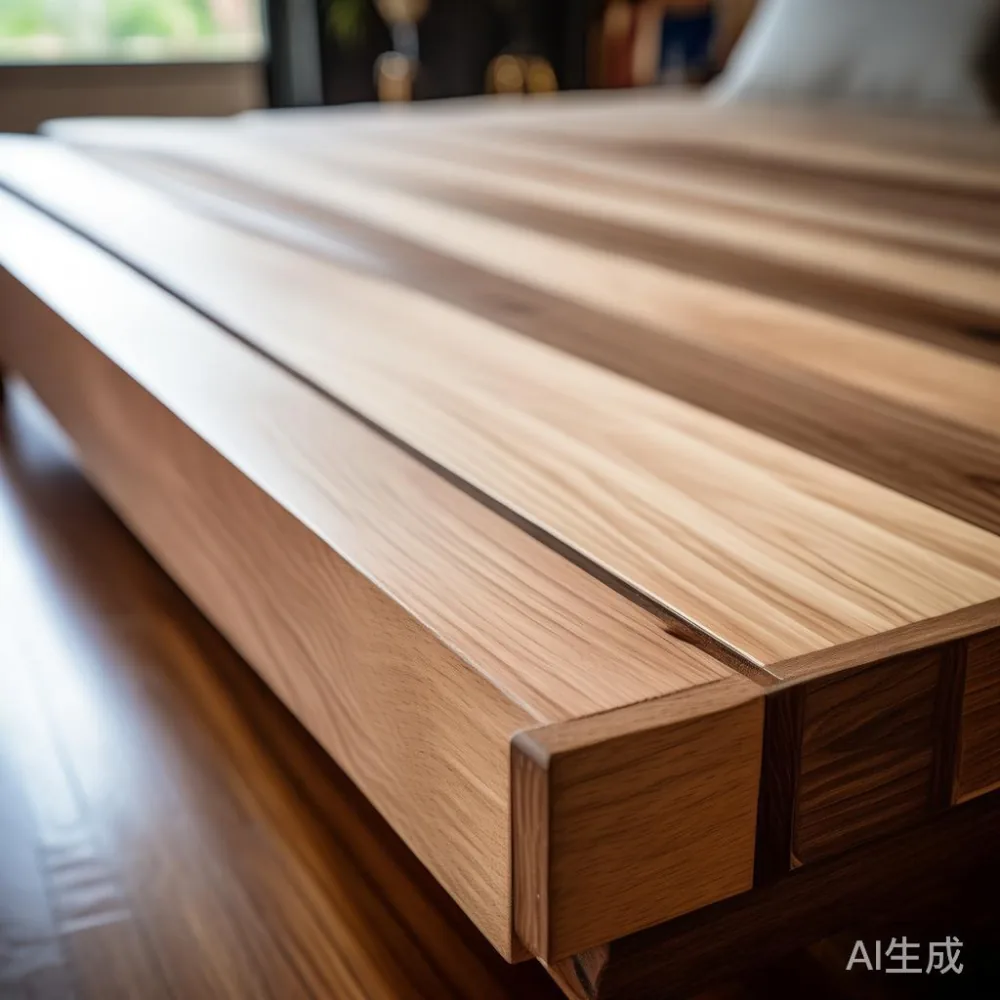
This comparison examines a queen-size bed frame over 60 months. The figures are planning estimates in SGD, including the frame but excluding a mattress, pillows and fitted linen. GST is treated as the 9% rate applicable at the time of purchase. Actual delivery, installation and repair charges can vary, so quotations should be checked before ordering.
What is the 5-year cost of a veneer or solid wood bed frame?
The short answer is that veneer usually wins on purchase price, while a well-specified solid wood bed frame can offer better long-term value if it is kept in use. The comparison is not simply “wood versus engineered wood”: veneer is real wood sliced into thin layers and bonded to a panel, whereas solid timber is milled from logs. The structural design, finish, joinery and dimensions all affect cost.

For a realistic model, assume a queen bed frame measuring 152 cm wide by 203 cm long, with a typical assembled weight of 45 kg for a veneer frame and 58 kg for a solid oak frame. The bed frame must fit through a common HDB or condo access route. A 90 cm doorway is possible, but the route can include a 90 cm-wide corridor turn and a lift door around 80 cm wide.
A basic veneer option might retail at SGD 680 before GST, with a delivery charge of SGD 40 and assembly estimated at SGD 60. A mid-range solid oak frame might retail at SGD 1,180 before GST, with delivery at SGD 80 and assembly at SGD 90. A premium solid walnut frame could reach SGD 1,850 before GST, but its heavier construction is not automatically more suitable for compact urban rooms.
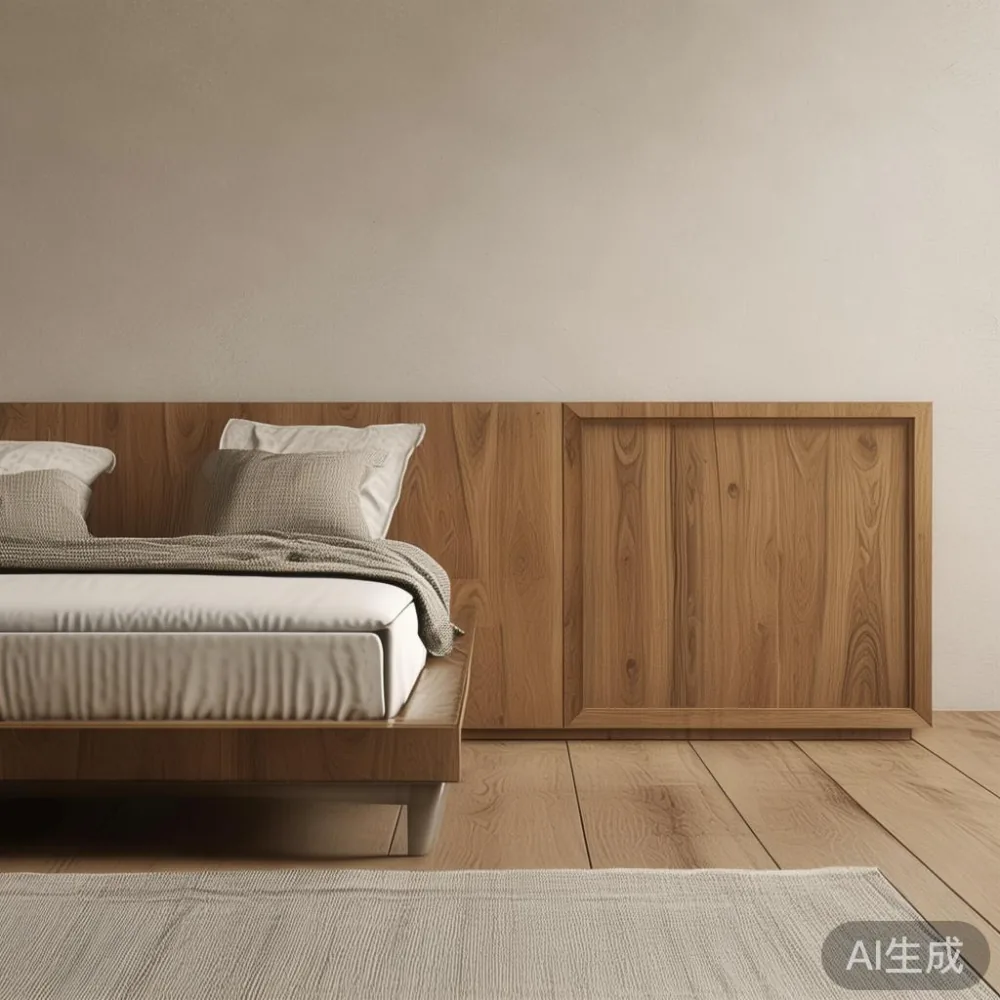
Across five years, owners should account for cleaning supplies, touch-up work, repair risk and the residual value of the frame. A veneer frame is not disposable, but exposed edges, lifting seams and swollen joints need attention. Solid wood can scratch, split or move with humidity too. Its advantage is usually easier refinishing and the possibility of repairing a damaged rail, not immunity to damage.
The key calculation is straightforward:
Five-year cost = purchase price + GST + delivery + assembly + maintenance + likely repair − resale value.
Using the example above:
- Veneer: SGD 680 + SGD 61.20 GST + SGD 40 delivery + SGD 60 assembly + SGD 90 maintenance and one SGD 120 repair allowance − SGD 90 estimated resale value = SGD 861.20.
- Solid oak: SGD 1,180 + SGD 106.20 GST + SGD 80 delivery + SGD 90 assembly + SGD 60 maintenance and no major repair allowance − SGD 180 estimated resale value = SGD 1,336.20.
- Solid walnut: SGD 1,850 + SGD 166.50 GST + SGD 100 delivery + SGD 120 assembly + SGD 55 maintenance and no major repair allowance − SGD 300 estimated resale value = SGD 1,891.50.
These figures show why “cheapest” should not be the only decision. It is not a permitted claim in this article, but the arithmetic remains useful: a lower purchase price may leave a larger repair bill after five years.
How much do veneer and solid wood cost in Singapore?
Veneer bed frames are available from roughly SGD 450 to SGD 1,200 before GST, depending on the panel thickness, veneer species, finish and hardware. A simple flat-pack design may weigh 28 kg, while a framed storage version can weigh 50 kg or more. Veneer’s lighter weight can reduce delivery friction, especially when a building has a small lift or a narrow stairwell.
Solid wood bed frames commonly range from SGD 900 to SGD 2,600 before GST. Oak is often priced below walnut and ash, although grade, thickness and construction make a larger difference than the species name alone. A queen oak frame may weigh 55 kg; a walnut frame may weigh 62 kg. Those weights should be checked against the lift capacity shown in the building notice, not just the lift door dimensions.
For a typical HDB flat, buyers often spend SGD 50 to SGD 120 on delivery and SGD 50 to SGD 150 on assembly. A condo with a private loading bay or a scheduled service lift may cost less, while a late-night delivery may attract a surcharge. Clear corridor management can prevent a second delivery fee: photograph the door, lift and turning points, and provide the frame’s carton dimensions before the truck is booked.
The customer question worth asking is not simply “Which material looks nicer?” It is: “What maintenance and repair cost should I budget for this bed frame over 60 months?”
Is European wardrobe worth it in a Singapore bedroom?
A European wardrobe can make sense in a spacious condo, but its cost must be compared with usable internal space and installation access. A 180 cm-wide wardrobe may provide more hanging room than a 150 cm model, yet it can block a 90 cm corridor or make a room feel compressed. Before buying, measure the wall, skirting, window and door swing.
This is separate from the bed frame, but the same five-year logic applies. A European wardrobe at SGD 1,900 may contain adjustable rails, soft-close hinges and multiple shelves. A local modular option at SGD 1,200 may offer fewer decorative details but easier replacement of fittings. Over 60 months, a SGD 150 repair could outweigh a SGD 300 purchase difference.
For compact HDB bedrooms, a wardrobe with a depth of 55 to 60 cm often balances storage with circulation. A 180 cm unit can still work in a larger Tampines or Punggol flat if the aisle remains at least 60 cm. Use a tape measure rather than relying on floor plans, and check whether the delivery carton fits through the lift.
Which finish ages better in Singapore humidity?
Singapore’s climate brings warm air, sudden rain and indoor air-conditioning changes. Relative humidity in a lived-in room may vary from roughly 45% to 75% across the year. Neither finish should be wiped with a soaking cloth, and neither should be placed directly beside a frequently opened window that admits damp air.
Veneer is especially sensitive at seams and edges. Ask whether the face veneer is 0.6 mm, 1.0 mm or thicker, and whether the panel edges are sealed. A 0.6 mm veneer can look refined but may show wear sooner in a high-contact area. A 1.0 mm veneer with sealed edges can perform better, though it still requires careful humidity management.
Solid wood expands and contracts as moisture changes. Oak may move around 1 to 2 mm across a broad panel over seasonal changes, depending on the grain and finish. This movement is not automatically a defect. The frame should be assembled with room for normal movement and should not be screwed tightly against a wall.
For maintenance, budget about SGD 15 every three months for a gentle cleaning cloth and suitable wood care product. Avoid abrasive pads, silicone sprays and alcohol-heavy cleaners. Re-oil or re-wax according to the product instructions, usually every 12 to 24 months depending on use and exposure.
Last month I visited a client’s three-bedroom condo in Bedok to assess a bed frame and a matching solid wood sofa. The original oak bed frame had a dulled rail, two shallow scratches and a slightly uneven joint after six years of use. The refinishing work took two days and cost SGD 260. A similar veneer unit nearby had a lifted corner seam; replacing that panel was quoted at SGD 290 and required 10 days of lead time. The solid frame was heavier at 58 kg, but it was visibly easier to restore. That experience is one sample, not a guarantee for every product.
What should buyers inspect before delivery?
Inspect the sample, the drawing and the warranty terms before paying a balance. A bed frame may have a beautiful finish in a showroom yet arrive with mismatched grain, uneven gaps or damaged corners. Ask for photographs of the exact finish, the joint locations and the underside of the slats. Confirm whether slats are included, whether a centre support is fitted and whether the headboard attaches with concealed hardware.
Measure the carton rather than only the assembled frame. A queen bed frame boxed for lift access might be 160 cm long, 42 cm wide and 18 cm deep. A solid wood unit might use 2 cartons, each weighing 31 kg. If the lift door is 80 cm wide, the cartons must fit flat or be tilted without hitting the ceiling.
For owners who also use a nightstand, leave at least 40 cm of reachable space beside the mattress. A marble table should not be placed where its base interferes with the bed frame rail. A dining table and wardrobe require similar access checks during delivery day.
Owners researching how to choose Japanese bed may be comparing low platforms with storage-friendly frames. The practical points remain more important than the label: a clear floor area, adequate ventilation, accessible fasteners and a weight that the lift and floor route can handle.
Design references can also influence the buying decision. A search for French provincial for apartment may suggest carved details, curved edges and decorative hardware, but those forms often add weight and make a small bedroom feel busy. A restrained French light luxury bed frame can suit a condo if its proportions remain simple.
American light luxury often means generous proportions, upholstered surfaces and coordinated bedroom pieces. For a queen bed in Singapore, the outer width should ideally stay within 170 cm, leaving enough circulation in a compact room. Post-modern light luxury can use clean lines and mixed textures without filling every wall.
For coordinated furniture, a designer Modern light luxury furniture scheme might pair a solid wood bed frame with a low nightstand, a marble table in another room and a restrained dining table. Keep the wood species and finish consistent so repairs do not become visually obvious.
How do delivery, assembly and warranty affect the five-year total?
Delivery is a meaningful cost in a dense housing estate. A low-cost veneer frame may attract free delivery only above a specified order value, while a solid wood frame may incur a lift or carrying surcharge. A buyer who expects to save SGD 40 at checkout can lose that saving if a second crew visit is needed because one carton was damaged.
Ask whether delivery includes carrying to the bedroom door or only lobby handover. A HDB block with a 100 cm-wide corridor may allow a two-person carry, but a sharp 90-degree turn can still require careful rotation. For a condo, reserve the service lift and check whether the building requires a protection mat on the floor.
Assembly quality affects the first-year cost as much as the material. Check that all bolts are included, that the slat supports align and that the headboard is fixed to the frame rather than to a decorative panel. A frame assembled without adequate centre support may develop noise or deflection under a 70 kg mattress and two adults.
Warranty language should be read carefully. A structural warranty of 10 years may cover certain frame failures under defined conditions, but it may not cover finish wear, accidental impact, insect damage or improper assembly. Confirm whether replacement slats, fasteners and touch-up materials are available after the warranty period.
Used-bed buyers should also consider the bed frame’s age and previous load. Inspect for loose joints, crushed corners and signs of moisture damage. Cleaning and repair may cost SGD 80 to SGD 300, but those costs should be added to the purchase price before comparison.
How should you plan a 5-year ownership budget?
Build a simple spreadsheet with eight columns: material, purchase price, GST, delivery, assembly, maintenance, repair and resale value. Enter the actual dates of cleaning, touch-ups and repairs. Revisit the sheet every 12 months rather than guessing all maintenance at the start.
A sensible reserve is around 3% of the purchase price each year for maintenance and small repairs. On a SGD 1,000 veneer frame, that is SGD 30 per year, or SGD 150 across 60 months. On a SGD 1,500 solid wood frame, the same reserve is SGD 45 per year, or SGD 225 over five years. This is not a warranty claim; it is a planning allowance that can be adjusted after the first year.
Choose solid wood when the frame is central to the room, frequent refinishing is acceptable and the budget can accommodate a heavier delivery. Choose veneer when the goal is a lighter, lower upfront outlay and the finish will be protected from moisture and impact. In either case, ask for a finish sample and a clear care guide.
For storage, buyers comparing the best Japandi wardrobe for 2026 can apply the same material tests: look at edge sealing, drawer movement, hinge replacement and delivery access. A bedroom project that includes a bed frame, nightstand and wardrobe is more coherent when the supplier can explain one maintenance routine instead of several conflicting systems.
Those looking into how to style French wardrobe in bedroom may focus on colour and hardware, but should also check the clearance around the wardrobe door. Leave at least 60 cm for opening, or plan a sliding arrangement if the room cannot provide it. The wardrobe may cost less than a bed frame, yet a difficult installation can dominate the project budget.
MIDHILL, established in Foshan in 2008 and exporting to more than 15 countries, makes the material discussion relevant to international production. A 10-year structural warranty and lifetime refinishing service should be requested in writing, together with the limits of each service. For Singapore orders, confirm the local delivery partner, GST treatment, 14-day return conditions and any freight surcharge before checkout.
Over 60 months, veneer can remain a sensible budget choice, while solid wood can reward owners who value repairability and refinishing. The strongest purchase is not determined by the material name alone. It is determined by the specified construction, the actual delivered cost, the maintenance plan and the way the bed frame fits your Singapore home.