Veneer vs. Solid Wood: Singapore's Long-Term Sofa Costs
Choosing a bed frame for a Tampines HDB flat, a Bedok condo, or a compact Punggol bedroom is rarely a simple choice between two materials. Veneer can offer convincing oak or walnut character at a lower purchase price, while solid wood can support heavier use and more meaningful repair options. The sensible answer depends on what the frame will cost over 5 years, including the initial price, GST, delivery, maintenance, replacement parts, and the risk of scratches or swelling in Singapore’s humid conditions.
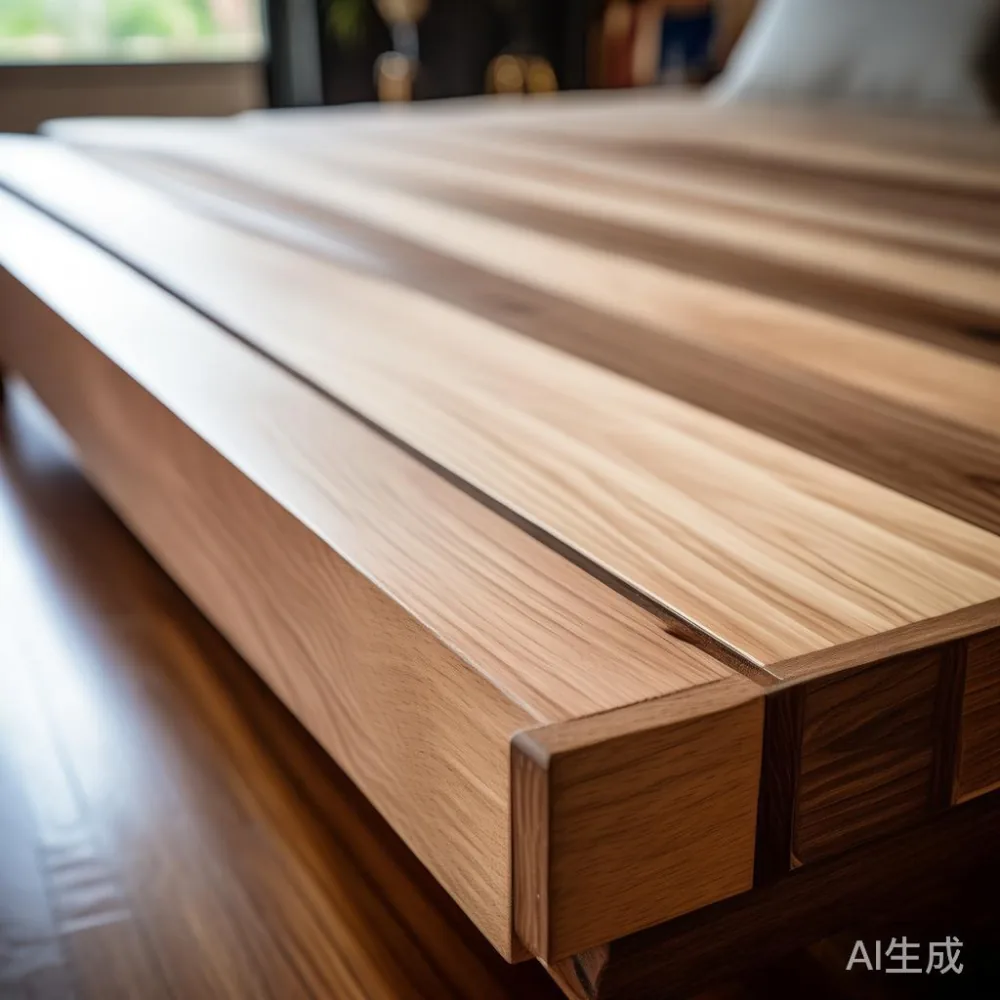
MIDHILL is a Foshan solid wood furniture maker established in 2008, with export experience across 15-plus countries. Its 10-year structural warranty, lifetime refinishing service, free shipping above US$350, and 14-day returns policy provide useful reference points when comparing ownership risks. This comparison focuses specifically on bed frames and keeps prices in SGD for Singapore readers.
What is the real 5-year cost of a veneer or solid wood bed frame?
The real 5-year cost includes more than the showroom figure. A buyer should add 9% GST, delivery charges, assembly, protective care, expected repairs, and a conservative allowance for component replacement. For a Singapore bed frame, useful specifications include width, headboard height, slat spacing, load capacity, and packed weight because these affect both installation and long-term performance.

Consider a queen-size bed frame measuring 152 cm wide by 200 cm long. A laminated-wood or plywood structure may weigh 35–45 kg, whereas a comparable solid-wood frame may weigh 60–85 kg. The heavier frame usually requires two people and at least 90 minutes to assemble; a lighter veneer frame may take 35–60 minutes with one person. In a corridor narrower than 100 cm or an HDB lift with internal dimensions below 110 cm by 140 cm, the packed carton becomes as important as the bed itself.
A realistic comparison might look like this: a veneer bed frame purchased for SGD 900 becomes SGD 981 after GST. A solid-wood bed frame purchased for SGD 1,500 becomes SGD 1,635. Over 5 years, maintenance and replacement assumptions can narrow or even reverse that gap, especially if a veneer edge lifts, a slat cracks, or both products need refinishing.
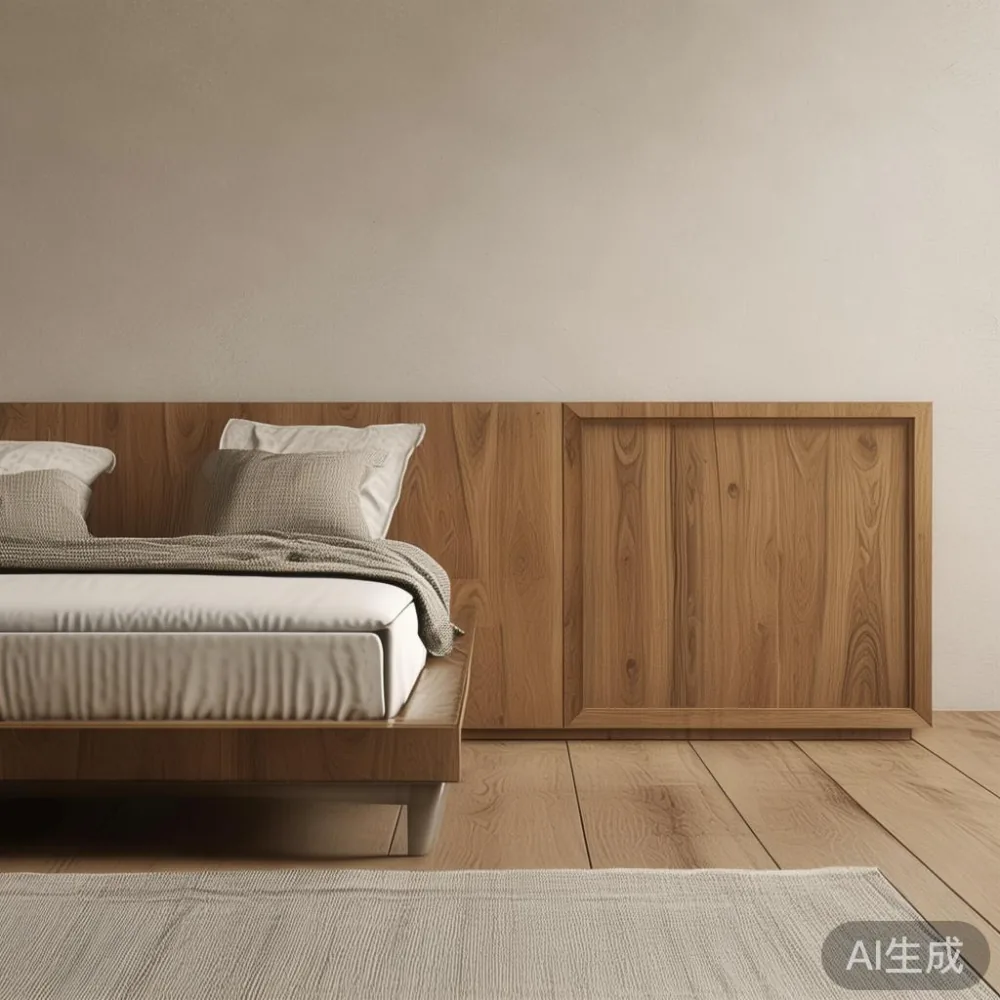
These figures are examples rather than fixed MIDHILL quotations. Actual prices depend on timber species, dimensions, hardware, finish, and design. The purpose is to show how a buyer can calculate ownership cost without comparing unlike products.
How do veneer and solid wood differ in a humid Singapore bedroom?
Veneer is a thin layer of real wood, often 0.6–1.2 mm thick, bonded to an engineered core such as MDF, plywood, or laminated timber. It can reproduce the grain and colour of oak, walnut, or ash while keeping weight and cost manageable. Solid wood is not merely a thicker veneer: it uses solid timber components that can be sanded, patched, and refinished through repeated cycles.
Humidity is the central technical difference. HDB bedrooms in eastern Singapore can experience refined moisture levels, particularly during monsoon periods. A responsible wood bed frame should use kiln-dried timber, stable joinery, and a finish that allows limited movement. An engineered core can remain dimensionally stable when manufactured correctly, but repeated moisture exposure may still open a vulnerable seam or cause a veneer edge to peel if the protective finish fails.
Solid wood tolerates surface damage more readily because the visible material extends through the component. A 15 cm scratch may need only a spot repair, whereas the same scrape through 0.6 mm veneer may expose the core and require replacement of a larger panel. Solid wood can also move by roughly 1–3 mm across a 50 cm board with seasonal humidity changes when the design permits normal expansion.
Neither material is waterproof. Keep the frame at least 20–30 cm from an open window, use a mattress protector, maintain indoor relative humidity near 45–60% where practical, and wipe standing moisture from the headboard or side rails. A digital hygrometer costing about SGD 25 makes monitoring easier.
What does a 5-year cost model look like?
The following model compares two queen-size frames with broadly comparable appearance and function. The veneer example has an engineered core, 14 wooden slats, and a veneered headboard. The solid-wood example uses solid timber for the main rails and headboard, with the same basic dimensions and a comparable finish. Freight, mattress, bedding, and mattress toppers are excluded.
The veneer frame has an initial retail price of SGD 900. Adding 9% GST gives SGD 981. A delivery charge of SGD 80 and assembly cost of SGD 60 bring the starting outlay to SGD 1,121. Annual cleaning and waxing are estimated at SGD 40 for 5 years, or SGD 200. A conservative SGD 250 allowance covers one slat replacement, two hardware changes, and one edge or veneer repair. Total 5-year cost reaches approximately SGD 1,571, or SGD 314 per year.
The solid-wood frame begins at SGD 1,500. GST raises it to SGD 1,635. Delivery is estimated at SGD 100 because of the higher weight, while assembly is SGD 100. Five years of cleaning and oiling at SGD 60 annually total SGD 300. The repair reserve is lower at SGD 120, reflecting the ability to refinish small areas and replace visible timber components more readily. Total cost is approximately SGD 2,255, or SGD 451 per year.
On these assumptions, the solid-wood frame costs about SGD 684 more over 5 years, equal to approximately SGD 137 per year. The difference can narrow if the veneer frame needs a headboard panel replacement costing SGD 300–450. It can widen if the solid-wood frame’s heavier construction creates extra stair-carrying or assembly charges in a walk-up unit.
A second scenario shows why the repair reserve matters. If the veneer frame incurs one SGD 420 panel replacement after moisture damage, its 5-year total rises to SGD 1,741. A SGD 100 solid-wood refinishing treatment after an accidental scrape leaves its total at SGD 2,255. In this case, the veneer frame still costs SGD 514 less, but it has less repair flexibility. Buyers should not treat one scenario as a promise; the figures are a budgeting method.
Are HDB lift and corridor dimensions the deciding factor?
For many Singapore residents, access can cost as much as the material. A Punggol HDB flat may have a compact lift and a turn that eliminates the need for a queen headboard to be tilted through a doorway. A Bedok or Tampines condo corridor may offer wider access but include a glass door, sharp 90-degree turns, or a delivery time restriction managed by building management.
Before purchase, record the narrowest corridor width, doorway width, lift door width, lift cabin depth, and lift height. A common lift door is about 90 cm wide, while the cabin may measure 110–140 cm deep and 210–220 cm high. A carton 168 cm long and 28 cm thick may fit diagonally, but a boxed headboard 175 cm long and 12 cm thick may not fit a shallow lift at all. Check the factory carton rather than the assembled dimensions.
Weight also affects delivery. A 60 kg solid-wood carton may need two handlers, whereas a 38 kg veneer carton may fit one person’s normal carrying limit but still exceed some building porter rules. Ask for an unpacking service at the door because the largest component should be no more than one person can safely manoeuvre.
Delivery timing should be planned around renovation, moving, and building rules. A Singapore lead time of 10–21 days is reasonable for a made-to-order frame, while some in-stock designs can arrive in 5–8 days. The quoted day should distinguish production from dispatch. MIDHILL can provide freight details for international orders, while local buyers should confirm the final Singapore landing cost, including GST, before the bed frame leaves the supplier.
Which option fits different bedrooms and budgets?
A veneer bed frame is often practical for a rental flat, a child’s room, or a secondary guest bedroom where the visible design matters more than extensive refinishing. It also suits a compact room because lighter construction can simplify moving. For example, a 137 cm-wide frame with a 105 cm headboard and 20 cm side clearance may make a narrow bedroom easier to organise than a bulky 152 cm model.
Solid wood is more compelling for a primary bedroom, a home office guest room, or a property where the buyer expects to keep the frame for 10 years or more. Its weight can feel reassuring, but stability comes from the engineering, not timber alone. Look for corner braces, dowelled or mortise-and-tenon joints, centre support, and slats spaced no more than 5–8 cm apart for a queen mattress.
Design language should also guide the purchase. A pale oak veneer can support French light luxury through restrained profiles and linen textures. Walnut-toned solid wood can carry an American light luxury mood with stronger rails and simple panelling. Post-modern light luxury often uses clean lines, softened edges, and a mix of warm timber with stone or metal accents.
The same design vocabulary appears across solid wood sofa, dining table, wardrobe, and nightstand collections, but material performance still varies by construction. A marble table may need a separate support and levelling discussion; a solid wood dining table may be repaired at a damaged edge; a wardrobe may depend more heavily on door alignment and hardware. Those comparisons should not be used to infer that every timber component behaves identically.
Some style labels are useful when creating a room brief. Searches for top 10 Rustic furniture can be filtered down to bed frames with visible timber character, while Rustic for small living room suggests a compact bedroom-sitter or storage bed. The phrase european sofa bed with storage applies to multifunction seating rather than the main bed frame, so it should not distort this material comparison. Likewise, Italian light luxury for hotel and under 2000 light luxury furniture are broader references, not material standards.
For a guest room, Boho for guest room styling can pair neatly with a light oak finish and woven textiles. Keep the actual dimensions compatible with a standard Singapore mattress, and avoid using a style label to excuse weak joints or excessive weight.
What did I experience when testing both frame types?
Last month I visited a colleague’s three-room HDB flat in Bedok to examine two queen-size bed frames after 3 years of use. One was a 42 kg veneer frame with a 1 mm walnut veneer; the other was a 74 kg solid-wood frame with an oak finish. The apartment had an 88 cm internal lift door and a 96 cm corridor outside, so the solid-wood carton had been unpacked by the lift lobby before delivery to the flat.
The veneer frame had two shallow marks near the foot rail and one swollen area along the rear lower edge after an open-window leak. Its finish had dulled along the top of the headboard, but the core remained aligned. The solid-wood frame had a deeper 12 cm scrape near the bedside edge. After sanding through the existing finish and applying a matching oil, the mark became far less visible without replacing a panel.
Both frames had developed roughly 2 mm of seasonal movement across the headboard width. Neither had loose joints. That result supports the broader point: construction quality and exposure to moisture matter at least as much as the label “solid wood.” My colleague used the same mattress on both frames, so the comparison did not introduce a support difference.
One practical finding concerned care. The solid-wood frame had been treated with oil about four times and needed only a damp-cloth clean between applications. The veneer frame had been waxed twice, yet its lower edge still trapped dust after the leak. If a buyer lives near the coast or in a unit with persistent window condensation, a repairable solid-wood component offers more control over future maintenance.
How should Singapore buyers compare quotes fairly?
Request an itemised written quotation that shows the bed frame’s dimensions, timber or veneer specification, core material, finish, slat count, centre support, load rating, warranty, delivery charge, and assembly terms. Compare a queen-size frame with a queen-size frame; do not place a 137 cm product against a 180 cm solid-wood model. The material difference should not hide a difference in scale or engineering.
Ask where refinishing applies. A lifetime refinishing promise is useful only if it identifies the covered components and whether labour, return freight, and finish matching are included. For MIDHILL, the stated 10-year structural warranty and lifetime refinishing service should be confirmed in the quotation for the selected bed frame. Likewise, the 14-day returns policy requires buyers to check the condition requirements before accepting delivery.
Check the finish compatibility with Singapore conditions. A water-based matte coating is easy to maintain indoors but may show fingerprints. An oil finish can be refreshed locally, yet it needs more regular care. A harder lacquer may resist marks but can be harder to repair without a specialist. Request a small finish sample and test it on the underside or an offcut.
For budgeting, use a spreadsheet with 8 columns: purchase price, GST, delivery, assembly, annual care, repairs, expected resale or transfer value, and total 5-year cost. Enter actual local charges where known. If a company provides free international shipping above US$350, that does not mean Singapore delivery is free; request the local landed price.
Finally, test the product at the doorway. A supplier should provide carton dimensions and packed weight. Confirm whether the headboard detaches, whether side rails are removable, and whether assembly requires fixing the frame to the wall. A quality bed frame should offer stable support and easy access to the lift, but it should never block the bedroom door or emergency egress.
Which bed frame offers the stronger 5-year value?
Veneer usually gives a lower entry cost, lighter handling, and a consistent decorative surface. In the example above, it cost about SGD 314 per year over 5 years, compared with SGD 451 for solid wood. That makes veneer financially attractive when the frame remains indoors, receives careful care, and the buyer accepts a more limited repair path.
Solid wood costs more initially but can be the more resilient choice when a frame is used daily, moved between rooms, exposed to minor impacts, or expected to remain in the home beyond 5 years. Its main advantage is not a guarantee that it will never move or crack; it is the ability to sand and refinish visible damage without replacing an engineered skin. For a primary bedroom in Tampines, Bedok, or Punggol, that flexibility can justify the additional SGD 137 per year shown in the model.
Neither category wins every comparison. The most useful bed frame is the one with sound joinery, accurate dimensions, moisture-aware design, a manageable carton, and a documented warranty. Buyers should choose solid wood for repairability and long daily use, or veneer for a controlled budget and lighter installation, then calculate the actual 5-year cost using local GST, delivery, care, and repair assumptions.