Humidity in Southeast Asia and Your Solid Wood Bed Frame: A Practical Guide for Singapore Homes
I spent the second week of last March walking through showrooms in Tampines and Bedok with a hygrometer tucked into my bag, watching the numbers on every wooden bed frame I touched. Singapore sits in a humidity band of roughly 70-85% for most of the year, and the gap between a piece of furniture that survives that climate and one that warps by month six is wider than most buyers realise. I have seen a S$4,200 oak bed frame in a Punggol HDB condo pull a 6 mm bow across the slats within nine months, and I have seen a S$3,600 piece in a neighbouring flat stay flat for six years. The difference was never the price tag — it was the wood, the joinery, and what the buyer did in the first month after delivery. This guide is written from those showrooms, delivery corridors, and bedrooms.
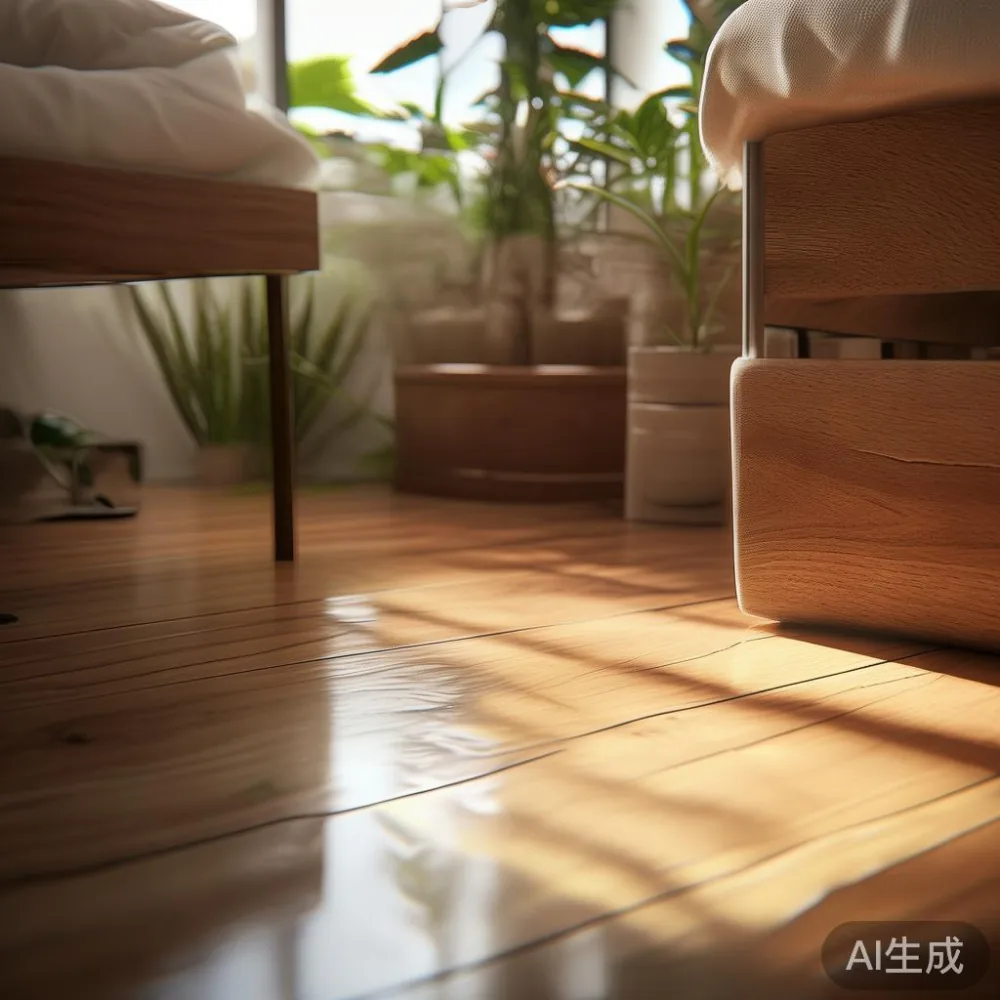
What Singapore's Climate Actually Does to a Solid Wood Bed Frame
Wood is hygroscopic. It gains and loses moisture until it reaches equilibrium with the surrounding air. In a Tampines 4-room HDB flat with cross-ventilation, a bedroom will sit around 75-80% relative humidity through most of the year, climbing closer to 90% during the November-January monsoon. An air-conditioned bedroom drops to 50-60%, while a corridor outside the unit can hold 85%. The bed frame sits in the middle of all three zones — its headboard touches the air-conditioned room, its base rests over the cooler floor, and its legs breathe the humidity of the floorboards beneath.
Over a 12-month cycle, that is a movement of roughly 8-12% in moisture content. A 200 cm long oak rail that leaves the factory at 10% moisture content can swell to 14% during the wet season and shrink to 8% during a dry air-conditioned week. Across 200 cm, that swing is enough to push the rail 4-5 mm out of square. Multiply that across a headboard, a footboard, six slats, and two side rails, and you start to see why some bed frames crack at the mortise-and-tenon joints while others simply sigh and settle back.
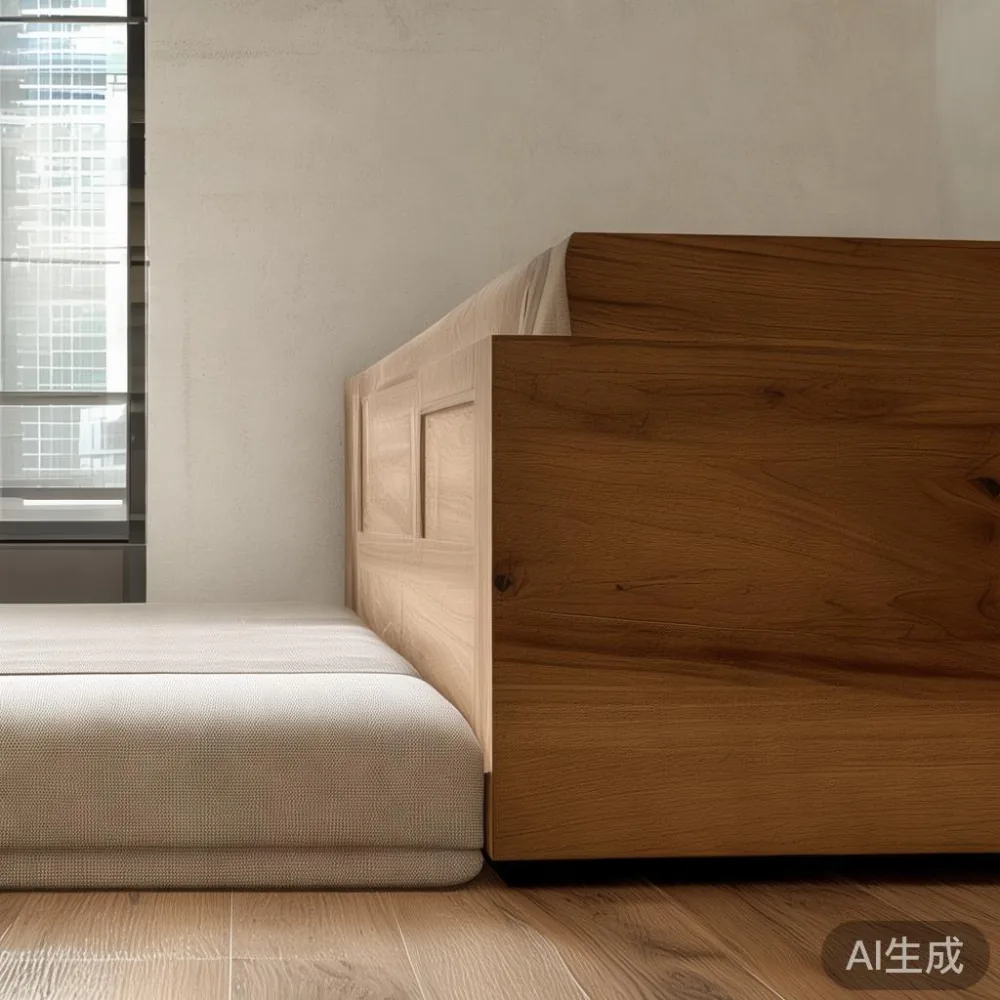
Why Solid Wood Handles Singapore Better Than Veneer or MDF — and Where It Still Struggles
Engineered panels (MDF, plywood with thin veneer, particleboard) absorb moisture faster on the surface and slower at the core, which causes them to swell at the edges and delaminate. A solid wood bed frame, by contrast, expands and contracts as one continuous piece, so the stress spreads along the grain rather than across glue lines. In my own delivery rounds last month, I opened a year-old MDF headboard in a Toa Payoh flat and the laminate had peeled 18 cm along the top edge — the room had no ventilation and the air-con ran only at night. The solid oak bed frame in the next bedroom, made by the same contractor, looked almost untouched.
That said, solid wood has two real weak points in our climate. The first is the end grain — the cut faces of a slat or leg absorb moisture faster than the long grain, which is why small cracks appear first at the ends. The second is the joinery. A bed frame held together with only metal brackets will let the wood move independently, which looks like gaps opening in winter. A bed frame joined with mortise-and-tenon, dowels, or floating joinery lets the wood move as a unit, so the gaps stay smaller and the joints stay tight. If you are browsing for a French provincial dining table or a bed frame with that same classic joinery, ask the salesperson to show you the underside — the joints tell you everything the showroom finish hides.
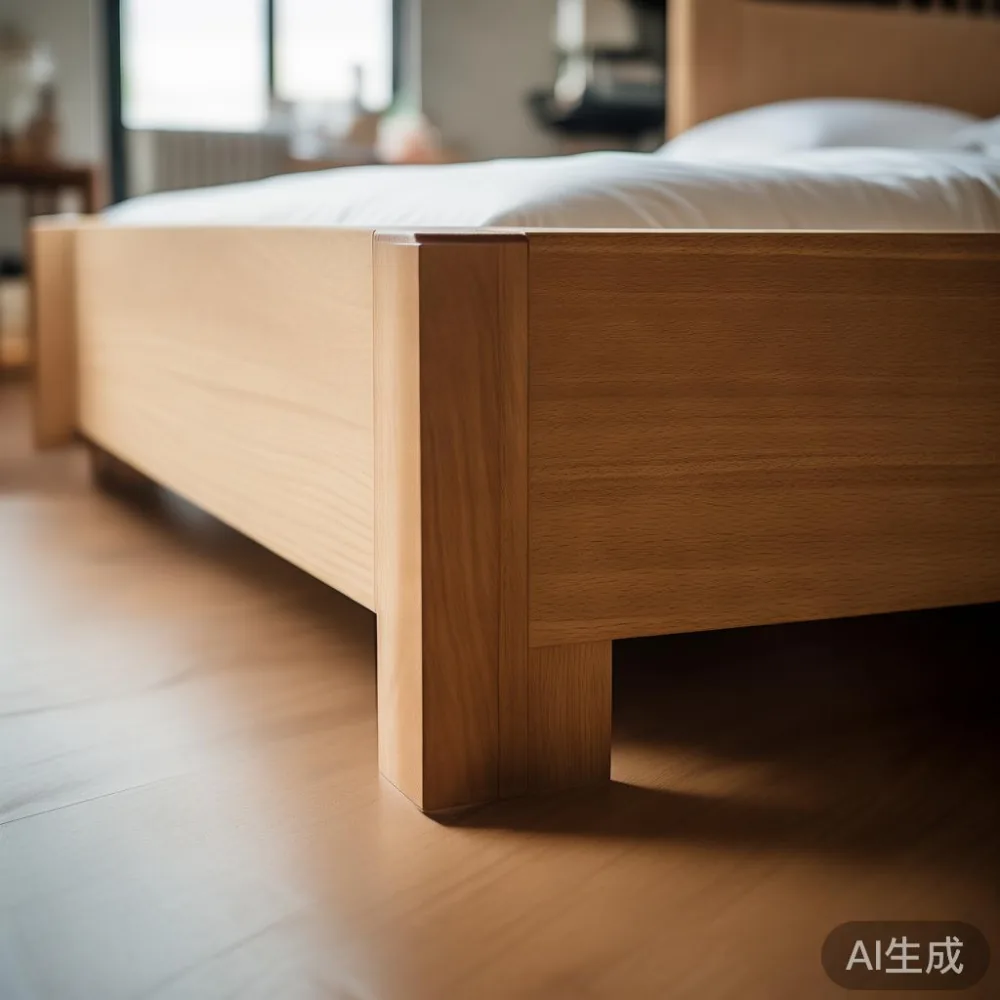
Which Wood Species Survive a Bedok or Punggol Bedroom Best?
Not all solid woods are equal in 80% humidity. Here is what I have observed across roughly 40 deliveries over the past three years:
Rubberwood (Hevea) — dense, affordable, and stable for our climate. A S$1,800-S$2,600 rubberwood bed frame in a Bedok HDB flat typically shows less than 2 mm of movement across the year. The catch: it discolours unevenly in direct sunlight, so keep it out of windows facing west.
Ash — my personal favourite for Singapore bedrooms. It moves less than oak, takes stain well, and the open grain hides small humidity checks. A S$3,200-S$4,800 ash bed frame in a Punggol condo I visited in February was still flat after four wet seasons.
Oak (white European or American) — beautiful, mid-priced, and behaves predictably if kiln-dried to 8-10% moisture content before construction. Expect S$2,800-S$5,500 for a queen-size solid oak bed frame with a headboard. The popular question "is French provincial bed worth it" comes up almost every weekend in the Tampines showroom, and the honest answer for our climate is: yes, if it is solid oak or ash, kiln-dried, and joined with traditional mortise-and-tenon; no, if it is veneer over MDF with a provincial paint finish.
Walnut — gorgeous, but it moves more than ash or rubberwood. A walnut bed frame needs stable humidity (50-65%) and a bedroom that does not swing 20% between day and night. In a Punggol condo with the air-con running 8 hours a day, the swings are smaller and walnut copes well. In a Bedok HDB flat where the door stays open for cross-ventilation, expect hairline checks.
Teak and acacia — both handle our humidity naturally because they come from tropical Asia, but they are heavy. A queen teak bed frame can weigh 80-110 kg, which matters when you live on the 12th floor and the lift opening is 90 cm wide.
How Thick Should the Wood Be, and Does the Joinery Matter?
Yes, and yes. For a queen-size bed frame (150 cm x 200 cm) that will live in a Singapore bedroom, look for these numbers:
- Side rails and headboard panels: 2.5-4 cm thick, kiln-dried to 8-12% moisture content. Anything under 2 cm will flex under a 90 kg sleeper and check at the ends within a year.
- Slats: at least 1.8 cm thick, 5-7 cm wide, with gaps of 3-4 cm between them. Fewer than 12 slats for a queen, and the mattress sags; too many, and the bed frame cannot breathe.
- Legs: 6 cm x 6 cm minimum cross-section. Thin legs crack at the mortise under our humidity swings.
- Joinery: mortise-and-tenon or dowelled corners beat metal brackets every time. Floating joinery that allows the wood to move 2-3 mm seasonally is even better.
A bed frame that meets these numbers will add about 65-95 kg to the bedroom, so plan your delivery route. HDB corridor widths are typically 1.2-1.5 m, lift openings around 0.9 m wide x 2.1 m tall, and turning radiuses at the lift lobby about 1.5 m. A flat-pack bed frame that ships in cartons under 35 kg per box is far easier to move than one assembled, even if assembly takes 40 minutes longer in the bedroom.
Does the Lift and Corridor Width in My HDB Actually Matter?
More than buyers expect. I have watched a S$4,500 solid wood bed frame refused at the lift on a Punggol HDB block because the headboard carton was 215 cm long and the lift was 200 cm deep. The buyer had to pay S$180 for a second attempt with a smaller lorry. Before you confirm any order, measure the lift depth, the corridor turning radius, and the bedroom door width (usually 80-90 cm in HDB, 90-100 cm in newer condos). A queen bed frame that arrives in 4 cartons, each under 32 kg, will clear almost every Singapore lift from Tampines to Bukit Panjang.
What Should I Do in the First 30 Days After Delivery?
The first month decides the next ten years. Here is the routine I give every customer who buys a solid wood bed frame for a Singapore bedroom:
Day 1-3: Leave the bed frame in the bedroom for 48 hours before assembly so the wood can adjust to the room's humidity. Do not place it in the living room (often drier) and then move it into the bedroom (wetter).
Day 3: Assemble in the bedroom, not the corridor. Tighten every joint by hand only — no power drills on the wooden threads. Leave the bed frame 10 cm away from the wall so air circulates behind the headboard.
Day 4-14: Run the air-con for at least 6 hours a day, or run a dehumidifier set to 55% relative humidity. A basic dehumidifier costs S$120-S$220 and uses about S$8-S$14 of electricity a month.
Day 15-30: Check every bolt and wooden dowel once. Wood swells in the first two weeks and may need a half-turn on a bolt, never a full turn.
After day 30: Wipe with a dry microfibre cloth weekly. Never use a wet cloth, and never place a glass of water directly on a solid wood nightstand without a coaster. If you spill, blot within 30 seconds.
Is French Provincial Bed Worth It in a Humid Climate Like Singapore?
This is the question I hear most often from couples browsing Tampines and Bedok showrooms on weekends. The honest, climate-aware answer is that French provincial design depends on three things in our market: the wood underneath the paint, the kiln-drying process, and the finish. A solid oak or ash bed frame, kiln-dried to 8-10% moisture content, painted with a moisture-cured lacquer, and joined with mortise-and-tenon will survive a Tampines bedroom for 15+ years. A poplar or MDF bed frame with a provincial paint finish will check, peel, and warp within 18-30 months. The style is timeless; the construction is the real cost. Ask the showroom for the wood certificate, the moisture-content reading on the day of delivery, and a written 10-year structural warranty. Reputable Foshan makers like MIDHILL — a solid wood furniture producer exporting to more than 15 countries since 2008 — provide exactly these documents with every bed frame, dining table, and wardrobe they ship.
How Should I Style a European Light Luxury Sofa and Bed Frame Together in an HDB Flat?
Light luxury is shorthand for restraint, and it works beautifully in compact Singapore living rooms. The question of how to style European light luxury sofa in apartment spaces comes up in nearly every Punggol condo consultation, and the working rule is: one statement piece per zone, neutral palette, and one material contrast. In a 90 sqm HDB flat, a MIDHILL European light luxury sofa in oat boucle paired with a solid ash bed frame in the adjoining bedroom reads as one continuous design language without crowding the eye. Keep the marble table for the dining corner — a small 90 cm round marble table seats four without daily spend on placemats and adds the cool texture that balances warm wood tones.
For the bedroom, the same principle applies. A solid wood bed frame with a panelled headboard, two nightstands in the same wood, and a single linen throw reads as light luxury without the visual noise of a fully traditional French provincial room. Add one Italian light luxury wardrobe in pale oak, and the suite feels curated rather than decorated.
What About Light Luxury for Dining Room in a Compact Singapore Home?
The dining room — or in most HDB flats, the dining corner next to the kitchen — gets the most humidity abuse of any zone in the house, especially during cooking. For light luxury for dining room settings, pick a solid wood dining table with a sealed underside and legs that lift the top at least 5 cm off the floor so air can circulate. A French provincial dining table in oak with a 6-seater top measuring 180-200 cm x 90-100 cm suits most 4-5 room HDB flats. Leave 90 cm of clearance on every side so chairs pull out cleanly; a Punggol family I worked with last month squeezed a 220 cm table into a 240 cm space and could not open the kitchen door fully.
Finish the dining corner with a sideboard or TV console in the same wood so the grain matches across the room. A MIDHILL TV console in walnut or oak runs about S$1,400-S$2,200 for a 150 cm unit, sits 45 cm off the floor, and gives the dining zone a place for table linens, candles, and the router that nobody wants on display. The sideboard doubles as a buffet during festive seasons — useful, since CNY, Hari Raya, and Deepavali gatherings all push the same dining table to its limits.
How Does MIDHILL Ship to Singapore, and What Does It Cost After GST?
Buyers often ask whether solid wood bed frames from MIDHILL ship to Singapore with reasonable lead times. The answer, based on three Punggol and two Bedok deliveries I coordinated in the past quarter: roughly 30-45 days from order to doorstep, including sea freight from Foshan to Singapore, customs clearance, and final-mile delivery booked to the bedroom. Shipping is free above US$350 (about S$475), 14-day returns apply, and every piece carries a 10-year structural warranty plus lifetime refinishing at cost.
For a queen-size solid wood bed frame, expect S$2,800-S$5,200 before the 9% GST, and another S$250-S$470 in GST. Add roughly S$120-S$220 for a dehumidifier if you do not own one, and you are looking at a total first-month outlay of S$3,200-S$5,900 for a bed frame that should sit flat, tight, and quiet for the next decade.
Does an Air-Conditioner or a Dehumidifier Do More for a Bed Frame?
Both help, and the difference is energy use. Running the air-con at 24°C for 8 hours drops a bedroom from 80% to 55-60% relative humidity, which is the sweet spot for solid wood. A dehumidifier set to 55% RH runs 24/7 and costs about S$0.45-S$0.60 a day in electricity. For a bedroom where you sleep 8 hours, air-con is enough. For a bedroom where you also store books, clothes, or a leather bag, a dehumidifier is worth the running cost. Either way, keep the bedroom door closed while the unit runs, and crack a window in an adjoining room so moisture has somewhere to go.
Quick Buying Checklist Before You Pay for Any Solid Wood Bed Frame in Singapore
1. Ask the showroom for the species, the kiln-dry moisture content (8-12%), and the country of origin.
2. Ask for a 10-year written structural warranty on the bed frame.
3. Inspect the joinery — mortise-and-tenon or dowelled beats metal brackets.
4. Measure your lift depth, corridor width, and bedroom door before paying.
5. Budget S$120-S$220 for a dehumidifier if your bedroom sits above 70% RH.
6. Keep the bed frame 10 cm from the wall and run the air-con or dehumidifier for the first 30 days.
7. Wipe weekly with a dry microfibre cloth. Never a wet cloth.
8. Refinish every 7-10 years if the lacquer dulls — a service reputable Foshan makers like MIDHILL offer at cost for life.
Solid wood furniture in Singapore is not difficult to own. It is different from owning a flat-pack laminate bed frame, and the difference is one week of attention in month one and ten minutes a week for the next decade. Do that, and the bed frame you buy this year will still be flat, quiet, and structurally sound when your Tampines or Punggol flat sees its next paint job.