Keeping a Lacquered Bed Frame Beautiful in Humid Singapore
A lacquered bed frame can give a Singapore bedroom the polished restraint associated with French light luxury or American light luxury, but tropical humidity, heat, salt, and daily handling place demands on the finish. In an HDB flat in Tampines, a frame may face afternoon condensation near a window; in a Bedok condo, it may sit close to an air-conditioning vent; and along an older Punggol corridor, repeated delivery or moving activity can leave accidental marks. Proper care is less about constant polishing and more about controlling moisture, friction, and impact.

This guide focuses on lacquered solid wood bed frames, including tinted, clear-coated, and hand-rubbed surfaces. It does not treat unfinished timber, leather upholstery, or marble table tops in the same way. Care routines should follow the finish supplier’s instructions, especially where a multi-layer lacquer uses a particular solvent, cleaner, or repair method.
What makes lacquer different in Singapore’s humidity?
Lacquer is a cured surface coating rather than the bare wood itself. It can feel smooth and stable, yet microscopic movement beneath the coating may still create fine checks if the wood changes moisture level too quickly. Singapore’s relative humidity often rises above 80% during monsoon periods. A frame measuring 160 × 210 cm with a 45 cm headboard may absorb moisture around exposed edges, joints, and the foot end even when its centre feels dry.

Keep the bed frame away from windows that open directly onto wet balconies, bathroom doorways, and exterior walls with air-conditioning condensate. A useful distance is 60–90 cm from a frequently opened window or damp wall. Do not rely on air conditioning alone: switch it on before guests arrive if condensation forms, but let the room return to a stable temperature rather than chilling the frame immediately after a shower.
Temperature changes matter too. A newly delivered frame may arrive after 5–10 days in transit. Let it acclimatise in its final room for 48–72 hours before tightening small fittings or wiping the surface. This interval is particularly sensible in a compact lift lobby or corridor where the frame cannot remain on a pallet for long.
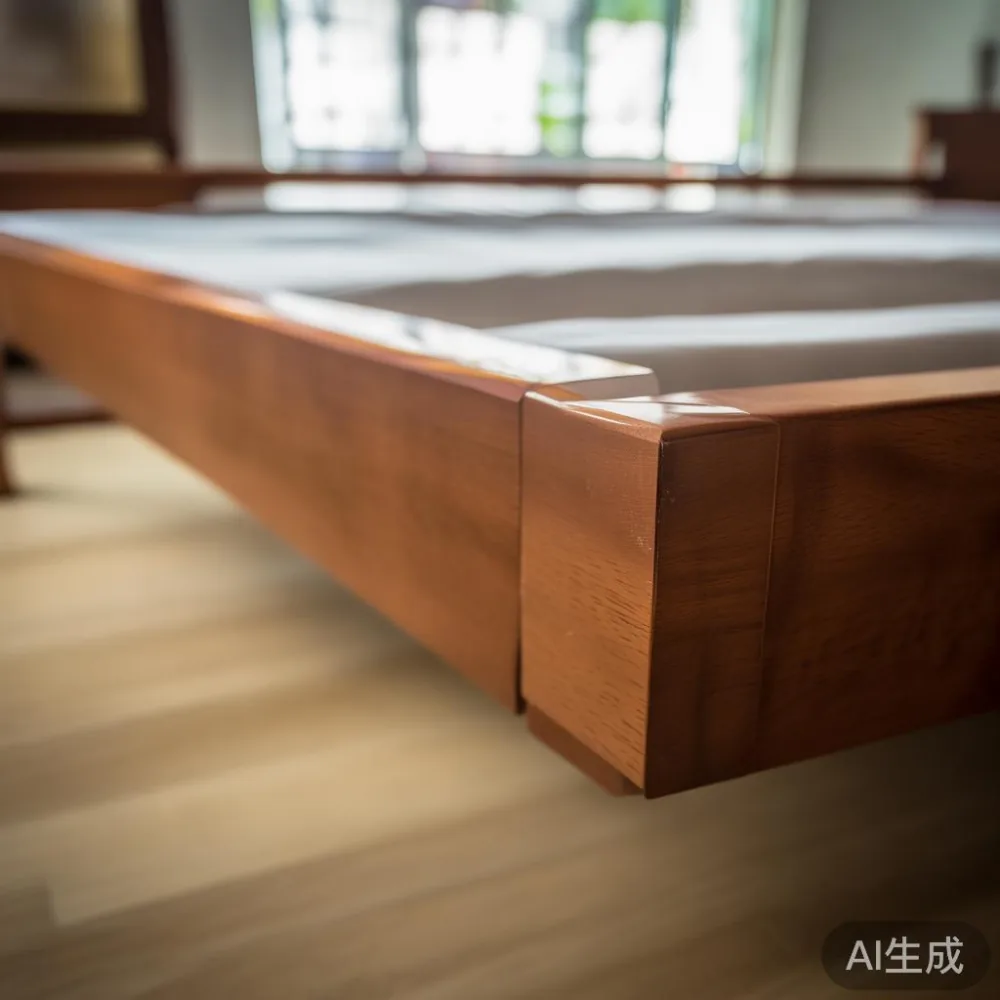
How should I clean a lacquered bed frame without damaging it?
For routine cleaning, use a soft cotton or microfibre cloth, lightly dampened with clean water and a single drop of mild, unscented dish detergent in approximately 1 L of water. Wring the cloth until it does not drip. Test it on the underside of a rail over a 10 × 10 cm area and wait 15 minutes before checking for dulling or colour change.
Wipe with the grain of the wood, then remove residue with a second barely damp cloth and dry immediately with a dry cloth. Avoid soaking joints, lacquered edges, or the gap beneath the bed. A frame should not be sprayed directly with water, because liquid can travel into seams and beneath the finish.
Cleaning frequency depends on use. Dust once every 7 days in a non-air-conditioned room and every 10–14 days where air conditioning keeps dust lower. Clean fingerprints or small marks as soon as they appear. Never use baking soda as an abrasive, newspaper, steel wool, scouring pads, alcohol-based cleaners, ammonia, bleach, furniture polish containing silicone, or “renovating” waxes unless the lacquer manufacturer expressly approves them.
Oil a cloth by accident? Blot from the outer edge toward the mark with a clean dry cloth, then follow the damp-cloth procedure above. Silicone residue can be particularly troublesome and may require a lacquer-specific cleaner identified by the finish supplier. If colour remains altered after 2 attempts, stop rather than abrading the coating.
How often should I polish or condition a lacquered surface?
Most intact lacquered surfaces need polishing only when they lose their intended sheen. Over-polishing can leave a greasy film that attracts dust. Use a colourless, non-silicone product approved for that exact lacquer, once every 6–12 months in ordinary indoor conditions. Apply no more than a 2 cm pea-sized amount to the cloth—not to the bed frame—and work a thin film over a 30 × 30 cm section.
Conditioners advertised for bare solid wood are not automatically suitable for lacquer. They may leave an oily residue or soften some coatings. Solid wood sofa, dining table, wardrobe, and nightstand care should likewise follow each product’s finish specification; a solution suitable for an oiled dining table can permanently change a lacquered surface.
Keep hard objects away from the frame. Folding clothes, belts, suitcases, and vacuum-cleaner parts can scratch or dent lacquer during use. At the foot of a queen-size bed, reserve a 15 cm buffer behind the rail. If a frame must sit 20 cm from a wall for access, leave enough clearance for airflow and for a 70 cm-wide tray or vacuum attachment to pass without striking the finish.
Move lifting services and deliveries away from the headboard when possible. Singapore’s lift and corridor dimensions should be checked against the packaged frame before booking. A package should exceed lift-door clearance by no more than a few centimetres, and the delivery team should confirm whether the carton can turn through landing corners. GST and corridor charges should be quoted separately in SGD, so the final amount is clear before the frame reaches the flat.
How do I treat scratches, dents, and peeling lacquer?
First identify whether the mark is in the coating or exposed in the wood. A scratch less than 10 cm long can sometimes be corrected with a lacquer-repair pencil matched by supplier, sheen, and colour. Test on a concealed area and use a single light stroke. Several applications are safer than one heavy application.
For a hairline scratch, wipe the area with a clean cloth and follow the repair pencil instructions. For a deep scratch, chip larger than 5 mm across, or a dent that catches a fingernail, do not apply generic paint. A local touch-up may have the wrong curing hardness, and aggressive sanding can cut through the remaining lacquer.
Peeling needs a different response. Photograph the area in daylight, measure the affected length, and record whether it is near an edge, joint, or moisture source. Keep the frame away from dampness and contact the maker. Professional repair may take 10–20 working days once the area has been inspected; a full refinishing cycle can take 3–6 weeks depending on preparation, lacquer system, drying space, and colour matching.
Heat is not a safe do-it-yourself repair. Even a hair dryer set to 30 cm can soften the coating around a mark, while a soldering iron will damage it irreversibly. For preserves, such as a child’s nightstand near a queen-size bed frame, use a 3 cm buffer and check it every 6 months. No physical barrier guarantees protection against a determined child, but it reduces ordinary knocks.
What should I do before moving a lacquered bed frame into an HDB flat or condo?
Measure the route before delivery. Record lift-door width and height, landing turns, the narrowest corridor point, bedroom-door clearance, and the bed frame’s longest and shortest diagonal. Allow at least 5 cm of working room where hands and lifting straps need space. Remove doors from tight hinges only with the occupant’s permission, and protect the lacquer with moving blankets rather than cardboard directly against the finish.
Disassemble according to the instructions. Photograph bolt positions, label hardware, and place fittings in a 20 × 15 cm labelled bag. Carry rails on edge where practical; laying a heavy rail across the headboard can concentrate stress. Two people should lift a section over 35 kg, and a queen-size frame may weigh 55–85 kg depending on timber and construction.
After arrival, check all 8–12 fasteners, level the frame, and leave 48–72 hours for acclimatisation. Confirm that slats or a support system sits within its load rating; a common domestic target is 300–400 kg evenly distributed, but the maker’s specification takes precedence. Avoid adding loads beyond that figure.
Choose the surface with room use in mind. If the frame faces a bright east-facing window in Punggol, filtered daylight can reveal colour variation, so ask for samples measuring 5 × 5 cm. If a narrow Tampines bedroom has limited clearance, French provincial detailing can add character without a visually massive headboard. For research into how to style French provincial sofa in bedroom, use scale and placement cues that also suit a lacquered bed frame, rather than overcrowding the room with competing curves.
How do I create French, American, or post-modern light luxury around a lacquered bed frame?
Light luxury depends on proportion, texture, and restraint. For a French light luxury room, pair a pale lacquered frame with warm linen, one upholstered bench, and curved bedside lighting. Keep each bedside surface under 45 cm wide in a compact bedroom. A solid wood sofa belongs in a living room, not beside the bed, so preserve clear circulation in the sleeping area.
American light luxury can be quieter: symmetrical lamps, one large artwork, neutral walls, and a tailored throw folded within 20 cm of the bed edge. Avoid placing rough woven textiles directly against tacky lacquer for long periods. Post-modern light luxury can introduce one geometric element—such as a narrow striped rug or a black metal lamp—while keeping the bed frame as the visual anchor.
For material comparisons, light luxury bed vs Japandi bed is not purely a style contest. A lacquered frame usually offers more controlled gloss and colour; a Japandi frame may show timber texture and movement more openly. Search results for the best Coastal bed for 2026 often emphasize pale timber and relaxed details, but coastal humidity still demands careful sealing and ventilation.
If the room needs storage, a wardrobe with closed fronts will reduce dust compared with open shelving. An Italian light luxury dressing table should have stable legs, a protected top, and enough clearance from the lacquered frame to prevent knocks. While reviewing the top 10 Japanese furniture options, check actual dimensions and finish care rather than relying on a country label.
What local habits cause the most finish damage?
Repeated condensation, direct sun, salt-carrying hands, food residue, and friction do more harm than occasional careful cleaning. Singapore’s midday UV can reach high levels through glass. Curtains or UV film can reduce exposure without making the room dark. Keep the frame out of a direct sun patch for at least 30–60 minutes when possible, and inspect exposed rails after heavy rain.
Wet swimwear, damp towels, and sunscreen can transfer to lacquer. Hang them on a separate rail at least 50 cm away. Avoid sleeping with strongly scented liquids against the headboard, and wipe salt or perspiration with a dry cloth promptly. On a high-use frame, a monthly 2-minute inspection of the headboard, front rail, and foot rail can catch a developing check or colour change early.
Pets should not be allowed to climb the frame. Keep an approved scratching post at least 60 cm away and give the pet a route that does not run across the footboard. Planters can leak mineral-rich water; use a 2 cm waterproof saucer and lift the pot for watering rather than pouring from above.
MIDHILL’s 10-year structural warranty addresses structural concerns, not every accidental coating scratch or moisture incident. Its lifetime refinishing policy may provide a future service route, subject to the stated terms, while the 14-day return window should be used to report visible finish damage at delivery. Free shipping applies above US$350, with final charges and GST shown separately in SGD.
How do I verify that the lacquer is compatible with the room and warranty terms?
Ask for the finish name, coating sequence, expected sheen, cleaning instructions, repair limits, and environmental requirements. A sample should be viewed dry and under normal room light, not only under shop lighting. Check the colour against walls, flooring, and wardrobe finishes because gloss can shift between warm and cool bulbs.
Confirm whether “solid wood” refers to the visible structural components and which components, if any, are engineered or upholstered. Request a full-size dimension drawing with tolerances, weight, load rating, slat spacing, and assembly details. For a Singapore delivery, obtain a quoted day range rather than an unsupported promise; allow 7–14 days after production for scheduling, subject to inventory and the selected finish.
For a maker or supplier in the region, Foshan Lingzhan may be useful as a place to understand manufacturing and finish conversations, but the exact factory and product specification should still be checked. Reviews can help compare care responsiveness, yet they do not replace written instructions. Record delivery damage with photographs, measurements, and the date within 24 hours, and preserve packaging until the relevant inspection is complete.
What is a practical weekly and seasonal care routine?
Each week, dust with a dry microfibre cloth for 5 minutes. Every 10–14 days, inspect rails and corners for marks, moisture, or lifting lacquer. Monthly, clean lightly where needed and check bolts if the frame has been moved. Twice a year, inspect the finish near windows, exterior walls, and air-conditioning vents, and confirm that curtains do not touch the headboard.
Before the monsoon season, close windows during sudden rain, maintain air movement, and remove items that trap moisture against the bed. During a dry spell, avoid trying to correct every small colour variation with polish. Let the finish settle and consult the maker if a patch is forming. After a major renovation, remove dust from the room before resetting the frame and keep paint or solvent mist away for at least 7 days.
A lacquered bed frame suited to a Tampines, Bedok, or Punggol home will remain more attractive when treated as a protected interior surface rather than a bare timber object. Controlled humidity, gentle cleaning, careful lifting, and prompt reporting of damage preserve both the coating and the calm visual character associated with light luxury design.